


Hungary Presses Russia Not to Hike Energy Prices amid Iran Turmoil

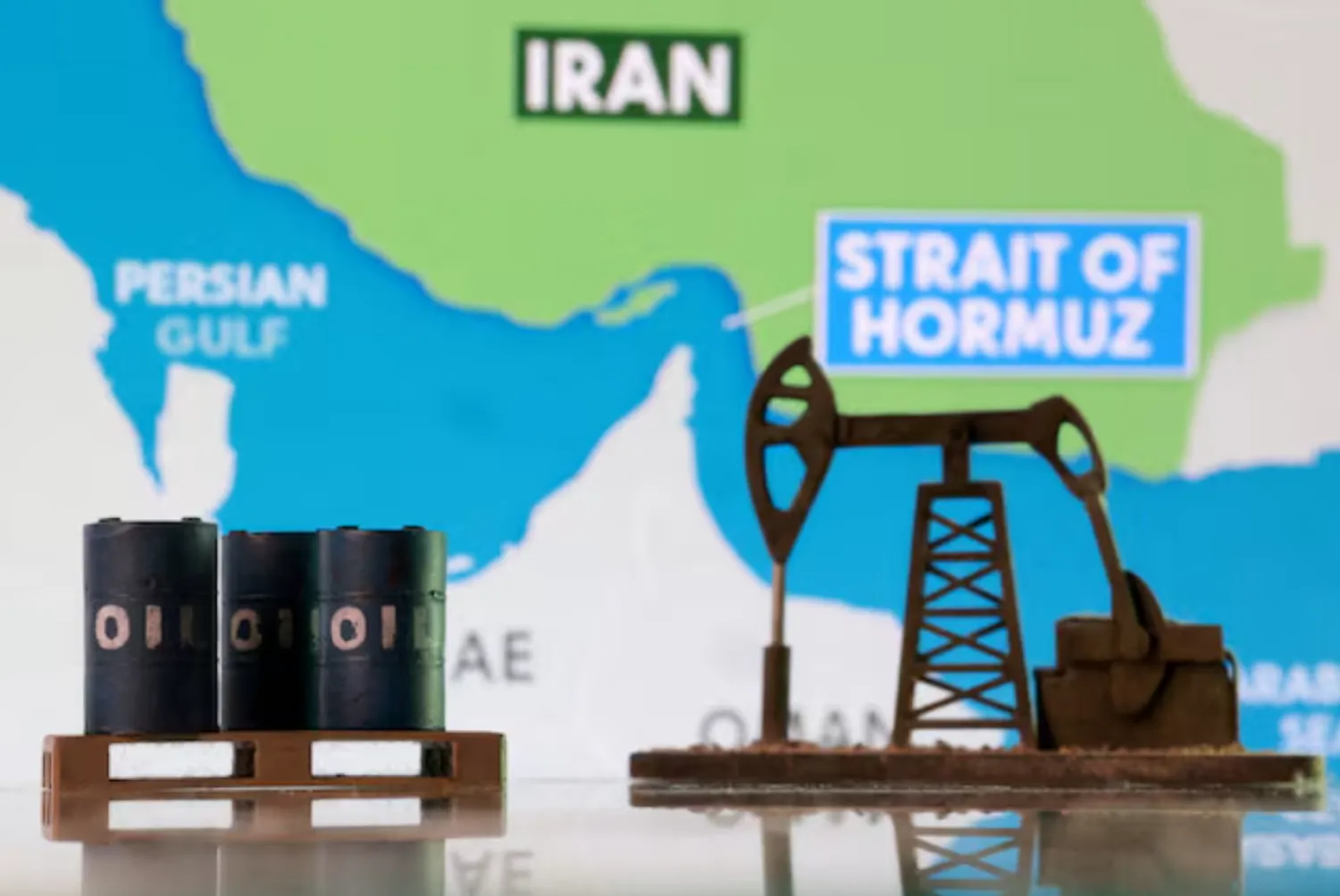
3D-printed oil barrels, an oil pump jack and a map showing the Strait of Hormuz and Iran appear in this illustration taken March 2, 2026. REUTERS/Dado Ruvic/Illustration/File Photo
TT

Hungary Presses Russia Not to Hike Energy Prices amid Iran Turmoil

3D-printed oil barrels, an oil pump jack and a map showing the Strait of Hormuz and Iran appear in this illustration taken March 2, 2026. REUTERS/Dado Ruvic/Illustration/File Photo

Hungary wants guarantees from Russia that it will not charge Budapest more for oil and gas, despite global prices jumping due to conflict in the Middle East, Hungary's foreign minister said Wednesday.

Hungarian Foreign Minister Peter Szijjarto was in Moscow to meet Russian President Vladimir Putin in the Kremlin later Wednesday to press the request, according to AFP.

Energy prices have surged since the United States and Israel attacked Iran on Saturday, including the benchmark price of Russian crude.

Hungary is the European Union's biggest importer of Russian fossil fuels, having maintained purchases and secured exemptions from sanctions despite pressure from Brussels amid the Russian offensive on Ukraine.

Budapest was already facing disruption from the closure of the Druzhba pipeline, which transports Russian oil to Hungary and which Ukraine says was damaged in a Russian strike.

Szijjarto said he would be seeking assurances that "the crude oil and natural gas necessary for Hungary's energy supply will continue to be available to us.

"I am also here to obtain guarantees that, despite the changed circumstances and the global energy crisis, Russia will continue to deliver the necessary quantities of oil and gas for Hungary at unchanged prices," he added.

Budapest relies on Russian oil and is currently in a standoff with Kyiv over a halt to supplies via the Soviet-era Druzhba pipeline, which runs through Ukraine.

Ukraine says Russia attacked the pipeline in January and that the threat of another strike was holding up repairs.

Hungary and Slovakia -- which also buys Russian crude -- accuse Kyiv of delaying the repairs in an attempt to put pressure on them and choke them of Russian energy.

Kremlin spokesman Dmitry Peskov said buyers of Russian oil were "facing blackmail" and accused Kyiv of "the deliberate blocking of deliveries through the Druzhba pipeline".




Iran War to Weigh More on Indian Growth than Inflation, Keeping Interest Rates Low

This frame grab from a video released by the US Department of Defense on March 4, 2026, shows what the Department of Defense says is periscope footage of a US Navy submarine firing on and sinking an Iranian warship in the Indian Ocean. (Photo by US Department of Defense / AFP)
TT

Iran War to Weigh More on Indian Growth than Inflation, Keeping Interest Rates Low

This frame grab from a video released by the US Department of Defense on March 4, 2026, shows what the Department of Defense says is periscope footage of a US Navy submarine firing on and sinking an Iranian warship in the Indian Ocean. (Photo by US Department of Defense / AFP)

The US and Israel's attack on Iran is expected to ‌weigh more on India's economic growth than its inflation, which will encourage the Reserve Bank of India to keep interest rates low, three sources familiar with policymakers' thinking and analysts said.

The conflict, which has rippled out across much of the Middle East, has pushed up oil prices by about 15%, disrupted gas flows from the region and triggered selloffs in Indian equity, debt and currency markets, with the rupee hitting a record low and bond yields rising due to concerns about India's current account deficit and the risk of higher inflation.

Despite a weaker rupee and higher crude prices, the central bank is unlikely to take a hawkish turn, all three sources familiar with policy deliberations said.

Current assessments could change, one of the sources cautioned, in case of extreme developments in the Middle East.

The thinking of policymakers appears to have diverged from the market reaction.

Interest rates have risen in emerging and global markets since the Gulf conflict broke out. Traders in India's swap markets have added to bets on at least one rate increase over the next 12 months.

"I don't feel the market has sufficiently priced the risk from oil prices rising significantly and there could be room for swap rates to move even higher ‌if Brent oil ‌holds above $80 per barrel over the next couple of weeks," said Ritesh Bhusari, joint general manager for ‌treasury at ⁠South Indian Bank.

The ⁠RBI's rate-setting panel, which meets for its next policy review in about a month, paused rate cuts at its last meeting in February after reducing the policy repo rate by 125 basis points in 2025.

The sources declined to be identified as they are not authorized to speak to the media. An email sent to the RBI on Wednesday seeking comment was not answered.

Conflict in the Middle East has muddied the picture for central bank policy projections globally. Traders have pushed back wagers on rate cuts by the Federal Reserve while adding to bets on a hike by the European Central Bank.

A rise in oil prices above $100 per barrel or a faster-than-expected pass-through of costs could run the risk of turning global monetary policy more hawkish, according to analysts at Goldman ⁠Sachs.

QUICKER HIT TO GROWTH

An immediate risk to India's growth comes from disruptions to gas supplies.

On Tuesday, Indian ‌companies reduced natural gas supplies to industries in anticipation of tighter flows from the Middle East, ‌a move that could hurt output in sectors including fertilizers and power.

If gas supply disruptions persist for more than four weeks, they could hurt economic growth ‌for at least a quarter, one of the sources said.

If oil prices remained above $90 to $95 a barrel for three to four quarters in ‌a row, the source said, India's expected 7%-plus economic growth in the next financial year would take a more sustained hit.

Under that scenario, growth could slow to about 6.5% from the current expectation for more than 7%, the person added.

Cuts in gas supplies to fertilizer and power companies could reduce output in those sectors in the near term, weighing on growth with a lag in the first and second quarters of the next fiscal year, a second source said.

“If oil prices ‌remain high for an extended period, the ‘Goldilocks phase’ for the Indian economy will end,” the person added.

INFLATION BUFFERS

Inflation, meanwhile, is likely to rise more modestly in the near term.

Retail fuel prices in India ⁠have not moved in tandem with global ⁠crude prices, as fuel retailers often hold prices steady. The government can also cut excise duties to shield consumers if global prices remain elevated, the first source said.

“There is plenty of room on the inflation front,” the third source said. “If inflation were closer to 5%, there might have been a case for a pre-emptive hike, but it is currently near the lower end of the RBI’s tolerance band.”

India's retail inflation was at 2.75% in January, closer to the lower end of the RBI's 2% to 6% tolerance range.

A 10% to 20% rise in global oil prices could lift Indian inflation by 25 to 50 basis points if fully passed through to consumers, according to a Deutsche Bank estimate. With a partial pass-through, consumer price inflation could rise to the 4.5% to 5% range, it said.

“If the fiscal authorities keep retail pump prices unchanged, the RBI would be less worried about near-term inflation risks and focus more on downside growth risks,” Citigroup chief India economist Samiran Chakraborty said in a note this week.

“This could perversely make the policy stance less hawkish than what the immediate market reaction to higher oil prices might suggest,” he said.

However, the central bank may also be constrained from delivering more rate cuts if oil prices remain elevated.

“While the RBI is unlikely to hike rates, if inflation were to rise towards 5% due to higher oil prices, it would also be unlikely to cut rates to support growth in such a scenario,” Deutsche Bank chief India economist Kaushik Das said.


China Reportedly Tells Oil Refiners to Suspend Exports

FILE PHOTO: A worker walks past oil pipes at a refinery in Wuhan, Hubei province March 23, 2012. REUTERS/Stringer/File Photo
TT

China Reportedly Tells Oil Refiners to Suspend Exports

FILE PHOTO: A worker walks past oil pipes at a refinery in Wuhan, Hubei province March 23, 2012. REUTERS/Stringer/File Photo

China has told its largest oil refiners to suspend exports of diesel and gasoline, Bloomberg News reported Thursday, citing unidentified sources, as the war in the Middle East risks an energy supply crunch.

China is a net importer of oil and is one of several major Asian economies that depend on the vital Strait of Hormuz for energy. Traffic through the strait is currently blocked.

The Middle East was the source of 57 percent of China's direct seaborne crude imports in 2025, according to analytics firm Kpler.

Officials from China's top economic planner, the National Development and Reform Commission, met refinery representatives "and verbally called for a temporary suspension of refined product shipments that would begin immediately,” Bloomberg said Thursday, citing unidentified people familiar with the matter.

"The refiners were asked to stop signing new contracts and to negotiate the cancellation of already-agreed shipments," it said.

A spokesperson for China's foreign ministry denied knowledge of the suspension when asked about it at a regular news conference.

PetroChina, Sinopec, CNOOC, Sinochem Group and private refiner Zhejiang Petrochemical regularly obtain fuel export quotas from the government, Bloomberg said.

The companies did not respond to AFP's requests for comment.


UAE Shares Extend Losses

A man follows the stock market shares on a screen with stock information at the Dubai Financial Market (DFM) in the Gulf emirate of Dubai, United Arab Emirates, 04 March 2026. EPA/ALI HAIDER
TT

UAE Shares Extend Losses

A man follows the stock market shares on a screen with stock information at the Dubai Financial Market (DFM) in the Gulf emirate of Dubai, United Arab Emirates, 04 March 2026. EPA/ALI HAIDER

The UAE stock markets fell in early trade on Thursday, extending losses from the previous session after exchanges reopened following a two-day trading halt triggered by Iran’s missiles and drones.

The UAE's stock markets reopened on Wednesday.

Both exchanges said they will temporarily set a 5% lower price limit on securities.

Dubai's main share index sank more than 4%, as stocks retreated across the board, with top lender Emirates NBD and blue-chip developer Emaar Properties both losing 4.9%.

Elsewhere, budget airline Air Arabia declined 4.9%.

However, utility firm Dubai Electricity and Water Authority advanced 4.4%.

In Abu Dhabi, the index retreated 2.3%, with the country's biggest lender First Abu Dhabi Bank declining 4.9% and Aldar Properties was ⁠down 5%.

Among ⁠other fallers, Abu Dhabi Commercial Bank tumbled 5%.