

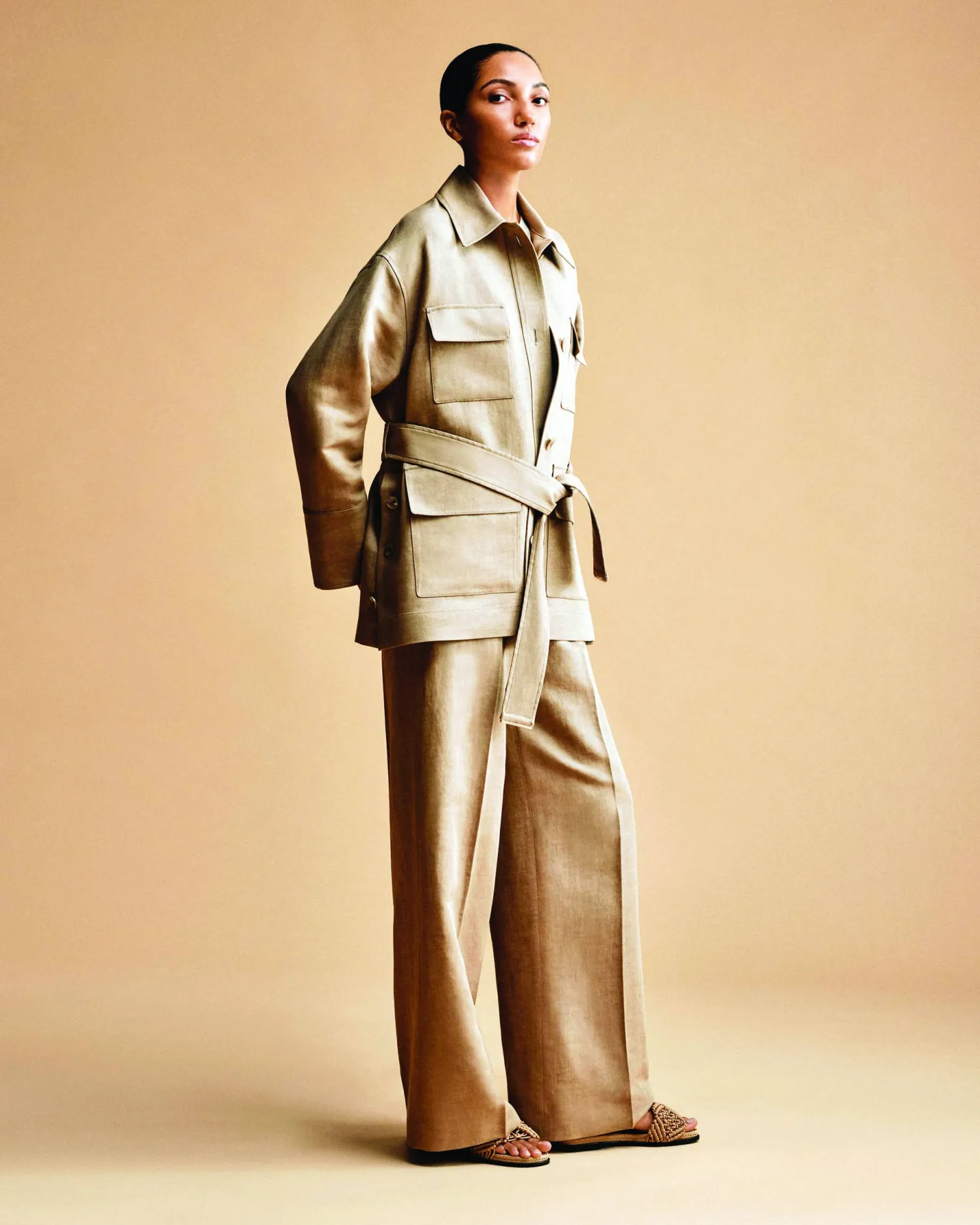

Italy's Agnona Brand: Lamb among the Fashion Wolves

Italy's Agnona Brand: Lamb among the Fashion Wolves
TT

Italy's Agnona Brand: Lamb among the Fashion Wolves

Italy's Agnona Brand: Lamb among the Fashion Wolves

At Milan Fashion Week, headlines go to splashy names, over-the-top fashions and celebrities posing by catwalks.

But behind the scenes, Italy's smaller and medium-sized brands, the often family-owned lifeblood of the industry, are doggedly defending their craft, striving to keep alive long traditions of excellence.

One of them, Agnona, began in 1953 as a wool mill in Italy's northern Piedmont region, producing luxurious textiles in natural fabrics like cashmere, lambswool and angora that supplied top haute couture houses in Paris, from Christian Dior to Givenchy to Yves Saint Laurent.

Acquired in 1999 by the Ermengildo Zegna Group, Agnona switched from textiles to apparel and was sold in 2020 to Zegna family members Stefano Aimone, the chief executive and creative director, and his father Roberto.

Agnona, which is opening its first flagship store in Milan next month, envisions a global network of owned and franchised stores in future.

Stefano Aimone sat down with AFP to explain the challenges facing smaller names amid competition from the big fashion conglomerates, changes in consumer habits and the race towards retail.

- 'Overwhelmed by demand' -

"If you want to aim for quality and certain types of craftsmanship you have to stay here in our Italian boot. But many companies have closed. Many closed because of Covid, post-Covid they were absorbed into larger groups because costs went up, prices fluctuated, they had periods of no sales -- no work at all -- followed by excess work. Financially they didn't have the reserves.

"The businesses that remain are now extremely overwhelmed by demand from the big French groups and the Italian brands.

"The problem isn't just cut-and-sew, it's also the production of materials, because everything cascades down... the dye houses that are still around are clogged up, which creates delays, and delays weaken the quality of the entire industrial process."

- 'Made in Italy' -

"I'd say 'Made in Italy' is becoming relatively less important to them (customers); the customer now identifies more with the brand itself, with its values, with what the brand represents...

"Made in Türkiye, Made in Italy, Made in France -- it can be important, but it's definitely not as important as it once was, because brands have been very active in communicating many other values they embody, which provide justification beyond geography.

"And in a way that's right, because a brand isn't just its product -- it's also what it stands for and what it does beyond the product itself."

- 'Sowing seeds' -

"We're just under 15 million euros in revenue but we expect to reach 20 million and beyond within three years.

"We still have many markets that we haven't even started talking to, for example, all of China, the entire Middle East, all of Latin America, the whole APAC region including Australia.

"Since we took over the brand, there have been years of rebuilding: not only rebuilding our premises -- the industrial site and the headquarters -- but working on the collection.

"We introduced menswear, so we focused heavily on internal work, and we didn't necessarily want to push revenue right away. Because if you go out to market without a solid product, you risk ruining everything you're trying to achieve -- it can be counterproductive.

"So those were years of sowing seeds, and now that we're ready, we're beginning to address the global market."


Stella McCartney Marks Year of the Horse with Equestrian Paris Fashion Week Show

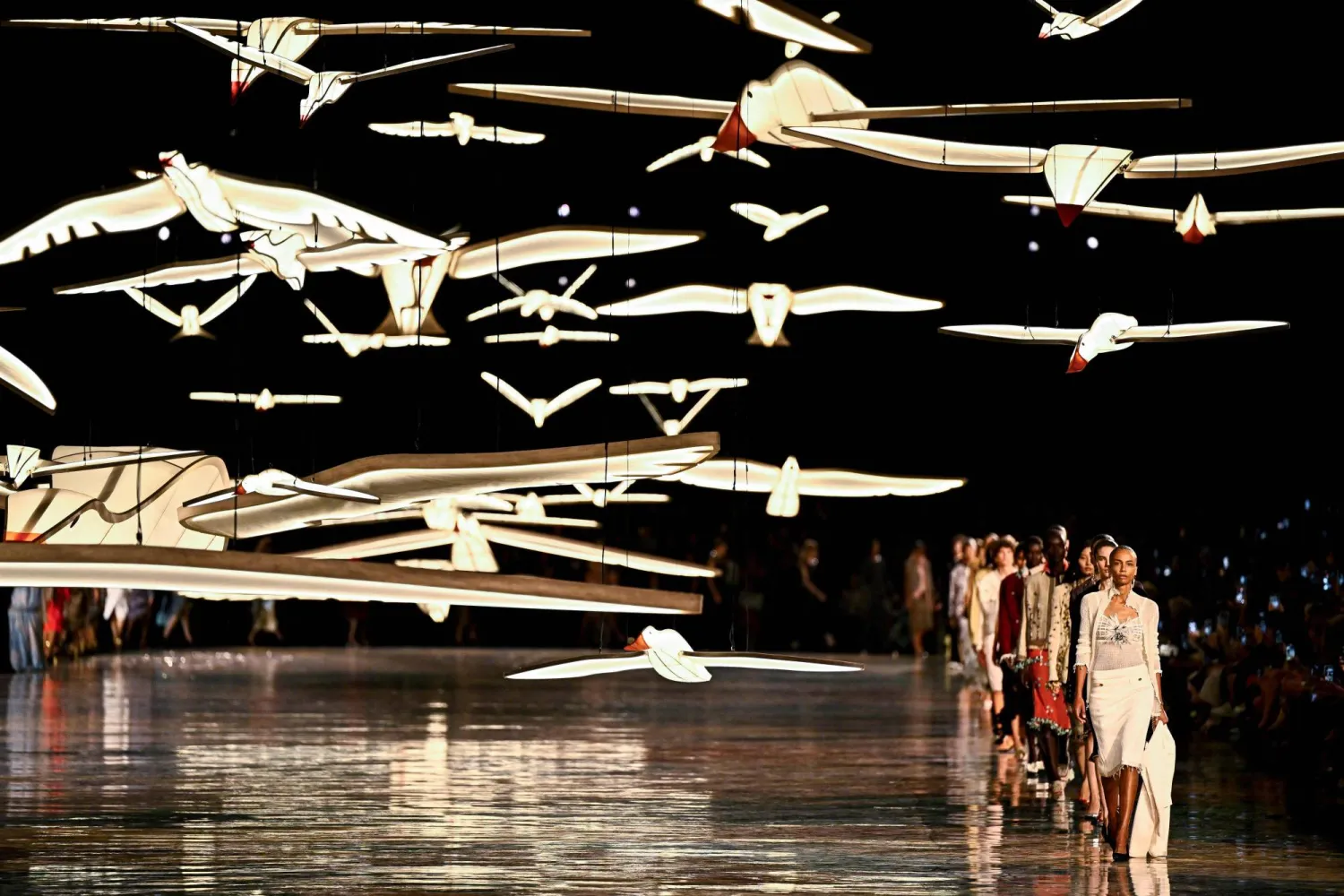
 Models present a creation by Stella McCartney for the Women's Ready to Wear Fall/Winter 2026-2027 collection fashion show as part of the Paris Women Fashion Week, in Paris, on March 4, 2026. (AFP)
Models present a creation by Stella McCartney for the Women's Ready to Wear Fall/Winter 2026-2027 collection fashion show as part of the Paris Women Fashion Week, in Paris, on March 4, 2026. (AFP)
TT

Stella McCartney Marks Year of the Horse with Equestrian Paris Fashion Week Show

 Models present a creation by Stella McCartney for the Women's Ready to Wear Fall/Winter 2026-2027 collection fashion show as part of the Paris Women Fashion Week, in Paris, on March 4, 2026. (AFP)
Models present a creation by Stella McCartney for the Women's Ready to Wear Fall/Winter 2026-2027 collection fashion show as part of the Paris Women Fashion Week, in Paris, on March 4, 2026. (AFP)

Stella McCartney, known for her commitment to animal rights and sustainability, put horses at the center of her eponymous brand's Paris Fashion Week show set in a riding hall in Paris' Bois de Boulogne.

Five black horses and five white horses charged in and began performing an intricate equestrian choreography, walking in circles and weaving around each other, before the first ‌models emerged on ‌an oval catwalk surrounding the ‌sandy ⁠ring.

The winter 2026 ⁠collection continued the equestrian theme, with thigh-high riding boots, and suit trousers or jeans fashioned into stirrup pants and paired with bright preppy sweatshirts.

"There's a lot of new innovations in the show," McCartney told Reuters in an ⁠interview after the show. "Everything's plant-based, vegan, so ‌there are no ‌animal glues, there's no dead animals.

"That's why I always ‌like to sort of remind people and celebrate ‌and bring animals into the conversation," she added, saying the show also honored the Lunar New Year of the Horse.

Dresses and skirts covered ‌in plastic-free sequins featured hip bustles, pleats and bows, while multicolored crochet scarves ⁠provided a ⁠pop of color to tailored suits.

Stella McCartney, founded 25 years ago, became fully independent once more last year after McCartney bought the minority stake held by LVMH back from the luxury group.

A few seats down from Stella's father, former Beatle Paul McCartney, LVMH heir Antoine Arnault was among the front row guests at the show, seated next to his wife, model Natalia Vodianova.


Adidas Expects Operating Profit to Rise to 2.3 Bln Euros in 2026

An Adidas logo is seen at the new Futurecraft shoe unveiling event in New York City, New York, US, April 6, 2017. (Reuters)
TT

Adidas Expects Operating Profit to Rise to 2.3 Bln Euros in 2026

An Adidas logo is seen at the new Futurecraft shoe unveiling event in New York City, New York, US, April 6, 2017. (Reuters)

German sportswear maker Adidas on Wednesday said it expected its operating profit to increase to around 2.3 billion euros ($2.7 billion) this year, despite around a 400-million-euro impact from US tariffs and unfavorable currency developments.

Currency-neutral revenues were expected to ‌increase at ‌a high-single-digit rate in ‌2026, ⁠adding another 2 ⁠billion euros in revenue, it said in a statement, as it forecast to grow at a low-double-digit rate in North America and Greater China, among others.

It added ⁠it expected currency-neutral net ‌sales to ‌keep growing at a high-single-digit rate in ‌both 2027 and 2028, with operating ‌profit rising a mid-teens compound annual growth rate over the three-year period from 2026 to 2028.

In 2025, ‌it reported sales of 24.8 billion euros and operating profit ⁠of ⁠2.06 billion.

Management proposed a dividend increase of 40% to 2.80 euros per share for 2025.

In a separate release, Adidas proposed Nassef Sawiris as its new chairman and extended the contract of CEO Bjorn Gulden to 2030.


Gabon Fashion Designer Brings Traditional Raffia to Paris Runways

Gabonese fashion designer Chouchou Lazare sketches a design for a dress inside his tailoring workshop in Libreville on February 9, 2026. (AFP)
TT

Gabon Fashion Designer Brings Traditional Raffia to Paris Runways

Gabonese fashion designer Chouchou Lazare sketches a design for a dress inside his tailoring workshop in Libreville on February 9, 2026. (AFP)

Strands of raffia dry outside in the sun at the studio of Gabonese fashion designer Chouchou Lazare, who has made a name for himself using the natural fibers to craft his award-winning garments.

The natural material derived from palm leaves -- and traditionally reserved for Gabon's nobles and village chiefs -- gained international attention on the runways of the world's fashion capital last week.

"This is raffia from Gabon, it's special, it's woven very finely, it's a textile that deserves to be shown," the self-taught designer told AFP at his workshop in the capital Libreville.

Whether braided, sewn or glued to bustiers or skirts, nearly all of Lazare's dresses incorporate raffia.

Lazare was only nine years old when he began helping out his mother with her sewing to make ends meet.

He went on to organize his first fashion show in high school and has never received formal training in fashion.

Now in his 50s -- he chooses to keep his exact age under wraps -- Lazare says he learned his craft by designing dresses for the two most important women in his life: his mother and grandmother.

"She was very tall; to me, she was like a queen," he said of his mother.

And in readying his latest collection for the show in Paris on February 28, she remained his inspiration.

"When I prepare my shows, I want to see queens, women who fully own who they are," he said.

Although the signature material is used throughout his collection, the natural fibers are never dyed.

In the central African country, raffia has special significance.

"It's a traditional fabric that is part of the spirituality of our country, that speaks to the ancestors," the designer said.

- Like 'diamonds' -

Nowadays no longer just for nobility, raffia features at Gabonese traditional weddings and Indigenous bwiti spiritual ceremonies.

"Raffia represents a natural resource to be preserved, contributing to the influence of Gabonese and African cultural heritage," the ministry of sustainable tourism and crafts said on social media earlier in the year.

But that does not mean it should only be worn by Gabonese or African people, Lazare said.

"It's for everyone," he stressed, checking whether a bunch of the fibers laid out on his balcony were dry.

In 2002, Lazare won first prize for fashion at the Saint-Etienne International Design Biennial in France.

More than two decades later, he presented his creations to French President Emmanuel Macron during a state visit to Gabon in November.

A photograph of Lazare with Macron and Gabon's President Brice Oligui Nguema now proudly hangs in his workshop, a reminder of "a great moment", he said.

While raffia may seem a familiar textile to people in Gabon, Lazare said that upon seeing the presidents' reactions to his creations, "I felt like they were diamonds."

Glittering in his "diamonds" -- a raffia-decorated hat and tunic with a gold suit jacket -- Lazare picked up an achievement award in Paris at last week's Fashion Annual Show, which for more than 25 years has been honoring African designers.

As the president of the Association of Gabonese Stylists and Creators, he is also paving the way for other designers through teaching and mentorship.

Lazare said he hoped to see raffia recognized "as a treasure for Gabon".