



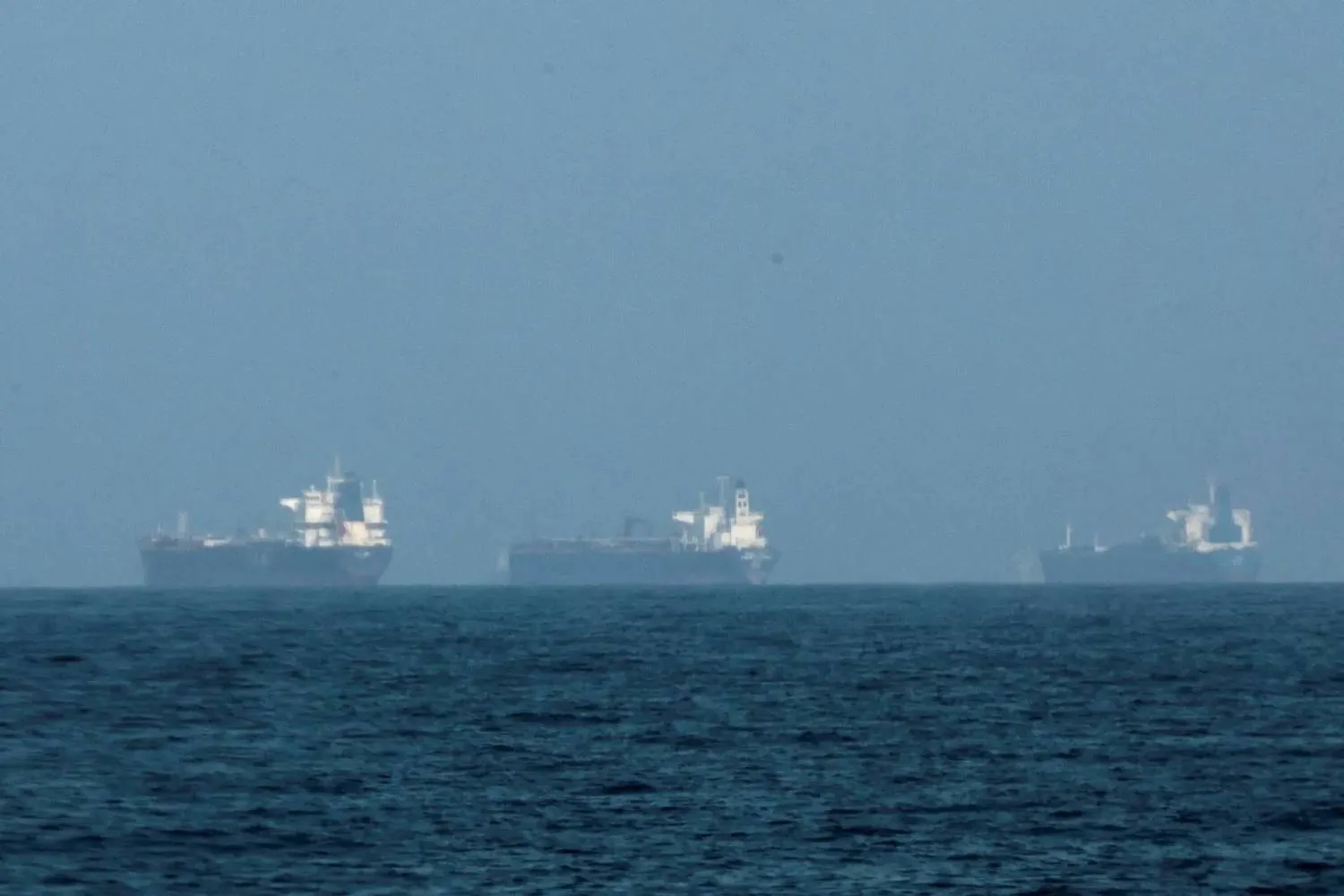

In a bid to break the paralysis affecting one of the world’s most critical waterways, US President Donald Trump has proposed to provide insurance risk guarantees as a strategic tool to impose stability in the Strait of Hormuz, through which roughly 20 percent of global oil flows.
Experts, however, told Asharq Al-Awsat that the initiative may not be sufficient to guarantee the uninterrupted movement of trade and shipping. Iran has warned that vessels crossing the strait could be targeted unless their passage is coordinated in advance.
Analysts say the Trump administration’s approach blends military power with financial engineering in an attempt to enforce stability while calming markets through US-backed insurance guarantees.
Trump announced the policy on his platform Truth Social, directing the US International Development Finance Corporation (DFC) to provide guarantees for vessels operating in the area.
He also signaled that the US Navy could escort oil tankers if necessary. Details remain unclear, however, on how the DFC — an agency traditionally tasked with mobilizing private capital for development projects and reducing investment risks in emerging markets — would structure such coverage.
On Wednesday, US Energy Secretary Chris Wright said in an interview with Fox News that the US Navy would begin escorting oil tankers through the Strait of Hormuz once it had the operational capacity to do so.
Treasury Secretary Scott Bessent similarly indicated that the navy stood ready to provide secure transit corridors for tankers if needed, with the goal of ensuring uninterrupted energy supplies and preventing disruptions to global trade routes.
Abdulaziz Sager, chairman of the Gulf Research Center, said the proposed guarantees would not be enough to ensure the safe passage of commercial shipping. Washington could deploy naval escorts for oil and gas tankers or even place them under the US flag, a measure used during the Iran–Iraq War, but the risk of Iranian attacks would still persist.
He noted that Iran retains several options to target vessels, including missiles, naval mines, drones, cyberattacks and underwater strike capabilities. While the US measures might help bring some degree of stability to oil prices, he added, insurance costs for shipping are likely to remain high.
Meanwhile, more than half of the world’s major marine insurance associations have announced that they will suspend war-risk coverage for vessels entering the Arabian Gulf starting Thursday.
Such insurance typically protects shipowners and charterers from liabilities and damages caused by war, terrorism, piracy, and similar threats. Its withdrawal significantly reduces the willingness of companies to load cargo from Gulf ports.
Five days into the conflict, Sager said it remains difficult to estimate the scale of economic losses affecting trade volumes, oil flows, or shipping costs. Much will depend on the duration of the conflict and the extent of potential damage to tankers and energy infrastructure across the Gulf.
Saeed Salam, director of the Vision Center for Strategic Studies, said the US strategy reflects an attempt to impose what he described as forced stability in the Strait of Hormuz. By combining military deployment with financial guarantees, Washington is seeking to contain market panic and reassure shipping companies.
Yet he argued that the guarantees remain incomplete. Naval escorts may offer psychological reassurance, but they cannot fully counter asymmetric threats such as naval mines, suicide drones or anti-ship missiles.
In some cases, the escorts themselves could turn commercial tankers into legitimate military targets, increasing the risk of direct naval confrontation and potentially expanding the conflict from a regional crisis into a broader international one.
Salam added that while US intervention may help curb soaring insurance premiums, it will not eliminate what he described as a fear-driven surcharge on maritime transport. Military convoys tend to slow shipping traffic and create logistical bottlenecks, which in turn push costs higher.
He also noted that oil flows through the Strait of Hormuz have already declined as buyers adopt defensive hedging strategies. At the same time, war-risk insurance premiums have surged by around 300 percent, reaching about 1.5 percent of the value of each shipment and adding millions of dollars in additional costs to every tanker.
In Salam’s view, the deeper challenge lies in Washington’s attempt to substitute financial guarantees for geopolitical security. Any failure to militarily protect insured vessels could undermine the entire insurance framework and expose the US Treasury to massive compensation claims, potentially shifting the crisis from maritime chokepoints to the core of the global financial system.


