


Hezbollah Says Fighting Israeli Forces Who Landed in East Lebanon

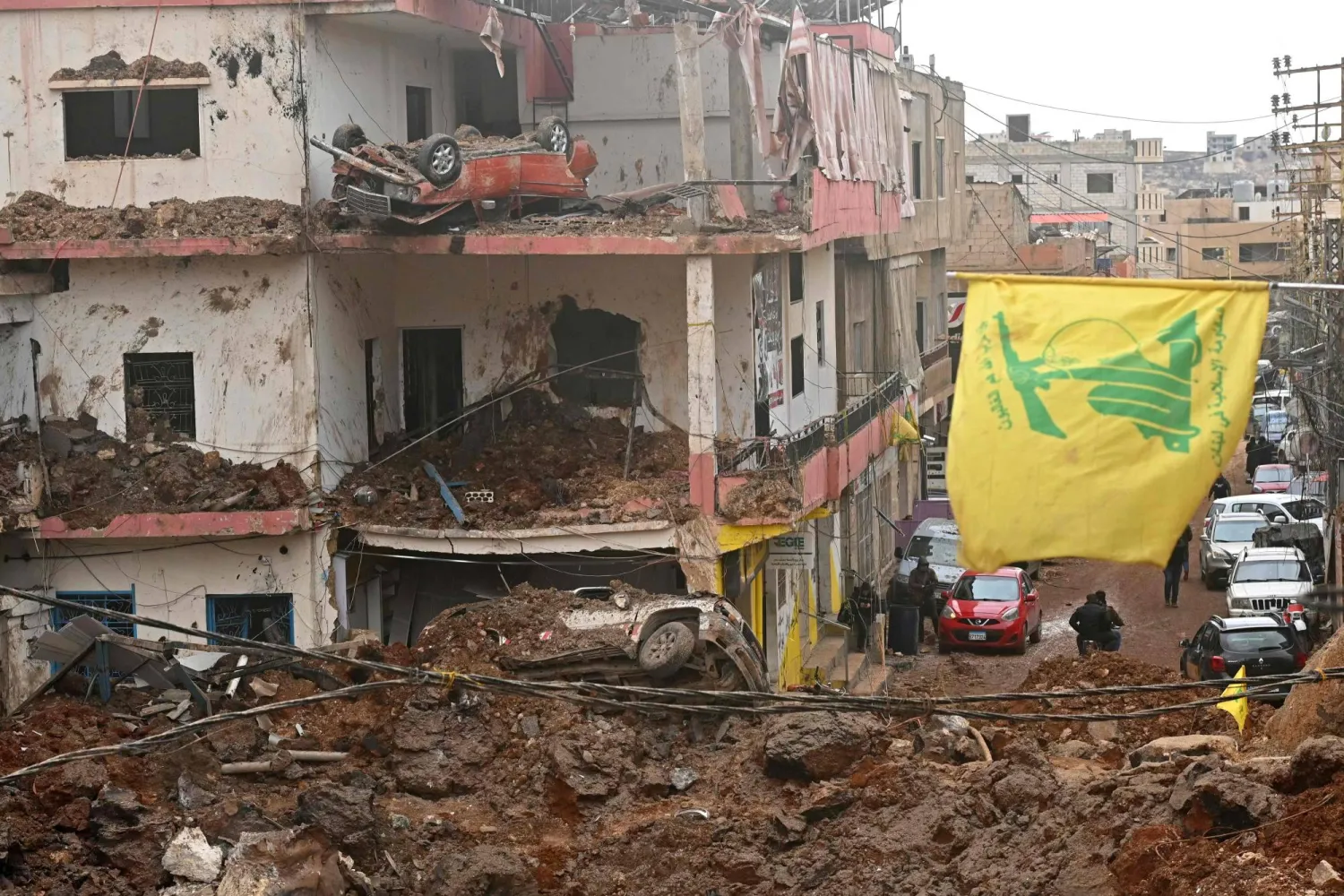
This photograph taken during a media tour organized by the Hezbollah shows a flag of Hezbollah installed on the balcony of a damaged building at Nabi Sheet town after an Israeli military operation in the Bekaa Valley of Lebanon, on March 7, 2026. (Photo by FADEL itani / AFP)
TT

Hezbollah Says Fighting Israeli Forces Who Landed in East Lebanon

This photograph taken during a media tour organized by the Hezbollah shows a flag of Hezbollah installed on the balcony of a damaged building at Nabi Sheet town after an Israeli military operation in the Bekaa Valley of Lebanon, on March 7, 2026. (Photo by FADEL itani / AFP)

Hezbollah said on Monday it was fighting Israeli forces who landed in eastern Lebanon by helicopter across the Syrian border, the second such operation since the outbreak of the latest conflict with Israel.

Lebanon was drawn into the Middle East war last week when Iran-backed militant group Hezbollah attacked Israel in response to the killing of Iranian supreme leader Ali Khamenei during US-Israeli strikes.

Israel, which has kept up strikes targeting Hezbollah despite a 2024 ceasefire, launched multiple waves of strikes last week across Lebanon and sent ground troops into border areas, said AFP.

In a statement on Monday, Hezbollah said it detected "the infiltration of approximately 15 Israeli enemy helicopters" from the Syrian side of the border in eastern Lebanon, an area where Hezbollah holds sway.

The group said its fighters "engaged the helicopters and the infiltrating force with appropriate weapons, and the confrontation" was ongoing.

Lebanon's state-run National News Agency (NNA) earlier reported "fierce clashes... towards the outskirts of the town of Nabi Sheet to repel Israeli forces that carried out a landing by helicopters" in the area.

Two Hezbollah officials in the Bekaa region, where Nabi Sheet is located, told AFP that an Israeli helicopter was downed.

The Israeli army did not immediately comment on the incident.

It is the second such attack after an Israeli commando operation in Nabi Sheet and its surrounding areas overnight Friday failed to find the remains of Ron Arad, an airman missing since 1986, killing 41 people.

- Beirut strikes -

In the Hezbollah stronghold of Beirut's southern suburbs, an AFP correspondent said a loud explosion was heard on Monday, with smoke seen rising from the area.

A brief statement from the Israeli military said it had "struck infrastructure belonging to the Hezbollah terrorist organization in Beirut".

The area was pounded by Israel over the past week but had not suffered any strikes since Saturday.

The military had told residents of the Beirut suburbs as well as Lebanon's south -- both strongholds of Hezbollah -- to evacuate, warning of attacks against the militant group.

The NNA reported several strikes early Monday, including one on the town of Tayr Debba near the southern city of Tyre, which "resulted in an initial toll of three citizens martyred and 15 others wounded".

Closer to the Israeli border, Hezbollah said on Monday that it targeted Israeli soldiers entering the towns of Odaisseh and Aitaroun with artillery shells.

It also said it clashed with Israeli soldiers in Odaisseh.

Lebanon's health minister Rakan Nassereddine said on Sunday that Israeli strikes on Lebanon had killed 394 people over the past week, including 83 children and 42 women.

Israel's military said that two of its soldiers were killed in combat in southern Lebanon, the first fatalities among its forces since the latest offensive began on March 2.


Israel Says Ready to Move on Pilot Zones amid New Lebanon Talks

A motorcade delegation arrives on the first day of talks between the Lebanese and Israeli delegations in Rome © Andreas SOLARO / AFP
TT

Israel Says Ready to Move on Pilot Zones amid New Lebanon Talks

A motorcade delegation arrives on the first day of talks between the Lebanese and Israeli delegations in Rome © Andreas SOLARO / AFP

Israel said it was ready to move forward with plans to withdraw troops from two areas of south Lebanon, as the two countries held a new round of talks in Rome on Tuesday.

US-brokered negotiations were taking place in the Italian capital over a framework agreement sealed last month after five rounds of talks in Washington, with Lebanese negotiators hoping for progress on an Israeli withdrawal.

The framework deal emerged after war broke out between Israel and Iran-backed militant group Hezbollah on March 2 against the backdrop of the wider Middle East war.

It calls for an end to the war in Lebanon, disarmament of the Lebanese movement, the deployment of Lebanese troops in the south and for Israeli forces to steadily withdraw from the country in two "pilot zones".

Israeli Foreign Minister Gideon Saar said Tuesday that his country was "ready to move forward implementing these two pilot zones".

"I hope and tend to believe that this round of discussions in Rome will promote it."

The Lebanese presidency had announced on Monday that its delegation to Rome had been instructed "to demand the immediate start of Israeli forces' withdrawal from the two pilot zones before any further discussion".

AFP journalists saw delegation vehicles entering the US embassy compound in the heart of Rome under tight security on Tuesday morning ahead of the talks, while the embassy declined to comment when asked.

According to a Lebanese diplomatic source familiar with the content of the talks, "the Lebanese army is ready to gradually take control of the localities from which the Israeli army would withdraw".

But Hezbollah rejects the agreement outright despite Lebanese government pressure, lowering expectations of success in the negotiations.

Orna Mizrahi of the Institute for National Security Studies (INSS) in Tel Aviv said Israel was "willing to withdraw gradually", but on the condition that "that there will be no presence of Hezbollah in the areas that Israel is withdrawing from".

She added that Israel also seeks to ensure "that the Lebanese army will have the ability... to keep it as a neutralized zone and a neutralized place that Hezbollah cannot come in again."

A US military delegation began discussions with the Lebanese army in Beirut on Saturday on the process for Israeli withdrawal from one of these "pilot zones".

- Limited prospects -

The framework agreement was concluded after a fragile ceasefire came into effect last month in the war between Hezbollah and Israel.

The Israeli army has nonetheless continued limited strikes in the south and has been carrying out demolitions in villages it occupies, according to official Lebanese media.

Lebanon's state-run National News Agency reported a strike on the southern town of Nabatieh al-Fawqa on Tuesday.

Israel's strikes and ground invasion have killed more than 4,300 people since the war started in early March, according to Lebanese authorities.

"The chances of a breakthrough in Rome are quite limited," Karim Bitar, a lecturer at Sciences Po Paris, told AFP.

"What we might see instead is a kind of opportunity to show that the process is still in place... that there are negotiations continuing despite the opposition and the obstacles that are beginning to emerge."

Tehran had demanded the ceasefire in Lebanon in order to conclude a memorandum of understanding with Washington on June 17.

But the region has seen a renewed escalation in recent days, with the US carrying out a third consecutive night of strikes against Iran ahead of the planned reimposition on Tuesday of its naval blockade on Iranian ports with ongoing attacks.

Iran wants to establish a link between negotiations over the regional war and Lebanon, "but we have the wish to disconnect it," said Mizrahi.

Tehran's priorities remain the Strait of Hormuz and the nuclear file, she added.

"The Iranians are using Lebanon as an excuse. They will always use it as an excuse," she said.

Hezbollah drew Lebanon into the regional war on March 2 by launching missiles at Israel in support of Iran.

Bitar, for his part, said that the risk of major fighting returning to Lebanon as a result of the regional escalation "is, of course, not negligible".

"But I think that Iran today will think twice before asking Hezbollah to launch new strikes against Israel," he said.

Tehran "wants to maintain Hezbollah as a long-term deterrent tool and does not want to use it immediately to open a new front," he said.


Israeli Strikes Kill Two People in Gaza, Including a 10-Year-Old, Medics Say

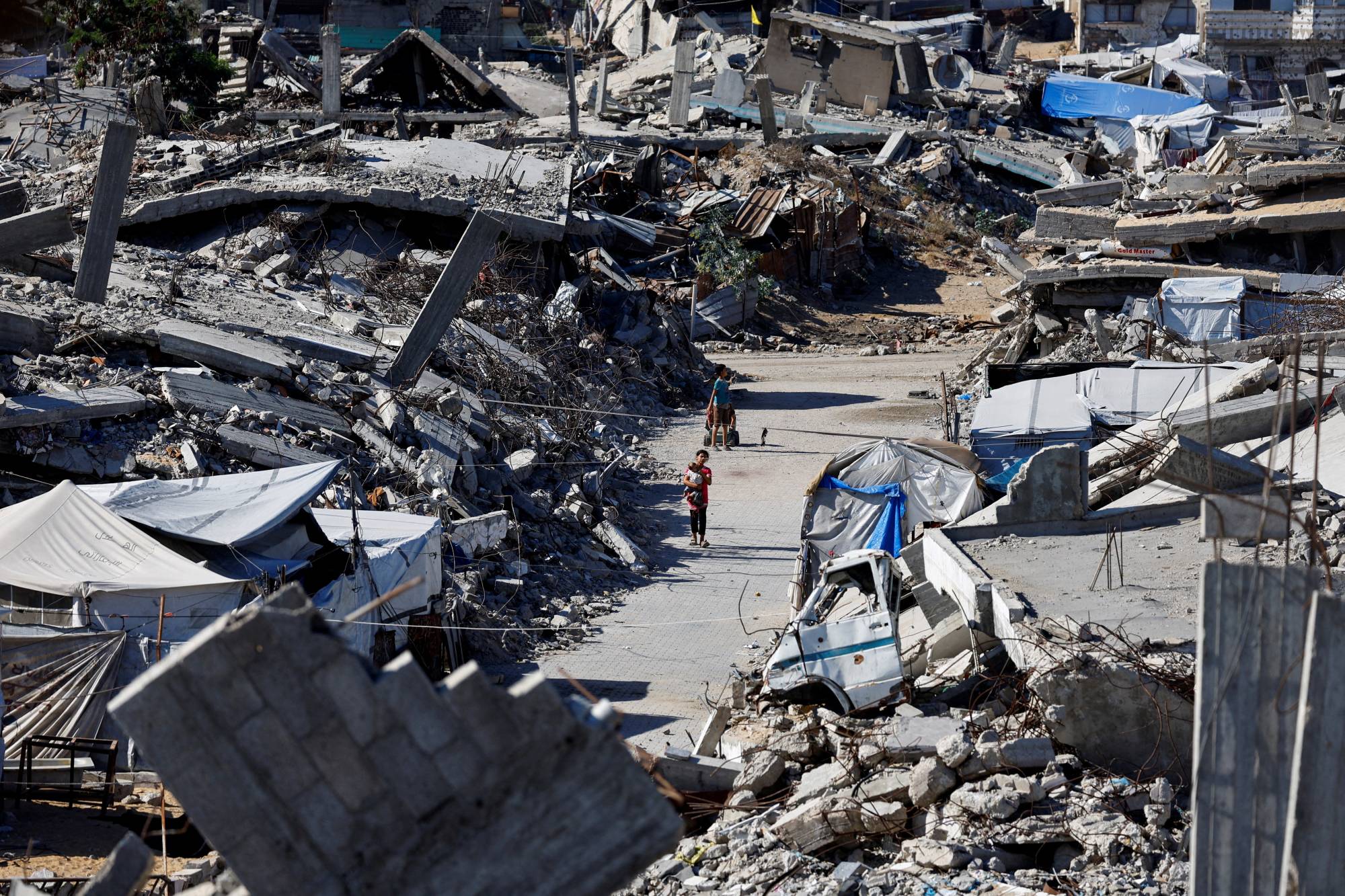
A Palestinian inspects a destroyed area following an Israeli airstrike in southern Gaza City, 12 July 2026. (EPA)
TT

Israeli Strikes Kill Two People in Gaza, Including a 10-Year-Old, Medics Say

A Palestinian inspects a destroyed area following an Israeli airstrike in southern Gaza City, 12 July 2026. (EPA)

An Israeli strike ‌and gunfire killed at least two Palestinians, including a 10-year-old boy, in the Gaza Strip on Tuesday, Gazan health officials said.

The deaths add to a toll of more than 1,100 Palestinians killed by Israeli attacks since an October ceasefire between Israel and Hamas took effect, according to health officials in the enclave.

The truce halted major fighting but has failed to stop sporadic violence. Four Israeli ‌soldiers have been ‌killed by fighters in Gaza over ‌the ⁠same period.

Medics said ⁠Muataz Abu Shaar, 10, was shot earlier on Tuesday by Israeli gunfire in Rafah, south Gaza. He was pronounced dead at the hospital.

Nearby in Khan Younis, an Israeli airstrike killed a 36-year-old man and left three people wounded, medics ⁠added.

The Israeli military did not immediately ‌comment on either incident.

The latest ‌violence comes as Hamas leaders visited Cairo for further ‌talks on implementing the second phase of ‌US President Donald Trump's Gaza peace plan.

The discussions include Hamas disarmament and Israeli army withdrawals, according to sources close to the talks, who added that there had not ‌yet been a breakthrough.

Hamas says Israel's violations of the ceasefire are ⁠a key obstacle ⁠to implementing the second phase of Trump's plan.

Nearly all of Gaza's 2 million people, most of whom have been displaced several times, now live on a tiny strip of land along the coast, mainly in makeshift tents or damaged buildings, under Hamas control.

Hamas-led fighters killed 1,200 people during their cross-border attack into Israel on October 7, 2023, according to Israeli tallies. The Gazan health ministry said more than 73,000 Palestinians have been killed in the territory since then.


Lebanon, Israel Hold US-Brokered Talks in Rome to Implement Framework Deal

 A motorcade arrives at the United States' Embassy in Rome, Italy, where ambassadors-level talks between Israel and Lebanon are expected to take place, Tuesday, July 14, 2026. (AP)
A motorcade arrives at the United States' Embassy in Rome, Italy, where ambassadors-level talks between Israel and Lebanon are expected to take place, Tuesday, July 14, 2026. (AP)
TT

Lebanon, Israel Hold US-Brokered Talks in Rome to Implement Framework Deal

 A motorcade arrives at the United States' Embassy in Rome, Italy, where ambassadors-level talks between Israel and Lebanon are expected to take place, Tuesday, July 14, 2026. (AP)
A motorcade arrives at the United States' Embassy in Rome, Italy, where ambassadors-level talks between Israel and Lebanon are expected to take place, Tuesday, July 14, 2026. (AP)

Lebanon and Israel resumed talks on Tuesday in the Italian capital, with Beirut hoping for progress towards securing an Israeli withdrawal from south Lebanon under a US-brokered deal, although expectations for swift progress were low.

US-led diplomacy has emerged since Hezbollah and Israel returned to war on March 2 amid the wider regional conflict, moving forward despite strong objections from the Iran-backed group, which believes only Iranian pressure on Washington can secure an end to the war and Israeli withdrawal.

Iran demanded an end to the war in Lebanon as part of its interim deal with Washington signed last month, but the agreement has been shaken over the last week by renewed US-Iranian hostilities in the Gulf.

Israel's military is occupying what it describes as a "buffer zone" about 10 km (6 miles) into Lebanon along the entire length of the ‌Israeli border. Israeli ‌officials say the zone is necessary to protect northern Israeli communities from attacks launched ‌by ⁠Hezbollah.

A meeting in ⁠Washington on June 26 produced an agreement that called for an end to the Lebanon conflict, the disarmament of armed groups - an apparent reference to Hezbollah - as well as the deployment of Lebanese troops to the south and the progressive withdrawal of Israeli forces.

But deadly Israeli strikes have continued and Hezbollah has rejected the agreement as well as efforts to disarm it. Israel, meanwhile, has said its troops would remain in southern Lebanon as long as Hezbollah remained armed.

Lebanese and Israeli officials will meet at the US embassy in Rome on Tuesday and Wednesday to set out how to implement the framework deal, Lebanese officials ⁠told Reuters.

One of the officials said moving the talks to Rome would make ‌it easier for both countries' delegations to consult their governments for guidance as ‌they negotiated.

Italian Foreign Minister Antonio Tajani said on Monday that Italy had offered to host the talks to continue work towards ‌a genuine ceasefire in Lebanon.

"We are also very pleased that Rome can serve as the venue for these meetings. In ‌this way, our capital becomes a capital of peace," Tajani said ahead of a European Union meeting in Brussels on Monday.

PILOT ZONES ON THE TABLE

In comments published by his office on Monday, Lebanese President Joseph Aoun said he hoped the Rome meeting would yield "tangible and practical steps on the ground" to implement the agreement and that it would see Israel begin its troop pull-out so ‌that the Lebanese army could deploy to the south.

One of the Lebanese officials said the country's delegation to Tuesday's talks would seek the gradual and sequential withdrawal of ⁠Israeli troops "one zone after another," ⁠referring to the "pilot zone" project under which Hezbollah would disarm, Israeli forces would withdraw and Lebanese troops would deploy area by area in southern Lebanon.

The June 26 agreement said two zones had been identified as a starting point. A US official said last week that the US military's Central Command (CENTCOM) was coordinating with both Lebanon and Israel to launch the pilot zones.

A US military delegation was in Lebanon at the weekend to discuss the plan in detail with Lebanon's army, sources told Reuters.

Israel's military has forced the local Lebanese population from their homes and carried out controlled explosions of entire villages. It says it is destroying infrastructure, including underground tunnels, used by Hezbollah.

More than 4,000 Lebanese have been killed and more than a million displaced by Israel's campaign in Lebanon since March, according to Lebanon's health ministry. The toll does not say how many combatants may be among the dead and Hezbollah has not disclosed figures on its war dead. Reuters reported on May 3 that several thousand Hezbollah fighters had been killed.

At least 32 Israeli soldiers and four Israeli civilians have been killed by Hezbollah, most of them in southern Lebanon since the latest fighting erupted.
