


Saudi Arabia Grants Stranded Syrians, Egyptians Transit Visas

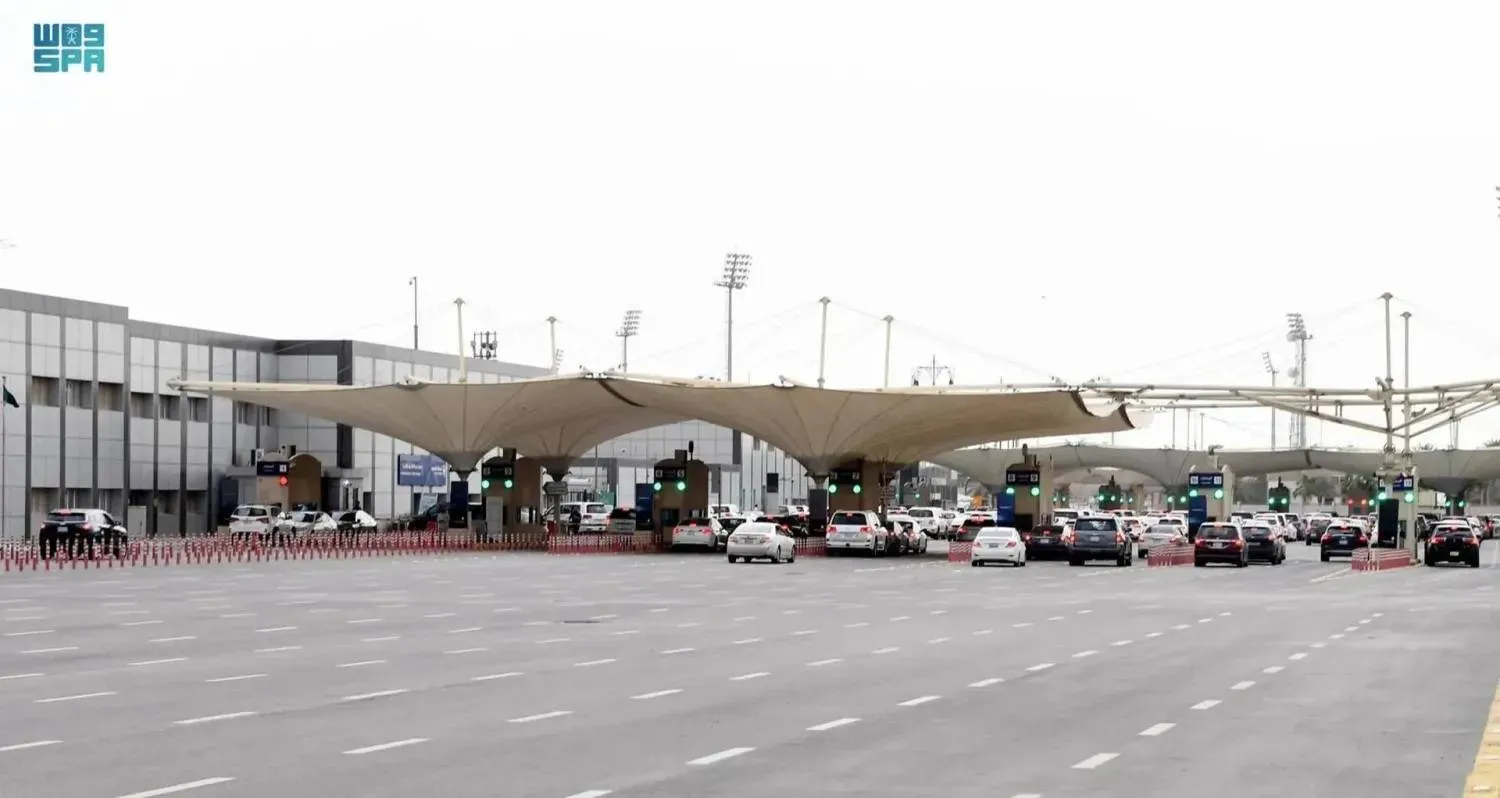
The King Fahd Causeway linking Saudi Arabia and Bahrain. (SPA)
TT

Saudi Arabia Grants Stranded Syrians, Egyptians Transit Visas

The King Fahd Causeway linking Saudi Arabia and Bahrain. (SPA)

Several ambassadors accredited to Saudi Arabia said their countries are coordinating closely with Saudi authorities to facilitate the entry and transit of their citizens through the Kingdom’s land crossings, amid the instability in the region.

Mohsen Mahbash, chargé d’affaires at the Syrian Embassy in Riyadh, said the embassy receives daily lists — coordinated with Syrian embassies across Gulf countries — that are sent to the Saudi Foreign Ministry to help stranded Syrian citizens obtain visas needed to transit overland through Saudi territory to Syria or other destinations.

Speaking to Asharq Al-Awsat, Mahbash said the embassy formed a committee from its diplomatic staff after flights were suspended to follow the issue. It also launched a WhatsApp hotline to receive inquiries from stranded citizens about procedures for obtaining visas that allow them to pass through the Kingdom to Syria by land or to third countries.

He said that from the first moments of the regional escalation and the suspension of flights due to military operations, the embassy began receiving inquiries and requests for assistance from Syrian citizens stranded at Saudi airports after their flights were canceled.

The embassy immediately contacted the Saudi Foreign Ministry to inquire about procedures that could help those cases obtain the visas needed to leave the Kingdom or transit through it to other destinations, he said.

Mahbash added that the Saudi Foreign Ministry circulated procedures for granting visas through official diplomatic channels to streamline the process and remove obstacles for citizens needing assistance.

Regarding pilgrims and visitors, Mahbash said the embassy continues coordinating with Syria’s ministries of religious endowments and tourism to monitor the movement of pilgrims and ensure their return to Syria.

He praised the Saudi Ministry of Hajj and Umrah for its immediate and daily coordination, noting that Umrah pilgrims’ trips and returns to Syria have so far proceeded without significant obstacles.

He reiterated his country’s position, issued by the Ministry of Foreign Affairs and Expatriates, condemning what it described as Iran’s unjustified escalation and attacks against countries in the region.

He also praised the Saudi Foreign Ministry, the Ministry of Hajj and Umrah, and the Interior Ministry for their direct and supportive response in assisting Syrian citizens affected by the current situation.

Egypt’s ambassador to Saudi Arabia Ehab Abu Srei told Asharq Al-Awsat that Saudi Arabia has shown a strong understanding of the difficult situation facing Egyptian visitors stranded in Gulf countries.

He said communication has taken place with the consular department at the Saudi Foreign Ministry regarding residents and visitors in the Kingdom and across Gulf countries, particularly Bahrain, adding that residents in all Gulf states face no restrictions on entering Saudi Arabia.

The Egyptian Embassy in Riyadh has urged Egyptian citizens stranded in neighboring Gulf countries that share land borders with Saudi Arabia to contact Egyptian embassies in those countries to take the necessary measures.

The embassy said this falls within the framework of the Saudi Foreign Ministry's generous initiative to allow emergency entry visas at land crossings, so that Saudi territory can be used for returning to Egypt.

Abu Srei also praised the political coordination between the two countries under the current circumstances, describing it as “high-level coordination.”

He reiterated Egypt’s position, condemning violations of the sovereignty of any Gulf Cooperation Council state, including Saudi Arabia, stressing that dialogue — not military operations — is the path to resolving disputes.

Meanwhile, Iraq’s Foreign Ministry welcomed Saudi Arabia’s approval of a request submitted by the Iraqi Embassy in Riyadh to grant transit visas to Iraqi citizens wishing to return home via Saudi territory through the Arar border crossing.

The ministry said the move followed ongoing diplomatic coordination among the Iraqi Embassy in Riyadh, the Saudi Foreign Ministry, and the relevant authorities.

It added that the necessary official approvals were obtained to grant entry visas for overland transit, in line with the Kingdom’s laws and regulations, ensuring smooth movement through air and land border crossings.



Jeddah Port Welcomes First Group of Sudanese Pilgrims

The directorate reaffirmed its readiness to manage pilgrim influxes at all ports -SPA
TT

Jeddah Port Welcomes First Group of Sudanese Pilgrims

The directorate reaffirmed its readiness to manage pilgrim influxes at all ports -SPA

The General Directorate of Passports at Jeddah Islamic Port welcomed the first group of Sudanese pilgrims arriving for the 1447 AH Hajj season, completing their entry procedures with speed and efficiency, SPA reported.

The directorate reaffirmed its readiness to manage pilgrim influxes at all ports by deploying state-of-the-art technology and multilingual, highly qualified personnel to ensure a smooth transit process.

Also on Friday, the General Directorate of Passports at Prince Mohammad bin Abdulaziz International Airport in Madinah welcomed the inaugural flight of Moroccan pilgrims arriving for the 1447 AH Hajj season.

The directorate reaffirmed its full readiness to manage the influx of pilgrims across all air, land, and sea ports by deploying state-of-the-art technology and multilingual, highly qualified personnel to ensure a smooth transit process.


King of Bahrain: Iran Must Cease Meddling in Our Internal Affairs

Bahrain’s King Hamad bin Isa Al Khalifa. (BNA file)
TT

King of Bahrain: Iran Must Cease Meddling in Our Internal Affairs

Bahrain’s King Hamad bin Isa Al Khalifa. (BNA file)

Bahrain’s King Hamad bin Isa Al Khalifa called on Thursday Iran to cease interfering in the internal affairs of his country and Arab Gulf nations, stressing that the “nation comes above all and that Bahrain is a trust borne by all its citizens.”

In remarks to the media, he said the recent Iranian attacks against Bahrain’s “security, stability, and the safety of its people exposed those who betrayed the nation and aligned themselves with the enemy.”

“In times when nations face mounting challenges and when people are test, true positions are revealed,” he added, noting: “While the Bahrain Defense Force remained highly vigilant in defense of the kingdom, a small group of individuals chose to collaborate with the enemy and cooperated with those who violated national sovereignty.”

“This was a grave act of treason and an unforgivable crime,” he declared in remarks carried by Bahrain’s state news agency BNA.

King Hamad stressed that Iran must cease meddling in the internal affairs of Bahrain and Gulf Cooperation Council countries, expressing his “deep anger” over the recent developments and adding that the people of Bahrain share this sentiment.

He questioned “how one could not feel anger when those entrusted with the nation’s interests have betrayed it, and when those elected to represent the people stood with traitors who were rejected by public.”

“Public opinion stands united in rejecting such actions and called for the expulsion of those who cooperated” with Iran’s aggression, he went on to say.

“Those who betray the nation do not deserve the honor of belonging to it or the privilege of living on its land. Citizenship is not merely granted, but a binding covenant, and those who break it forfeit their right to it,” announced King Hamad.

Moreover, he expressed regret over the positions of some lawmakers “who sided with traitors instead of upholding their responsibility to protect national interests.”

He underscored the importance of maintaining unity and integrity within the Council of Representatives, adding: “Those who chose to align themselves with those who attacked the nation should go to them, as there is no place among the people for those who side with the country’s enemies.”

“The peoples of the GCC fully support the rulings against those found guilty of betrayal, including imprisonment and the revocation and withdrawal of nationality, and have called for further measures,” he went on to say.

“These deterrent measures are not acts of retribution, but a safeguard for the majority of loyal citizens, and a necessary step to prevent circumstances that could require the armed forces to assume control under military provisions in defense of Bahrain,” said King Hamad.

“Those lawmakers face two options: either to issue a clear apology to the people of Bahrain that restores trust, or to join those they chose to align with, who have left the country or been expelled under final court rulings for acts of betrayal,” he warned.

He stressed that parliamentary membership “is a trust and representation is an honor not deserved by those whose actions are tainted by betrayal. There is no place for them among the people, nor any honor in representing them going forward.”

Furthermore, King Hamad said that stability will not be restored, nor will normal life resume, “until ranks are cleansed of every traitor and accomplice.”

He reiterated that “the nation stands above all and that Bahrain is a trust borne by all.”


UAE Announces Travel Ban on Nationals to Iran, Lebanon and Iraq

The flag of the UAE. (Asharq Al-Awsat)
TT

UAE Announces Travel Ban on Nationals to Iran, Lebanon and Iraq

The flag of the UAE. (Asharq Al-Awsat)

The United Arab Emirates foreign ministry on Thursday announced a travel ban on Emirati nationals going to Iran, Lebanon and Iraq, citing regional developments including the Middle East war.

Iran has targeted the Gulf nation throughout the Middle East conflict sparked by a US-Israeli attack before a fragile ceasefire was announced, including missiles fired at civilian and energy infrastructure.

"In light of current regional developments, the Ministry of Foreign Affairs (MoFA) announces a travel ban on UAE nationals travelling to the Islamic Republic of Iran, the Lebanese Republic, and the Republic of Iraq," state news agency WAM reported.

It said the ministry called on "all UAE nationals currently in these countries to expedite their immediate return" to the UAE.