


US Consumer Prices Likely Increased in February Ahead of Iran Conflict

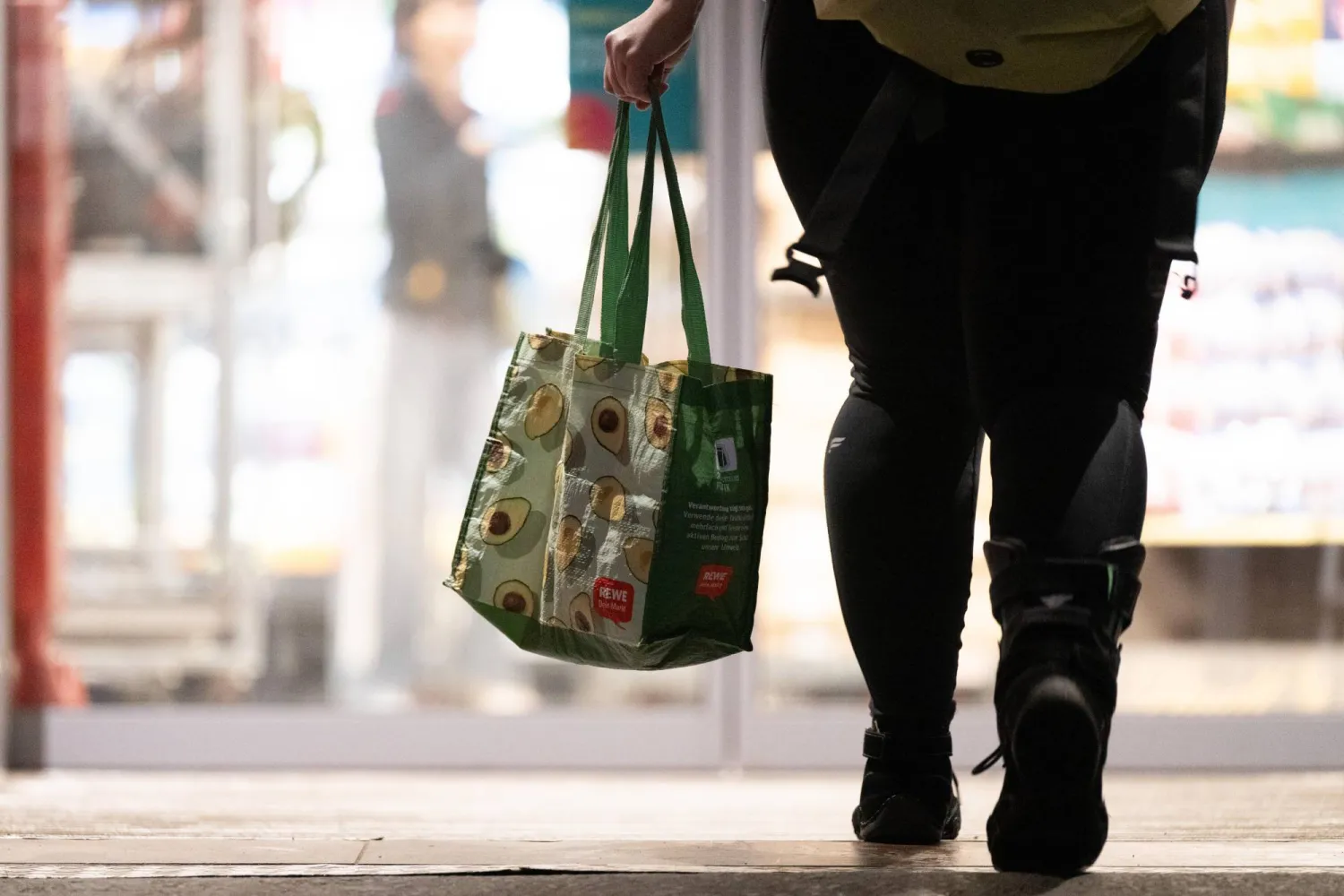
09 December 2025, Saxony, Dresden: A woman walks into a supermarket. (dpa)
TT

US Consumer Prices Likely Increased in February Ahead of Iran Conflict

09 December 2025, Saxony, Dresden: A woman walks into a supermarket. (dpa)

US consumer prices likely picked up in February as the cost of gasoline increased in anticipation of an escalating war in the Middle East, and with the conflict driving up oil prices, a further rise in inflation is expected in March.

The anticipated increase in the Consumer Price Index last month would also reflect the continued, but staggered pass-through from President Donald Trump's sweeping tariffs, which he pursued under a law meant for use in national emergencies, that have since been struck down by the US Supreme Court.

The Labor Department's consumer inflation report on Wednesday is, however, expected to show underlying price pressures rising moderately last month, thanks to relatively cheaper used motor vehicles and airline fares. It is unlikely to have any impact on near-term monetary policy, with the Federal Reserve expected to keep interest rates unchanged next week.

"The February CPI is likely to show that progress on lowering inflation is stalling out again," said Sarah House, ‌a senior economist at Wells ‌Fargo.

"Although the conflict in the Middle East started at the end of February, oil ‌and ⁠gasoline prices were ⁠already rising last month in anticipation of an escalation," House said.

The CPI likely increased 0.3% last month after climbing 0.2% in January, a Reuters survey of economists predicted. Estimates ranged from a 0.1% rise to a 0.3% increase. In the 12 months through February, the CPI was estimated to have advanced 2.4%, which would match January's increase, and reflect last year's high readings dropping out of the calculation.

The US central bank tracks the Personal Consumption Expenditures price indexes for its 2% inflation target.

Economists estimated that gasoline prices rose by about 0.8% in the CPI report after declining for two straight months.

Prices at the pump have jumped by more than ⁠18% to $3.54 per gallon since the US-Israeli war on Iran started at the end of February, ‌data from motorist advocacy group AAA showed. Oil prices shot up well ‌above $100 per barrel, before pulling back on Tuesday after Trump stated the war could end soon.

UPSIDE RISK TO FOOD PRICES FROM WAR

"The ‌recent 15% move alone suggests a 0.15-0.30 percentage point lift to headline inflation depending on how the conflict evolves," said ‌Andy Schneider, a senior US economist at BNP Paribas Securities.

Food prices likely maintained a moderate pace of increase, though Schneider added "a sustained oil price shock would raise fertilizer and transportation costs that could push food inflation higher later in the year."

Excluding the volatile food and energy components, the CPI was forecast to have gained 0.2% after rising 0.3% in January. The so-called core CPI inflation was likely curbed by a ‌decline in used motor vehicle prices, as well as smaller increases in rents and airline fares.

But prices for goods like apparel and household furnishings likely increased solidly as businesses passed ⁠on tariffs. January's Producer Price Index ⁠report showed a widening in margins, including for apparel, footwear and accessories retailing.

Though businesses have absorbed much of the import duties, economists said they were unlikely to continue doing so, citing among others persistently higher readings of input costs in the Institute for Supply Management surveys.

Trump has responded to the Supreme Court ruling by imposing a 10% global tariff, which he said would rise to 15%.

"The trouble is that there is evidence that input costs continue to escalate, even as the level of tariffs has mostly stabilized," said Stephen Stanley, chief US economist at Santander US Capital Markets. "The pass-through dynamic could persist for a while."

In the 12 months through February, the core CPI inflation is forecast to have increased 2.5% after rising by the same margin in January, also reflecting favorable base effects.

Economists said the tame core CPI readings were unlikely to translate into moderate core PCE inflation gains in February. January's delayed PCE price index data due on Friday is expected to show a solid increase in core inflation.

"Weighting differences and unexpected strength in PPI service prices are likely to produce a significantly larger increase in the broader consumption index," said Lou Crandall, chief economist at Wrightson ICAP. "Similar effects are likely to give the core PCE price index an upward bias in the February data due out on April 9."



IEA Agrees to Record Release of Emergency Oil Reserves in an Effort to Calm Surging Prices

FILE PHOTO: A pump jack operates outside of Midland, Texas, US June 11, 2025. REUTERS/Eli Hartman/File Photo
TT

IEA Agrees to Record Release of Emergency Oil Reserves in an Effort to Calm Surging Prices

FILE PHOTO: A pump jack operates outside of Midland, Texas, US June 11, 2025. REUTERS/Eli Hartman/File Photo

The International Energy Agency agreed Wednesday to release the largest volume of emergency oil reserves in its history, in a bid to counter the effects on energy markets of the war in the Middle East.

The Paris-based organization said it will make 400 million barrels of oil available from its members’ emergency reserves. It’s a larger stock than the 182.7 million barrels that were released in 2022 by the IEA's 32 member countries in response to Russia’s full-scale invasion of Ukraine.

“Without sufficient routes to market and with no more available storage, Middle East oil producers have started to reduce production," IEA executive director Fatih Birol said. "And we have seen further attacks and damage to energy and energy-related infrastructure. Refinery operations have also been disrupted, with major implications for jet fuel and diesel supplies in particular.”

IEA member countries currently hold over 1.2 billion barrels of public emergency oil stocks, with a further 600 million barrels of industry stocks held under government obligation.

In response to US and Israeli strikes, Iran has attacked commercial ships across the Persian Gulf, escalating a campaign of squeezing the oil-rich region as global energy concerns mount.

Iran has effectively stopped cargo traffic in the narrow Strait of Hormuz through which about a fifth of all oil is shipped from the Persian Gulf toward the Indian Ocean. It has also targeted oil fields and refineries in Gulf Arab nations, aiming at generating enough global economic pain to pressure the United States and Israel to end their strikes.

Germany and Austria said earlier Wednesday they would release parts of their oil reserves following an IEA request for members to release the record 400 million barrels to help temper energy price spikes due to the Iran war. Japan also said it will release some of its reserves starting Monday.

Group of Seven energy ministers met Tuesday at IEA headquarters in Paris to look at ways to bring down prices. Birol said afterward that they discussed all available options, including making IEA emergency oil stocks available to the market.

The IEA reserves were established in 1974 following the Arab oil embargo.

“This is a major action aiming to alleviate the immediate impacts of the disruption in markets,” Birol added. "But, to be clear, the most important thing for a return to stable flows of oil and gas is the resumption of transit through the Strait of Hormuz.”

The G7 is comprised of the leading industrialized nations of Canada, the United States, France, Italy, Japan, Germany and Britain. Austria is not a member. The group's leaders were set to hold a meeting via videoconference later Wednesday to discuss energy issues.

The German economy ministry, Katherina Reiche, said the IEA asked Germany to release 2.64 million tons of its oil reserves. It was not immediately clear how much Austria was releasing.

She said it would take a couple of days before the delivery of the first quantities.

“Germany stands behind the IEA’s most important principle of mutual solidarity," Reiche said.

The G7 energy ministers announced Tuesday that they supported in principle “the implementation of proactive measures to address the situation, including the use of strategic reserves.”

According to the IEA, export volumes of crude and refined products are currently at less than 10% of prewar levels.

Austrian Economy Minister Wolfgang Hattmannsdorfer said his country was releasing part of the emergency oil reserve and extending the national strategic gas reserve, adding: “One thing is clear: in a crisis, there must be no crisis winners at the expense of commuters and businesses.”

The German government also said it will introduce a measure to allow gas stations in Germany to raise fuel prices no more than once a day. The federal government wants to introduce this as quickly as possible, Reiche said.

In Austria, starting Monday, price increases at gas stations will be allowed only three times a week, the country’s economy minister said.


Iran Tells World to Get Ready for $200 a Barrel

This general view shows the Humber Refinery, operated by Phillips 66, near South Killingholme, north-east England on March 11, 2026. World oil prices surged more than five percent on March 11 as the Middle East war disrupted crude exports. (Photo by Oli SCARFF / AFP)
TT

Iran Tells World to Get Ready for $200 a Barrel

This general view shows the Humber Refinery, operated by Phillips 66, near South Killingholme, north-east England on March 11, 2026. World oil prices surged more than five percent on March 11 as the Middle East war disrupted crude exports. (Photo by Oli SCARFF / AFP)

Iran's military command said on Wednesday the world should be prepared for oil to hit $200 a barrel, as three more ships came under attack in the blockaded Gulf.

Iran fired at Israel and targets across the Middle East on Wednesday, demonstrating it can still fight back and disrupt energy supplies despite what the Pentagon has described as the most intense US-Israeli strikes yet.

Oil prices that shot up earlier this week have eased and stock markets have rebounded, with investors betting for now that US President Donald Trump will find a quick way to end the war he began alongside Israel nearly two weeks ago.

But so far there has been no let-up on the ground, or any sign that ships can safely sail through the Strait of Hormuz, where a fifth of the world's oil has been blockaded behind a narrow channel along the Iranian coast in the worst disruption to energy supplies since the oil shocks of the 1970s.

"Get ready for oil to be $200 a barrel, because the oil price depends on regional security which you have destabilised," Ebrahim Zolfaqari, spokesperson for Iran's military command, said in comments addressed to the United States.

After offices of a bank in Tehran were hit overnight, Zolfaqari also said Iran would respond with attacks on banks that do business with the United States or Israel. People across the Middle East should stay 1,000 metres from banks, he added.

Bahrain's Civil Aviation Affairs said on Wednesday that several Gulf Air aircraft without passengers, and some cargo airplanes, were relocated to alternative airports to "ensure the continuity and efficiency of air operations" during the crisis.

Three more merchant ships were struck in the Gulf by unknown projectiles, according to agencies that monitor maritime security, raising the number of ships reportedly hit since the war began to 14.

Crew were evacuated from a Thai-flagged bulk freighter after an explosion caused a fire. A Japanese-flagged container ship and a Marshall Islands-flagged bulk carrier also sustained damage.

Oil prices, which shot up briefly to nearly $120 a barrel on Monday, have since settled around $90, suggesting investors are betting Trump will be able to halt the war and reopen the strait soon.

But governments are still discussing drastic action. The International Energy Agency was expected to recommend releasing 400 million barrels from global strategic reserves, a record.

That would take months and amount to just three weeks' flow through the strait.


Gold Eases as Firmer Dollar, Lingering Inflation Concerns Weigh

A saleswoman adjusts gold jewellery for sale at a shop in Lianyungang in China eastern Jiangsu province - AFP
TT

Gold Eases as Firmer Dollar, Lingering Inflation Concerns Weigh

A saleswoman adjusts gold jewellery for sale at a shop in Lianyungang in China eastern Jiangsu province - AFP

Gold prices edged lower on Wednesday, weighed down by an uptick in the US dollar and looming inflation concerns that boosted the likelihood of higher interest rates.

Spot gold was down 0.3% at $5,177.50 per ounce, as of 9:18 a.m. ET (1318 GMT). US gold futures for April delivery fell 1.1% to $5,185.20.

The US dollar index inched up 0.3%. A stronger US currency makes dollar-priced commodities more expensive for holders of other currencies, Reuters reported.

"The gold market seems to be in a push-and-pull between safe-haven demand driven by the war and concerns over higher-for-longer interest rates," said Peter Grant, vice president and senior metals strategist at Zaner Metals.

Gold is often seen as a hedge against uncertainty and inflation, but it does not yield interest, making it less attractive when rates are high.

On the geopolitical front, Iran fired at Israel and targets across the Middle East, while at least three ships were hit in the Gulf, demonstrating Tehran can still fight back and disrupt energy supplies despite the most intense US-Israeli strikes yet.

Meanwhile, oil prices rebounded as markets doubted whether the International Energy Agency's plan for a record release of oil reserves could offset potential supply shocks from the conflict. Higher oil prices risk stoking inflation by raising energy and transport costs across the economy.

Data showed the US consumer price index rose 0.3% in February, in line with forecasts and above January's 0.2% increase. CPI rose 2.4% in the year to February, also matching expectations.

Analysts at Standard Chartered noted it is not unusual for gold to experience downside pressure for several weeks amid a need for cash.

"We maintain our positive longer-term view and expect gold to resume its uptrend beyond near-term profit-taking," they added.

Among other metals, spot silver fell 3.1% to $85.67 per ounce, spot platinum lost 0.5% to $2,189.35, and palladium slipped 1.3% to $1,633.30.