


Trump Administration Denounces CNN for Airing Messages from Iranian Leaders

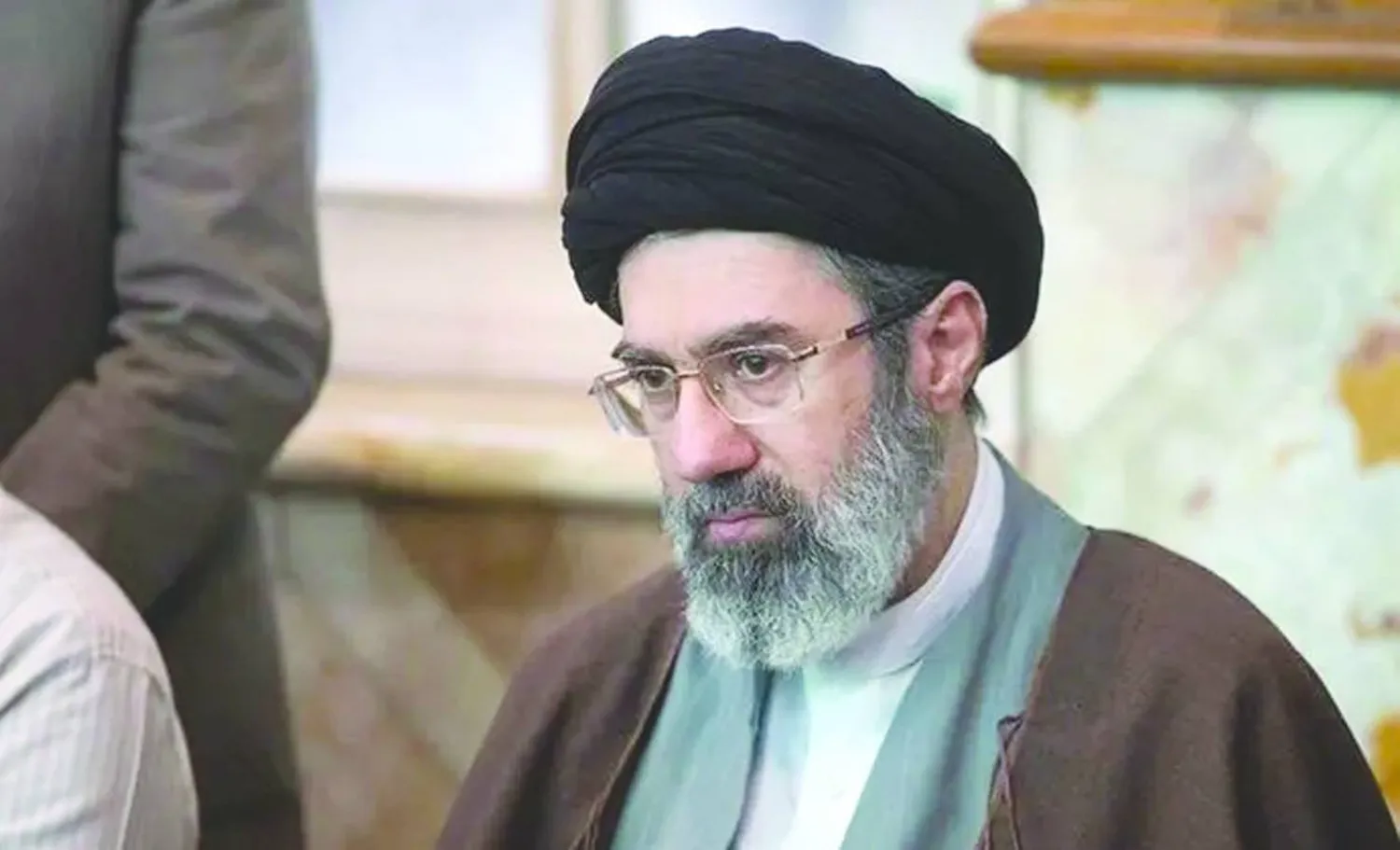
The new Iranian leader, Mojtaba Khamenei (archive - Tasnim)
TT

Trump Administration Denounces CNN for Airing Messages from Iranian Leaders

The new Iranian leader, Mojtaba Khamenei (archive - Tasnim)

The Trump administration denounced CNN on Thursday for airing a portion of the new Iranian supreme leader's public statement, the second time in three days that he's targeted the network for reporting on how the regime is responding to the American attacks.

The attack illustrated the care news outlets must take in reporting during wartime, and the responsibilities of American journalists to report the perspective of countries its government views as enemies. It also exposed inconsistencies. The message of Supreme Leader Mojtaba Khamenei during his first public statement since he succeeded his father, who was killed in an Israeli airstrike, was widely available elsewhere.

The White House said on social media that “fake news CNN just aired four straight minutes of uninterrupted Iranian state TV, run by the same psychotic and murderous regime that prided itself on brutally slaughtering Americans for 47 years.”

Earlier CNN interview criticized by Trump's communications leader Two days earlier, White House communications director Steven Cheung took issue with CNN anchor Erin Burnett's interview with Hossein Mousavian, a former Iranian nuclear negotiator. Burnett asked Mousavian what he had been hearing about the Iranian government's interest in having talks with the United States. There wasn't much, he said.

“Ever notice how CNN just regurgitates quotes and unverified information from Iranian terrorists?” Cheung wrote on X. “Total disgrace. They have become the murderous Iranian Regime's version of Pravda,” he said, referring to the official newspaper of the former Soviet Union.

CNN did not address Cheung's statement but did respond to the White House attack on Thursday. It noted that CNN, Sky News and Al Jazeera also showed portions of the Iranian leaders’ statement live.

“The world is watching with anticipation which direction this war will take,” CNN said. “Purported remarks from Iran's new supreme leader are a critical component in helping audiences understand where this conflict is heading and were aired for their obvious news value.”

Other news outlets, including The Associated Press, sent out alerts on what Khamenei said. His vow to keep up attacks on other Arab countries in the region and plans to choke off the world's oil supply were headlines. The New York Times led its website with a story on the speech in its immediate aftermath, later writing that the speech “was an early indication of how the new supreme leader would approach the war, as well as how he would lead the country.”

CNN has long been a favored target of President Donald Trump, dating back to his first term. It's a particularly vulnerable time for the network with Paramount Global's agreement to purchase CNN's parent company, Warner Bros. Discovery, raising questions about its future editorial independence.

CNN showed a news anchor reading a portion of Khameini's remarks in Farsi, with an English translation. It did not air them in full. After the speech, correspondent Nick Paton Walsh gave a debrief to anchor Kate Bolduan, noting how the non-appearance of the leader — reportedly injured in an air attack — was as important as what he said.

“We were waiting to see the face of the man to have proof of his health and survival,” Walsh said, “and they've not met that moment. Instead, a handwritten message, it seems, that mostly reiterates things we kind of already knew.”

A social media message board for Iran's point of view The Tech Transparency Project has reported that several Iranian leaders and institutions maintain verified accounts on X, formerly Twitter, owned by Trump ally Elon Musk. CNBC said Thursday that Khamenei has one of them, and an X account with his portrait posted the text of his remarks, available in Farsi and in an English translation.

Even though Khamenei's father is dead, an account with his portrait was active on Thursday, mainly reposting messages from his son. “The revenge we have in mind is not just because of the martyrdom of the illustrious Leader of the Revolution,” read one message posted Thursday. “Every member of the nation martyred by the enemy is a separate case that demands we seek revenge.”

X is officially blocked in Iran, though many use a virtual private network to bypass restrictions. A message sent to the platform on Thursday was not immediately returned.

There's a long history of journalists seeking interviews with world leaders, even when they are regarded as enemies of the United States. Most notable was “60 Minutes” correspondent Mike Wallace's interview with Iran's Khomeini in 1979, when that country was holding Americans hostage.

Thursday's remarks by Iran's new supreme leader were absolutely newsworthy and legitimate for CNN to air them, said Jane Ferguson, a veteran international correspondent and founder of the journalism platform Noosphere. It's not the job of government leaders to pick apart what CNN is reporting, she said.

“We've always faced this,” she said, about when reporters interview leaders or other figures hostile to American interests. “This has been a bit of low-hanging fruit for awhile.”

Historian Douglas Brinkley of Rice University said that it's unfair for CNN to be singled out in this instance. He, too, believes it is newsworthy to learn what leaders of an adversary are thinking, but it's important to make sure that journalists are careful.

“You have to be leery of being used as a propaganda tool by the Iranian regime,” he said. “On the other hand, knowing what the enemy is saying and looking for a sign of a peace offering or a nuance is important ... It's a difficult balance.”



Russian Missile Kills Three on Bus in East Ukraine

This photograph shows residential buildings heavily damaged by a Russian air strike at the beginning of the full-scale invasion, where more than 50 people were killed, in the center of the city of Izium, Kharkiv region on March 10, 2026, amid the Russian invasion of Ukraine. (AFP)
TT

Russian Missile Kills Three on Bus in East Ukraine

This photograph shows residential buildings heavily damaged by a Russian air strike at the beginning of the full-scale invasion, where more than 50 people were killed, in the center of the city of Izium, Kharkiv region on March 10, 2026, amid the Russian invasion of Ukraine. (AFP)

A Russian strike in eastern Ukraine on Friday killed three people on a bus near the embattled town of Kupiansk, which Moscow's army is battling to recapture, investigators said.

The wider Kharkiv region, which borders Russia, was partly occupied when Russian forces invaded in February 2022, but was largely liberated by Ukraine months later.

"Three people were killed as a result of the strike: the bus driver and two passengers," local investigators announced.

The bus was near the village of Nova Oleksandrivka when it was hit by an Iskandr missile, they added. Investigators posted images of a red bus with its windows blown out.

There was no immediate comment from the Kremlin, which claims its forces do not target civilians.

Peace talks spearheaded by the United States aiming to halt more than four years of fighting have been derailed by the US-Israeli war with Iran.

Russia's invasion sparked the bloodiest war in Europe since World War II, forcing the displacement of millions and leaving hundreds of thousands of soldiers and civilians dead on both sides.


Türkiye Says Third Ballistic Missile from Iran Shot Down

 This handout photograph taken and released on March 9, 2026, by Turkish news agency DHA (Demiroren News Agency) shows part of a second Iranian ballistic missile destroyed by NATO in Turkish airspace. (Photo by Handout / DHA (Demiroren News Agency) / AFP)
This handout photograph taken and released on March 9, 2026, by Turkish news agency DHA (Demiroren News Agency) shows part of a second Iranian ballistic missile destroyed by NATO in Turkish airspace. (Photo by Handout / DHA (Demiroren News Agency) / AFP)
TT

Türkiye Says Third Ballistic Missile from Iran Shot Down

 This handout photograph taken and released on March 9, 2026, by Turkish news agency DHA (Demiroren News Agency) shows part of a second Iranian ballistic missile destroyed by NATO in Turkish airspace. (Photo by Handout / DHA (Demiroren News Agency) / AFP)
This handout photograph taken and released on March 9, 2026, by Turkish news agency DHA (Demiroren News Agency) shows part of a second Iranian ballistic missile destroyed by NATO in Turkish airspace. (Photo by Handout / DHA (Demiroren News Agency) / AFP)

Türkiye’s defense ministry on Friday said a ballistic missile from Iran had been shot down in Turkish airspace by NATO forces in the third such incident of the Middle East war. 

"A ballistic munition launched from Iran and entering Turkish airspace was neutralized by NATO air and missile defense assets deployed in the eastern Mediterranean," a ministry statement said. 

Hours earlier, sirens wailed at Türkiye’s southern Incirlik airbase, a key NATO facility where US troops are stationed, state news agency Anadolu reported. 

Local media also reported sirens in Batman, 600 kilometers (370 miles) further east. 

NATO air defenses shot down a first ballistic missile fired from Iran on March 4, with a second intercepted on Monday. 

Residents of the southern city of Adana, next to Incirlik, were woken by sirens at 3:25 am (0025 GMT) and several posted footage of a fast-moving object that appeared to be on fire, the Ekonomim business news website reported. 

Separately, sirens sounded in Batman around 4:00 am, with reporters saying the alarm appeared to be coming from a military drone base next to the city's airport. 

Monday's incident prompted Washington to close its consulate in Adana and urge all US citizens to leave southeastern Türkiye. 

Iranian President Masoud Pezeshkian denied the missile had been fired from Iran in a phone call to Türkiye’s Recep Tayyip Erdogan. 

Since the US-Israeli war on Iran started on February 28, Tehran has retaliated with strikes across the Middle East. 

Incirlik is an important NATO facility used by US troops for decades, but which also hosts military personnel from Spain and Poland, its website says. 

US troops are also stationed at Kurecik, a base in the central Malatya province, where they man an early-warning radar system NATO describes as a "key element" of its missile shield that can detect Iranian missile launches. 

Although Ankara has categorically denied radar data has ever been used to help Israel, its presence has rattled Tehran. 

On Tuesday, Türkiye said a Patriot missile defense system was being deployed in Malatya just days after NATO moved to strengthen its "alliance-wide ballistic missile defense posture". 


Russia Says It Doesn't See Iran Crisis Reducing US Interest in Ukraine Peace Talks

FILE PHOTO: Kremlin spokesman Dmitry Peskov attends a meeting of Russian President Vladimir Putin with Palestinian President Mahmoud Abbas at the Kremlin in Moscow, Russia, January 22, 2026. REUTERS/Ramil Sitdikov/Pool/File Photo
TT

Russia Says It Doesn't See Iran Crisis Reducing US Interest in Ukraine Peace Talks

FILE PHOTO: Kremlin spokesman Dmitry Peskov attends a meeting of Russian President Vladimir Putin with Palestinian President Mahmoud Abbas at the Kremlin in Moscow, Russia, January 22, 2026. REUTERS/Ramil Sitdikov/Pool/File Photo

Russia is not concerned at this point that the Iran crisis will reduce US interest in mediating ‌peace talks ‌on Ukraine, ‌Kremlin ⁠spokesman Dmitry Peskov said ⁠on Friday.

"No, there are no such concerns at ⁠this time; our ‌contacts with ‌our American ‌counterparts provide ‌no grounds for such doubts," Peskov told reporters in ‌response to a question.

Russia is ⁠expecting ⁠a new round of negotiations, but has nothing to announce yet on the timing, he said.