


At Heart of the Crisis, Gulf States Act as Global Shock Absorbers

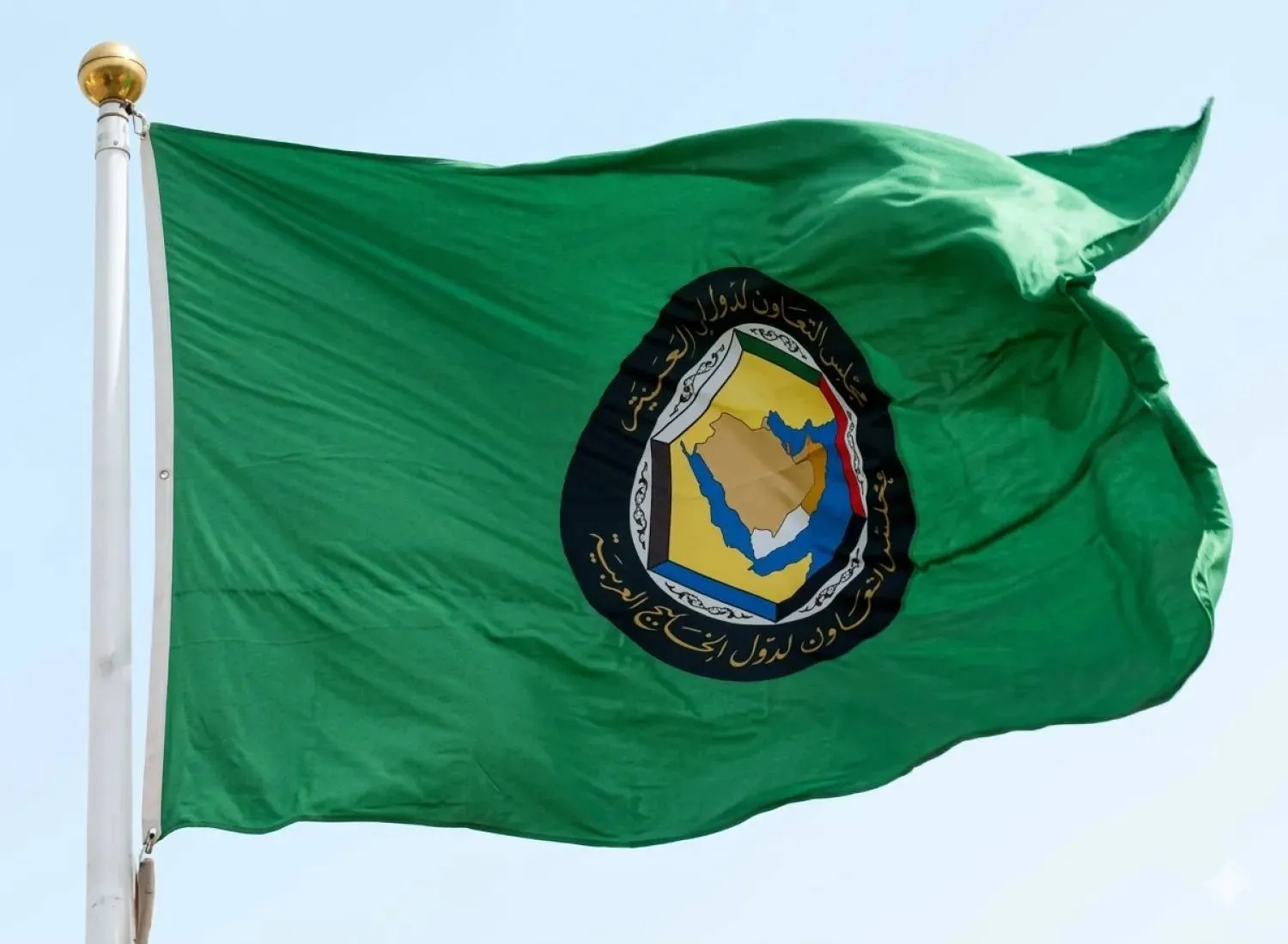
The flag of the Gulf Cooperation Council General Secretariat. (Asharq Al-Awsat)
TT

At Heart of the Crisis, Gulf States Act as Global Shock Absorbers

The flag of the Gulf Cooperation Council General Secretariat. (Asharq Al-Awsat)

As the US-Israeli war against Iran entered its 18th day, fast-moving geopolitical shifts in the Middle East have again thrust Gulf Cooperation Council (GCC) states into focus as a pillar of global economic stability, particularly in energy markets, international trade, and supply chains.

As supply chains strain under the weight of conflict, GCC economies are emerging as a stabilizing force in global trade and energy, backed by a $2.3 trillion economic bloc. Ranked ninth globally, the region is no longer just an energy exporter, but a major financial and investment center in the international system.

That role is heightened by the Gulf’s geography, linking some of the world’s most critical trade and energy routes, especially the Strait of Hormuz. Disruption to the vital passage has fueled fears of surging energy prices and supply chain breakdowns.

Hamza Dweik, head of trading for the Middle East and North Africa at Saxo Bank, said the Gulf’s stabilizing role goes beyond theory, with direct impact on market dynamics.

The region sits at the crossroads of key energy arteries, giving it unusual capacity to steady markets or amplify volatility when risks rise, Dweik told Asharq Al-Awsat.

He pointed to the Strait of Hormuz, one of the world’s most sensitive energy chokepoints, where oil flows averaged about 20 million barrels per day in 2024, roughly 20% of global petroleum liquids consumption.

Oil market shock absorbers

From an energy standpoint, Dweik said the global economy relies on Gulf states for two core functions: steady oil supplies and the ability to absorb market shocks.

Spare production capacity concentrated in Gulf producers within OPEC+ allows markets to rebalance during disruptions, making the region a key stabilizer in global oil markets.

The Gulf’s influence extends beyond oil into liquefied natural gas. Qatar accounted for about 18.8% of global LNG exports in 2024, according to International Gas Union data, underscoring how gas prices are exposed to regional disruptions.

Trade and supply chains

The Gulf’s role also spans global trade and logistics, as international supply chains show clear signs of fragility.

Rising risks along maritime routes tied to the region, including the Red Sea and the Suez Canal, are not only delaying shipments but also pushing up transport and insurance costs, adding to global inflationary pressure.

The United Nations Conference on Trade and Development (UNCTAD) has warned that disruptions in key shipping corridors can raise freight costs and curb global trade when vessels are forced to reroute.

Global impact

Vijay Valecha, Chief Investment Officer at Century Financial, said Gulf states are central to global economic stability given their position at the heart of major energy and trade routes.

About 27% of global seaborne oil trade passes through the Strait of Hormuz, along with a nearly similar share of LNG supplies, meaning any disruption there amounts to a global supply shock, he told Asharq Al-Awsat.

Since the war began, shipping traffic through the strait has dropped sharply, prompting Gulf states to act quickly to safeguard energy flows to global markets.

Valecha said Gulf producers have turned to alternative pipelines to bypass the Strait of Hormuz and maintain exports.

Saudi Arabia’s East-West pipeline runs nearly 1,200 km from Abqaiq to the Red Sea port of Yanbu, with a capacity of about 7 million barrels per day.

The United Arab Emirates operates the Habshan-Fujairah pipeline, which moves crude from inland fields to Fujairah on the Gulf of Oman, with a capacity of about 1.5 million barrels per day.

But these alternatives cannot fully replace volumes that typically pass through Hormuz, underscoring the strait’s critical importance to global markets.

Global investments

Beyond energy, Gulf sovereign wealth funds play a key role in stabilizing the global financial system, with combined assets of about $5.6 trillion, or roughly 36% of the world’s sovereign wealth fund assets.

Investments span equities, bonds, and infrastructure worldwide, supporting capital flows and financial stability.

However, Valecha said prolonged tensions could push some funds to redirect investments inward or toward defense spending, with potential knock-on effects for global markets.

The impact of the tensions is already visible. Oil prices have swung sharply since the war began, while maritime shipping costs have climbed.

International Monetary Fund estimates show that a 10% rise in energy prices over a full year could lift global inflation by about 40 basis points and slow global growth by between 0.1 and 0.2 percentage points.

Together, these dynamics underscore a shift in the Gulf’s global role. GCC states are no longer just energy suppliers, but a central pillar of global economic stability, across oil and gas, trade, and investment.

As geopolitical and economic shifts deepen, the region’s importance is set to grow, not only as an energy hub but as a key anchor for the global economy in times of crisis.



What Does the Inclusion of Saudi Bonds in the J.P. Morgan Index Mean?

Saudi woman walks at the Saudi stock market in Riyadh - Reuters
TT

What Does the Inclusion of Saudi Bonds in the J.P. Morgan Index Mean?

Saudi woman walks at the Saudi stock market in Riyadh - Reuters

Saudi Arabia’s debt market is set for a strategic shift in early 2027, following J.P. Morgan’s announcement that local-currency bonds will be included in its global emerging markets bond index. The move represents a vote of confidence in the Kingdom’s structural reforms and is expected to open the door to substantial capital inflows that will help finance major economic transformation projects.

In a note, J.P. Morgan said the move follows a series of reforms to improve foreign investor access and enhance local market capabilities.

The bank added that Saudi sukuk, Shariah-compliant debt instruments that function similarly to bonds, with a remaining maturity of up to 15 years, will be eligible for inclusion in the Government Bond Index-Emerging Markets (GBI-EM), the most widely tracked benchmark of its kind, with $233 billion in assets tracking it.

J.P. Morgan said eight sukuk issues would be eligible for inclusion, with a total value of $69 billion.

The Kingdom’s inclusion in the index is expected to boost liquidity and demand for sovereign debt, contributing to lower borrowing costs.

In September, J.P. Morgan had placed Saudi Arabia on “Positive Index Watch,” paving the way for its eventual inclusion in the GBI-EM.

Commenting on the decision, Saudi Finance Minister Mohammed Al-Jadaan told Bloomberg that the move reflects continued confidence in the Kingdom’s economic transformation trajectory. He said the inclusion marks a new milestone in Saudi Arabia’s integration into global financial markets, adding that its immediate impact will be seen in broadening and diversifying the investor base and supporting long-term capital inflows into the domestic debt market, thereby strengthening the resilience and stability of the national economy.

The Significance of the Index

The importance of J.P. Morgan’s index lies in its role as a benchmark guiding major global fund allocations, particularly passive funds that track indices automatically. With an expected weighting of around 2.52 percent, Saudi bonds will become a core component of international investor portfolios, increasing government bond liquidity and reducing borrowing costs over the long term, a critical factor for the Kingdom’s economy.

Passive funds play a key role in ensuring steady inflows. Trillions of dollars globally are managed through such funds. Once Saudi Arabia is included in the index, these funds will purchase Saudi bonds to remain aligned with it. Unlike active investors, they do not rapidly buy or sell based on daily news or market sentiment, but continue to hold bonds as long as they remain in the index, providing significant stability to the Saudi debt market. Their participation also ensures a constant base of large-scale buyers, facilitating bond trading at any time.

Reforms That Paved the Way

This inclusion is the result of a series of regulatory reforms highlighted by the bank in its note. Saudi Arabia has improved international investor access by linking to the global Euroclear system, expanding its network of primary dealers to include international banks, and facilitating cross-border settlement and trading. These measures have enhanced legal certainty and transparency, making the Saudi debt market an attractive and secure destination for foreign capital.

Financial Stability Amid Regional Challenges

Beyond its economic dimensions, the move carries strategic significance amid ongoing geopolitical tensions in the region. Increased inflows into local bonds are expected to strengthen the government’s ability to manage any economic fallout from regional instability. It underscores the resilience and attractiveness of the Saudi economy, demonstrating its capacity to attract quality investment and secure the financing needed for its development plans regardless of external challenges.


S&P Warns African Sovereign Credit Rating Risks Likely to Worsen

Central Bank of Egypt building (A.P.)
TT

S&P Warns African Sovereign Credit Rating Risks Likely to Worsen

Central Bank of Egypt building (A.P.)

S&P Global Ratings warned on Thursday that the risks to African sovereign credit scores were likely to worsen the longer the Middle East war drags on.

The ratings agency said that higher fuel and fertilizer import costs would increase inflation and fiscal strains for countries, "potentially leading to rating pressure".

Egypt, Mozambique and Rwanda are among the "most exposed" the agency said, although Egypt's deep domestic capital markets and Rwanda's high levels of concessional debt provide some offset, according to Reuters.

Less exposed are net-oil exporters Nigeria, Angola and Congo-Brazzaville as well as Morocco, due to stronger foreign-currency reserves.

S&P's "base case" assumed that the conflict will peak and that the Strait of Hormuz will gradually reopen but related disruptions will likely persist for months. A resumption of hostilities and a more prolonged conflict would present a greater threat to many African sovereigns.

The ratings agency said it expected Africa's borrowing costs to increase due to war's impacts and as a result of global risk aversion.

S&P in recent weeks kept Egypt's credit rating on a "stable" outlook and affirmed ratings for Morocco, Ghana and Mozambique.


Gold Slips on Inflation Concerns as High Oil Prices and Stronger Dollar Weigh

An image made with a drone shows oil gas and fuel storage units at the Navigator Terminal in Grays, Britain, 14 April 2026. EPA/NEIL HALL
TT

Gold Slips on Inflation Concerns as High Oil Prices and Stronger Dollar Weigh

An image made with a drone shows oil gas and fuel storage units at the Navigator Terminal in Grays, Britain, 14 April 2026. EPA/NEIL HALL

Gold prices fell on Thursday, pressured by a stronger dollar and elevated oil prices that stoked inflation worries, as investors tried to assess the conflict direction from stalled US-Iran talks.

Spot gold was down 0.9% at $4,696.71 per ounce, as of 1135 GMT. US gold futures for June delivery fell 0.8% to $4,714.0.

The dollar inched higher, making greenback-priced bullion more expensive for holders of other currencies, while benchmark 10-year US Treasury yields rose to an over one-week high, raising the opportunity cost of holding non-yielding bullion.

"Gold continues to take its cues from the oil market, with rising energy costs keeping the risk of near-term dollar strength and elevated inflation in focus," said Ole Hansen, head of commodity strategy at Saxo Bank.

Iran seized two ships in the Strait of Hormuz as it tightened its grip on the strategic waterway after US President Donald Trump announced he was indefinitely calling off attacks, with no sign of peace talks restarting.

Iranian officials did not say they had agreed to any extension of the truce, accusing Washington of violating it by maintaining a blockade on Iranian trade by sea.

Brent crude oil prices rose above $100 a barrel on the stalled peace talks and as both nations maintained their restrictions on the flow of trade through the strait.

Higher crude oil prices can add to inflationary pressures, increasing the likelihood that interest rates remain elevated. While gold is often seen as an inflation hedge, higher rates dampen bullion’s appeal as it offers no yield.

Meanwhile, a Reuters poll of economists showed the US Federal Reserve will likely wait at least six months before cutting interest rates this year as war-driven energy shocks reignite already-elevated inflation.

"The current consolidation appears more a pause driven by rate uncertainty than a structural shift, and we maintain the view that gold is likely to reach a fresh record high later this year or in early 2027," Hansen added.

Spot silver fell 3.9% to $74.63 per ounce, while platinum lost 3.2% to $2,007.98, a more than one-week low for both metals. Palladium was down 4.8% at $1,470.79, a more than two-week low.