
Esmail Khatib, Iran Spy Chief, from Shadow War to Assassinationhttps://english.aawsat.com/features/5252828-esmail-khatib-iran-spy-chief-shadow-war-assassination
Esmail Khatib, Iran Spy Chief, from Shadow War to Assassination
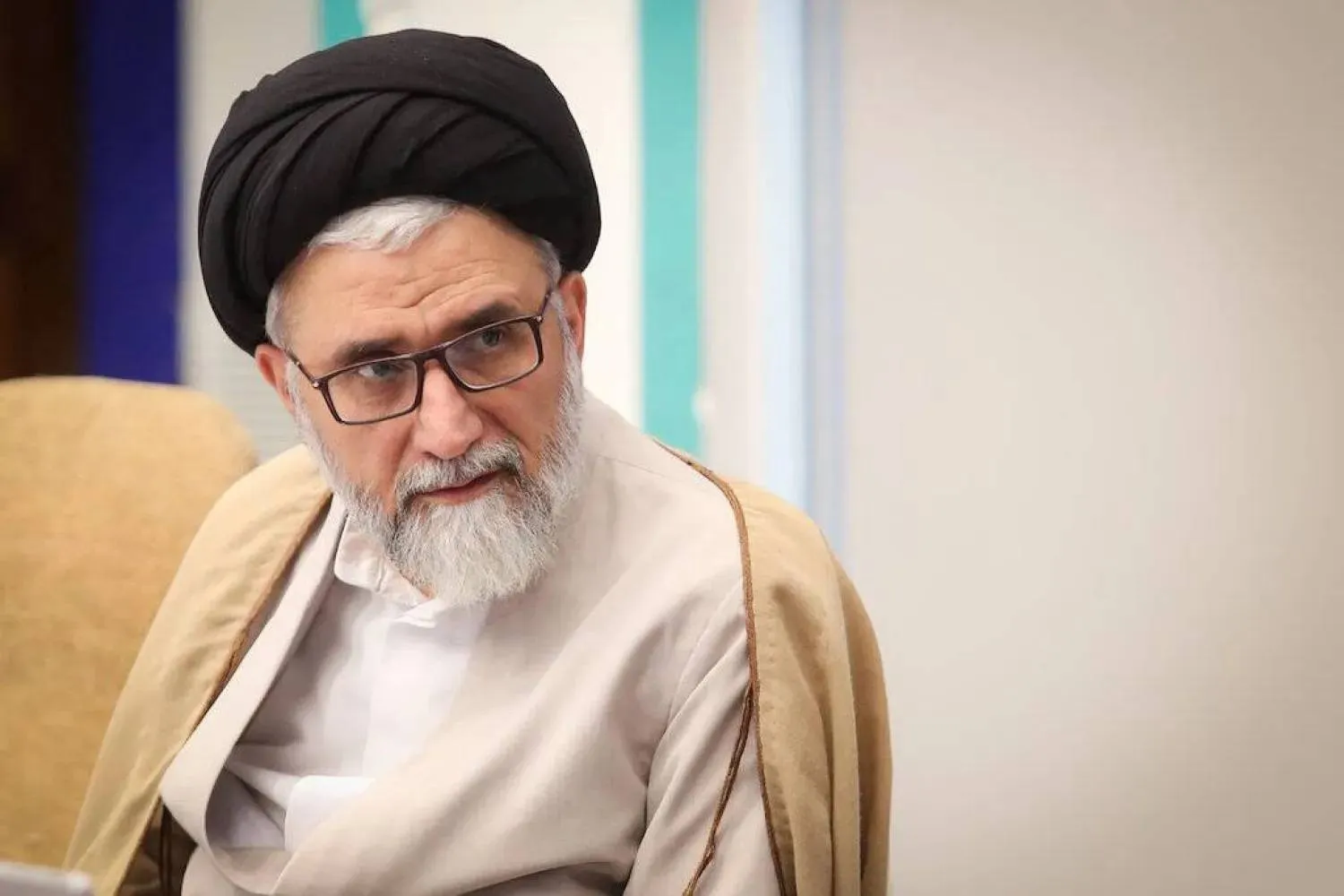
A photo released by the Iranian supreme leader’s official website shows Intelligence Minister Esmail Khatib in November last year
Within Iran’s ruling structure in Tehran, the post of intelligence minister is far from a routine cabinet role. The ministry, established after the 1979 revolution, is a central pillar of the security system, overseeing a wide network of intelligence operations at home and abroad.
While the president formally nominates the minister, the appointment is effectively decided with the Supreme Leader's approval, placing the role within a security structure closely tied to his office.
From this position, conservative cleric Esmail Khatib rose to lead Iran’s intelligence apparatus in 2021, after more than four decades in the Islamic Republic’s security and judicial institutions.
His career ended dramatically during the Iran-Israel war. On the 19th day of the conflict, Israeli Defense Minister Israel Katz said the Israeli air force had carried out a strike in Tehran that killed Khatib.
The Israeli military said Khatib oversaw an apparatus responsible for espionage and covert operations, and played a role in suppressing protests inside Iran.
The announcement came days after his name surfaced outside Iran, when the US State Department’s Rewards for Justice program offered up to $10 million for information on several senior Iranian officials linked to the Revolutionary Guards and the Supreme Leader’s office, including Khatib.
For years, Khatib operated largely in the shadows within intelligence institutions. He moved to the center of the Iran-Israel confrontation as the shadow conflict between the two sides escalated in recent years.
The announcement of his death added his name to a list of figures from Iran’s Supreme National Security Council killed in the conflict, including Secretary Ali Larijani and Mohammad Bagher Pakpour, commander of the Islamic Revolutionary Guard Corps.
From seminary to state institutions
Esmail Khatib was born in 1961 in Qaenat, South Khorasan province, eastern Iran. In the mid-1970s, he moved to the seminary in Qom, where he studied Islamic jurisprudence under senior clerics.
His teachers included Mohammad Fazel Lankarani, Nasser Makarem Shirazi and Mojtaba Tehrani. He also attended jurisprudence lessons taught by Ali Khamenei before he became the supreme leader. This religious path was common for clerics who entered state institutions after the 1979 revolution that toppled the Shah.
After the establishment of the Islamic Republic, Khatib quickly joined the new system. At 19, he enlisted in the Revolutionary Guards and worked in intelligence and operations units during the Iran-Iraq war in the 1980s. Reports indicate he was wounded, later placing him among recognized veterans, a status that carries political weight in Iran.
Entry into the intelligence ministry
In the mid-1980s, after the creation of the Ministry of Intelligence and Security in 1983, Khatib moved to the new body, which became Iran’s main civilian intelligence agency. He worked in several departments, including foreign affairs and intelligence analysis.
He gained prominence in the 1990s when he was appointed head of intelligence in Qom province.
Qom, a stronghold of the clerical establishment, is among Iran’s most sensitive provinces due to its religious institutions. Managing security there required navigating complex balances among clerics and political factions.
Khatib held the post for more than a decade, during a period marked by political tensions in the city, including developments linked to senior cleric Hossein Ali Montazeri, once seen as a potential successor to Ruhollah Khomeini before being sidelined.
Closer to the center of power
Over time, Khatib moved into roles closer to decision-making centers. In 2010, he joined the office of Supreme Leader Ali Khamenei in a unit responsible for his security and protection, a position reserved for senior intelligence officials.
Two years later, he was appointed head of the judiciary’s protection and intelligence center, tasked with monitoring judicial institutions and ensuring their political loyalty.
He remained in the role until 2019, during the tenure of judiciary chief Sadeq Larijani. With Ebrahim Raisi’s later appointment as head of the judiciary, ties between the two men strengthened.
The Astan Quds phase
In 2019, Khatib moved to Astan Quds Razavi in Mashhad, one of Iran’s largest economic and religious institutions, which oversees the Imam Reza shrine.
He took charge of security and protection within the organization, part of a network of institutions directly linked to the supreme leader’s office. He remained there until 2021, when he returned to the intelligence ministry, this time as its head.
Intelligence minister
In August 2021, after Ebrahim Raisi was elected president, he nominated Khatib as intelligence minister. As is customary, the appointment came after approval from Supreme Leader Ali Khamenei, who had the final say on sensitive security posts.
Khatib became the eighth intelligence minister since the ministry’s establishment. He took office as Iran faced multiple security challenges, including sabotage at nuclear facilities, assassinations of scientists and officials, and an escalating intelligence confrontation with Israel.
Iran’s political landscape shifted after President Ebrahim Raisi died in May 2024 in a helicopter crash in the northwest. After subsequent elections, President Masoud Pezeshkian formed a new government.
Khatib was among the few ministers to retain his post. Pezeshkian renominated him, a move analysts said reflected the sensitivity of the role.
His retention drew criticism from some political and reformist circles that had hoped for changes in the leadership of security agencies.
Rivalry within the security apparatus
At the start of his tenure, Khatib worked to manage a key issue within the security establishment, the complex relationship between the intelligence ministry and its parallel counterpart, the Revolutionary Guards Intelligence Organization.
The two bodies have overlapping mandates and often compete over major security files. Khatib sought to improve coordination, particularly in countering what the system described as foreign infiltration. The balance, however, remained complicated, reflecting ties to different power centers.
Protests and sanctions
Khatib’s tenure saw one of Iran’s largest protest waves in the past decade. In 2022, demonstrations erupted after the death of Mahsa Amini while in the morality police custody.
Security agencies, including the intelligence ministry, played a central role in responding through arrests, investigations and the pursuit of activists.
Khatib echoed the official line, describing the protests as driven by foreign interference and accusing the United States, Britain and Israel of involvement.
In September 2022, the United States imposed sanctions on Khatib and the ministry, accusing it of running cyberattack networks targeting governments and companies in multiple countries, including Albania.
Security failures
Despite repeated announcements of dismantling espionage networks, Iran’s security apparatus faced criticism over several failures.
Among the most notable was a deadly attack in Kerman in 2024 during a ceremony marking the anniversary of Qassem Soleimani’s killing, which left dozens dead.
Assassinations inside Iran, including those targeting figures linked to the so-called resistance axis, also exposed vulnerabilities.
These incidents sparked debate within Iran’s elite over the system’s ability to counter external infiltration.
Criticism intensified after the killing of numerous Iranian officials, including military commanders and nuclear scientists, during the 12-day war in June, amid reports of extensive intelligence breaches.
End of a security career
Throughout his career, Esmail Khatib remained largely out of the spotlight. He was not a mass political figure, but a security official who rose steadily through state institutions.
The Iran-Israel war in 2026, however, thrust him into the center of the confrontation. The Israeli announcement of his killing on the 19th day of the war ended a career spanning more than 40 years in the security services.
Whether seen as a major intelligence blow or another chapter in the regional conflict, Khatib’s trajectory reflects a common path within Iran’s complex security establishment: a cleric who began in the seminary, joined the Revolutionary Guards in the early years of the revolution, and rose through the ranks to one of the most sensitive posts in the Iranian state.
Three Precious Gifts to Tehran from Saddam Hussein, Osama bin Laden, and George W. Bushhttps://english.aawsat.com/features/5280397-three-precious-gifts-tehran-saddam-hussein-osama-bin-laden-and-george-w-bush
(FILES) Photo taken 01 February 1979 at Tehran airport of Ruhollah Khomeini (C) leaving the Air France Boeing 747 jumbo that flew him back from exile in France to Tehran. Getty Images
Three Precious Gifts to Tehran from Saddam Hussein, Osama bin Laden, and George W. Bush
(FILES) Photo taken 01 February 1979 at Tehran airport of Ruhollah Khomeini (C) leaving the Air France Boeing 747 jumbo that flew him back from exile in France to Tehran. Getty Images
Most people in today’s Middle East were born after 1979. Yet they often overlook how profoundly that year shaped their countries, their stability, and their daily lives. It unleashed storms, wars, and leaders whose ambitions and dangers far exceeded the borders from which they emerged. Some observers even see a direct link between that pivotal year and what is unfolding today around the Strait of Hormuz following the recent US-Israeli war against Iran and its military arsenal.
Few years in modern history can rival 1979 in significance or consequence.
That year, Khomeini returned to Tehran from exile in Paris. The reactor of the Iranian Revolution quickly began emitting its political radiation, especially after the institutionalization of the doctrine of Wilayat al-Faqih, the Guardianship of the Islamic Jurist.
The same year, Iraq’s presidential palace effectively fell into the hands of the country’s strongman, Saddam Hussein, who eased President Ahmed Hassan al-Bakr into retirement under the burdens of age—and perhaps regret.
In 1979, Egyptian President Anwar Sadat also signed the Camp David Accords with Israeli Prime Minister Menachem Begin in Washington under the sponsorship of President Jimmy Carter.
These developments soon intersected with a major international event. Soviet leader Leonid Brezhnev committed what many would later regard as the grave error of invading Afghanistan. The Kremlin walked into a trap. From among the fighters who flocked to that battlefield would emerge Osama bin Laden, the man who would inaugurate the new century with the attacks on New York and Washington, unintentionally paving the way for the removal of Saddam Hussein’s regime.
On January 16, 1979, amid mounting protests and demonstrations, Shah Mohammad Reza Pahlavi left Iran, entrusting the country to the government of Shapour Bakhtiar. Those around him tried to portray the departure as a temporary vacation. In reality, it was a one-way journey. America had abandoned its ally.
The decisive turning point came swiftly. On February 1, a plane from Paris landed at Tehran’s Mehrabad Airport carrying an extraordinary passenger: Ayatollah Khomeini, returning after fourteen years in exile. The massive crowds that greeted him delivered an unmistakable message. The Shah’s regime had fallen. The revolution had triumphed.
Ruhollah Khomeini (L) prays with the Iranian opposition leaders after receiving them at his Pontchartrain mansion, west of Paris, on November 6, 1978. (Photo by Joel ROBINE / AFP via Getty Images)
Decision-makers across the region watched carefully. Few were more alarmed than Saddam Hussein, then the powerful deputy leader of Baathist Iraq. Events in Tehran accelerated rapidly. The Islamic Republic was proclaimed. The doctrine of Wilayat al-Faqih was enshrined. The constitution incorporated language committing the new state to “exporting the revolution” under the banner of supporting the oppressed.
Saddam Refuses to Kill Khomeini
History could easily have unfolded differently.
During Khomeini’s years in Najaf, he was a difficult guest. Iraqi authorities frequently complained that he sought to evade the restrictions attached to his residency. After the Algiers Agreement of March 6, 1975, signed by the Shah and Saddam Hussein under the auspices of Algerian President Houari Boumédiène, both sides pledged to cease supporting each other’s opponents.
Iraqi officials repeatedly reminded Khomeini of the understanding. He effectively refused to commit himself to ending political activity against the Shah.
According to former Iraqi officials, Iraqi intelligence one day proposed arranging Khomeini’s assassination and blaming the Shah’s security services. Saddam’s response surprised them. He reportedly asked: “Do the people making this proposal not understand that Iraq does not betray its guests?”
Thus Khomeini remained alive.
Once the Iran-Iraq War began, however, eliminating him became an obsession for Saddam’s half-brother Barzan al-Tikriti, the head of Iraqi intelligence. Reaching Khomeini was difficult, though Iran in 1981 had not yet fully consolidated its security institutions.
Iraqi intelligence developed ties with the Kurdistan Democratic Party of Iran and with the Mujahedin-e Khalq. It helped coordinate operations that culminated in the devastating bombing of Iran’s parliament complex, killing dozens of senior figures. Soon afterward, Ali Khamenei was targeted by a bomb hidden inside a tape recorder, leaving him permanently injured in one arm.
Barzan remained determined to reach Khomeini himself. According to accounts from former Iraqi intelligence officials, Baghdad eventually recruited a cleric close to the Iranian leader and managed to plant a small explosive device inside Khomeini’s wool pillow. The bomb detonated when he was away from it. The attempt failed.
The Paris Interlude
Chance played an important role in Khomeini’s journey to power.
Forced to leave Iraq, he searched for a new place of exile. Years later in Paris, former Syrian Vice President Abdul Halim Khaddam recalled that Khomeini’s associates discreetly explored the possibility of relocating to Syria. President Hafez al-Assad was not interested.
Khaddam said Assad feared that hosting Khomeini could trigger not merely a political crisis with Iraq but perhaps even war between the two Baathist rivals. Khaddam advised Khomeini’s entourage to consider Algeria instead. They dismissed the idea, believing Algeria was too distant and likely to impose strict restrictions.
What surprised Khaddam was France’s willingness to receive Khomeini and provide him with a global platform.
During his stay in Neauphle-le-Château outside Paris, visitors streamed in from around the world.
Iraqi authorities sought to gauge his intentions. Khomeini had already demonstrated his ability to move Iranian public opinion through audio recordings that supporters distributed secretly inside Iran.
The Iraqi intelligence officer responsible for liaising with Khomeini during his years in Najaf was Ali Baweh, who had often facilitated his activities. Baghdad decided to send him to Paris. Former intelligence officials claim Baweh traveled with another man wearing a watch capable of recording conversations. Khomeini received them politely but showed no flexibility.
Asked about his plans after the Shah’s fall, he delivered an answer that landed like a bomb. After overthrowing the Shah, he said, the next objective would be “the overthrow of the infidel Baath regime.”
Saddam’s Obsession with Wilayat al-Faqih
When Khomeini appeared in Tehran surrounded by unprecedented crowds, Saddam understood that the storm would soon reach Iraq.
According to former presidential aides, the issue that troubled him most was not the revolution itself but the doctrine of Wilayat al-Faqih. Saddam believed it implied that a non-Iraqi cleric could demand the allegiance of Iraqi Shiites. To him, this represented a direct threat to Iraq’s sovereignty and cohesion.
He reportedly kept a booklet explaining the powers of the Supreme Jurist as understood by Khomeini and studied it carefully. By September 1980, Saddam had concluded that war was inevitable. He believed Khomeini intended to penetrate the Arab world by first bringing down Iraq. Waiting, in his view, meant eventually fighting Iran in the streets of Baghdad. Better to fight on the border.
Iraqi leader Saddam Hussein visits soldiers in northern Iraq. (Photo by Jacques Pavlovsky/Sygma via Getty Images)
Many who knew him believe this conviction also strengthened his determination to remove Ahmed Hassan al-Bakr and assume full power. Since the Baath Party’s return to government in 1968, Saddam had chosen to remain formally second in command, benefiting from Bakr’s legitimacy while gradually reshaping the military and state institutions around himself.
On July 16, 1979, Bakr finally departed. The age of Saddam had begun.
Former Foreign Minister Hamed al-Jubouri later recounted a revealing conversation with Bakr. When Jubouri once attempted to resign, Bakr reportedly pointed to the presidential chair and declared: “I would urinate on the presidency if it cannot even preserve the dignity of the president.”
Then, with tears in his eyes, he added: “Forget resignation. I cannot accept yours. Who can accept mine? We are prisoners. We do not possess the right to resign.”
“We Will Smash the Iranians’ Heads”
Saddam’s decision to go to war preceded his formal assumption of the presidency.
Salah Omar al-Ali, one of the veteran Baathist leaders who helped bring the party to power in 1968, recalled a revealing conversation during the Non-Aligned Movement summit in Havana in September 1979.
Iraqi President Ahmed Hassan al-Bakr and Saddam met Iranian Foreign Minister Ebrahim Yazdi. Despite tensions along the border, the atmosphere was constructive.
Hoping to reinforce that mood, Salah Omar al-Ali later spoke privately with Saddam and stressed the importance of peaceful solutions and economic development.
IRAQ - JANUARY 01: Iranian POW's waiting in line for food at the Ramadt detention camp under a smiling portrait of Iraq leader Saddam Hussein during the war between Iran Iraq. (Photo by Bill Foley/Getty Images)
Saddam listened attentively before responding.
“Pay attention, Salah,” he said. “This opportunity may come only once every hundred years. The opportunity exists today. We will smash the Iranians’ heads. We will recover every inch they occupied. We will restore the Shatt al-Arab.”
Then he added sharply: “I never want to hear you speak again about peaceful solutions, humanitarian solutions, or settling problems with Iran. Listen carefully. I will smash the Iranians’ heads and recover every inch from Khorramshahr to the Shatt al-Arab.”
A year later, he launched the war.
Saddam believed several factors worked in his favor. Khomeini’s revolution had turned America into Iran’s enemy. The Soviet Union feared revolutionary contagion among its Muslim republics. The Gulf monarchies felt threatened by Tehran’s ambitions.
He convinced himself that Iraq alone could break the revolutionary wave threatening regional stability. He miscalculated.
He assumed Iran’s post-revolutionary chaos would guarantee a quick victory. He failed to understand how rapidly Iranian nationalism would fuse with religious fervor once Iraqi troops crossed the border.
The war did not destroy the Islamic Republic. Instead, it strengthened it. Khomeini ruthlessly consolidated power and entrenched the rule of the Supreme Jurist. Saddam’s greatest achievement after eight years of war was a ceasefire. Iran survived. Iraq was exhausted.
The Kuwait Gift
In the years that followed, Tehran received another unexpected gift.
General Nizar al-Khazraji, Iraq’s chief of staff at the time, later described how he learned of the invasion of Kuwait in August 1990.
“I was asleep at home,” he recalled. “Early in the morning I received a call summoning me to General Headquarters. When I arrived, I was told: ‘We have completed the occupation of Kuwait.’”
Khazraji was stunned. Defense Minister Abdul Jabbar Shanshal was informed in exactly the same way.
Imagine, Khazraji said, an army being pushed into such an adventure without the knowledge of either its defense minister or its chief of staff.
A few days later Saddam explained that secrecy had been necessary to preserve surprise. He added that Kuwait had been liberated by forces reporting directly to him rather than to the regular chain of command.
Khazraji saw the decision as the product of arrogance born from Saddam’s belief that he had emerged victorious from the war with Iran.
The consequences were enormous.
The world’s attention shifted decisively from the “Iranian threat” to the “Iraqi threat.” Operation Desert Storm expelled Saddam from Kuwait and left Iraq wounded, isolated, and under sanctions.
Meanwhile, Iran caught its breath and resumed its long-term regional project.
The Gifts of Osama bin Laden and George W. Bush
Another chain of events that began in 1979 would transform the Middle East.
The Soviet invasion of Afghanistan triggered alarm throughout the West. Washington resolved to make Moscow pay dearly. Volunteers poured into Afghanistan from across the Arab and Muslim worlds. The United States encouraged the jihad against Soviet forces and supported many of the fighters.
Among them was a wealthy young Saudi named Osama bin Laden.
On Afghan soil, al-Qaeda was born.
ARLINGTON, VA - SEPTEMBER 12: President George W. Bush and Secretary of Defense Donald Rumsfeld survey the damage at the Pentagon building September 12, 2001 in Arlington, VA. (Photo by David Hume Kennerly/Getty Images)
On September 11, 2001, bin Laden carried the conflict to the American mainland. Civilian airliners destroyed the towers of the World Trade Center. Thousands were killed.
America had been struck at the heart of its power and prestige. The world waited for the response.
Under President George W. Bush, encouraged by military and security institutions and by the neoconservative movement, the United States first overthrew the Taliban and then invaded Iraq, toppling Saddam Hussein.
For the generals of Iran’s Revolutionary Guard, the scene was almost unbelievable.
The Taliban regime, hostile to Tehran, had fallen at American hands. Saddam’s regime, which Iran had failed to overthrow during eight years of war, met the same fate.
Iran neither obstructed these outcomes nor mourned them. Yet Tehran also saw American forces deployed on both its eastern and western frontiers.
A new phase in US-Iran relations began.
Qassem Soleimani and officers of the Quds Force focused on undermining the American military presence, especially in Iraq, while avoiding direct confrontation with Washington.
Without intending to, bin Laden had delivered Iran another extraordinary gift.
After the attacks on New York and Washington, the world became obsessed with al-Qaeda. Soon afterward, attention shifted toward Saddam Hussein, whose danger was magnified relentlessly by Western political and media narratives.
The result was that Iran moved out of the center of the international spotlight.
The Bush administration advanced numerous arguments to justify war against Iraq: alleged weapons of mass destruction, obstruction of international inspectors, and suspicions that Saddam had never abandoned nuclear ambitions.
Most consequential was the effort to suggest a connection between Saddam Hussein and al-Qaeda.
No meaningful partnership ever emerged between the Iraqi regime and bin Laden’s organization. Yet Saddam did make the mistake of exploring the possibility.
While bin Laden was living in Khartoum, Iraqi intelligence officer Farouq Hijazi met him through the mediation of Sudanese Islamist leader Hassan al-Turabi. The discussion was lengthy and difficult. After returning to Baghdad, Hijazi advised Saddam to close the file. Contacts ended.
But the allegation lingered—and helped justify the invasion.
Syria, Soleimani, and the Iraqi Prize
Another event left a lasting mark on the region’s future. Days before the American invasion of Iraq, Syrian President Bashar al-Assad flew to Tehran. Anxiety about the coming war dominated his discussions with President Mohammad Khatami and Supreme Leader Ali Khamenei.
Bashar Assad meets with Qassem Soleimani
Both sides agreed that if American forces consolidated their position in Iraq, Syria or Iran could be next.
The answer, they concluded, was to bleed the American presence through resistance movements. Qassem Soleimani participated in some of those discussions.
Syria subsequently facilitated the movement of fighters into Iraq, while Soleimani methodically built resistance networks.
Iran wagered on geography—and won.
It encouraged its Iraqi allies to participate in governing institutions and successive governments, especially after executive power became concentrated in the office of the prime minister, a position conventionally held by a Shiite politician.
When the last American soldier left Iraq in December 2011, Iran had become an indispensable actor in Iraqi affairs.
The fingerprints of Soleimani were visible throughout the Iraqi state. After his death, many of those networks remained under the stewardship of his successor, Esmail Qaani.
Then came another opportunity. In July 2014, Abu Bakr al-Baghdadi appeared in Mosul after the dramatic collapse of Iraqi army units. Soleimani moved immediately, dispatching weapons to both Baghdad and Erbil.
Grand Ayatollah Ali al-Sistani issued his famous call to arms. Iran later helped transform the resulting mobilization into the Popular Mobilization Forces, which eventually became an official institution under the authority of the Iraqi prime minister.
Iranian influence now extended across parliament, government, the military, and the PMF. From Iraq to Lebanon, from the Palestinian arena to Yemen, Tehran steadily expanded its reach.
The cumulative result is difficult to miss. Khomeini survived. Saddam’s war failed. Saddam’s invasion of Kuwait redirected international attention. Bin Laden’s attacks transformed global priorities. George W. Bush’s invasion removed Iran’s most formidable Arab rival. Each actor pursued his own objectives. Together, however, Saddam Hussein, Osama bin Laden, and George W. Bush delivered three of the most valuable strategic gifts the Islamic Republic of Iran has ever received.
‘If Ebola Comes, We’ll Be Wiped Out’: Fear Grips Camps in DR Congohttps://english.aawsat.com/features/5280009-%E2%80%98if-ebola-comes-we%E2%80%99ll-be-wiped-out%E2%80%99-fear-grips-camps-dr-congo
A staff member hangs up protective equipment to dry after washing them at the Ebola Treatment Center (ETC) in Munigi on June 2, 2026. (AFP)
TT
TT
‘If Ebola Comes, We’ll Be Wiped Out’: Fear Grips Camps in DR Congo
A staff member hangs up protective equipment to dry after washing them at the Ebola Treatment Center (ETC) in Munigi on June 2, 2026. (AFP)
Dorcas Mapenzi fears the worst if Ebola comes to the Kingonze camp, where she lives alongside more than 25,000 other displaced people in the conflict-hit eastern Democratic Republic of Congo.
"If Ebola comes, we'll be wiped out as we're packed like sardines," the displaced woman told AFP at the sprawl of tarpaulin and tents on the outskirts of Bunia, the capital of the northeastern Ituri province, the epicenter of the latest outbreak.
Spread by close contact, the deadly viral disease has spread like wildfire in the vast central African country's east, where decades of armed conflicts have forced millions of people from their homes and into camps where they live cheek-by-jowl.
Nearly a million of those displaced are in Ituri -- among the provinces of the desperately impoverished DRC most prey to the east's litany of armed groups -- where the prospect of the epidemic spreading throughout the refugee camps has sparked alarm.
The World Health Organization's director general, Tedros Adhanom Ghebreyesus has warned that the eastern DRC "faces a catastrophic collision of disease and conflict", with the fighting hampering efforts to tackle the epidemic.
Visiting Bunia on Saturday, Tedros called for more international help and financial aid to combat the spread of Ebola.
He also said it was essential to assuage fears among affected communities who are deeply distrustful of authorities and halt the spread of false information about the virus.
The current outbreak was officially declared in the DRC and neighboring Uganda on May 15.
As of May 31, the WHO said 321 cases had been confirmed in the DR Congo, including 48 deaths. Thjere are nine confirmed cases in Uganda, including one fatality.
- 'Everyone will die' -
No infection has yet been recorded at the Kingonze displaced persons' camp, where Mapenzi now lives.
But conditions in the camp are ripe for a disease passed on through close physical contact and bodily fluids.
"I've already heard of Ebola and it's a disease that scares me a lot," Mapenzi said as she washed her laundry in a basin on the ground.
"We displaced people here have no hygiene.
"Our children play next to filthy toilets and even relieve themselves on the ground, in the middle of the tarpaulins that serve as our homes," the young woman said.
Deborah Nzale, a widow and head of her family, lives with nine people in a small tarpaulin shelter of barely three square meters (32 square feet).
"Given these conditions, how are we going to protect ourselves against this disease, when everyone tells us we need to distance ourselves to fight Ebola?" she asked.
No vaccine or treatment exists for the Bundibugyo strain of Ebola responsible for the latest outbreak.
So attempts to contain the virus's spread have had to rely mainly on protective measures and rapid contact tracing.
"We sleep piled on top of each other, with everyone's sweat," Nzale said.
"If a single person gets infected here in this camp, everyone will die."
- 'Ebola really kills' -
So far, Kingonze's displaced residents have not received any protective gear.
"Ebola really kills," a poster at the entrance warns.
"People looking to raise awareness come through here with messages but, surprisingly, we don't have the kit we need to protect ourselves," Budjo Amos complained.
"I don't even have soap to wash my hands," said Amos, who fled the province's common communal violence.
"The most urgent thing is to give us clean water," he insisted.
There is just a single borehole in Kigonze. Empty jerrycans pile up in front. Water flows from the tap for just a few hours a day.
"The state has to intervene urgently," Amos pleaded.
Already long absent from swathes of Ituri, the Congolese state has been criticized for its delayed response to the outbreak, which was declared several weeks after the first cases emerged.
Many hospitals in the region still lack essential equipment, especially isolation tents for patients.
According to Ituri's military governor, the province counts around 61 displaced persons camps housing nearly 970,000 people.
"We need to deploy equipment and qualified, specialist medical staff as quickly as possible," Lieutenant General Johnny Luboya Nkashama told AFP on Friday, "to spare this province from disaster".
Beirut Southern Suburbs Residents Live Between Displacement, Returnhttps://english.aawsat.com/features/5279916-beirut-southern-suburbs-residents-live-between-displacement-return
Vehicles drive on the highway as people leave Beirut's southern suburbs after Israel ordered strikes on Dahiyeh, in Beirut, Lebanon, 01 June 2026. EPA/WAEL HAMZEH
Beirut Southern Suburbs Residents Live Between Displacement, Return
Vehicles drive on the highway as people leave Beirut's southern suburbs after Israel ordered strikes on Dahiyeh, in Beirut, Lebanon, 01 June 2026. EPA/WAEL HAMZEH
The latest Israeli threat threw Beirut’s southern suburbs into turmoil within hours. Schools were evacuated, parents rushed to pull their children out of classrooms, and many residents fled their homes in haste. Roads filled with a new wave of displacement, reviving scenes the Lebanese have endured repeatedly in recent months.
But the threat did not end when the warning did. The alert was lifted, but the anxiety stayed. Some people returned to work, but not to a sense of safety. For many, the question is no longer when the strike will come, but how to live under the constant expectation of the next warning.
The home that is no longer safe
Layla Hassan told Asharq Al-Awsat that the latest threat to the southern suburbs did not end for her when the warning expired. The feeling it left behind still follows her. The problem, as she sees it, is no longer tied to a single security incident, but to a permanent state of uncertainty.
She said the natural bond between people and their homes has changed radically. “The home, which once represented the safe space people turned to in fear or danger, has now become one of the sources of anxiety.”
The warning, she said, made returning more complicated than leaving, especially for those responsible for children or other family members.
Life in displacement, despite its hardship and lack of services, can sometimes feel less cruel than the anxiety of returning, she said. Electricity, water, cramped spaces and the strain of daily life become secondary details beside one overriding concern, keeping the family safe.
She added that repeated displacement gradually pushes people to adapt to abnormal conditions, until the mere feeling of safety becomes a goal in itself, even at the cost of the life they once knew.
People leave Beirut's southern suburbs after Israel ordered strikes on Dahiyeh, in Beirut, Lebanon, 01 June 2026. EPA/WAEL HAMZEH
Every day begins with fear
Fatima Shams has not returned to the southern suburbs since Monday’s threat. She told Asharq Al-Awsat that “the Lebanese are living today in a state of constant anticipation that has made fear part of the daily routine. Every morning begins with a different question, but the meaning is the same, will this day pass safely?”
She described how the latest threat disrupted the daily lives of families. Her sister was at school when exams were halted and students were urgently evacuated. Within minutes, parents had to leave work and head to schools, caught between traffic-clogged roads and fear of a sudden security development.
“The hardest thing people are living through is not only the fear of strikes, but the constant feeling of instability,” she said. “Families are no longer able to plan their day or their week, because any new warning can overturn everything.”
She said the danger no longer feels confined to one area after warnings and tensions spread to different parts of Lebanon, making insecurity more widespread than ever.
Anticipation is wearing people down
Ali Noureddine, from the southern town of Toul and a resident of Beirut’s southern suburbs, described life for residents as “deadly anticipation.”
He told Asharq Al-Awsat that “the crisis is no longer linked to the warning itself, but to the psychological state that follows it. After every threat, people remain trapped between the possibility of returning to normal life and the possibility of a new escalation.”
He said this constant anxiety drains residents more than direct security incidents, because it turns life into an open-ended wait that no one knows when it will end.
The anxiety, he added, is not limited to the southern suburbs. It reaches the south as well, where families follow news of their towns, homes and areas with no clarity over what comes next.
People leave Beirut's southern suburbs after Israel ordered strikes on Dahiyeh, in Beirut, Lebanon, 01 June 2026. EPA/WAEL HAMZEH
We carry our memories in a bag
Layan Abdullah has not returned to the southern suburbs since the latest threat. For the university student, campus life is no longer about lectures, exams and ambitions. It is about displacement and the search for safety.
She told Asharq Al-Awsat that “her life has become a matter of packing belongings into a bag, moving to a new place, then preparing for the possibility of doing it again.”
Her generation, she said, can no longer think about future projects or career plans. The priority has narrowed to getting through the day safely.
She spoke of the harsh feeling that accompanies each displacement, reducing an entire life to a single bag. “A person does not leave behind only walls and furniture, but memories, details and relationships tied to a place.”
She also pointed to the added suffering of families with patients who need continuous medical care. Every move brings new questions about safe roads, access to hospitals and securing treatment, adding another layer of pressure to the psychological burden everyone is carrying.
Displacement from the southern suburbs and fear of losing Bint Jbeil forever
Hassan Bazzi does not describe the latest threat to Beirut’s southern suburbs as a passing security incident. For him, it was a moment that revived deeper fears about his future and the future of his hometown, Bint Jbeil.
He told Asharq Al-Awsat that “he found himself, like thousands of others, facing the prospect of another displacement from the southern suburbs, while carrying the feeling that the distance between him and his southern town, where he had spent years planning to return and settle, is growing day by day.”
“After the latest threat to the southern suburbs, the same feeling returned, that our entire lives have become suspended,” he said. “It is no longer only about where we live today or tomorrow, but about an entire future that we do not know whether we will be able to reclaim.”
He said he owns land and property in Bint Jbeil that he had seen as his life project and source of stability after more than three decades of work. But with the war continuing and the political and military scene growing more complicated, he now feels those plans slipping farther away.
“I imagined I would return to live on my land and take care of what I had built over the years. I thought the hardship of 30 years would give me a chance to rest and settle down. Today, I feel all of that has been postponed indefinitely,” he said.
He said repeated threats and continued displacement from the southern suburbs and the south have left people in a state of accumulated psychological exhaustion, making it hard to think about the future or make any long-term plans.
“I fear our children will grow up not knowing these villages as we knew them, and I fear that waiting to return will become a permanent state,” he said. “That is why displacement from the southern suburbs alone is not what worries me. What worries me more is that a day may come when I feel Bint Jbeil has become just a memory.”
لم تشترك بعد
انشئ حساباً خاصاً بك لتحصل على أخبار مخصصة لك ولتتمتع بخاصية حفظ المقالات وتتلقى نشراتنا البريدية المتنوعة