


Second Fire Hits Kuwait’s Mina al-Ahmadi Refinery, Saudi Downs 29 Drones

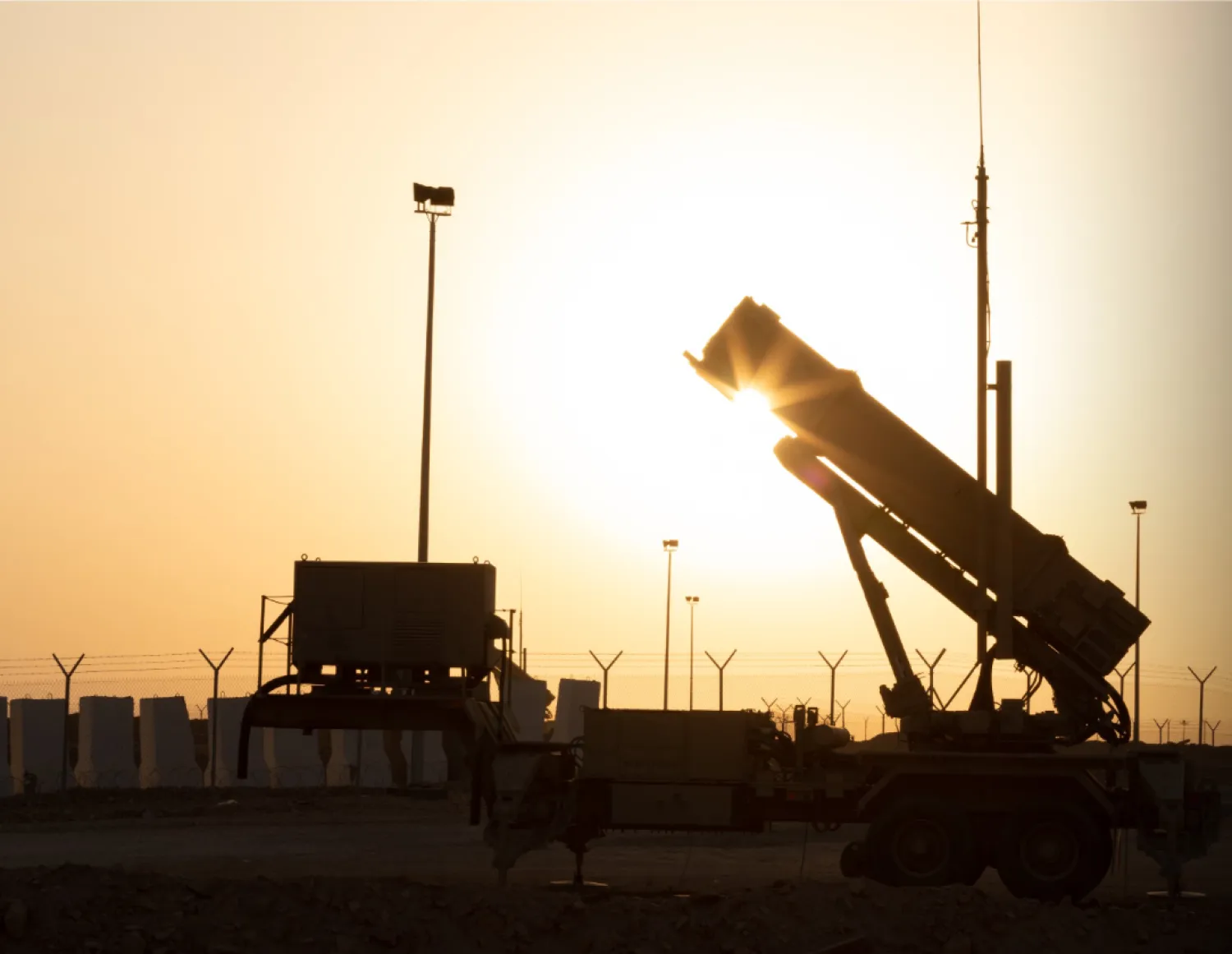
In Saudi Arabia, air defenses downed 29 drones over the Eastern Province and Al Jouf. Photo: Defense Ministry
TT

Second Fire Hits Kuwait’s Mina al-Ahmadi Refinery, Saudi Downs 29 Drones

In Saudi Arabia, air defenses downed 29 drones over the Eastern Province and Al Jouf. Photo: Defense Ministry

Gulf air defenses intercepted and destroyed multiple Iranian missiles and drones targeting civilian sites, energy facilities, and critical infrastructure across the region, officials said Friday, as attacks continued to escalate.

In Saudi Arabia, air defenses downed 29 drones over the Eastern Province and Al Jouf.

Kuwait’s Mina al-Ahmadi refinery, operated by Kuwait Petroleum Corporation, was targeted by drones for a second consecutive day, while Bahrain said it had faced 382 attacks since the start of the war, intercepting 141 missiles and 242 drones.

The United Arab Emirates said it dealt with four ballistic missiles and 26 drones launched from Iran.

The incidents come as Gulf air defense systems continue to repel successive waves of Iranian missiles and drones aimed at civilian objects, private property, energy installations and vital facilities.

Kuwait

Kuwait’s state news agency, citing Kuwait Petroleum Corporation, said drones struck the Mina al-Ahmadi refinery early on Friday, sparking fires in several operational units.

Firefighting and emergency teams quickly moved to contain the blaze, while several refinery units were shut down and precautionary measures were taken to ensure worker safety and secure the facility.

Initial estimates indicated no casualties, as authorities continued to assess the damage and investigate the circumstances.

The Kuwaiti military said it detected one ballistic missile and 25 drones over the past 24 hours.

Colonel Saud Al Atwan, spokesperson for the Ministry of Defense, said air defenses destroyed 15 drones, while two drones struck a refinery unit affiliated with the Kuwait Petroleum Corporation. Eight drones fell outside the threat zone and posed no danger.

Bahrain

Bahrain’s Defense Force General Command said its air defense systems had intercepted and destroyed 141 missiles and 242 drones since Iran began targeting the country.

Civil defense teams extinguished a fire at a company warehouse without injuries, the Interior Ministry said, adding that the blaze was caused by debris from Iranian attacks.

The General Command said in a statement that the use of ballistic missiles and drones against civilian objects and private property constituted a blatant violation of international humanitarian law and the United Nations Charter, warning that such attacks pose a direct threat to regional peace and security.
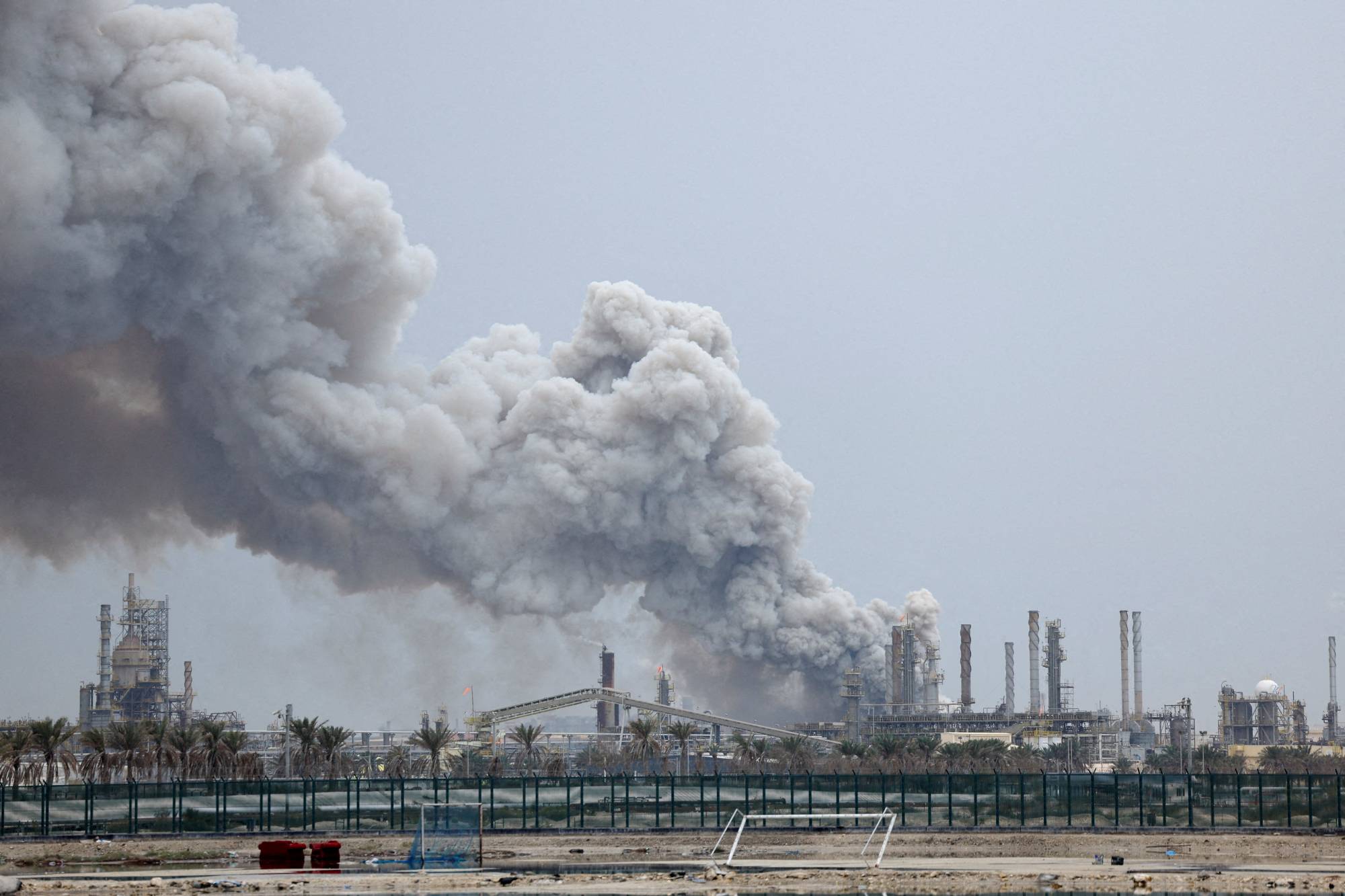
FILE PHOTO: Smoke rises following a strike on the Bapco Oil Refinery, amid the US-Israeli conflict with Iran, on Sitra Island Bahrain, March 9, 2026. REUTERS/Stringer/File Photo

United Arab Emirates

UAE air defenses on Friday intercepted four ballistic missiles and 26 drones launched from Iran, authorities said.

Since the start of the Iranian attacks, UAE air defenses have dealt with 338 ballistic missiles, 15 cruise missiles, and 1,740 drones.

The attacks have killed two members of the armed forces while on duty and six civilians.

The UAE also announced the dismantling of a “terrorist network” financed and run by Lebanon’s Hezbollah and Iran, with members arrested as part of ongoing efforts to safeguard national security and stability.

In a statement, the UAE State Security Apparatus (SSA) said the network had been operating within the country under a fictitious commercial cover and sought to infiltrate the national economy and carry out external schemes threatening the country’s financial stability.

According to state news agency WAM, the SSA explained that the network operated according to a pre-established strategic plan in coordination with external parties linked to Hezbollah and Iran, in violation of economic and legal regulations, to launder money, finance terrorism, and threaten national security.

Qatar

A fire broke out in a warehouse in Qatar without causing injuries, authorities said.

The Interior Ministry, cited by the Qatar News Agency, said civil defense teams were responding to the blaze in the Birkat Al Awamir area, with no casualties reported.

The ministry urged the public to rely only on official updates, avoid rumors and refrain from sharing unverified information, calling on residents to follow guidance calmly and responsibly to support public safety and security.



Shehbaz Sharif, Tamim bin Hamad Support Path of De-escalation

The Emir of Qatar, Sheikh Tamim bin Hamad Al Thani meets Pakistan’s Prime Minister Shehbaz Sharif in Doha, Qatar, April 16, 2026. (QNA)
TT

Shehbaz Sharif, Tamim bin Hamad Support Path of De-escalation

The Emir of Qatar, Sheikh Tamim bin Hamad Al Thani meets Pakistan’s Prime Minister Shehbaz Sharif in Doha, Qatar, April 16, 2026. (QNA)

Following his shuttle tour that kicked off in Saudi Arabia, Pakistan’s Prime Minister Shehbaz Sharif discussed with Qatar’s Emir Sheikh Tamim bin Hamad Al Thani the latest regional and international developments, particularly those in the Middle East, during a meeting held Thursday at the Amiri Diwan.

The Pakistani Prime Minister reiterated his country's condemnation of the attacks targeting Qatar and other countries in the region, affirming Pakistan's full solidarity with Doha and support for the measures it takes to protect its sovereignty and safeguard its security and stability, the Amiri Diwan said in a statement.

During the meeting, Qatar’s Emir expressed his appreciation for Pakistan's role in supporting efforts to deescalate tensions and promote diplomatic dialogue in the service of regional peace and security.

According to official sources, both sides stressed the necessity of supporting the path of deescalation and strengthening international coordination to ensure the security and stability of the region, especially maintaining the smooth flow of energy supply chains through vital maritime routes.

They further discussed the cooperation and friendship relations between the two countries and ways to develop them, aiming to strengthen the partnership and open new horizons for bilateral cooperation.

The Qatari Emir and the Prime Minister also held a bilateral meeting, where they exchanged views on current developments of mutual interest and emphasized the importance of continued coordination and consultation between the two countries, particularly amidst current events and their repercussions on the region's security and stability.

Sharif arrived in Doha on Thursday morning for a working visit to the country. The PM and the accompanying delegation were welcomed upon arrival at Doha International Airport by Minister of State for Foreign Affairs Sultan bin Saad Al Muraikhi.


Sultan of Oman, Qatari Emir Discuss Regional Developments, Means to Contain Escalation

Sultan Haitham bin Tariq of Oman, and Sheikh Tamim bin Hamad Al Thani, Emir of Qatar met at Al Baraka Palace in Muscat on Thursday (Omani News Agency)
TT

Sultan of Oman, Qatari Emir Discuss Regional Developments, Means to Contain Escalation

Sultan Haitham bin Tariq of Oman, and Sheikh Tamim bin Hamad Al Thani, Emir of Qatar met at Al Baraka Palace in Muscat on Thursday (Omani News Agency)

Sultan Haitham bin Tariq of Oman, and Sheikh Tamim bin Hamad Al Thani, Emir of Qatar, discussed in Muscat on Thursday the developments in the region amid rising tensions.

Qatar’s Emir arrived in Muscat in a visit to Oman, where he held talks with Sultan Haitham at Al Baraka Palace.

The two leaders exchanged views on current developments, particularly their implications for regional security and stability, as well as their impact on energy supplies and international shipping, according to a statement from the Qatari Diwan.

They stressed the importance of intensifying regional and international efforts to deescalate tensions and the need to prioritize diplomatic solutions and dialogue to resolve disputes, contributing to regional and international security and stability.

The two leaders also emphasized continued coordination and consultation on issues of mutual interest in addition to the strong fraternal ties between the two countries and ways to further develop them across various fields.

Later, Sultan Haitham and Sheikh Tamim bin Hamad held a private meeting during which they discussed the deep-rooted relations between the two countries and ways to develop them in various domains for the mutual benefit of their peoples.


OIC Lauds US President’s Ceasefire Announcement in Lebanon

OIC Lauds US President’s Ceasefire Announcement in Lebanon
TT

OIC Lauds US President’s Ceasefire Announcement in Lebanon

OIC Lauds US President’s Ceasefire Announcement in Lebanon

The General Secretariat of the Organization of Islamic Cooperation (OIC) commended the diplomatic efforts of US President Donald Trump that led to a 10-day truce in Lebanon, the Saudi Press Agency reported.

The OIC stressed the need that all parties adhere to the ceasefire agreement and refrain from undermining it.

The General Secretariat also expressed its support for and solidarity with the Republic of Lebanon in preserving its unity, sovereignty, and territorial integrity.

Trump announced Thursday evening a 10-day truce in Lebanon that could pause fighting between Israel and Hezbollah, and boost attempts to extend the ceasefire between Iran, the United States and Israel after weeks of devastating war.