
Israel’s Military to Occupy Swathe of Southern Lebanon, Defense Chief Says

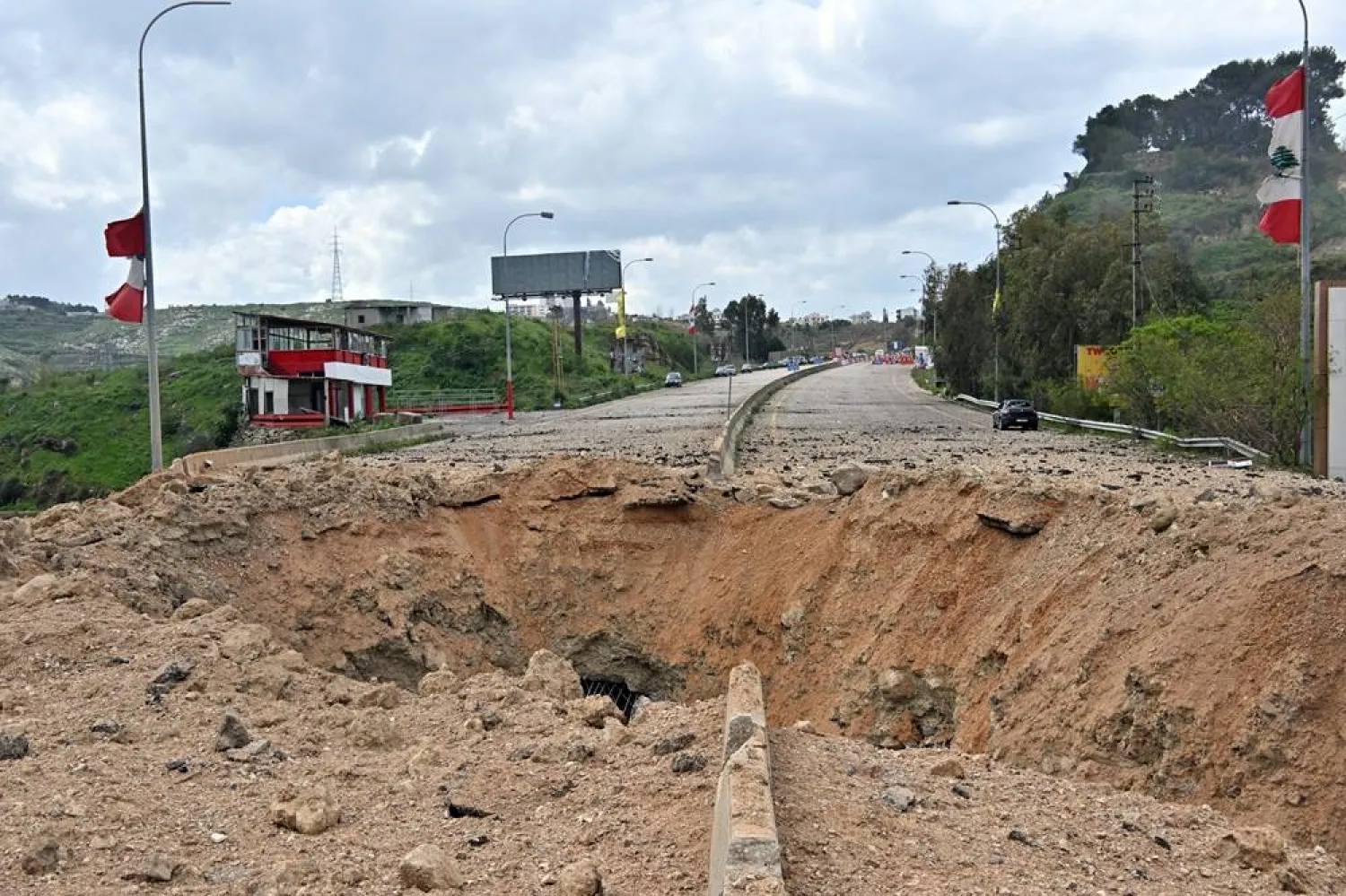
Damage at the site of an Israeli strike targeting the Qasmiye bridge near Tyre, southern Lebanon, 23 March 2026. (EPA)
TT

Israel’s Military to Occupy Swathe of Southern Lebanon, Defense Chief Says

Damage at the site of an Israeli strike targeting the Qasmiye bridge near Tyre, southern Lebanon, 23 March 2026. (EPA)

Israel's military will occupy southern Lebanon up to the Litani River, defense minister Israel Katz said on Tuesday, the first time Israel has clearly spelled out its intent to seize swathes of territory that make up nearly a tenth of Lebanon. 

Katz has previously threatened Lebanon's government it would lose territory if it did not disarm Hezbollah, the group backed by Tehran that drew Lebanon into the US-Israeli war on Iran when it fired into Israel on March 2. 

On Tuesday, Katz said in a meeting with the military chief of staff that the military would "control the remaining bridges and ‌the security zone ‌up to the Litani", and was creating a "defensive buffer". 

The Litani ‌River ⁠meets the Mediterranean ⁠about 30 km (20 miles) north of the Israeli border with Lebanon. 

The military has destroyed five bridges over the river since March 13 and has accelerated the demolition of homes in Lebanese villages close to the Israeli border as part of a campaign that Israel says is aimed at Hezbollah and not Lebanese civilians. 

Under international law, attacks on civilian infrastructure, including homes and bridges, are generally prohibited. 

The Israeli military declined to comment on the defense minister's remarks. The military has previously said ground troops were carrying out limited ⁠and targeted raids close to the border with Israel. 

ISRAEL SEEKS DEFENSIVE BUFFER ‌LIKE IN GAZA, SAYS KATZ 

Katz said there could be ‌no homes or residents in areas of southern Lebanon where there was "terror" in the area, in an apparent ‌reference to Hezbollah, whose fighters have continued to launch daily rocket and drone attacks into Israeli ‌territory and battle Israeli troops in southern Lebanese villages. 

Katz said Israeli soldiers were maneuvering in Lebanon to establish a "forward defensive line", fighting Hezbollah and destroying infrastructure used by the group, including homes that he said function as "terrorist outposts". 

For the second time this week, he said the approach was similar to that taken by the ‌military in Gaza, clearing and demolishing buildings near the border "to create a defensive buffer and push the threat away from communities". 

On Monday, influential Finance ⁠Minister Bezalel Smotrich said Israel ⁠should annex southern Lebanon up to the river. 

Israel's strikes on Lebanon have caused widespread destruction across the country's south and parts of the capital, Beirut, and have killed more than 1,000 people. 

Over a million people have been forced from their homes. The United Nations human rights chief has criticized Israel's actions, particularly its use of widespread evacuation orders. 

Among those killed are almost 120 children, 80 women and 40 medical personnel, according to Lebanon's health ministry, which does not otherwise distinguish between civilians and fighters. Two Israeli soldiers have been killed in fighting in Lebanon. 

President Donald Trump on Monday said Washington and Tehran could soon reach an agreement on ending the war following what he has described as talks between US and Iranian officials. Iran has denied there have been any negotiations with the US 

It is unclear if a ceasefire in Lebanon would be part of any agreement on ending the US-Israeli war with Iran. 


Israeli Strike Severs Last Bridge Linking Southern Lebanon to Rest of Country

Smoke rises following an Israeli strike in Nabatieh, Lebanon, April 16, 2026.  REUTERS/Stringer
Smoke rises following an Israeli strike in Nabatieh, Lebanon, April 16, 2026. REUTERS/Stringer
TT

Israeli Strike Severs Last Bridge Linking Southern Lebanon to Rest of Country

Smoke rises following an Israeli strike in Nabatieh, Lebanon, April 16, 2026.  REUTERS/Stringer
Smoke rises following an Israeli strike in Nabatieh, Lebanon, April 16, 2026. REUTERS/Stringer

An Israeli strike has severed the last bridge linking southern Lebanon to the rest of the country, a senior Lebanese security official told Reuters on Thursday, adding that the strike “shattered” the bridge and left no possibility of repairing it.

The state-run National News Agency (NNA) reported that “enemy warplanes carried out two consecutive strikes targeting the Qasmieh bridge, the remaining crossing linking the Tyre area to the city of Sidon, completely destroying it.”

The agency also said that Lebanon’s main highway linking Beirut and Damascus was closed on Thursday after an air strike targeted a car, killing one person.

Since March 2, the Israeli army has successively destroyed four main bridges over the Litani River, which divides southern Lebanon into two parts.

Two days ago, the ambassadors of Lebanon and Israel in Washington met at the US State Department to discuss announcing a ceasefire and setting a date to begin negotiations between Lebanon and Israel under US auspices.

Lebanon’s president had launched an initiative on March 9 based on a full truce, a halt to all Israeli attacks, support for the Lebanese army, the army’s control over areas of tension and confiscation of all weapons there, and the start of negotiations with Israel.

Israeli Prime Minister Benjamin Netanyahu said the talks would focus on disarming Hezbollah and establishing peaceful relations between the two neighboring countries.


In Lebanon Shelters, Women Care for Tiny Babies, Face Pregnancy

Mariam Zein (R) brings her son to a mobile health clinic run by charity Caritas Lebanon. Joseph EID / AFP
TT

In Lebanon Shelters, Women Care for Tiny Babies, Face Pregnancy

Mariam Zein (R) brings her son to a mobile health clinic run by charity Caritas Lebanon. Joseph EID / AFP

Mariam Zein cradled her 11-week-old son on a mattress on the floor where she and her family have sheltered near Beirut since the Israel-Hezbollah war upended her young family's life.

"I was really excited when I was in my ninth month of pregnancy... I never thought he'd be born and there'd be war," said Zein, 26, clutching baby Hussein.

"I haven't been able to enjoy my son -- my first child... to see him getting bigger in his own bed, in his own home."

"I was very sad, and I'm still sad," she told AFP, nappies and baby formula wedged near a photocopier, clothes hanging on an improvised line.

Zein fled with her husband, their baby and other relatives when war erupted between Israel and Hezbollah on March 2, drawing Lebanon into the Middle East conflict, said AFP.

She does not know if her home in south Lebanon is still standing.

Israel has kept up strikes despite a fragile US-Iran ceasefire, a landmark meeting this week between Israeli and Lebanese officials in Washington, and reports that leaders from both countries would talk for the first time in decades.

Lebanese authorities say the war has killed more than 2,100 people and displaced more than one million others.

Some 140,000 people are in overcrowded shelters like the center in Beirut's suburbs housing Zein's family and around 500 other people, among them five pregnant women and others with young babies.

Zein said she stopped breastfeeding because there was no privacy, and now struggles to buy baby formula, while Hussein is outgrowing his clothes.

"Whatever happens I just want my son near me," she said.

- Pregnancy -

According to the United Nations Population Fund (UNFPA), an estimated 620,000 women and girls are displaced, including some 13,500 pregnant women, of whom "1,500 are expected to give birth within the next 30 days".

The agency and other organizations have sought to support women as the authorities struggled to cope.

In a small tent containing a portable ultrasound, obstetrician and gynecologist Theresia Nassar has checked on women including Zein as part of a mobile health clinic run by charity Caritas Lebanon with support from UNFPA.

Displaced pregnant women risk missing important tests and scans, she said, and they are trying to fill the gaps.

"We're not just worried about physical health but also their mental health," she said.

"They don't know if they can go home, they don't have their medication, they're not being properly followed."

Elsewhere, at a school-turned-shelter in central Beirut, heavily pregnant Ghada Issa, 36, is due to deliver a baby girl in a few weeks.

But "this place, this environment, is not for pregnant women", said Issa, who was displaced from south Lebanon with her husband, their daughter Siham, five, and son Ali, four.

They live in a cramped tent, and she said even the basics are a problem, like having to make frequent trips to crowded, far-away communal toilets.

- Twins -

Her husband set up an improvised bed so she doesn't have to sleep on the floor.

Underneath are precious donated items like tiny socks and little blankets. A worker from charity Amel Association International brought them a "baby kit" including nappies and baby powder.

Without donations and other support, "there wouldn't be anything" for the baby, Issa said, as people playing football yelled, children squealed and washing hung on improvised lines.

The shelter's administration said some 20 pregnant women and two who had recently given birth were among more than 2,600 people staying there.

"I haven't got my head around the idea of having a baby here," Issa said.

"I'm still hoping that one day they'll tell me, let's go to the village, and I'll have the baby at home."

In a university classroom in south Lebanon's city of Sidon, Ghada Fadel, 36, cares for her tiny twin sons. Mohammed and Mehdi are just over one month old, and in blue jumpsuits and matching beanies.

The family has been there since she was eight months' pregnant, after fleeing their border village.

"After we left the house, they (Israel) bombed it. The house is gone" along with everything they had prepared for the twins, Fadel said.

"I was hoping to give birth and come home," she said sadly.

"Every mum hopes to take her kids home... no matter the circumstances."


Sudan Enters a Fourth Year of War as Officials Lament an 'Abandoned Crisis'

 08 April 2026, Chad, Aboutengye: Women and girls wait for water distribution at the Aboutengue refugee camp in eastern Chad near the border with Sudan. Photo: Eva Krafczyk/dpa
08 April 2026, Chad, Aboutengye: Women and girls wait for water distribution at the Aboutengue refugee camp in eastern Chad near the border with Sudan. Photo: Eva Krafczyk/dpa
TT

Sudan Enters a Fourth Year of War as Officials Lament an 'Abandoned Crisis'

 08 April 2026, Chad, Aboutengye: Women and girls wait for water distribution at the Aboutengue refugee camp in eastern Chad near the border with Sudan. Photo: Eva Krafczyk/dpa
08 April 2026, Chad, Aboutengye: Women and girls wait for water distribution at the Aboutengue refugee camp in eastern Chad near the border with Sudan. Photo: Eva Krafczyk/dpa

Famine. Massacres. And now badly needed food and other supplies are under strain. Sudan on Wednesday entered a fourth year of war that's been called an “abandoned crisis,” as a new Middle East conflict throws into shadow the fighting that has forced 13 million people to flee their homes.

The North African country is described as the world's largest humanitarian challenge, notably in terms of displacement and hunger. There is no end in sight to the fighting between the military and the paramilitary group Rapid Support Forces, or RSF, which witnesses and aid groups say has laid waste to parts of the vast Darfur region.

“We’ve lost so many people in this war,” said Hussein Mohamed Shareef, running his fingers over the scar on his head where he said an RSF sniper had shot him in the city of Omdurman, near Khartoum, Sudan's capital. He said at least 10 friends have been killed.

Numbers tell a tale of pain

At least 59,000 people have been killed. At least 6,000 died over three days as the RSF rampaged through the Darfur outpost of el-Fasher in October, according to the United Nations, with UN-backed experts concluding that the offensive bore “the defining characteristics of genocide.” More than 11,000 people have gone missing over the course of the war, the Red Cross says.

The war has pushed parts of Sudan into famine. The number of people with severe acute malnutrition, the most dangerous and deadly kind, is expected to increase to 800,000, the world's foremost experts on food security, the Integrated Food Security Phase Classification, said in February.

About 34 million people, or almost two out of three Sudanese, need assistance, the UN says. Only 63% of health facilities remain fully or partially functional amid disease outbreaks, including cholera, according to the World Health Organization.

At a center for malnourished children in the Red Sea city of Port Sudan, health staff weighed crying babies and fed some through a tube in their nose.

The number of severely malnourished children entering the 16-bed center has doubled since the war began, to 60 a week, staff said. Several children often must share a mattress.

“I don’t know what will happen in the coming days,” Dr. Osman Karrar said.

Now fuel prices in Sudan have increased by more than 24% because of the Iran war and its effects on shipping, driving up food prices.

“A plea from me: Please don’t call this the forgotten crisis. I’m referring to this as an abandoned crisis,” the top UN official in Sudan, Denise Brown, said Monday, criticizing the international community for failing to focus on ending the fighting.

War could spread beyond Sudan

The conflict exploded from a power struggle that emerged following Sudan’s transition to democracy after an uprising forced the military ouster of longtime autocratic President Omar al-Bashir in April 2019.

Tensions boiled over three years later, in April 2023 between Sudan's military chief Gen. Abdel-Fattah Burhan, who chairs the ruling sovereign council, and RSF commander Gen. Mohamed Hamdan Dagalo, who was Burhan’s deputy.

Neither side can achieve a decisive victory, said Shamel Elnoor, a Sudanese journalist and researcher, adding that Sudanese “have become powerless and are subjected to foreign dictates.”

Germany was hosting a Sudan conference in Berlin on Wednesday for governments, UN agencies and aid groups. The aim was to rally humanitarian donors and “promote an immediate ceasefire," the German Development Ministry said.

The Sudanese government in Khartoum, however, slammed the conference as an “unacceptable” interference and said Germany didn't consult with Sudan before convening it.

Sudan is now essentially divided between a military-backed, internationally recognized government in Khartoum and a rival RSF-controlled administration in Darfur.

The military has established control over the north, east and central regions, including Sudan’s Red Sea ports and its oil refineries and pipelines. The RSF and its allies control Darfur and areas in the Kordofan region along the border with South Sudan. Both regions include many of Sudan’s oil fields and gold mines.

The Yale School of Public Health’s Humanitarian Research Lab, which tracks the war through satellite imagery, said this month that the RSF had received military support from a base in Ethiopia. The RSF didn't comment on the allegation.

Josef Tucker, senior analyst for the Horn of Africa at the International Crisis Group, told The Associated Press that the war could spill over Sudan’s borders, making the conflict “even more intractable.”

Experts look at possible war crimes

Three years of fighting have seen widespread atrocities such as mass killings and rampant sexual violence, including gang rapes.

Hospitals, ambulances and medical workers in Sudan have been attacked, with more than 2,000 people killed, WHO has said.

The International Criminal Court has said that it was investigating potential war crimes and crimes against humanity, particularly in Darfur, a region that two decades earlier, during al-Bashir's rule, became synonymous with genocide and war crimes.

Most of the latest atrocities have been blamed on the RSF and their Janjaweed allies — militias that were notorious for atrocities in the early 2000s against people identifying as East or Central African in Darfur. The RSF grew out of the Janjaweed.

The military's seizure of Khartoum and other urban areas in central Sudan in early 2025 did allow the return of about 4 million people to their homes, the UN migration agency said in March. But they struggle with damaged infrastructure and other challenges.

“It’s not really a return to normal. It is trying to survive amid a new normal,” said Tjada D’Oyen McKenna, CEO of aid group Mercy Corps.