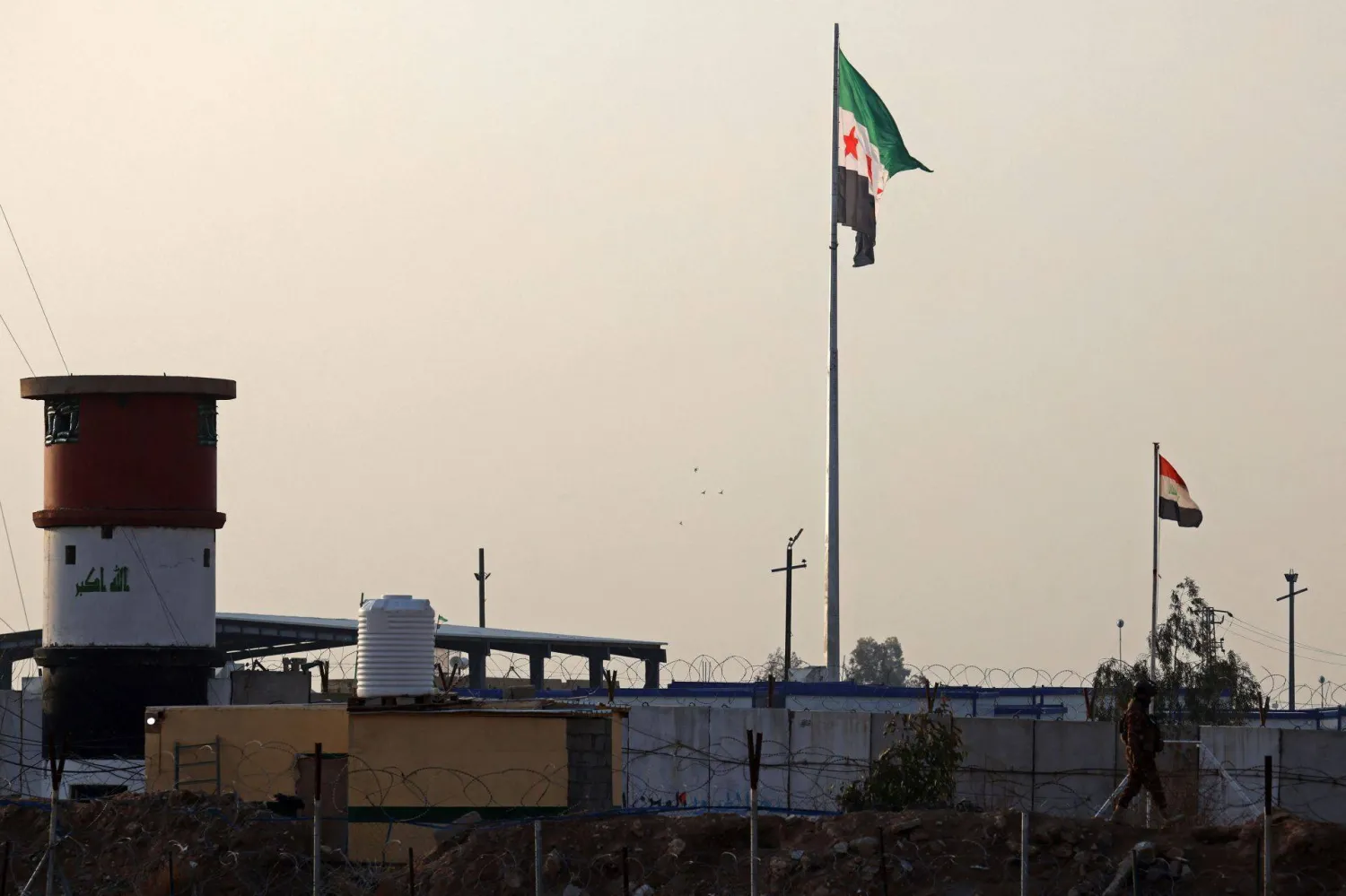

The Syrian armed forces said they were on full alert in wake of a rocket attack from Iraq against a Syrian military base in the Hasakeh province.
The army stressed that it will perform its duties in defending Syrian territories and deterring any attack.
Iraq arrested four people in connection with an earlier rocket attack launched against a military base in neighboring Syria, officials said late Tuesday.
Monday's attack targeted a northeastern Syrian military base in Hasakeh that had until recently hosted US forces with an international anti-ISIS coalition.
These are the first arrests announced in Iraq related to the Middle East conflict that broke out on February 28.
Monday’s attack took place hour after the bust of an Iraqi Popular Mobilization Forces (PMF) cell in Syria’s eastern Deir Ezzor province.
A Syrian security source told local radio that investigations are ongoing with the detainees to determine what they were planning. He revealed that they were collecting information and smuggling weapons in the area.
Assistant defense minister for the eastern region Sipan Hamo held Iraqi authorities fully and directly responsible for the attack on Hasakeh.
In a post on the X platform, he called on Baghdad to take the necessary measures to prevent a similar attack from taking place in the future.
The attack reflects the Iraqi authorities’ “inability” to impose control over their territories and failure “to prevent them from being used to launch attacks that threaten Syria’s security and safety,” he added.
Border with Lebanon
On the Syrian-Lebanese border, sources close to the Damascus government spoke of signs of an internal Lebanese escalation that is a “source of alarm for Syria.”
The sources told Asharq Al-Awsat: “It will be difficult for Syria to steer clear of any possible internal unrest in Lebanon. It will work on preventing any threat to Syria’s security.”
Hezbollah leaders had warned Lebanese authorities in recent days that the Iran-backed party would adopt a different approach towards them when the war is over.
Hezbollah has been critical of the government for banning its military operations, calling for its disarmament, calling for negotiations with Israel and recently for expelling the Iranian ambassador to Beirut.
Syrian Defense Ministry sources told Asharq Al-Awsat said Damascus was weighing three options. The first favors waiting for the end of the war before acting in Syria’s interests; the second believes in striking Hezbollah during the war because it is hostile to the Syrian people and its illegal weapons are tied to Iran and so, their presence is a threat to Lebanon and Syria; the third calls for coordination with Arab and regional parties, led by Saudi Arabia, Qatar and Türkiye, before any intervention can happen.
The unrest along the borders with Lebanon and Iraq will prompt Damascus to increase its coordination with those countries to prevent the smuggling of weapons and drugs and dry up the sources of support for Hezbollah and Iran-backed militias.
Military expert Abdul Jabbar al-Oqaidi told Asharq Al-Awsat that the possibility of Syria joining the conflict through intervening in Lebanon “is a very great challenge” and will have dire consequences for the security of the region and Syria that Iran can exploit.
Perhaps Iran is trying to lure Syria into the conflict “given that Tehran has been impatiently waiting for a moment to unleash its fury on the new Syria that expelled its forces, which marked the beginning of the end of the Iranian expansionist project in the region,” he added.
Al-Oqaidi said, however, it would be wise for Syria to stay out of the war. It should limit its role to securing borders and security coordination with the relevant parties.
He predicted that Syria would stay on the side and avoid becoming involved in a conflict that does not benefit it.
The Iranian and Zionist projects only have ill intentions towards the region and Syria, he warned.
The Defense Ministry sources noted the Lebanese government’s recent decision to ban Hezbollah’s military and security operations, saying it was a positive sign.
The Syrian state will “strike with force any attempt by the party to cross the border. At the same time, it is avoiding escalation and assuring Lebanese parties,” they added, underlining the importance of stability in Syria and Lebanon and the need to avert sectarian wars.