

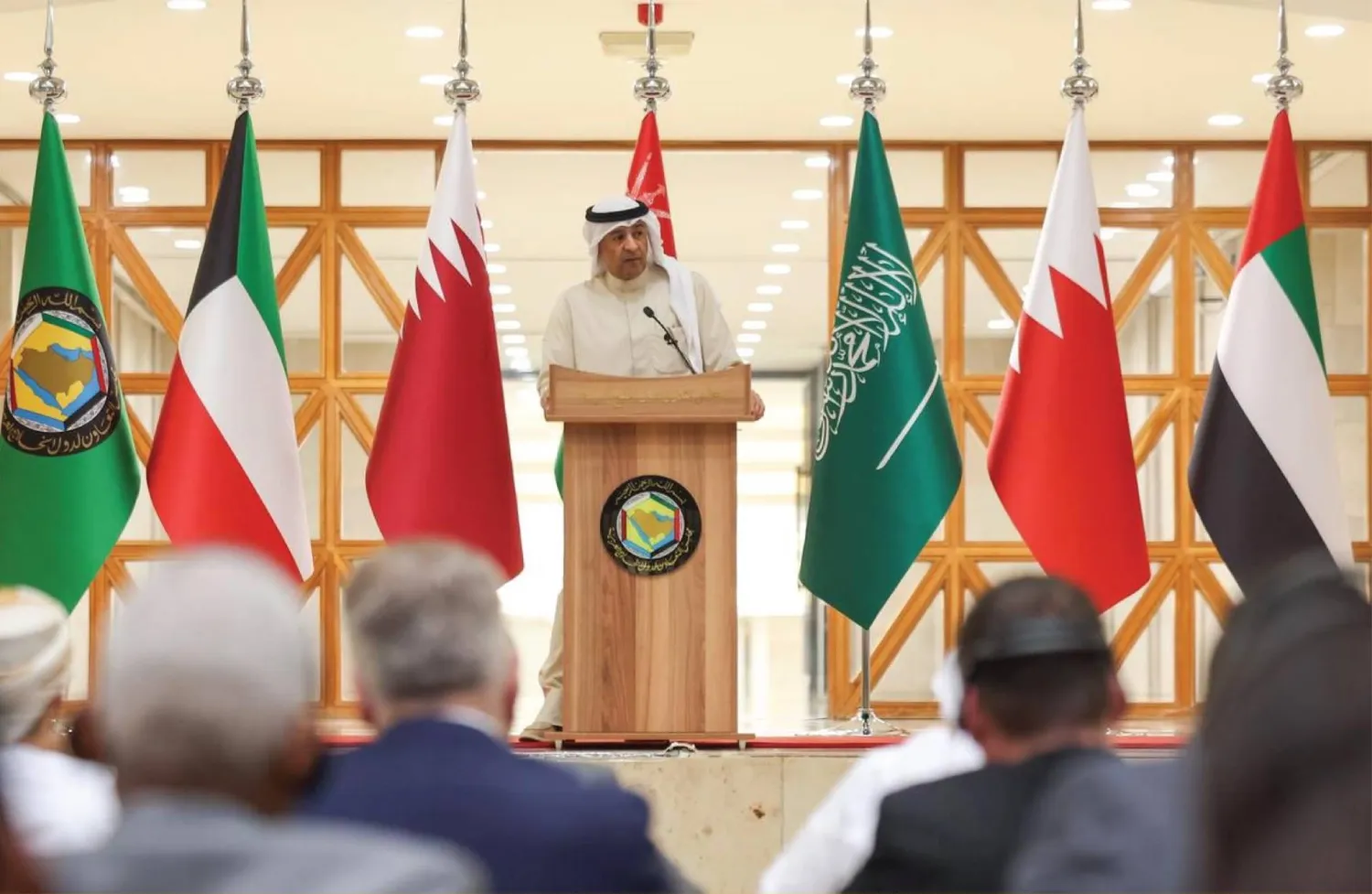

Albudaiwi: Regional Arrangements Excluding Gulf States Are Rejected

Albudaiwi affirmed that Gulf states had long been a pillar of regional and global stability (GCC)
TT

Albudaiwi: Regional Arrangements Excluding Gulf States Are Rejected

Albudaiwi affirmed that Gulf states had long been a pillar of regional and global stability (GCC)

Secretary-General of the Gulf Cooperation Council (GCC) Jasem Albudaiwi on Thursday called for Gulf states to be included in talks or agreements to resolve the crisis between Iran and the US and Israel.

“We stress the importance of involving GCC countries in any talks or agreements to resolve this crisis, in a way that contributes to strengthening their security and stability,” said Albudaiwi.

He added that the bloc rejected “any arrangements intended to redraw the map of the Middle East after the conflict ends.”

He said the GCC’s first choice was a diplomatic and political solution, describing it as “the wisest and most successful option,” while noting that Gulf states were reviewing all options in line with international law and the UN Charter.

Speaking in Riyadh to Arab and foreign ambassadors, Albudaiwi urged partners to send a unified international message to Iran demanding an immediate and unconditional halt to attacks on GCC states.

He said the Gulf’s goal “has never been to destroy Iran or weaken it, but to reach a normal relationship based on mutual respect, non-interference and non-aggression.”

He rejected framing the situation as part of “Middle East complexities,” calling it “a blatant violation of international law” and “a systematic targeting” of states not involved in any conflict.
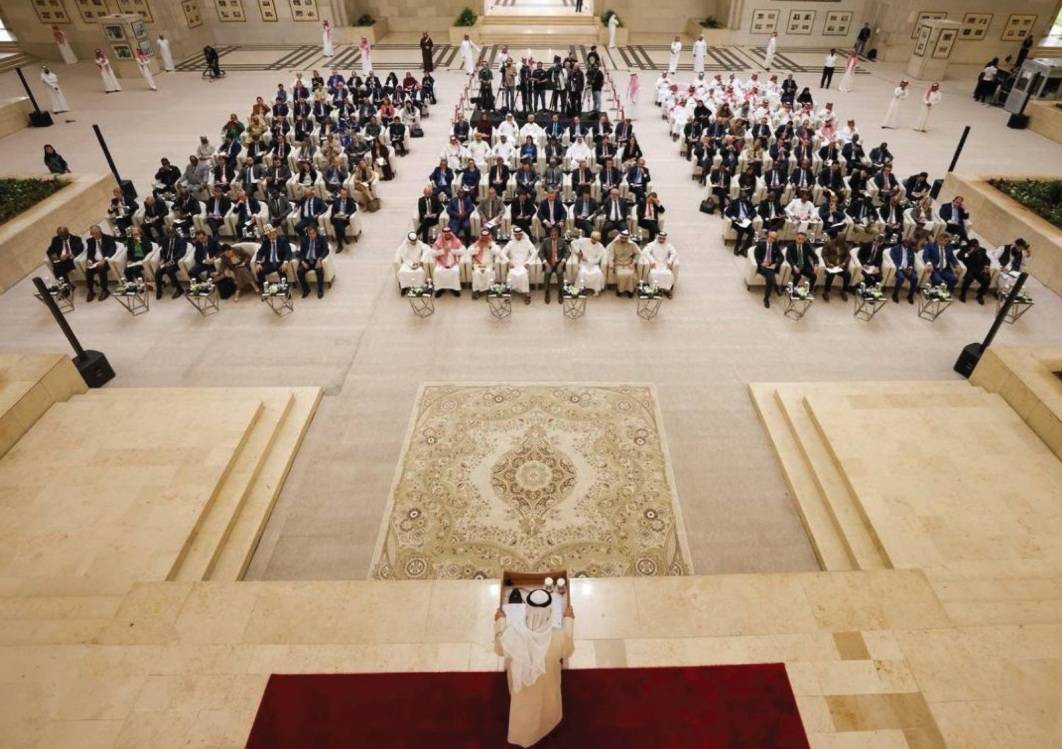
Albudaiwi said Gulf states would not accept becoming targets of aggression (GCC)

Albudaiwi said GCC states had long been a pillar of regional and global stability, a reliable energy source, and a responsible economic partner. But he said they would not accept becoming targets of aggression, arenas for regional rivalries, or seeing their citizens killed without accountability.

He said Iranian attacks over 25 days had exceeded 5,000 ballistic missiles and drones targeting GCC states.

Albudaiwi revealed that 85% of Iranian missiles launched in the war were aimed at Gulf states.

He praised Gulf air defenses for limiting the impact of the attacks, but said that this does not diminish the scale of the aggression or absolve Iran of full responsibility.

He said Iran had “crossed every line” by closing the Strait of Hormuz, blocking commercial ships and oil tankers, and imposing transit fees, in violation of international law.

He also cited repeated ship hijackings and attacks carried out through Iran’s regional proxies.

He warned that disruption to shipping would hit not only Gulf states but the global economy, especially as some countries face oil and gas shortages.

Albudaiwi explained that maritime passages are governed by international agreements, and no party can obstruct them or impose conditions.

The impact of closing the Strait of Hormuz may begin with higher energy prices, but its cumulative repercussions on the global economy, energy markets, marine insurance, and civil aviation would be catastrophic.

“What happens in the Strait of Hormuz does not stay in the Strait of Hormuz,” he added.

Albudaiwi said Gulf states were surprised by US and Israeli strikes on Iran, stressing they had made clear they would not take part in military action or allow their territory to be used against Iran, and had informed Tehran of that.

“Yet this position did not prevent it from attacking GCC states,” he said.

He said GCC states had shown restraint and chosen not to respond to avoid widening the conflict, and in the hope that Iran would come to its senses and stop these attacks.

He said Gulf states produce about 16 million barrels per day of crude oil, or 22% of global output, and account for 27% of global oil exports, or 11.5 million barrels per day.

They also hold 33% of global oil reserves and 21% of natural gas reserves.

These figures make the Gulf an indispensable pillar of the global economy, Albudaiwi affirmed, warning that any disruption would directly affect energy security and global economic stability.


Kuwait Ports Authority Says Drones Struck Shuwaikh Port

Smoke rises from a high-rise building following a drone attack in Kuwait City on March 8, 2026. (AFP/file photo)
TT

Kuwait Ports Authority Says Drones Struck Shuwaikh Port

Smoke rises from a high-rise building following a drone attack in Kuwait City on March 8, 2026. (AFP/file photo)

The Kuwait Ports Authority said on Friday that its main commercial Shuwaikh Port was targeted in a drone attack, resulting in material damage but no human casualties.

The authority added in a statement that it had activated the emergency procedures in place for such situations, in coordination with the relevant authorities.

Iran pressed on with its assaults in the Gulf in retaliation for US-Israeli strikes.


Saudi Arabia Urges Its Nationals in Lebanon to Leave Immediately

Saudi Embassy in Beirut (Reuters)
TT

Saudi Arabia Urges Its Nationals in Lebanon to Leave Immediately

Saudi Embassy in Beirut (Reuters)

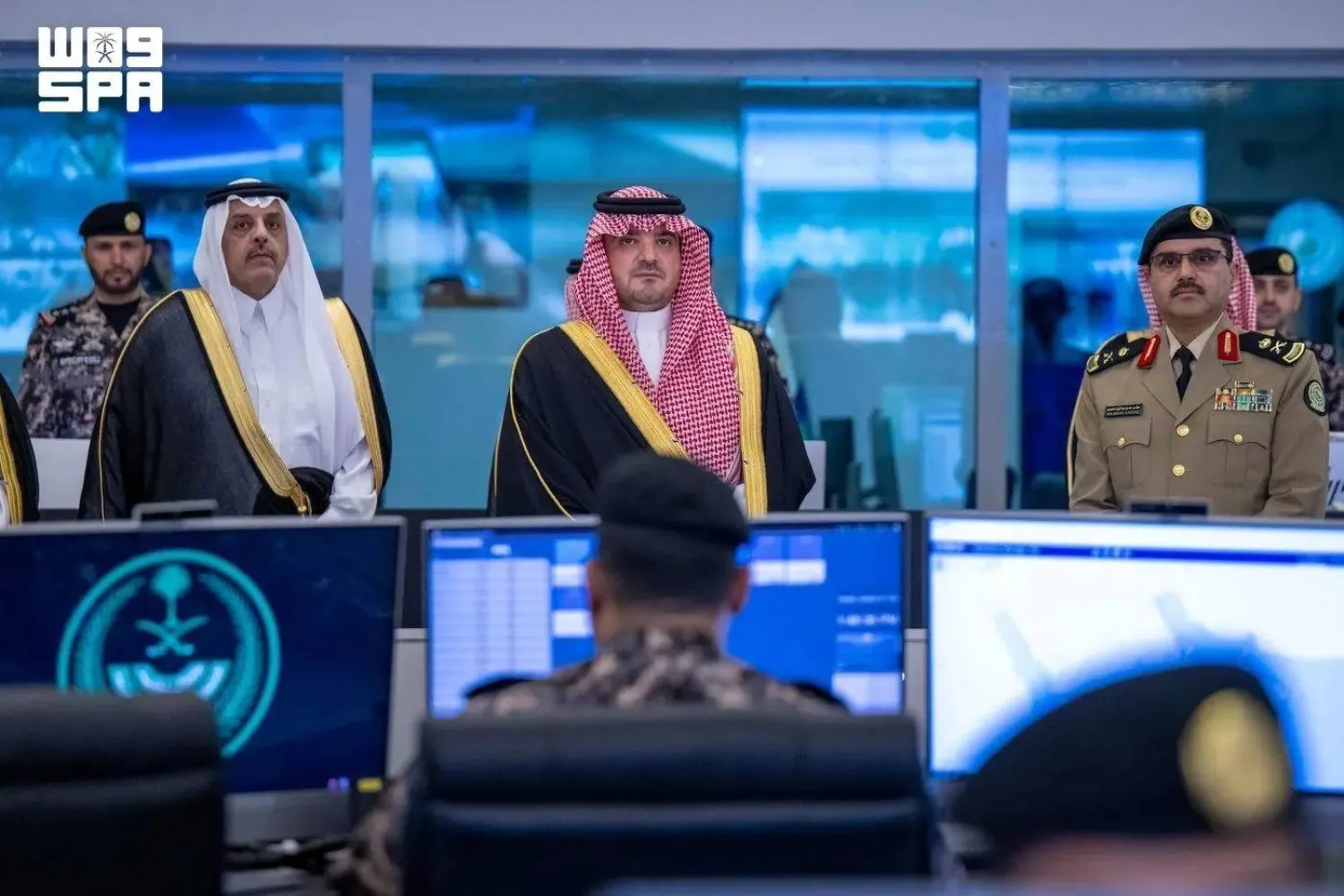
Saudi Arabia on Friday renewed calls on Saudi nationals currently present in Lebanon to leave the country immediately because of the security situation there.

In a statement on its social media platform X, the Saudi Embassy in Beirut urged its citizens to comply with the travel ban to Lebanon and called on all nationals currently present in the country to leave immediately citing the security developments.

The embassy emphasized the need to contact it in case of any emergency, wishing safety and security for all.


Kuwait Dismantles Iranian Cell, Bahrain Refers Collaborators to Judiciary

An Iranian rocket is intercepted over Abu Dhabi. (AFP)
TT

Kuwait Dismantles Iranian Cell, Bahrain Refers Collaborators to Judiciary

An Iranian rocket is intercepted over Abu Dhabi. (AFP)

Kuwait announced on Thursday that it busted a cell associated with Iran, while Bahrain referred collaborators with Tehran to the judiciary, reflecting the readiness of Gulf countries to deal with threats to their stability and security and to protect their higher interests.

Kuwaiti authorities said they thwarted a terrorist plot to carry out assassinations of state figures and leaders.

They detained a cell that includes a number of Kuwaitis working for Hezbollah, they added.

The cell was also tasked with recruiting people to carry out their attacks with the aim of harming higher national interests.

Kuwait had busted a similar cell just days ago.

Kuwait’s defenses also shot down on Thursday hostile rockets and drones that had breached its airspace.

In Bahrain, authorities arrested a cell accused of collaborating with Iran. It referred to the judiciary 14 people for contacting the Iranian Revolutionary Guards Corp (IRGC).

The detainees received assistance and funds to support operations against Kuwait, saying the IRGC had tasked them with sending photos and information.

One of the detainees took photos and sent coordinates of vital installations to the Guards, said Manama. The IRGC had used the information received from the cell to carry out attacks against Bahrain.

On March 12, the interior ministry announced that it had arrested four citizens for collaborating with the IRGC. Two days prior, it arrested six people for sharing photos of damage caused by Iranian attacks and voicing sympathy with Tehran and its hostile activities.

On Thursday, Bahrain’s defenses downed a rocket and 19 drones. Authorities said they will continue to confront Iran’s heinous terrorist attacks.

Bahrain has so far destroyed 154 rockets and 350 drones since the hostilities began.

In the UAE, authorities said a person was killed and three wounded from falling shrapnel from a downed ballistic missile in Abu Dhabi. Several vehicles were also damaged in the incident.

Emirati defenses downed 15 ballistic missiles and 11 drones fired from Iran in recent hours.

Since the eruption of the conflict, defenses downed 372 ballistic missiles and 1,826 drones from Iran. Two members of the armed forces were killed while performing their national duties.