


Lebanese Army ‘Repositions’ Itself in the South to Avoid Contact with Israel

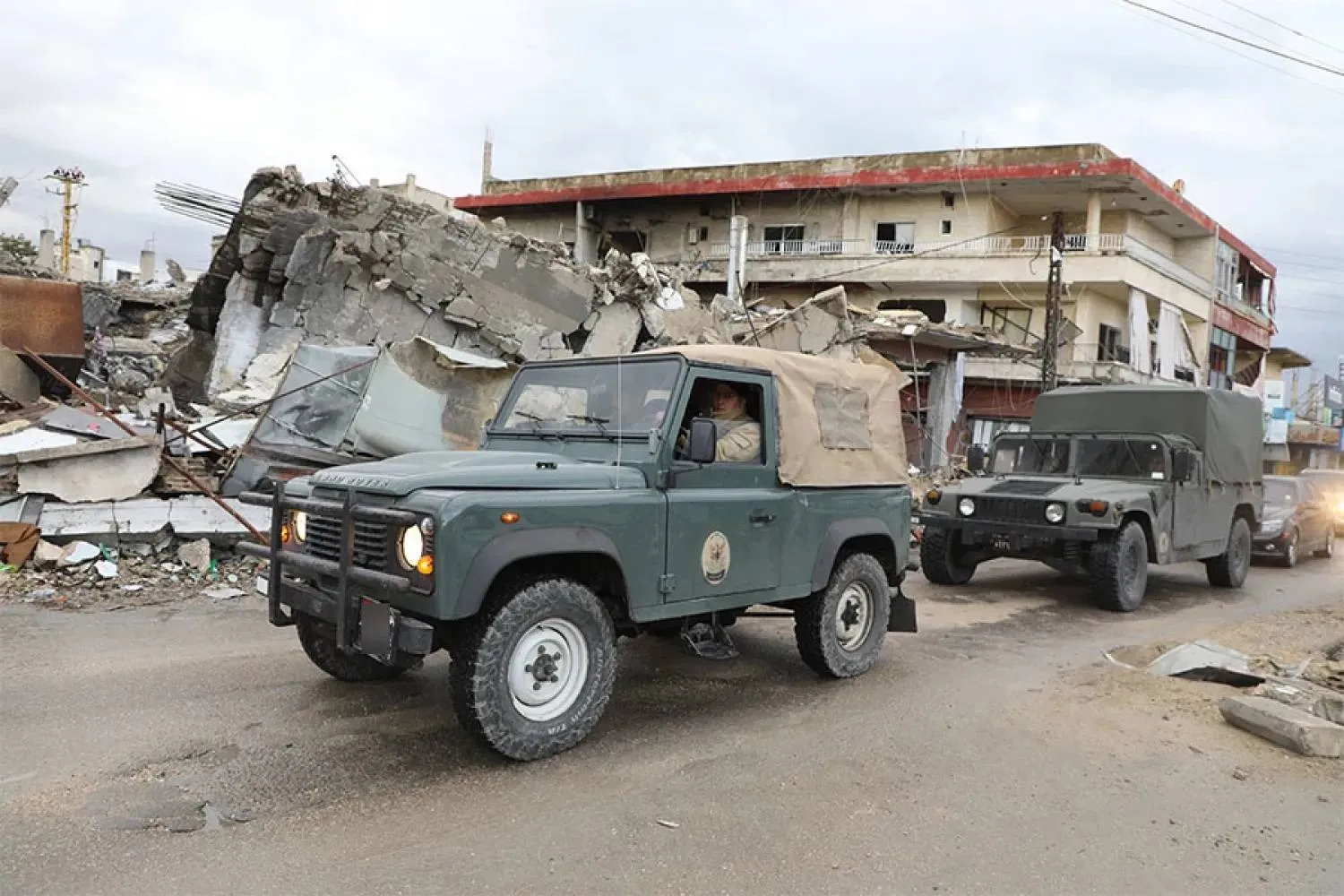
A Lebanese army patrol in southern Lebanon. (Lebanese army file photo)
TT

Lebanese Army ‘Repositions’ Itself in the South to Avoid Contact with Israel

A Lebanese army patrol in southern Lebanon. (Lebanese army file photo)

The Lebanese army and security forces are carrying out a “preventive” redeployment of units in the south under Israeli fire, in a move seen as aimed at avoiding direct contact or friction with Israeli forces.

The step comes amid the absence of a political decision to confront Israeli incursions militarily, and is viewed as the adoption of “protective tactics” for personnel in an area witnessing ongoing clashes.

A Lebanese security source familiar with the matter told Asharq Al-Awsat that the forces follow a fixed field principle of remaining alongside residents until the last moment before they need to evacuate an area.

“Personnel stay where civilians are, and withdraw only after displacement is complete, and before any potential Israeli advance, ensuring neither they nor residents are exposed to danger,” the source said.

Deployment is directly tied to displacement patterns and conditions in each town, the source said, noting that “the presence of residents is a decisive factor in the Internal Security Forces maintaining their posts.”

“Posts are not evacuated under a declared central plan, but based on changing field data,” the source added. “Every town that is emptied of its residents is automatically followed by the evacuation of its police post, with personnel joining the nearest military point.”

The town of Khiam was “among the last locations to maintain a security presence alongside residents until the final stages of displacement, before it was evacuated” as Israeli forces advanced.

Military pullback, local pushback

The town of Debel highlights the complexity of the situation between the military and civilians. A local source said the army had maintained an advanced position on its outskirts, but as limited Israeli incursions began nearby, the position was withdrawn overnight into the town, specifically to the public school.

“The withdrawal did not stop there,” the source said. “The following day, personnel were completely pulled out of Debel toward Rmeish, leaving no effective military presence inside the town, while personnel from Debel remained in their homes in civilian clothing.”

The most sensitive step was a proposal to relocate soldiers from the town, along with their families, outside the area, a move locally seen as a prelude to emptying the town. It was met with widespread rejection.

About 200 security personnel from Debel serve in the army and security forces, meaning their departure with their families would have led to the near-total evacuation of the town. Political and local efforts, involving the defense and interior ministries and religious authorities, led to the plan being frozen.

Despite the tension, the source said the town is not under siege, noting that the Debel-Rmeish road remains open, easing pressure for evacuation. Residents and personnel remain in their homes, while military positions and police posts continue operating in nearby towns, such as Ain Ebel and Rmeish.

Local media reported that the army repositioned at the Khardali checkpoint, the main gateway to the southern Litani area from the eastern sector, and is preparing to redeploy at the Kafra checkpoint, as Israeli forces advance toward Beit Lif and the facing Wadi al-Oyoun from the south.

Lebanese army commander General Rodolphe Haykal inspected units in Beirut and the southern city of Sidon and reviewed security measures within their areas of responsibility.

He urged troops to maintain readiness “to prevent any breach of security, and to act firmly against any attempt to undermine internal stability.”

“Despite rumors and incitement campaigns aimed at undermining the sacrifices and efforts of soldiers, the army will not hesitate to carry out its national duties,” he said, calling on troops “not to be influenced by such rumors, to adhere to their doctrine, and remain committed to performing their national duty.”

Preventive strategy

Former MP and retired brigadier general Chamel Roukoz said the moves “cannot be described as a traditional military withdrawal,” but rather a calculated field redeployment shaped by an asymmetric confrontation, given Israeli air and firepower superiority and the risk of direct targeting of exposed positions.

He said the army operates within a margin set by political authority, noting that no decision has been issued by the government to engage or confront Israeli forces directly.

“The military institution manages its deployment accordingly, balancing field presence with safety requirements,” he said.

On the evacuation of positions, including those reported in Debel, Roukoz said the measures “do not reflect abandonment of territory or a collapse of the front,” but rather precautions imposed by field realities, where some positions become easy targets under bombardment.

He said the redeployment carries operational and morale dimensions, aiming to avoid direct friction in the absence of a political decision, preserve troop morale, and avoid pushing forces into unequal confrontations.

The army command, he added, is showing “high flexibility” in managing deployment, shifting from exposed positions to safer ones.

Roukoz said the developments fall within “protection and redeployment tactics adopted in high-risk environments,” reflecting careful management of the balance between political decision-making and field realities.


Palestinian Brothers Killed in Israeli Strike on Gaza

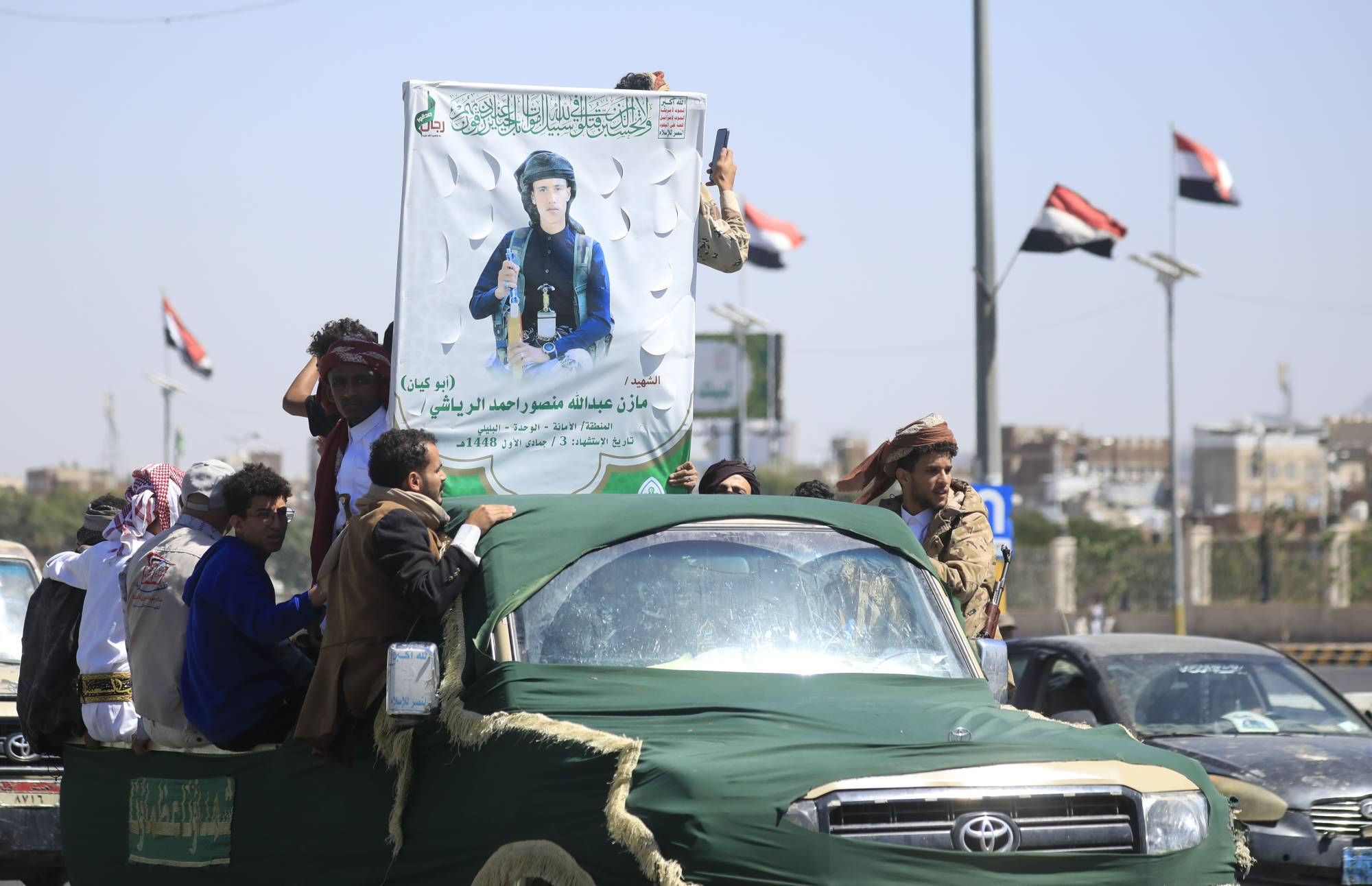
Mourners react during the funeral of Palestinians killed in an Israeli strike, according to medics, in Gaza City, March 28, 2026. REUTERS/Dawoud Abu Alkas
TT

Palestinian Brothers Killed in Israeli Strike on Gaza

Mourners react during the funeral of Palestinians killed in an Israeli strike, according to medics, in Gaza City, March 28, 2026. REUTERS/Dawoud Abu Alkas

An Israeli airstrike killed two Palestinian brothers Saturday morning in the Gaza Strip, hospital authorities said.

The strike hit the men close to the Showa roundabout in Gaza City’s Shijaiyah neighborhood, according to the Al-Ahly hospital.

The area is close to the so-called Yellow Line which separates Israeli-controlled areas across the Gaza Strip from the rest of the enclave.

Israel’s military did not immediately respond to a request for comment.


Israel, Hezbollah Brace for Prolonged Fighting in South Lebanon

An Israeli soldier directs a tank near the Lebanese border (Reuters)
TT

Israel, Hezbollah Brace for Prolonged Fighting in South Lebanon

An Israeli soldier directs a tank near the Lebanese border (Reuters)

Hezbollah is preparing for a prolonged fight in south Lebanon and is insisting on an Israeli withdrawal from Lebanese territory before any ceasefire takes effect, to avoid a repeat of the last war’s outcome, Lebanese sources following the group’s talks with officials said.

Continued Israeli troop build-ups suggest the Israeli army is also bracing for a long battle.

Information in Lebanon on fighters targeted in airstrikes, reinforced by Israeli footage of operations in combat zones, points to a shift in Hezbollah’s military approach.

The group has reduced combat units to two or three fighters to limit attrition and granted field units authority to act independently, based on battlefield conditions.

Sources said Hezbollah is preparing for a long war and will not accept any political deal that does not guarantee an Israeli withdrawal before a ceasefire begins, to prevent Israel from using any pause to destroy more homes or entrench military positions inside Lebanon.

The group is telling officials its fighters will continue to resist Israeli incursions until a full withdrawal, however long that takes. Any political agreement, the sources said, would also ensure the return of prisoners, whose numbers have risen since the war began, and allow displaced residents to return to their homes.

Talks suspended

The leaks indicate Hezbollah has raised its conditions ahead of any potential agreement, although there are currently no negotiations or exchanged messages with Israel through any international mediator, the sources said.

Israel has also raised its demands, seeking political negotiations with the Lebanese state while fighting continues and while it holds Lebanese territory.

These demands are coupled with steps by the Lebanese government to disarm Hezbollah, secure northern Israel fully and eliminate any threat, diplomatic sources told Asharq Al-Awsat.

The stance mirrors Israeli statements. The Israeli military said, “If the Lebanese government does not disarm Hezbollah, we will do it.”

A UN official warned of “increasingly alarming rhetoric” from Israeli authorities and the military regarding southern Lebanon, adding that what is needed is full respect for Lebanon’s sovereignty and territorial integrity.

Advance of 10 kilometers

Israeli forces have made what is seen as a strategic advance along Lebanon’s coast, pushing nearly 10 kilometers from the border southwest of Naqoura toward Bayyada, about 12 kilometers from the coastal city of Tyre.

Local sources said progress on this axis has been relatively smooth, as Hezbollah’s defenses are positioned farther east, along the route the Israeli army would take to reach Shama and Tayr Harfa and seize the surrounding high ground.

That would allow it to overlook the valleys of Zibqin and Majdal Zoun, an area it failed to enter in the last war despite controlling Shama.

Elsewhere, Israeli forces have advanced further in Qantara, nearing the edges of Wadi al-Hujair, a strategic valley that marked Israel’s last point of control before its withdrawal from south Lebanon in 2000. Reaching it would cut Hezbollah's supply lines from the valley and the Litani River toward the interior.

In response, Hezbollah said it carried out a series of attacks targeting Israeli tanks and troop concentrations, and released images showing armored vehicles hit in Deir Siryan and Taybeh with guided missiles and drones. The group said its fighters were engaging Israeli forces at point-blank range in some areas of incursion and inside village neighborhoods.

The number of operations on Thursday reached nearly 90, announced in separate statements, the highest since the war began on Oct. 8, 2024, signaling a sharp escalation.

Israel now fully controls 11 villages across the first, second and third lines along the border.

At the same time, Israeli airstrikes hit the Zahrani area, causing casualties in Sarafand and Saksakiyeh.

Strikes also targeted Bazaliyah in the Bekaa in eastern Lebanon, as well as dozens of villages in the districts of Tyre, Nabatieh, Bint Jbeil, Marjayoun and Jezzine, in addition to attacks on Beirut’s southern suburbs.

Warnings over the humanitarian situation

On the humanitarian front, Karolina Lindholm Billing, UNHCR Representative in Lebanon, said about 150,000 people have been cut off after bridges over the Litani River were destroyed.

The situation remains deeply alarming, and there is a real risk of a humanitarian catastrophe, she said.

Marcoluigi Corsi, UNICEF Representative in Lebanon, said at a Friday press conference that displaced people in Lebanon are unable to find safe shelter even in the capital, Beirut, amid the Israeli offensive against Hezbollah.


Hamas to Seek Changes in Response to Disarmament Plan

Smoke rises from a site hit by an Israeli strike near a camp for displaced people in Deir al-Balah in central Gaza Strip last Wednesday (AP)
TT

Hamas to Seek Changes in Response to Disarmament Plan

Smoke rises from a site hit by an Israeli strike near a camp for displaced people in Deir al-Balah in central Gaza Strip last Wednesday (AP)

Sources in Hamas and other Palestinian factions say there’s growing pessimism over a plan presented by the high representative of the US-backed Board of Peace, Nikolay Mladenov, to the movement’s leadership, proposing the full and unconditional disarmament of the Gaza Strip.

Two Hamas sources, inside and outside Gaza, told Asharq Al-Awsat the group is leaning toward partially rejecting the plan and will push for amendments to make it more equitable for Palestinians.

They said it does not clearly bind Israel to carry out the second phase, or even complete the first.

A third Hamas source and a senior Palestinian faction figure in Gaza said internal discussions are ongoing within each faction and at a broader national level.

Despite major reservations, they said the proposal would be handled positively while safeguarding Palestinian rights.

A unified response is expected, they added, one that stops short of full approval and instead seeks clarifications, guarantees and clear changes to several provisions.

Although the plan, reported by some media outlets and confirmed by sources, refers to “step-by-step” implementation by both sides, Hamas and other factions believe it favors Israel and does not compel it to meet its obligations.

The sources said it aims to fully disarm Gaza, including light, heavy and even personal weapons that individuals wanted by Israel may retain for self-defense.

Another senior faction source said the plan seeks to reshape Gaza’s political and security landscape and dismantle the “resistance” structure, offering in return only humanitarian and administrative measures that do not preserve Palestinians’ political and national rights.

The “step-for-step” principle, the source said, is largely symbolic, requiring factions to take strategic steps including full disarmament, surrendering all powers, halting any military activity and potentially restricting political activity under various pretexts.

It would also require factions to dismantle their own tunnels in areas under their control in exchange for temporary humanitarian packages.

A Hamas source in Gaza said disarmament “in this way” is unacceptable, arguing that Israel is imposing its conditions without regard for Palestinian demands.

The source said individuals wanted by Israel and leading activists must retain at least personal weapons for self-defense, citing ongoing Israeli special forces operations and armed groups accused of carrying out assassinations.

Such a scenario, the source said, could allow Israel to carry out killings while attributing them to ordinary criminal acts.

The plan’s general principles call for completing outstanding commitments from the first phase without delay and allowing the entry of reconstruction materials, including dual-use items, into areas verified as disarmed and placed under a national committee.

Hamas sees this as linking reconstruction and access to areas in Gaza with the surrender of weapons.

Hamas sources said this contradicts a plan by US President Donald Trump presented to the group during ceasefire talks last September, noting the original proposal called for setting weapons aside under a negotiated framework, not imposing disarmament through what they described as threats.

They added that the Board of Peace plan does not require a full Israeli withdrawal; instead, it outlines a partial, phased pullback without clear benchmarks.

It also falls short of committing to genuine reconstruction, focusing mainly on temporary housing such as caravans, while allowing construction materials in unspecified quantities and without clarifying whether they would support the comprehensive rebuilding of homes and civilian infrastructure.

According to the sources, the plan allows Israel to take military action if the national committee fails to carry out its duties, to address what it describes as a “serious potential threat” in areas declared disarmed. Hamas views this as giving Israel room to justify operations similar to those it currently conducts against Palestinian factions.

Among Hamas’s objections is the Board of Peace’s insistence that no government employees affiliated with the movement serve on the committee that would administer Gaza. The issue was discussed during a recent meeting in Cairo between Hamas leaders and Mladenov and remains under further negotiation.

The plan stipulates that Hamas must cease exercising any civil or security authority in Gaza and refrain from governance, policing and administrative functions.

Hamas is seeking an arrangement under which its civil servants would be integrated after security vetting, while senior officers and others rejected by Israel would be excluded from any governing role in Gaza.

Since Hamas leaders expressed anger at Mladenov, particularly following his remarks before the UN Security Council, the movement’s media outlets have stepped up efforts to promote its position, featuring interviews with faction figures, tribal leaders, analysts and writers to rally support for its stance.
