


Worries About Global Economic Pain Deepen as the War in Iran Drags on

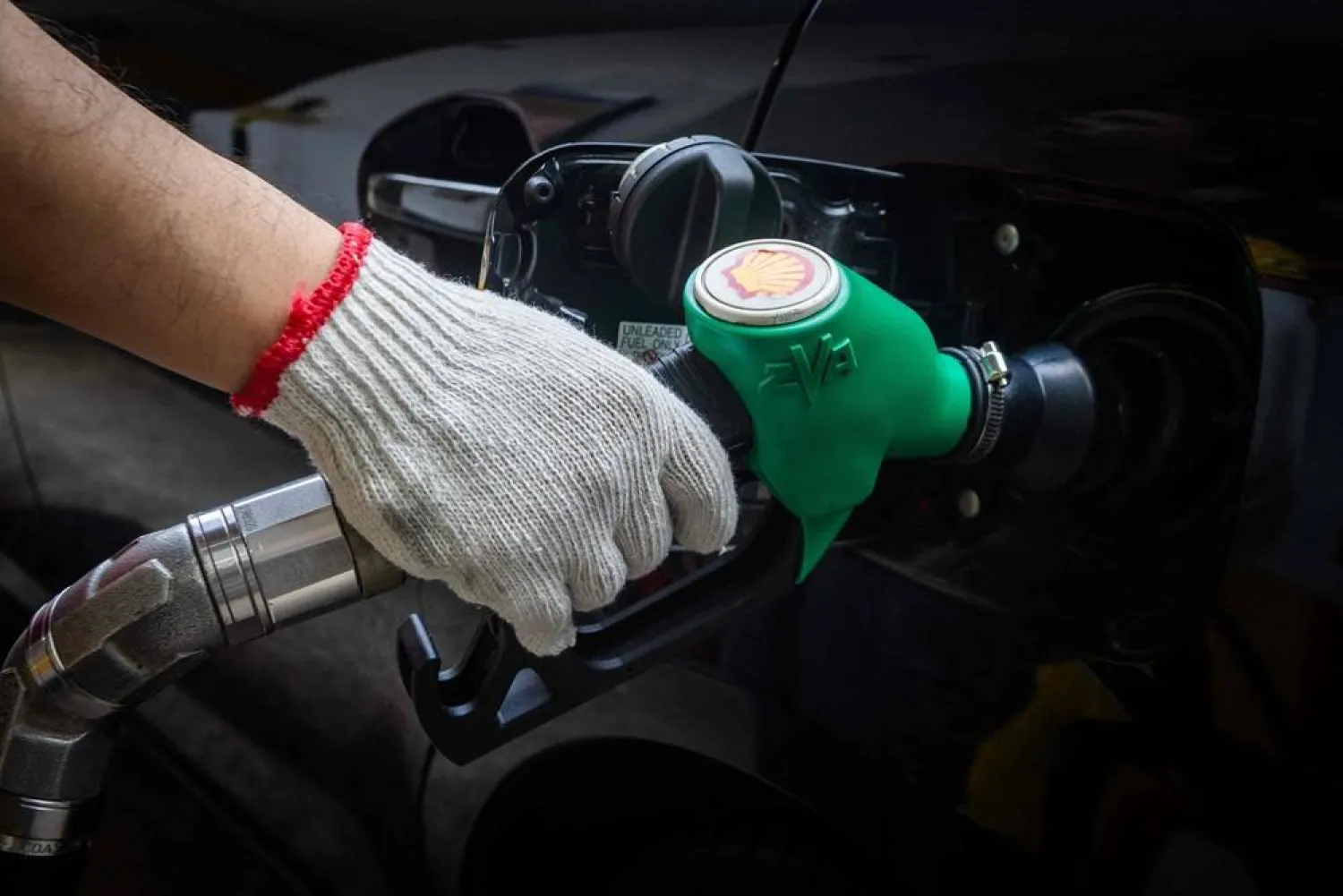
A worker refills the tank of a car at a gasoline station in Macau on March 27, 2026. (AFP)
TT

Worries About Global Economic Pain Deepen as the War in Iran Drags on

A worker refills the tank of a car at a gasoline station in Macau on March 27, 2026. (AFP)

US and Israeli attacks on Iran have driven up prices, darkened the outlook for the world economy, sent global stock markets reeling and forced developing countries to ration fuel and subsidize energy costs to protect their poorest.

Ongoing strikes and counterstrikes on Persian Gulf refineries, pipelines, gas fields and tanker terminals threaten to the prolong the global economic pain for months, even years.

“A week ago or certainly two weeks ago, I would have said: If the war stopped that day, the long-term implications would be pretty small,” said Christopher Knittel, an energy economist at the Massachusetts Institute of Technology. “But what we’re seeing is infrastructure actually being destroyed, which means the ramifications of this war are going to be long-lived.”

Iran has hit Qatar’s Ras Laffan natural gas terminal, which produces 20% of the world’s liquefied natural gas. The March 18 strike wiped out 17% of Qatar’s LNG export capacity and repairs will take up to five years, state-owned QatarEnergy said.

The war caused an oil shock from the get-go. Iran responded to US and Israeli attacks Feb. 28 by effectively closing off the Strait of Hormuz, a transit point for a fifth of the world’s oil, by threatening tankers trying to pass through.

Gulf oil exporters like Kuwait and Iraq cut production because there was nowhere for their oil to go without access to the strait. The loss of 20 million barrels of oil a day delivered what the International Energy Agency calls the “largest supply disruption in the history of the global oil market.”

The price for a barrel of Brent crude oil climbed 3.4% on Friday to settle at $105.32. That was up from roughly $70 just before the war began. Benchmark US crude rose 5.5% to settle at $99.64 per barrel.

“Historically, oil price shocks like this have led to global recessions,” Knittel said.

The war also has dredged up a bad economic memory from the oil shocks of the 1970s: stagflation.

“You’re raising the risk of higher inflation and lower growth,” said the Harvard Kennedy School's Carmen Reinhart, a former World Bank chief economist.

Gita Gopinath, former chief economist at the International Monetary Fund, recently wrote that global economic growth, expected before the war to register 3.3% this year, would be 0.3 to 0.4 percentage points lower if oil prices averaged $85 a barrel in 2026.

Fertilizer shortages and price hikes hurt farmers

The Gulf accounts for a big share of exports of two key fertilizers, a third of urea and a quarter of ammonia. Producers in the region enjoy an advantage: easy access to low-cost natural gas, the primary feedstock for nitrogen fertilizers.

Up to 40% of world exports of nitrogen fertilizer pass through the Strait of Hormuz.

Now that the passage is blocked, urea prices are up 50% since the war and ammonia 20%. Big agricultural producer Brazil is especially vulnerable because it gets 85% of its fertilizer from imports, Alpine Macro commodity strategist Kelly Xu wrote in a commentary. Egypt, a big fertilizer producer itself, needs natural gas to make the stuff and production falters when it can’t get enough.

Eventually, higher fertilizer prices are likely to make food more expensive and less abundant as farmers skimp on it and get lower yields. The squeeze on food supplies will land hardest on families in poorer countries.

The war also has disrupted world supplies of helium, a byproduct of natural gas and a key input in chipmaking, rockets and medical imaging. Qatar makes helium at the Ros Laffan facility and supplies a third of the world’s helium.

Rationing gas and limiting the air conditioning

“No country will be immune to the effects of this crisis if it continues to go in this direction,” International Energy Agency head Fatih Birol said on March 23.

Poorer countries will be hit hardest and face the biggest energy shortages “because they will be outbid when competing for the remaining oil and natural gas,” said Lutz Kilian, director of the Center for Energy and the Economy at the Federal Reserve Bank of Dallas.

Asia is especially exposed: More than 80% of the oil and LNG that passes through the Strait of Hormuz is headed there.

In the Philippines, government offices are now open just four days a week and bureaucrats must limit the use of air conditioning to nothing cooler than 75°F (24°C). In Thailand, public workers have been told to take the stairs instead of elevators.

India is the world’s second-biggest importer of liquefied petroleum gas, which is used in cooking. The Indian government is giving households priority over businesses as it allocates its limited supply and absorbing most of the price increases to keep costs low for poor families.

But LPG shortages have forced some eateries to shorten hours, close temporarily or drop dishes like curries and deep-fried snacks requiring a lot of energy.

South Korea, dependent on energy imports, is restricting the use of cars by public employees and has reinstated fuel price caps that had been dropped in the 1990s.

Crisis hits a vulnerable US economy

The United States, the world’s largest economy, is somewhat insulated.

America is an oil exporter, so its energy companies stand to benefit from higher prices. And LNG prices are lower in the US than elsewhere because its export liquefaction facilities already are running at 100% capacity. The US can’t export any more LNG than it already is, so gas stays home, keeping domestic supplies abundant and prices stable.

Still, higher gasoline prices are weighing on American consumers already frustrated by the high cost of living. According to AAA, the average price of a gallon of gasoline has risen to nearly $4 a gallon from $2.98 a month ago.

“Nothing weighs more heavily on consumers’ collective psyche than having to pay more at the pump,” Mark Zandi, chief economist at Moody’s Analytics, and his colleagues wrote in a commentary.

The US economy already was showing signs of weakness, expanding an annual pace of just 0.7% from October through December, down from a rollicking 4.4% from July through September. Employers unexpectedly cut 92,000 jobs in February and added just 9,700 a month in 2025, the weakest hiring outside a recession since 2002.

Gregory Daco, chief economist at EY-Parthenon, has raised the odds of a US recession over the next year to 40%. The risk when times are "normal'' is just 15%.

Recovery will take time

The world economy has proven resilient in the face of repeated shocks: a pandemic, Russia’s invasion of Ukraine, resurgent inflation and the high interest rates needed to bring it under control.

So there was optimism it also could shrug off the damage from the Iran war. But those hopes are fading as the threats to the Gulf's energy infrastructure continue.

“There is no economic upside to the conflict with Iran,” Zandi and his colleagues wrote. "At this point, the questions are how much longer the hostilities will continue and how much economic damage they will cause.”



Saudi Central Bank Governor Says National Model Has Shielded Economy from Shocks

Saudi Central Bank Governor Ayman Alsayari. (International Monetary Fund)
TT

Saudi Central Bank Governor Says National Model Has Shielded Economy from Shocks

Saudi Central Bank Governor Ayman Alsayari. (International Monetary Fund)

Saudi Arabia’s economy has emerged as a model of resilience and crisis readiness, Central Bank Governor Ayman Alsayari said, citing steady progress under the Kingdom’s Vision 2030 reform agenda.

He stressed that continued implementation of the plan has helped protect the economy from regional shocks, underpinned by solid growth, contained inflation and prudent monetary and fiscal policies.

This strength, he noted, reflects decades of structural reforms and strategic investment in infrastructure and institutions, equipping the Kingdom with the capacity and flexibility to absorb shocks while sustaining investor and consumer confidence.

Addressing the International Monetary and Financial Committee of the International Monetary Fund, chaired by Saudi Finance Minister Mohammed Al-Jadaan, Alsayari highlighted the importance of Saudi Arabia’s diversified energy and trade infrastructure in maintaining supply flows under pressure.

He pointed to long-term investments such as the East-West pipeline, which runs to Red Sea ports in Yanbu, describing it as a vital artery for both Saudi exports and global energy supplies.

The ability to reroute exports and secure access to Red Sea ports and strategic facilities, he said, underscores the importance of long-term planning in preventing supply disruptions.

It also reinforces the need to treat energy security as integral to global financial stability, while avoiding policies that sideline the role of fossil fuels in sustaining trade and growth.

Alsayari warned that the war in the Middle East poses a serious test for the global economy and could revive conditions reminiscent of the stagflation era of the 1970s.

He welcomed progress on the “Diriyah Guiding Principles,” describing them as a milestone in efforts to reform IMF governance after nearly two decades of stagnation. The principles, reflecting the Diriyah Declaration, combine realism and ambition and provide a basis for strengthening the fund’s representation of the global economy.

Alsayari said that the step is essential to enabling the IMF to carry out its core functions in surveillance and lending, while keeping pace with technological shifts such as artificial intelligence and digital assets, and safeguarding the international monetary system against geopolitical risks and stagflation.

Saudi Arabia is translating its economic gains into tangible international support, including a $279 million pledge for IMF capacity development and the opening of a regional office in Riyadh to strengthen cooperation with countries in the region and beyond, Alsayari added.

He also cited platforms such as the AlUla Conference on Emerging Market Economies as tools to share expertise and advance reforms that support resilience and long-term growth.


IEA Proposes Building Iraq-Türkiye Pipeline to Bypass Hormuz

A general view of oil tanks at Türkiye's Mediterranean port of Ceyhan, February 19, 2014. (Reuters)
TT

IEA Proposes Building Iraq-Türkiye Pipeline to Bypass Hormuz

A general view of oil tanks at Türkiye's Mediterranean port of Ceyhan, February 19, 2014. (Reuters)

International Energy Agency Executive Director Fatih Birol proposed building a new oil pipeline linking Iraq’s Basra oil fields and Türkiye’s Mediterranean oil terminal in Ceyhan to bypass the Strait of Hormuz, according to Turkish newspaper Hürriyet.

“I believe a Basra-Ceyhan pipeline could be extremely attractive and a very important project for both Iraq and Türkiye, as well as for regional supply security, especially from Europe’s perspective,” Birol said in an interview with the newspaper.

“I also believe the financing issue can be overcome. Now is exactly the right time.”

He said, “The vase has been broken once, and it is very difficult to fix,” referring to the Strait of Hormuz.

A new oil pipeline “is a necessity for Iraq and an opportunity for Türkiye. It is also a major opportunity for Europe in terms of supply security. I think this should be considered a strategic project,” Birol added.

The war on Iran has disrupted shipping through the Strait of Hormuz, the strategic choke point through which 20% of the world’s oil supply flows, bringing global economic pain in the form of higher prices for gasoline, fertilizer and other staples.

Iraq and Türkiye share the Kirkuk-Ceyhan pipeline, a strategic corridor for transporting crude oil from northern Iraq to the Turkish port of Ceyhan, which began operation in 1976.

Iraq is seeking to rehabilitate the pipeline to overcome export problems, proposing to establish a new line from Basra to Ceyhan as a safe alternative to the Strait of Hormuz and to boost European energy security. On Sunday, Birol suggested building the new line.


Taiwan Business Group Urges Beijing, Taipei to Keep Politics Out of Trade

A person looks at a stock market graph inside the Taiwan Stock Exchange in Taipei, Taiwan, 20 April 2026. (EPA)
TT

Taiwan Business Group Urges Beijing, Taipei to Keep Politics Out of Trade

A person looks at a stock market graph inside the Taiwan Stock Exchange in Taipei, Taiwan, 20 April 2026. (EPA)

The head of one of Taiwan's top business groups said on Monday both Beijing and Taipei should leave politics out of resuming normal trade and tourism exchanges, after China unveiled new incentives for the island.

China, which views democratically-governed Taiwan as its own territory, announced measures this month which include easing tourism curbs and food imports, but said they had to be based on "opposing Taiwan independence".

China refuses to talk to Taiwan President Lai ‌Ching-te saying he ‌is a "separatist", and has stepped up political and economic ‌pressure ⁠in recent years, ⁠targeting tourism and imports of food, as well as holding regular war drills.

"As soon as there is an opening up, it should be as much as possible be systematic and normalized to maintain the long-term stability of business and trade exchanges," said Paul Hsu, chairman of the General Chamber of Commerce.

Flanked by representatives of the tourist and food sectors, he ⁠urged China to ensure stability in trade ties ‌rather than sudden stops and starts, in ‌comments to reporters in Taipei.

No matter which political party runs a city ‌or county, China should offer equal treatment, especially in southern Taiwan, ‌Hsu added, referring to a stronghold of Lai's Democratic Progressive Party.

China's Taiwan Affairs Office did not immediately respond to a request for comment.

China's new steps came at the end of a visit to Beijing by Taiwan opposition leader Cheng Li-wun, ‌which she described as a journey of peace, on which she met President Xi Jinping.

Taiwan's government should ⁠also "proactively face" China's offers ⁠of opening up, Hsu's group, which represents more than a million companies, said in a statement accompanying the remarks.

Group members' votes would go to whoever was good for Taiwan industry, Hsu said, adding that he was representing non-partisan industry voices.

"As long as you put forth good policies, we will offer support. But if you stand against us, I'm sorry, I can't support you. We have a vote - we are a democratic society."

Taiwan will hold key local elections in November, with the next presidential vote scheduled for early 2028.

On Sunday, Taiwan's China-policy making Mainland Affairs Council said the government would address the "reasonable demands" of industry, but warned it not to "become tools manipulated and exploited by the Chinese communists".