


UNDP: Arab Countries May Lose Up to $194 Billion from Iran War

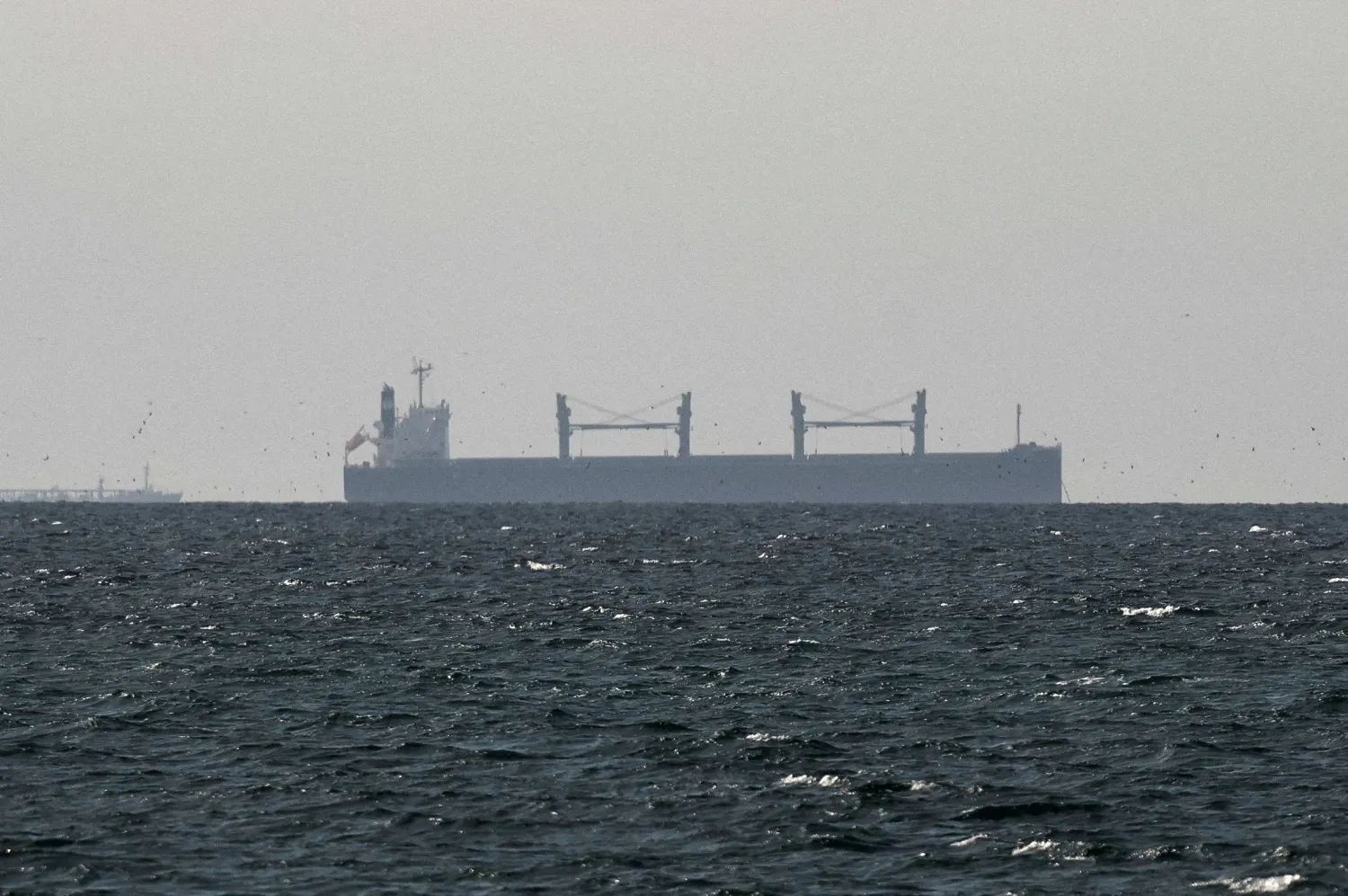
FILE PHOTO: A cargo ship in the Gulf, near the Strait of Hormuz, as seen from northern Ras al-Khaimah in United Arab Emirates, March 11, 2026. REUTERS/Stringer/File Photo
TT

UNDP: Arab Countries May Lose Up to $194 Billion from Iran War

FILE PHOTO: A cargo ship in the Gulf, near the Strait of Hormuz, as seen from northern Ras al-Khaimah in United Arab Emirates, March 11, 2026. REUTERS/Stringer/File Photo

The military escalation in the Middle East, now into its fifth week, may cost economies in the region from 3.7 to 6 percent of their collective Gross Domestic Product (GDP), a staggering loss of $120-194 billion, a new United Nations study found.

“Coupled with an estimated rise in unemployment of up to 4 percentage points or 3.6 million jobs lost—more than the total jobs created in the region in 2025, these reversals will push up to 4 million people into poverty,” according to an analysis by the United Nations Development Programme (UNDP), which was released early Tuesday.

The assessment - “Military Escalation in the Middle East: Economic and Social Implications for the Arab States region” - exposes the concerning reality of structural vulnerabilities characteristic to the region, which enable a short lived military escalation to generate profound and widespread socio economic impacts that may persist over a long-term.

The agency said it had studied a number of different scenarios to determine how the conflict, which began on Feb. 28, might affect countries in the region. The report’s authors indicated that the damage could be profound, even if the war ends relatively soon.

“A short-lived military escalation in the Middle East could generate profound and widespread socio-economic impacts across the Arab States region,” they said.

“Since the escalation began, maritime security risks and attacks on tankers have sharply curtailed shipping activity through the Strait of Hormuz,” said the study.

The Strait remains the world’s most critical maritime energy chokepoint, it added.

It warned that even limited military escalation or accidental incidents affecting the Strait can rapidly destabilize global energy markets and trigger sharp price movements.

The study added that simulations suggest that the military escalation could generate substantial but uneven macroeconomic impacts across the Arab States region.

Simulations indicate the Gulf Cooperation Council countries would experience macroeconomic impacts. GDP is projected to decline between 5.2 percent under the moderate disruption scenario and 8.5 percent under the most severe scenario.

The Levant region (Iraq, Lebanon, Jordan and Syria) could experience significant macroeconomic losses across all scenarios. Compared to the No-War scenario GDP is projected to decline between 5.2 percent and 8.7 percent.

These translate into between approximately 2.8 and 3.3 million additional people pushed into poverty.

The Human Development Index (HDI) declines by approximately –0.2 to –0.4 percent, corresponding to a loss of roughly half a year to nearly one year of human development progress. These impacts are most pronounced in the Levant, where losses translate into setbacks of around one to one and a half years.

According to the study, the war could also have significant implications for the region’s monetary, fiscal and financial conditions.

“The region’s central banks may therefore need to raise interest rates and intervene in foreign currency markets to contain foreign exchange and inflationary pressures and to provide liquidity support to banks,” it said.



IMF: Egypt Staff Mission May Lead to $1.6 Billion Disbursement this Summer

Traffic is seen on a street in central Cairo. Photo: Asharq Al-Awsat
TT

IMF: Egypt Staff Mission May Lead to $1.6 Billion Disbursement this Summer

Traffic is seen on a street in central Cairo. Photo: Asharq Al-Awsat

The International Monetary Fund said on Thursday that a staff mission is currently in Egypt to conduct the latest reviews on the country's Extended Fund Facility and Resilience and Sustainability Trust loan programs, which ⁠will determine a ⁠possible $1.6 billion disbursement.

IMF spokesperson Julie Kozack told a news briefing that if the review mission results ⁠in a staff-level agreement with Egyptian authorities, a board vote on completion of the reviews and the disbursement could take place over the summer months.

But she commended Egyptian authorities on making ⁠decisive policy ⁠actions that have limited the economic impact of the US-Israeli war on Iran, including keeping fiscal pressures in check.

She said that the IMF staff mission will confirm the resiliency of Egyptian growth.


Saudi Property Measures Help Curb Global Inflation Pressures

A food market in Saudi Arabia (SPA)
TT

Saudi Property Measures Help Curb Global Inflation Pressures

A food market in Saudi Arabia (SPA)

At a time when the global economy is grappling with strong waves of price pressures caused by the Iran war and disruption in the Strait of Hormuz, Saudi Arabia has managed to chart a different course.

Inflation continued to slow, settling at one of the lowest levels globally, supported by stable rents and regulatory measures to balance supply and demand.

The performance reflected the effectiveness of preemptive government measures and fiscal and monetary policies that helped shield the domestic market from the repercussions of geopolitical crises and global supply chain disruptions.

The latest official data showed that annual inflation slowed to 1.7% in April, according to the General Authority for Statistics.

The Ministry of Finance expects inflation in the Kingdom to slow to around 2% in 2026, compared with 2.3% in 2025.

The slowdown was supported by a slower rise in the cost of housing, water, electricity, gas, and other fuels, which increased by 3.8% compared with previous levels.

The stabilization of actual housing rents at 4.8% for the second month in a row also indicates that the market has begun to absorb regulatory measures. This raises an urgent question in economic circles over whether the Kingdom has already entered a phase of sustainable rent containment.

Experts say this stability could pave the way for further declines in the near term, especially after the approval of the executive regulations on fees for vacant properties, which aim to improve the efficiency of the real estate system and achieve a balance between supply and demand.

The fees are expected to increase real estate supply, which would in turn help lower prices and reduce them at the broader level across the Kingdom, strengthening its position as one of the G20 economies most capable of curbing price pressures.

The government has intensified its efforts to lower real estate prices and continues to do so.

This has come under the directives of Crown Prince and Prime Minister Prince Mohammed bin Salman, who ordered a number of measures to address the issue and bring balance to the real estate sector, after the system, particularly in the capital Riyadh, saw a wave of increases in land prices and rents in recent years.

Data details

Prices in the housing, water, electricity, gas, and fuels group, the second most influential category in inflation, slowed to 3.8% year on year in April, compared with 3.9% in March, recording the lowest rate of increase since the start of the year.

Inflation in actual housing rents also stabilized for the second month in a row at 4.8%, also the lowest rate of increase since the start of 2026.

Monthly comparison

On a monthly basis, the Consumer Price Index rose 0.2% compared with March, as prices increased for food and beverages, housing, and energy. In contrast, stable transport prices and declines in some furniture and clothing items helped limit the acceleration in inflation, keeping rates within moderate levels compared with regional and global markets.

Food and beverage prices, the largest group by weight in the consumer price basket, accelerated to 0.6% in April from 0.3% in March, mainly driven by higher food prices.

Transport prices rose 1% year on year, a slowdown from the previous month and the second-lowest rate of increase since the beginning of the year, helping limit the rise in overall inflation.

Real estate experts told Asharq Al-Awsat that government measures affecting the real estate sector would lower prices, which would, in turn, gradually reduce inflation in Saudi Arabia in the coming period. They said the housing, water, electricity, gas, and fuels group carries significant weight in the inflation rate.

Curbing monopoly

Dr. Osama bin Ghanem Al-Obaidy, an adviser and professor of international commercial law, attributed the slowdown to the stabilization of housing rents, especially after the approval of regulations imposing annual fees of up to 5% of the building’s value on vacant properties.

He said the executive regulations would encourage owners to use their vacant properties and put them on the market, increasing supply and lowering rental prices, thereby affecting real estate inflation by creating a balance between supply and demand.

He said the new regulations followed a series of government measures, including fees on undeveloped urban land, regulation of undeveloped plots, a five-year rent freeze, the development of large housing projects, and incentives for developers to increase real estate supply.

These efforts aim to achieve a more sustainable balance between supply and demand, leading to a further reduction in real estate inflation and, subsequently, a decline in the overall inflation rate.

Larger decline in rents

Economic expert Ahmed Al-Shihri said the slowdown in Saudi Arabia’s annual inflation rate was supported by the stabilization of actual housing rents. He said government moves related to the real estate system had helped calm the pace of increases in housing costs.

Al-Shihri said the decline coincided with the approval of the executive regulations for fees on vacant properties, aimed at boosting real estate supply and encouraging owners of unused units to inject them into the market.

He expected the move to contribute to a larger, gradual decline in rental prices in the coming period, once a better balance between supply and demand is achieved. This would ease pressure on rental prices and strengthen the housing market's stability, potentially supporting the continued slowdown in inflation to low levels compared with several regional and global economies.

He said real estate prices are among the groups with the greatest impact on inflation, meaning that a decline in the sector across the Kingdom would help gradually lower the rate in the coming period.

In conclusion, the data and accelerating legislative moves show that the Kingdom is not merely monitoring inflation indicators but is proactively addressing the roots of price challenges, especially in the real estate sector, which directly affects citizens’ quality of life.

With the executive regulations on fees for vacant properties entering into force and integrated with housing programs and increased supply, the Saudi economy appears to be moving steadily toward consolidating a phase of sustainable price stability. This enhances the appeal of the investment environment and supports households’ long-term financial planning.


IMF Says Constructive US-China Dialogue Good for World Economy

The US and Chinese flag at the Great Hall of the People prior to the state dinner of President Donald Trump and Chinese President Xi Jinping on Thursday May 14, 2026, in Beijing. (AP Photo/Mark Schiefelbein)
TT

IMF Says Constructive US-China Dialogue Good for World Economy

The US and Chinese flag at the Great Hall of the People prior to the state dinner of President Donald Trump and Chinese President Xi Jinping on Thursday May 14, 2026, in Beijing. (AP Photo/Mark Schiefelbein)

The International Monetary Fund said on Thursday that it welcomes the initial positive dialogue between US President Donald Trump and Chinese President Xi Jinping, adding that reducing tension and uncertainty between the world's ⁠two largest economies ⁠was good for the world.

"It's very important, of course, that the world's two largest economies are engaging ⁠at the highest level," IMF spokesperson Julie Kozack told a news briefing when asked about the Trump-Xi summit's initial outcomes in Beijing.

"We certainly welcome the fact that there's a constructive dialogue between ⁠the ⁠two countries. Anything that is going to help reduce trade tensions and reduce uncertainty is good for both of those large economies, and, of course, good for the global economy as well," Kozack added, according to Reuters.

Kozack also said that that the IMF was paying close attention to the energy shock caused by ⁠the conflict in the Middle East and its implications for ⁠fertilizer shipments.

History showed it took about six months for increases in fertilizer prices to translate into higher food prices, ⁠and ⁠in some cases reduced yields and food security issues, Kozack added.
