


Iran’s Fractured Leadership is Struggling to Coordinate, Officials Say

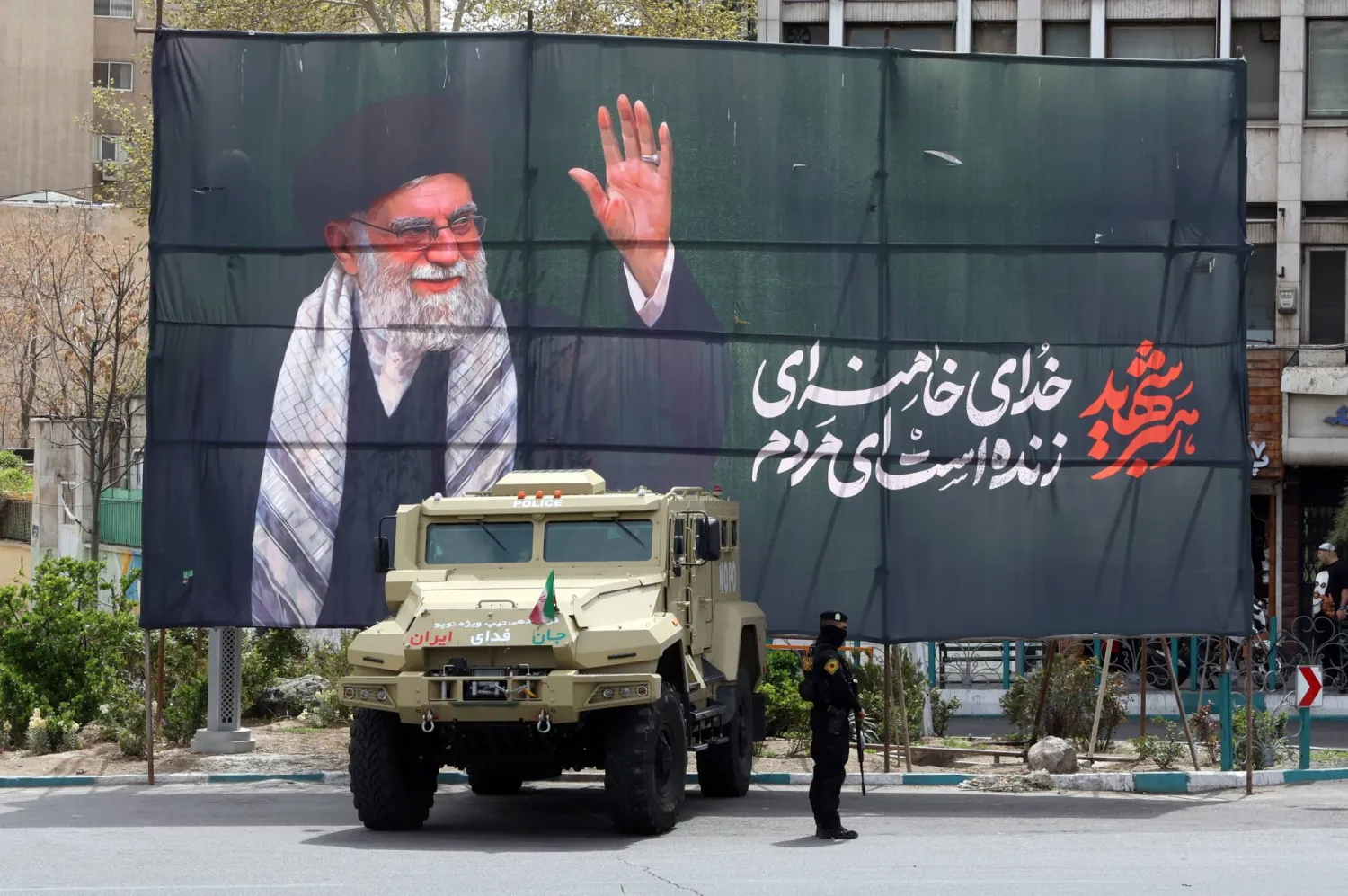
A member of the Iranian security forces stands guard next to a banner honoring former Iranian supreme leader Ali Khamenei, in Tehran, Iran, 30 March 2026. EPA/ABEDIN TAHERKENAREH
TT

Iran’s Fractured Leadership is Struggling to Coordinate, Officials Say

A member of the Iranian security forces stands guard next to a banner honoring former Iranian supreme leader Ali Khamenei, in Tehran, Iran, 30 March 2026. EPA/ABEDIN TAHERKENAREH

Washington: Ronen Bergman, Adam Goldman, Julian Barnes

The US-Israeli war against Iran has fractured the Iranian government, complicating its ability to make decisions and coordinate larger retaliatory attacks, according to officials familiar with US and Western intelligence assessments.

Several dozen Iranian leaders and their deputies have been killed since the war began four weeks ago. Those who survive have had difficulty communicating and are unable to meet in person, for fear of having their calls intercepted by the United States or Israel and being targeted in an airstrike.

While Iran’s security and military agencies continue to function, the government’s ability to plan new strategies or policies has been weakened.

The Trump administration has said a new government is in charge in Iran and has pressed it to make a quick deal. But the more degraded Iranian government decision making becomes, the more difficult it will be for it to negotiate with American envoys or make significant concessions.

With different leaders in place, Iranian negotiators may have little knowledge about what their government is willing to concede, or even whom precisely to ask.

What is more, American officials say hard-liners within the Iranian Revolutionary Guards Corps have become more influential in Iran, exerting more power than the religious leadership nominally in charge.

But whether someone emerges to make a deal, and whether that person can persuade other officials to agree to it, is far from clear.

Former American officials say Iran will make a deal when it suffers enough economic pain from the war. While the damage has been severe, Iran may not yet feel as though it is losing, according to current and former officials.

On Monday, US President Donald Trump threatened to expand the war if a deal was not quickly reached, suggesting that US forces might try to take Kharg Island, Iran’s main hub for oil exports.

Iran’s compromised communications have caused confusion and paranoia among the surviving government leaders, who fear that their calls and messages are being intercepted by Israeli intelligence, officials say.

As a result, they have been reluctant to make calls, according to officials briefed on Western intelligence assessments.

Israel began the war with a strike on the leadership compound that killed Iran’s supreme leader, Ali Khamenei, and much of the national security leadership.

A number of lower-level officials seen by the United States as more pragmatic were also killed in the strike, US officials said.

Trump himself made reference in interviews that potential candidates to lead Iran had been killed.

The attack severed many connections between security, military and civilian policymakers, according to Western officials and others briefed on government assessments.

It is unclear how much control the new supreme leader, Mojtaba Khamenei, is exerting over the government. He has not been seen in public, and US and Israeli intelligence agencies believe he was wounded during the war.

Some intelligence officials believe that Khamenei may be more of a figurehead, and that the surviving leadership of the Revolutionary Guards is making the decisions.

A senior US military official said Iranian command and control has been badly degraded by American and Israeli strikes.

Still, the official and a senior intelligence official said, before the war Iran built a decentralized control system that allows local commanders in different regions of the country to make their own strike decisions, even in the absence of direct day-to-day orders from Tehran.

The United States is targeting those local commanders, the senior military official said.

Nevertheless, Iran has proved it can still launch substantial offensive strikes.

But the retaliatory attacks have not been as large, or as effective, as they might have been because of the problems in the Iranian government. Given the decimation of its leadership, former US officials say, Iran has been unable to launch larger barrages of missiles that could more easily overwhelm defenses. Instead, regional commands have had to muster counterattacks without coordinating with one another.

Trump has expressed frustration with what he has portrayed as mixed messaging from the Iranian leadership.

“The Iranian negotiators are very different and ‘strange,’” Trump wrote on social media on Thursday. “They are ‘begging’ us to make a deal, which they should be doing since they have been militarily obliterated, with zero chance of a comeback, and yet they publicly state that they are only ‘looking at our proposal.’”

Over the weekend, Trump said the campaign of airstrikes had resulted in new leadership in Iran and again claimed progress in talks.

“It’s a whole different group of people,” Trump said on Sunday. “So I would consider that regime change, and frankly, they’ve been very reasonable.”

In a social media post on Monday, Trump offered optimistic assessments of the current government but also threatened to expand the war by targeting energy and civilian infrastructure. He said that if a deal was not reached shortly, and if the Strait of Hormuz remained closed, he would attack Iran’s electrical generation plants, oil wells and desalination plants.

People briefed on intelligence assessments said Trump’s frustration reflected the inability of the current Iranian government to coordinate a response and make a decision about the American peace proposals.

Israeli officials have said the communication problems in Iran are not dissimilar to the problems with hostage negotiations during the Gaza war. In Gaza, offers from the United States and Israel went to Hamas leaders in Qatar, and then were conveyed in written notes to leaders in Gaza, a time-consuming process that introduced confusion.

The New York Times


US to Leave Iran 'Pretty Quickly' and Return if Needed, Trump Tells Reuters

03 March 2026, US, Washington: US President Donald Trump speaks during a meeting in the White House. Photo: Kay Nietfeld/dpa
TT

US to Leave Iran 'Pretty Quickly' and Return if Needed, Trump Tells Reuters

03 March 2026, US, Washington: US President Donald Trump speaks during a meeting in the White House. Photo: Kay Nietfeld/dpa

The United States will be "out of Iran pretty quickly" and could return for "spot hits" if needed, President Donald Trump told Reuters on Wednesday, hours before he was scheduled to make a primetime address to the nation. Trump also said he would express his disgust with NATO for what he considers the alliance's lack of support for US objectives in Iran.
He said he is "absolutely" considering an attempt to withdraw the United States from NATO, Reuters reported.

Asked when the United States would consider the Iran war over, Trump said: "I can't tell you exactly .... we're going to be out pretty quickly."

He said US action has ensured Iran will not have a nuclear weapon.

"They won't have a nuclear weapon because they are incapable of that now, and then I'll leave, and I'll take everybody with me, and if we have to we'll come back to do spot hits," Trump said.


19 Migrants Found Dead by Italian Coastguard off Lampedusa

Hellenic coast guard performs SAR operation, following migrant's boat collision with coast guard off the Aegean island of Chios, near Mersinidi, Greece, February 4, 2026. REUTERS
TT

19 Migrants Found Dead by Italian Coastguard off Lampedusa

Hellenic coast guard performs SAR operation, following migrant's boat collision with coast guard off the Aegean island of Chios, near Mersinidi, Greece, February 4, 2026. REUTERS

The bodies of 19 migrants were recovered from a boat off the coast of Lampedusa on Wednesday by the Italian coastguard, the island's mayor told AFP.

Mayor Filippo Mannino said seven other migrants, including two children, were being treated for "hypothermia and intoxication from hydrocarbon fumes".

The coastguard rescue was staged some 135 kilometers (85 miles) off the Italian island, according to news agency ANSA.

The coastguard did not respond to AFP requests for information.

The rescue operation occurred in the early hours of Wednesday inside Libya's search-and-rescue zone, ANSA reported.

"All are believed to have died of hypothermia," wrote the agency, which cited strong winds, rain, and temperatures of 10C, in the area.

Lampedusa is a key landing point for migrants crossing the Mediterranean Sea from North Africa, with many dying trying the dangerous journey.

So far this year, 624 migrants have died or gone missing in the central Mediterranean, according to the UN's International Organization for Migration.

Lampedusa's last migrant disaster occurred in August last year, when 27 people died in two shipwrecks off the coast.

According to the interior ministry, 6,117 migrants have landed on Italy's shores so far this year.


Starmer Says UK to Host Multi-nation Meeting on Hormuz Shipping

British Prime Minister Keir Starmer speaks during a press conference to update on the latest situation in the Middle East and how the government is supporting families at home at 10 Downing Street in London, on April 1, 2026. (Photo by Frank Augstein / POOL / AFP)
TT

Starmer Says UK to Host Multi-nation Meeting on Hormuz Shipping

British Prime Minister Keir Starmer speaks during a press conference to update on the latest situation in the Middle East and how the government is supporting families at home at 10 Downing Street in London, on April 1, 2026. (Photo by Frank Augstein / POOL / AFP)

Britain will this week hold a meeting of about 35 countries to discuss how to reopen the strategic Strait of Hormuz which has been crippled by the Middle East war, Prime Minister Keir Starmer announced Wednesday.

UK Foreign Secretary Yvette Cooper will host the discussions, Starmer told reporters during a Downing Street press conference, without specifying the day of the talks.

The meeting will "assess all viable diplomatic and political measures that we can take to restore freedom of navigation, guarantee the safety of trapped ships and seafarers and resume the movement of vital commodities", Starmer said.

"Following that meeting, we will also convene our military planners to look at how we can marshal our capabilities and make the strait accessible and safe after the fighting has stopped," he added.

The discussions will include countries who recently signed a statement saying they were ready "to contribute to appropriate efforts to ensure safe passage through the Strait of Hormuz", Starmer said.

Britain, France, Germany, Italy, Japan and the Netherlands are among those to have signed it.

Iran has virtually closed the vital strait since the US-Israeli strikes that started the war on February 28, causing global oil and gas prices to soar.

A fifth of the world's oil and liquefied natural gas passes through the strait in peacetime.

"I do have to level with people on this. This (reopening) will not be easy," Starmer said.

The UK leader also backed NATO following renewed criticism of the eight-decade-old alliance by US President Donald Trump.

"NATO is the single most effective military alliance the world has ever seen, and it has kept us safe for many decades, and we are fully committed to NATO," Starmer said.

Trump told Britain's Telegraph newspaper in an article published Wednesday that NATO was a "paper tiger".

Asked whether he would reconsider US membership, he replied: "Oh yes, I would say (it's) beyond reconsideration," the paper reported.

Last month, Trump told the Financial Times that it would be "very bad for the future of NATO" if members fail to help reopen the vital waterway.

On Tuesday, he said that countries which have not joined the war but are struggling with fuel shortages should "go get your own oil" in the Strait of Hormuz, adding that the US would not help them.
