


Pessimism Grows over Iraq’s Prospects for Resuming Oil Exports

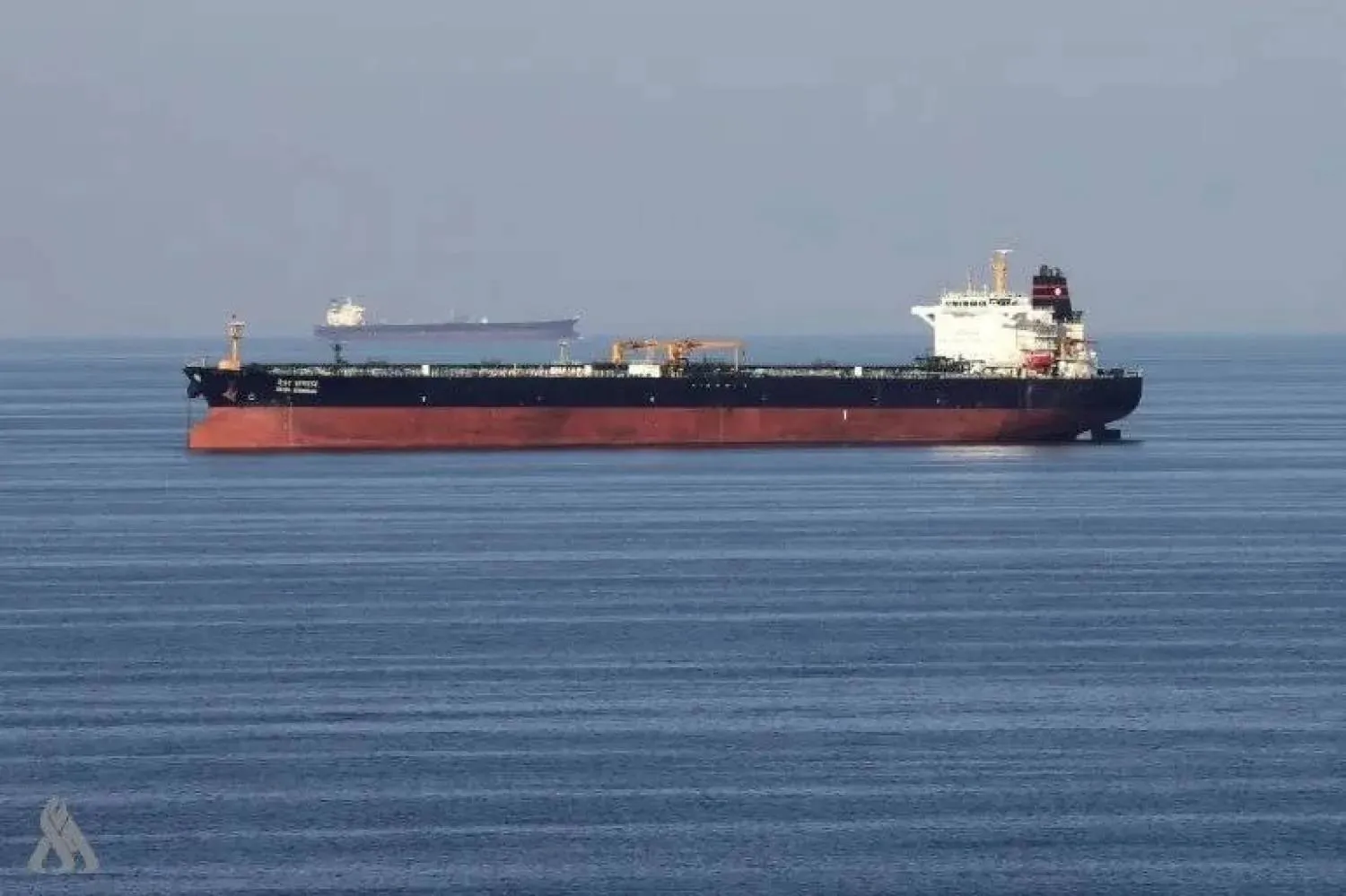
An Iraqi petroleum products tanker (Iraqi News Agency) 
TT

Pessimism Grows over Iraq’s Prospects for Resuming Oil Exports

An Iraqi petroleum products tanker (Iraqi News Agency) 

A growing number of Iraqi oil and economic experts are voicing pessimism about the country’s ability to resume crude exports via the Gulf and the Strait of Hormuz, despite Iran’s announcement of an “exception” allowing Iraqi shipments to pass as those of a “friendly country”.

Iraq has suffered a sharp blow to its oil sector following the US-Israeli conflict with Iran and the closure of the Strait of Hormuz, losing roughly three-quarters of its exports. The country had been producing about 3.5 million barrels per day, but current export volumes have dropped to around one million barrels per day, most of which is diverted to domestic consumption.

More than 300,000 barrels per day are still exported via the Kurdistan Region through Türkiye’s Ceyhan port, while smaller quantities are transported overland by tanker trucks to Jordan and Syria.

As a result of the collapse in exports, Iraq is expected to face a monthly fiscal deficit of between $5 billion and $6 billion, placing the government under severe financial strain, economists say.

While Iran’s decision has been welcomed by its allies and sympathizers as a positive step for Iraq, sceptics argue that resuming exports is far more complex than a political declaration. They point to complex web of technical, security and logistical challenges involving maritime risk, insurance costs, shipping company behavior and contractual arrangements.

Security concerns remain acute. Despite the Iranian exemption, four oil facilities in the southern province of Basra were targeted by drone attacks over the past two days, reportedly carried out by Iran-backed armed factions seeking to pressure foreign companies to leave Iraq. The incidents raise questions about the consistency between Tehran’s declared position and the actions of allied groups on the ground.

Former oil ministry spokesman Assem Jihad said Iraq’s export capacity is governed by “fundamental realities” that make a swift return to normal operations unlikely.

In comments posted on Facebook, he noted that Iraq does not rely on its own fleet of supertankers to export crude. Instead, the State Organization for Marketing of Oil (SOMO) sells oil under contracts whereby buyers arrange shipping and lift cargoes from Iraqi ports.

The key issue, he explained, is not a lack of contracts but the reluctance of global shipping companies and tanker owners to enter what is now considered a high-risk zone. Even if buyers are willing, securing vessels prepared to dock at southern Iraqi ports or operate near conflict areas remains a major obstacle.

Insurance costs have also surged. Companies face steep premiums for vessels transiting conflict zones, discouraging participation. “Even with statements allowing passage, that does not necessarily translate into a safe and secure shipping environment,” Jihad said, adding that insurers and shipping firms base decisions on actual risk assessments rather than political assurances.

He argued that exports would only resume once confidence returns to maritime markets, risks decline and insurance costs fall.

Economic researcher Ziad al-Hashimi outlined additional barriers preventing Iraq from benefiting from the Iranian decision.

Writing on X, he said Iraq’s oil production, service companies and southern export terminals are currently operating under “force majeure”, a status declared on March 20 across fields run by foreign firms. Lifting this clause could take time, as companies would require assurances that operations will not be targeted again.

“Its removal is not a quick process,” he noted, warning of “real risk” if exports resume without improved security guarantees.

Al-Hashimi also pointed to ongoing attacks on oil fields, saying that many service companies have evacuated staff and suspended operations. “Work will not return to normal as long as the war continues,” he underlined.

He further questioned the practicality of Iran’s exemption, which applies to loaded Iraqi tankers exiting Hormuz. “How will empty vessels enter the strait to reach Iraq, and who will guarantee their safety?” he asked.

The government and oil ministry have meanwhile faced criticism for failing to take precautionary measures to safeguard production, Iraq’s main source of national income. Critics say Baghdad should have diversified export routes or maintained floating storage capacity, as many oil-producing countries do.

According to Basra-based economist Nabil al-Marsoumi, Iraq’s state tanker company, established in 1972, currently owns just six vessels for refined products with a combined capacity of 117,000 tons. Four of these ships are over 15 years old, requiring more frequent maintenance.

The company no longer owns any crude oil tankers, he added, compared with 25 vessels totaling 1.485 million tons in 1983.

On the diplomatic front, Foreign Minister Fuad Hussein on Sunday thanked Iran for allowing Iraqi oil tankers to transit Hormuz during a meeting with Iranian ambassador Mohammad Kazem Al Sadeq.

A foreign ministry statement said the two sides discussed mechanisms to ensure implementation of the arrangement and broader regional developments. Hussein reiterated Iraq’s opposition to war and stressed the need for dialogue and peaceful conflict resolution.

Separately, data from the London Stock Exchange Group and analytics firm Kpler indicated that a tanker carrying Iraqi crude had passed through the Strait of Hormuz near Iran’s coast. The vessel, Ocean Thunder, loaded about one million barrels of Basra Heavy crude on March 2 and is expected to discharge in Malaysia in mid-April.


Iraq Could Restore Oil Exports to Pre-war Level within a Week if Hormuz Reopens, Basra Oil Chief Says

A cargo ship in the Gulf, near the Strait of Hormuz, as seen from northern Ras al-Khaimah, near the border with Oman’s Musandam governance, amid the US-Israeli conflict with Iran, in United Arab Emirates, March 11, 2026. REUTERS/Stringer/File Photo
TT

Iraq Could Restore Oil Exports to Pre-war Level within a Week if Hormuz Reopens, Basra Oil Chief Says

A cargo ship in the Gulf, near the Strait of Hormuz, as seen from northern Ras al-Khaimah, near the border with Oman’s Musandam governance, amid the US-Israeli conflict with Iran, in United Arab Emirates, March 11, 2026. REUTERS/Stringer/File Photo

Iraq could restore crude oil exports to around 3.4 million barrels per day within a week provided the Iran war ends and the Strait of Hormuz reopens, the head of the country’s state-run Basra Oil Company said.

Among Gulf oil producers, Iraq has suffered the biggest drop in oil revenue as a result of the effective closure of the Strait, a Reuters analysis has found, because it lacks alternative shipment routes.

But the country, the second biggest producer in the Organization of the Petroleum Exporting Countries, can quickly restore output to levels before US-Israeli attacks on Iran at the end of February led to the effective closure of the waterway. The Strait typically is the route for about a fifth of global oil and LNG flows.

SO FAR IRAN HAS MADE ONLY VERBAL PROMISES

Bassem Abdul Karim said Iran has so far provided only verbal guarantees that would allow Iraqi tankers permission to transit the Strait.

“We have not received any formal documents regarding permission for Iraqi tankers to pass,” he said in an interview with Reuters.

He said production from Iraq's southern oilfields was around 900,000 barrels per day, but if the war ends and safe passage through the Strait is guaranteed exports could reach 3.4 million bpd within a week.

US President Donald Trump has threatened to rain "hell" on Tehran unless it makes a deal by the end of Tuesday that would allow traffic to move through the Strait of Hormuz.

STEEP DROP IN IRAQI OIL OUTPUT

Last month, Iraq’s oil production dropped by about 80% to around 800,000 barrels per day, Iraqi energy officials told Reuters last month as the war meant Iraq could not export and storage tanks filled.

With limited outlets for Iraqi oil, production from the Rumaila field fell to around 400,000 bpd, down from about 1.35 million bpd before the conflict, and at the Zubair field the level was about 300,000 bpd, down 340,000 bpd before the war, Abdul Karim said.

Several smaller fields are being operated at limited levels to ensure continued production of associated gas, used in domestic power generation, while shutdowns at other sites have been used as an opportunity to carry out maintenance work, he added.

Production from Iraq's fields was around 4.3 million bpd before the war, which should leave enough leeway to export 3.4 million bpd even allowing for war-related damage.

Gas output from fields in Basra has dropped to around 700 million standard cubic feet per day, compared with about 1.1 billion standard cubic feet mscf per day before the war, largely because of the reduced oil production, Abdul Karim said.

MEETING REFINERY DEMAND

To supply domestic demand, BOC is sending around 400,000 bpd of crude to northern Iraq. That includes about 150,000 bpd by truck and roughly 250,000 bpd via a domestic pipeline, to supply refineries that have demand of around 500,000 bpd.

Production from the northern Kirkuk fields is roughly 380,000 barrels per day, Abdul Karim said.

Asked about the impact of drone attacks, Abdul Karim said strikes on oil facilities had caused “major losses to the continuity of production and oil operations,” adding that both foreign and Iraqi service companies had been targeted.

A two-drone attack that targeted the Rumaila oilfield on Saturday wounded three Iraqi workers, security and energy sources told Reuters.

Abdul Karim said the attack on the northern part of the Rumaila field hit sites used by US oilfield services companies Schlumberger and Baker Hughes, causing a fire that was later brought under control.

Neither Schlumberger nor Baker Hughes immediately responded to requests for comment.


Gold Holds Nearly Steady with Focus on US-Iran Tensions

Gold jewelry in a Korean gold exchange store in Seoul (AFP)
TT

Gold Holds Nearly Steady with Focus on US-Iran Tensions

Gold jewelry in a Korean gold exchange store in Seoul (AFP)

Gold prices were nearly steady on Monday, as market participants stayed cautious and awaited further signals on the evolving US-Iran situation and its impact on global interest rates.

Spot gold was little changed at $4,669.13 per ounce by 9:26 a.m. ET (1326 GMT) after falling 1% earlier in the session. US gold futures rose 0.3% to $4,694.20 per ounce, Reuters reported.

On the eve of a US deadline, the United States and Iran were weighing the framework of a plan to end their five-week-old conflict, even as Tehran pushed back against pressure to swiftly reopen the Strait of Hormuz. President Donald Trump has threatened to rain "hell" on Tehran if it did not make a deal by the end of Tuesday.

"Focus is likely to remain on the war and interest rates. If the conflict drags on, oil will grind higher amid tightening supply conditions, adding to inflationary pressures," said Bart Melek, global head of commodity strategy at TD Securities.

"That leaves central banks, particularly the Federal Reserve, with less room to ease policy and could even revive discussions about higher rates if energy prices rise further, which is negative for gold."

Oil prices fell in choppy trading on Monday, though they have risen sharply since the conflict began.

Gold is widely regarded as a hedge against geopolitical risks and inflation, but because it yields no interest, it tends to be less attractive when interest rates are high. Other items on investors’ radar include minutes of the Fed’s March policy meeting due on Wednesday, US Personal Consumption Expenditures (PCE) data due on Thursday, and the Consumer Price Index (CPI) on Friday.

The US central bank held rates steady last month and a majority of traders now see no chance of the Fed cutting interest rates this year, according to CME’s FedWatch tool. Among other metals, spot silver fell 0.4% to $72.67 per ounce, platinum lost 1% to $1,969.81, and palladium was down 1% at $1,488.58.


Morocco Launches Financial Futures Trading with Contract on MASI 20 Index  

File photo of a police officer standing near a Moroccan national flag near the main stadium during preparations for the FIFA Club World Cup in Agadir, December 10, 2013. REUTERS/Amr Abdallah Dalsh
TT

Morocco Launches Financial Futures Trading with Contract on MASI 20 Index  

File photo of a police officer standing near a Moroccan national flag near the main stadium during preparations for the FIFA Club World Cup in Agadir, December 10, 2013. REUTERS/Amr Abdallah Dalsh

Morocco on Monday began futures trading in financial instruments with its first listing of a standard futures contract on the MASI 20 equity index, the central bank and the AMMC - the capital markets regulator - said.

The contract, called the "MASI 20 Future," is based on an index that tracks the 20 largest and most liquid stocks listed on the Casablanca Stock Exchange, they said in a joint statement, AFP reported.

The contract's launch coincided with the unveiling of an institutional website by the Futures Market Coordination Body, a joint authority established to coordinate oversight of the futures market between the central bank and the AMMC.

The introduction of a futures contract represents the first step under Morocco's regulatory framework for derivatives trading, which will also allow for the development of other instruments such as options and swaps.
