


Iraq Could Restore Oil Exports to Pre-war Level within a Week if Hormuz Reopens, Basra Oil Chief Says

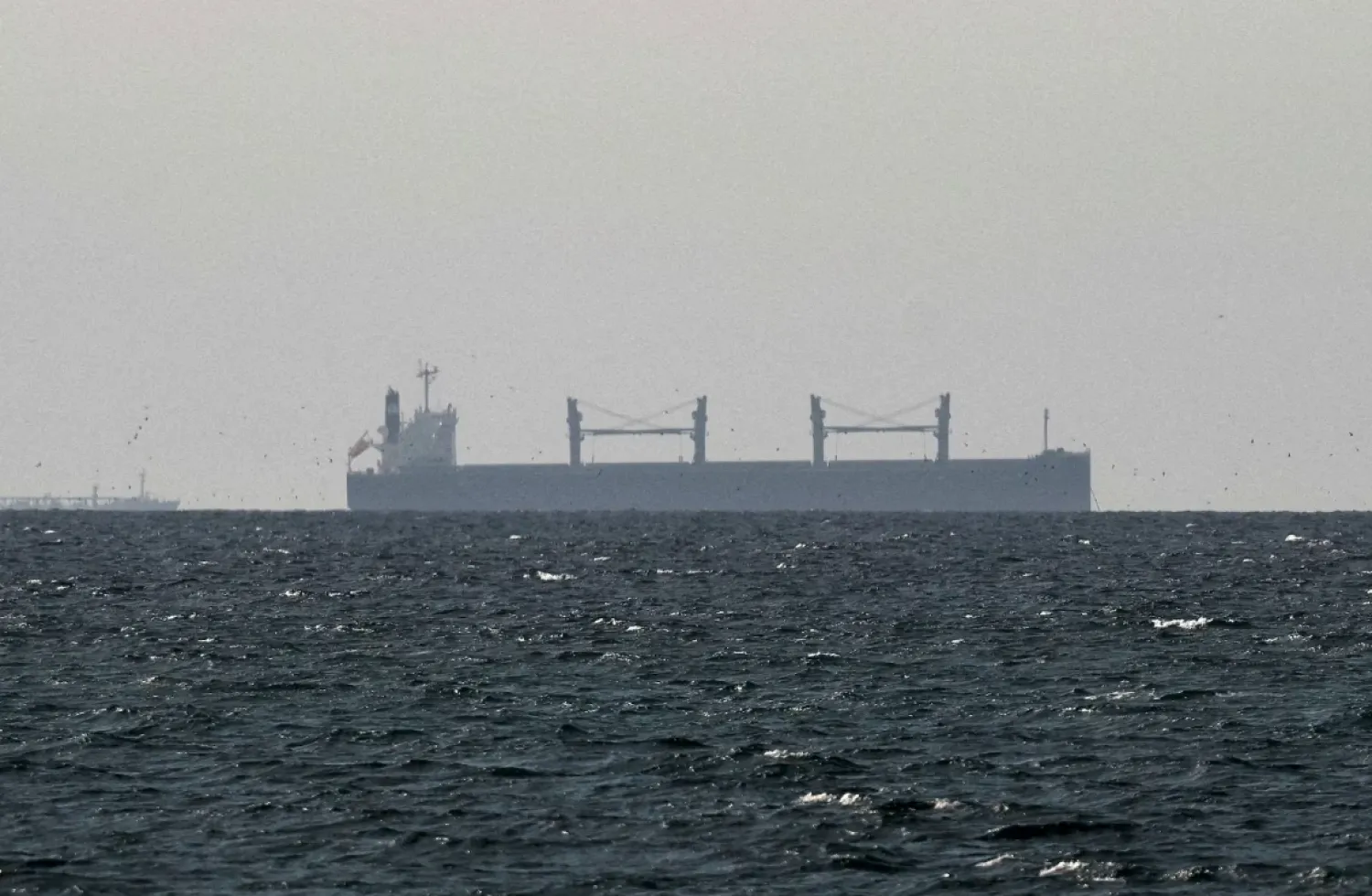
A cargo ship in the Gulf, near the Strait of Hormuz, as seen from northern Ras al-Khaimah, near the border with Oman’s Musandam governance, amid the US-Israeli conflict with Iran, in United Arab Emirates, March 11, 2026. REUTERS/Stringer/File Photo
TT

Iraq Could Restore Oil Exports to Pre-war Level within a Week if Hormuz Reopens, Basra Oil Chief Says

A cargo ship in the Gulf, near the Strait of Hormuz, as seen from northern Ras al-Khaimah, near the border with Oman’s Musandam governance, amid the US-Israeli conflict with Iran, in United Arab Emirates, March 11, 2026. REUTERS/Stringer/File Photo

Iraq could restore crude oil exports to around 3.4 million barrels per day within a week provided the Iran war ends and the Strait of Hormuz reopens, the head of the country’s state-run Basra Oil Company said.

Among Gulf oil producers, Iraq has suffered the biggest drop in oil revenue as a result of the effective closure of the Strait, a Reuters analysis has found, because it lacks alternative shipment routes.

But the country, the second biggest producer in the Organization of the Petroleum Exporting Countries, can quickly restore output to levels before US-Israeli attacks on Iran at the end of February led to the effective closure of the waterway. The Strait typically is the route for about a fifth of global oil and LNG flows.

SO FAR IRAN HAS MADE ONLY VERBAL PROMISES

Bassem Abdul Karim said Iran has so far provided only verbal guarantees that would allow Iraqi tankers permission to transit the Strait.

“We have not received any formal documents regarding permission for Iraqi tankers to pass,” he said in an interview with Reuters.

He said production from Iraq's southern oilfields was around 900,000 barrels per day, but if the war ends and safe passage through the Strait is guaranteed exports could reach 3.4 million bpd within a week.

US President Donald Trump has threatened to rain "hell" on Tehran unless it makes a deal by the end of Tuesday that would allow traffic to move through the Strait of Hormuz.

STEEP DROP IN IRAQI OIL OUTPUT

Last month, Iraq’s oil production dropped by about 80% to around 800,000 barrels per day, Iraqi energy officials told Reuters last month as the war meant Iraq could not export and storage tanks filled.

With limited outlets for Iraqi oil, production from the Rumaila field fell to around 400,000 bpd, down from about 1.35 million bpd before the conflict, and at the Zubair field the level was about 300,000 bpd, down 340,000 bpd before the war, Abdul Karim said.

Several smaller fields are being operated at limited levels to ensure continued production of associated gas, used in domestic power generation, while shutdowns at other sites have been used as an opportunity to carry out maintenance work, he added.

Production from Iraq's fields was around 4.3 million bpd before the war, which should leave enough leeway to export 3.4 million bpd even allowing for war-related damage.

Gas output from fields in Basra has dropped to around 700 million standard cubic feet per day, compared with about 1.1 billion standard cubic feet mscf per day before the war, largely because of the reduced oil production, Abdul Karim said.

MEETING REFINERY DEMAND

To supply domestic demand, BOC is sending around 400,000 bpd of crude to northern Iraq. That includes about 150,000 bpd by truck and roughly 250,000 bpd via a domestic pipeline, to supply refineries that have demand of around 500,000 bpd.

Production from the northern Kirkuk fields is roughly 380,000 barrels per day, Abdul Karim said.

Asked about the impact of drone attacks, Abdul Karim said strikes on oil facilities had caused “major losses to the continuity of production and oil operations,” adding that both foreign and Iraqi service companies had been targeted.

A two-drone attack that targeted the Rumaila oilfield on Saturday wounded three Iraqi workers, security and energy sources told Reuters.

Abdul Karim said the attack on the northern part of the Rumaila field hit sites used by US oilfield services companies Schlumberger and Baker Hughes, causing a fire that was later brought under control.

Neither Schlumberger nor Baker Hughes immediately responded to requests for comment.


Shehbaz Sharif: We Repaid $3.5 Billion in Debt Thanks to Saudi Arabia’s 'Pivotal' Support

Saudi Crown Prince Mohammed bin Salman holding talks with Pakistan's Prime Minister Shehbaz Sharif in Jeddah on March 12, 2026 (SPA).
TT

Shehbaz Sharif: We Repaid $3.5 Billion in Debt Thanks to Saudi Arabia’s 'Pivotal' Support

Saudi Crown Prince Mohammed bin Salman holding talks with Pakistan's Prime Minister Shehbaz Sharif in Jeddah on March 12, 2026 (SPA).

Pakistan’s Prime Minister Shehbaz Sharif announced on Wednesday that his country had successfully repaid $3.5 billion in mandatory bilateral debt, affirming that this achievement came thanks to the “pivotal” support of the Custodian of the Two Holy Mosques, King Salman bin Abdulaziz, and Crown Prince Mohammed bin Salman.

He clarified that this repayment did not affect the stability of foreign exchange reserves; rather, it strengthened market confidence in Pakistan’s ability to meet its international obligations.

The Kingdom had announced the provision of substantial financial support to Pakistan, including the extension of the term of a previous $5 billion deposit and the provision of an additional $3 billion deposit, aimed at enhancing economic stability and addressing global changes.

On Friday, the State Bank of Pakistan announced that Islamabad had completed the repayment of $3.45 billion in deposits to the United Arab Emirates, settling a final tranche worth $1 billion. The bank had also announced that it had received the Saudi deposit worth $3 billion.

This came after the United Arab Emirates requested that Pakistan return the funds it had deposited in the State Bank of Pakistan in 2018 to bolster its foreign exchange reserves.

This qualitative support aims to enable the Pakistani economy to confront global economic changes and strengthen its financial resilience, in a way that positively reflects on the living conditions of the Pakistani people. It also reaffirms the Kingdom’s consistent and ongoing position of standing alongside Pakistan under all circumstances, embodying the sincere bonds of brotherhood between the leaderships and the peoples.

In an address before the cabinet, the Pakistani Prime Minister clarified the current financial situation, stating: “We have repaid our mandatory external debts (amounting to approximately $3.5 billion in bilateral loans). Our foreign exchange reserves are stable at their current level, and we have fulfilled our obligations and repaid our debts.”

These developments constitute a key pillar in Pakistan’s relationship with international institutions; the stability of liquid reserves at around $20.6 billion (including $15.1 billion held by the central bank) contributes to strengthening Islamabad’s negotiating position with the International Monetary Fund. Pakistan’s success in repaying its bilateral debts, alongside adherence to the requirements of the Fund’s financing program, is seen as a vote of international confidence in the Pakistani economy’s ability to meet its immediate and future financial commitments.

The central bank indicated that its success in managing the outflows required to repay these billions was achieved without causing any shock to the value of the local currency, as the Pakistani rupee remained stable thanks to supportive deposits and cautious monetary policies.

For his part, Sharif explained that this repayment did not come at the expense of monetary stability; rather, it resulted from a coordinated plan between the Ministry of Finance and the central bank to ensure that foreign exchange reserves remained at safe levels, which strengthens Pakistan’s position in its ongoing negotiations with international financial institutions.

Regarding the role played by the Kingdom in securing this financial passage, the Prime Minister expressed his country’s deep appreciation, saying: “We are extremely grateful to the Custodian of the Two Holy Mosques, King Salman bin Abdulaziz, and His Royal Highness Crown Prince Mohammed bin Salman; they played a pivotal role in this matter. I am confident that these major issues will also be resolved, and Pakistan’s peace efforts continue uninterrupted and without relent.”

Sharif noted that this Saudi support was not merely temporary financial assistance, but rather a reflection of the depth of historical ties, adding: “Just as we have strengthened mutual cooperation by removing obstacles at both the joint and institutional levels, positive results have emerged from this.”

It is worth noting that this new Saudi move is not unprecedented. In 2018, the Kingdom provided a $6 billion support package, which included a $3 billion deposit in the State Bank of Pakistan, in addition to deferred oil payment facilities of the same value.


New Shipping Service Connects Jeddah Islamic Port with China, Malaysia and Egypt

Jeddah Islamic Port (Mawani)
TT

New Shipping Service Connects Jeddah Islamic Port with China, Malaysia and Egypt

Jeddah Islamic Port (Mawani)

The Saudi Ports Authority (Mawani) has announced the addition of China United Lines’ new SGX shipping service to Jeddah Islamic Port, enhancing the Kingdom’s connectivity with global markets, improving supply chain efficiency, and supporting trade flows through the Red Sea- one of the world’s most important maritime routes.

The new shipping service connects Jeddah Islamic Port with the ports of Shanghai and Nansha in China, as well as ports in Malaysia and Egypt, with a capacity of up to 2,452 TEUs.

This initiative forms part of Mawani’s ongoing efforts to improve the Kingdom’s performance in global logistics indicators, strengthen national exports, and support the objectives of the National Transport and Logistics Strategy, which aims to position Saudi Arabia as a global logistics hub and a key link between three continents.


Saudi Trade Offices Contribute to Creating 2,221 Export Opportunities, Securing 393 New Investments

King Abdullah Economic City port (Economic Cities and Special Zones Authority)
TT

Saudi Trade Offices Contribute to Creating 2,221 Export Opportunities, Securing 393 New Investments

King Abdullah Economic City port (Economic Cities and Special Zones Authority)

Saudi Arabia’s General Authority of Foreign Trade said Saudi commercial attachés contributed to creating 2.221 export opportunities and secured 393 new investment opportunities, underscoring efforts to expand the Kingdom’s global economic footprint.

The gains came alongside measures to protect domestic industry, including four anti-dumping investigations and five decisions imposing protective duties on imports to ensure fair competition and support Saudi exports abroad.

Established in 2019 as an independent authority, the body is tasked with advancing Saudi trade interests internationally and supporting economic development under Vision 2030.

According to a recent authority report seen by Asharq Al-Awsat, the agency held 25 meetings of its main negotiating team involving Saudi government entities, 75 meetings of related subcommittees and 149 meetings of Gulf technical negotiating teams. It also conducted seven rounds of negotiations between Gulf Cooperation Council states and trade partners.

International Partnerships

The authority carried out 38 overseas visits, participated in or prepared for 39 international forums and conferences, and held 305 technical meetings with domestic and foreign entities.

It launched four anti-dumping investigations into imports, prepared 182 economic reports to support companies and took part in seven international investigations to defend Saudi exports. It also issued five anti-dumping duty decisions covering imports of several products.

The report said the authority continued negotiations with a number of countries to support non-oil exports - goods and services - by securing preferential access to global markets, encouraging and protecting investment, strengthening supply chains and advancing free trade agreements with major economies and blocs.

Diversification Push

The authority said the efforts align with Vision 2030 goals to diversify the economy and strengthen Saudi Arabia’s position in global trade, adding that it was pressing ahead with trade policies aimed at widening the reach of Saudi exports and opening new markets, reinforcing the Kingdom’s ambition to position itself as a global trade hub.

The authority also said it was working with public and private sector partners to develop a more flexible and competitive external trade system while adopting international best practices in trade regulation.

The efforts form part of broader plans to boost the competitiveness of Saudi exports, improve efficiency and build a sustainable, diversified economy in line with the Kingdom’s foreign trade ambitions.
