


Saudi Arabia: AlUla Advances to 85th Place in IMD Smart City Index 2026

AlUla seeks to become an ideal destination for living, working and visiting. SPA
TT

Saudi Arabia: AlUla Advances to 85th Place in IMD Smart City Index 2026

AlUla seeks to become an ideal destination for living, working and visiting. SPA

AlUla has recorded the highest improvement in the IMD Smart City Index 2026, advancing from 112th place in 2025 to 85th this year, placing it among the most improved cities globally in this edition of the index.

This result reflects AlUla's ambition to become an ideal destination for living, working and visiting.

This achievement is a continuation of the comprehensive and sustainable development objectives pursued by the Royal Commission for AlUla (RCU) since its establishment, and in line with the AlUla vision, which targets the development of infrastructure, improvement of services, and enhancement of quality of life for the people and residents of AlUla, whilst preserving the unique natural and cultural environment of the governorate.

This year's edition of the index measures city performance across key pillars including quality of life, service efficiency, technology, environmental sustainability, and smart governance.

These pillars are central to the commission's priorities and are being continuously advanced in partnership with stakeholders across the public and private sectors.

On the quality of life front, RCU continues to develop services for the people and residents of AlUla, spanning education, healthcare, infrastructure, and public utilities, within an approach that balances urban development requirements with the preservation of the destination's identity.

Sustainability also serves as a foundational pillar within the comprehensive development framework for the governorate. In this regard, RCU has announced the lifting of the suspension on land sales and transactions in central and southern AlUla, a strategic step that opens the door for citizens and investors to participate in real estate activities within a regulated environment.

On the education front, RCU has established an integrated system that encompasses a language institute offering instruction in five languages, a scholarship program that has benefited more than 690 students, teacher qualification programs in which more than 800 educators have enrolled, and community activities that have engaged approximately 7,400 students.

In the area of transport, RCU has completed the expansion of AlUla International Airport, increasing its annual passenger capacity from 400,000 to 700,000, doubling the number of passport control lanes, and integrating smart technologies to enhance the passenger experience, alongside the introduction of smart mobility solutions within the governorate.

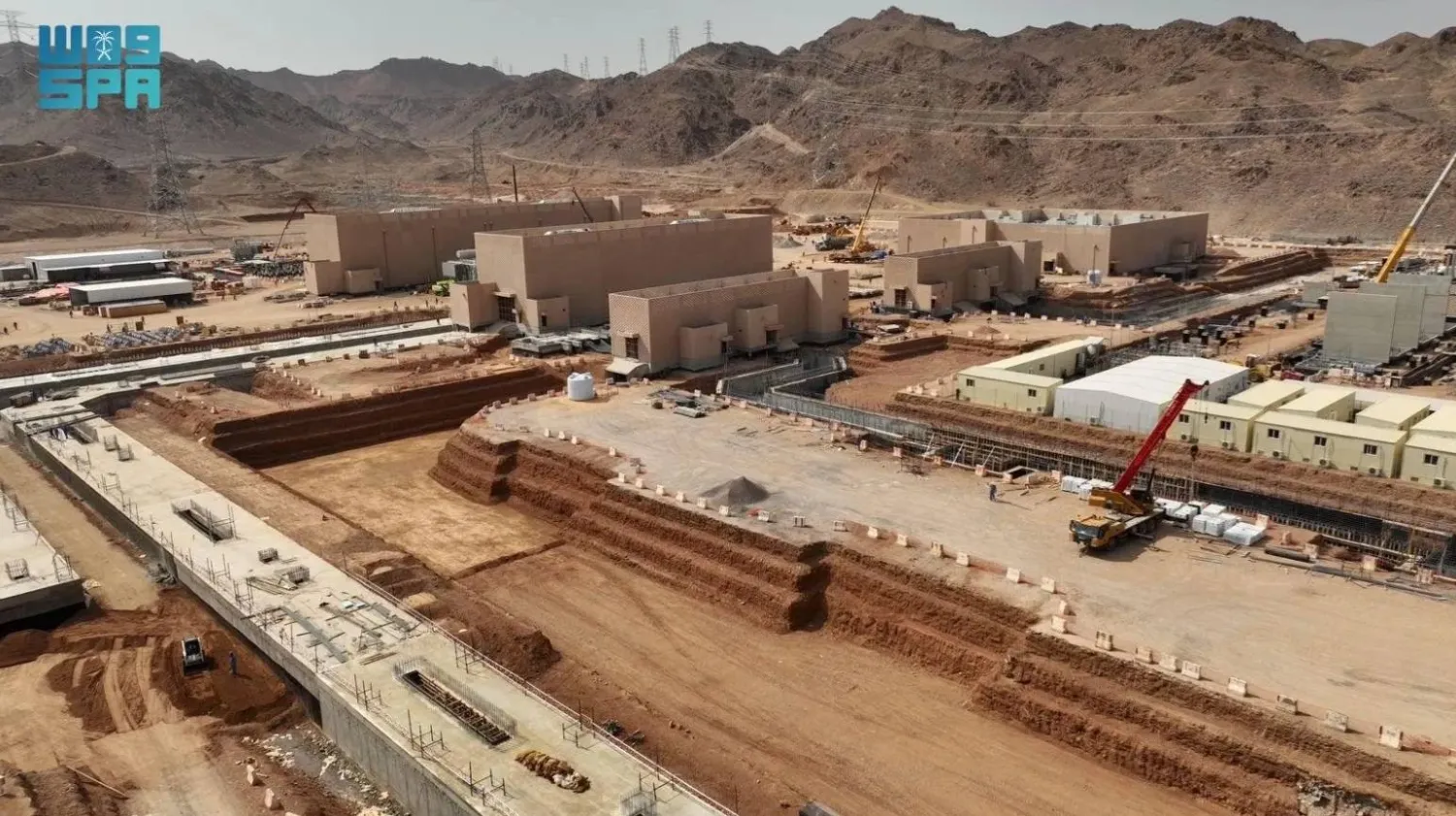
RCU continues to develop infrastructure through the construction of power stations and water storage facilities, as well as the enhancement of public utilities, all within the framework of the second masterplan, "Path to Prosperity", which aims to elevate quality of life and advance community development

This progress aligns with the objectives of Saudi Vision 2030 and reflects the accelerating transformation AlUla is undergoing across urban development and sustainability, supporting its ambitions to establish itself as a leading international cultural and tourism destination, and contributing to its growing presence on global smart city rankings.



Germany Hit by Record Temperatures as Heatwave Moves East

A boy jumps into the Dortmund-Ems Canal in Dortmund, western Germany on June 26, 2026 during a heatwave in Europe. (AFP)
TT

Germany Hit by Record Temperatures as Heatwave Moves East

A boy jumps into the Dortmund-Ems Canal in Dortmund, western Germany on June 26, 2026 during a heatwave in Europe. (AFP)

Germans braced for sweltering conditions on Saturday as a heatwave linked to dozens of deaths in Western Europe was expected to move east after temperatures broke records above 40 degrees Celsius (104 degrees Fahrenheit).

Britain, France, Switzerland and Germany have all experienced record heat in June, and the weather system could test more records as it rolls across Germany towards Poland.

On Friday, a new German record of 41.3 C was reached near the city of Saarbruecken close to the French border, a spokesperson for Germany's National Meteorological Service said, noting ‌the reading was ‌still preliminary.

In France, dozens of people both young and ‌old have ⁠died during the heatwave. ⁠Temperatures above 40 C have disrupted rail travel and power generation, suspended schools and postponed outdoor events.

"The heatwave is going to peak at the weekend, well over 40 degrees in some parts of Germany," said Karsten Brandt, a meteorologist at weather forecasting site Donnerwetter.de.

The Ironman European Championship long-distance triathlon taking place on Sunday in Frankfurt shortened the cycling and running courses due to the heat, organizers said.

Struggling with the prospect of damage to ⁠infrastructure like buckling roads and swelling train tracks, some major public service ‌providers have sought to reduce traffic.

FREE CANCELLATIONS TO ‌REDUCE RAIL TRAVEL

German national rail operator Deutsche Bahn has given customers the option of cancelling ‌long-distance travel bookings into early next week without charge due to the heatwave.

The company ‌said its infrastructure is under particular strain because of sun exposure and additional risk to signals, tracks and overhead wires stemming from thunderstorms and wildfires.

Parts of Germany, mainly in the southwest, have already experienced a much hotter June than usual.

The most extreme heat is forecast to begin fading at ‌the weekend, with heavy thunderstorms expected on Sunday.

Across Europe, cultural landmarks have had to close, farming has suffered, and some hospitals have ⁠struggled to cope.

The ⁠heatwave has pushed temperatures up to 18 C above their seasonal average, according to the Reuters Climate Monitor, and is being driven by a phenomenon known as an Omega block.

This weather pattern traps a bulging ball of hot air over regions for extended periods, with cooler air on its fringes.

Demand for electric fans has shot up, and Asian air conditioning makers have reported a European sales boom.

Most of the housing stock in Northern Europe is not built to temper heat but rather to keep it in.

The present heatwave will begin shifting by the end of the month, hitting Central Europe and the Balkans, the World Meteorological Organization said.

Scientists said the heatwave would have been virtually impossible without man-made climate change, which has made this week's night-time temperatures 100 times more likely than they would have been even two decades ago.


Farmers Fear Drought as Italy's Longest River Runs Dry

The Po River has never fallen this low so early in the year. Stefano RELLANDINI / AFP
TT

Farmers Fear Drought as Italy's Longest River Runs Dry

The Po River has never fallen this low so early in the year. Stefano RELLANDINI / AFP

Seawater is seeping into Italy's longest river as the waterway starts to run dry in the heatwave, hitting a farming heartland that produces the milk for Parmesan cheese.

The Po River has never fallen this low so early in the year, raising fears of a devastating drought in July in this corner of northern Italy, AFP said.

On the bank of one of its branches, farmer Federica Vidali looked anxiously at her sunflower field. The first bloom of the season has appeared, but part of the field is already dry and starting to crack.

One of the two canals that irrigate it has been shut because the seawater would enter and damage the crops.

"We're left with the water that others are willing to leave us. But we're not second-division farmers!" Vidali told AFP.

The Po River's flow has collapsed in a matter of days, dropping below 300 cubic meters per second, compared with an average of around 1,500 in June, according to Aipo, the interregional river agency.

"It has never dropped so fast, so early," said Stefano Calderoni of the Italian irrigation association (Anbi).

Sandbanks are multiplying, depths fall to barely one meter in places, and the river's few remaining fishermen swelter in the heat.

"Before, we used to pass on the left; now the passage is to the right of the sandbank, and it's very, very narrow," said Daniela Cuoghi, a surveyor for Aipo.

The many Alpine lakes that feed the Po Valley, Italy's agro-industrial heartland, are still about 60 percent full. But farmers are drawing heavily from the waterways to irrigate fields parched by the heat.

It rained this winter, but the mountain snow that used to replenish the lake has already melted due to climate change.

"We're not in a drought situation yet, but at this rate, there's less than three weeks of water left in reserve," said Damiano Di Simine, an expert with environmental group Legambiente.

Drought last struck the Po Valley in 2022 -- but only at the end of July.

- 'Really big problems' -

Further downstream, at the river's mouth, the situation is already serious: seawater has pushed about 20 kilometers upstream.

Saltwater is beginning to contaminate farmland reclaimed over the past five centuries from the delta marshes.

Barriers have been placed in the river to stop seawater, but they only work if river's flow is strong enough.

"We'd need almost double the current flow for them to work," said Rodolfo Laurenti, the engineer in charge of irrigation in the delta.

Laurenti called for cooperation and solidarity between regions to manage water in the event of a crisis.

Farmers are also considering new dams or water retention basins, but "we're afraid that all these structures will still never be enough," Laurenti said.

A few kilometers closer to the sea, clam fishermen are also struggling with soaring June temperatures. The heat has warmed the lagoons, boosting the growth of algae that cover the shellfish.

They must also clear algae from the nets protecting clams from invasive blue crabs, which arrived from North America in recent years.

"On top of all the problems we already have, we now have this crazy, long, and unexpected heat," said Paolo Mancin, head of the local fishermen's cooperative, standing with in water at 31C.

"Macroalgae are forming, there's a high mortality rate among clams... If it were something that lasted a week, we could get through it.

"But this prolonged heat is now causing really big problems."


Heavy Rain Pounds Western Japan as 2 Tropical Storms Approach

 People clean mud and debris from a flooded area after heavy rain brought by Tropical Storm Mekkhala in Hsinchu, Taiwan, June 26, 2026. (Reuters)
People clean mud and debris from a flooded area after heavy rain brought by Tropical Storm Mekkhala in Hsinchu, Taiwan, June 26, 2026. (Reuters)
TT

Heavy Rain Pounds Western Japan as 2 Tropical Storms Approach

 People clean mud and debris from a flooded area after heavy rain brought by Tropical Storm Mekkhala in Hsinchu, Taiwan, June 26, 2026. (Reuters)
People clean mud and debris from a flooded area after heavy rain brought by Tropical Storm Mekkhala in Hsinchu, Taiwan, June 26, 2026. (Reuters)

Heavy downpours triggered flooding in parts of western Japan on Friday as two approaching tropical storms added to a seasonal rain front already stuck above the country.

Storm Mekkhala was off the western coast of Japan's southern remote island of Amami as of late afternoon Friday as it headed northeast, the Japan Meteorological Agency said.

Another storm, Higos, was traveling nearby and the two storms are expected to reach the Tokyo region Saturday while dumping heavy rain, the JMA said.

Earlier Friday, a man was injured as he fell into a waterway in Nara, according to Japan's NHK public television.

Television footage from Kyoto showed the Kamo River swollen with muddy water. A flooding alert was issued in parts of Kyoto, Osaka and other areas in western Japan.

The Fire and Disaster Management Agency said more than 30 homes were flooded in Nara and Hiroshima on Friday. Heavy rain also disrupted some train operations and flights in the area.