


Lebanon Asserts Itself at Israel Negotiations, Undermining Hezbollah and Iran

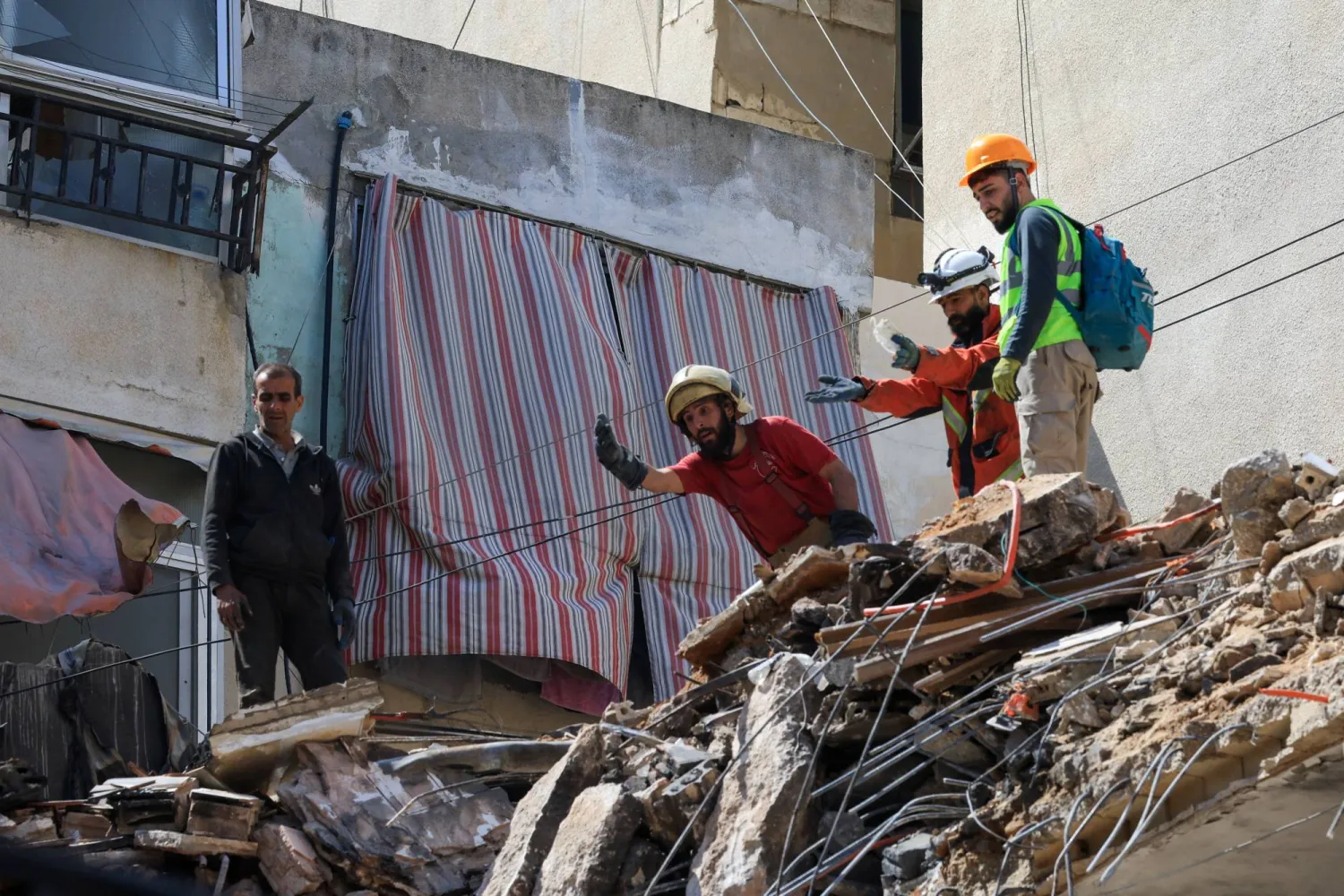
Rescuers work at the site of an Israeli strike carried out on Wednesday, in the southern suburbs of Beirut, Lebanon, April 10, 2026. (Reuters)
TT

Lebanon Asserts Itself at Israel Negotiations, Undermining Hezbollah and Iran

Rescuers work at the site of an Israeli strike carried out on Wednesday, in the southern suburbs of Beirut, Lebanon, April 10, 2026. (Reuters)

Lebanon is set to enter direct negotiations with Israel for the first time, marking a fundamental shift in how the state manages the conflict and underscoring its insistence on sovereign decision-making free of external tutelage.

The shift follows Iranian attempts to preserve what is known as the “unity arenas” in talks due to be held in Pakistan, against firm Lebanese insistence, voiced by President Joseph Aoun and Prime Minister Nawaf Salam, that the Lebanese state alone is authorized to negotiate on Lebanon’s behalf.

The talks carry added weight as they come after a series of pivotal state decisions, most notably banning Hezbollah’s military wing and operations and restricting weapons in Beirut to legitimate forces. They also follow steps rejecting Iranian interference in Lebanon, the latest being the expulsion of the Iranian ambassador.

These moves intersect directly with calls to disarm Hezbollah, an issue set to dominate the negotiations, especially as Israel moves to link any withdrawal from southern Lebanon to tangible progress on that front.

The developments have angered Hezbollah. Officials and supporters have sharply criticized the move, going so far as to accuse Prime Minister Nawaf Salam of treason.

Hezbollah supporters also staged a protest against Salam on Thursday and Friday after the government decided to make Beirut a demilitarized city.

Blow to Hezbollah

Lebanese Forces MP Razi El Hage said Hezbollah had bet on Lebanon being included in a ceasefire deal between the United States and Iran, allowing it to declare what he described as a false victory and use it to pressure the government to reverse its decisions.

He said the state is now more serious than ever about imposing monopoly over arms.
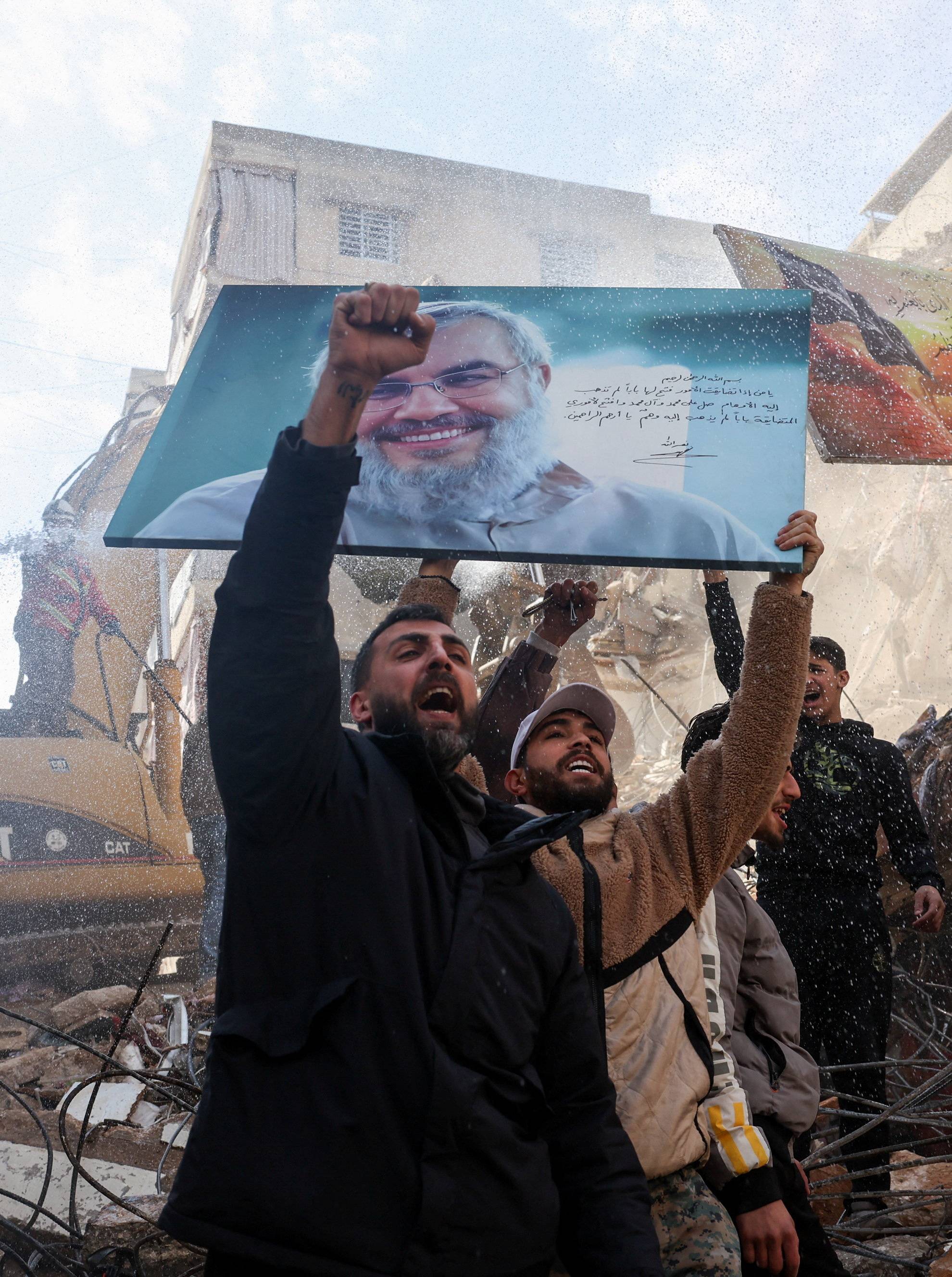
People with an image of slain Hezbollah leader Hassan Nasrallah gather as rescuers with heavy machinery work at the site of an Israeli strike carried out on Wednesday, in the southern suburbs of Beirut, Lebanon, April 10, 2026. (Reuters)

Political analyst Ali al-Amine said Hezbollah has long sought to turn political and military developments into what appears to be victory, even if illusory, relying on an organized propaganda machine and its influence over its support base.

“Had a ceasefire in Lebanon coincided with a truce involving Iran, the party would have rushed to declare a divine victory and stage celebrations,” he told Asharq Al-Awsat.

But recent developments have undercut that approach, he added. Continued Israeli strikes coincided with the Lebanese state taking action, weakening Hezbollah’s ability to exploit developments in its favor, he explained.

He pointed to Salam’s initiative and Aoun’s efforts to cement the principle that the Lebanese state alone negotiates on behalf of Lebanon, a shift that has angered Hezbollah.

Hezbollah’s problem is exclusion

Al-Amine said Hezbollah’s core problem is not with the negotiations themselves. The party has long taken part in them through Parliament Speaker Nabih Berri, including during maritime border talks.

“The issue now is that it no longer leads or monopolizes this track, nor does Iran behind it,” he said.

He added that Salam’s clear statement that Lebanon negotiates for itself, followed by Aoun’s backing, marked a turning point. Hezbollah responded with a political campaign that went as far as accusing Salam of being “Zionist.”

Israel’s announcement that it is ready to negotiate deepened the shock, he said, not because of the talks themselves but because the initiative had slipped from Hezbollah’s hands.
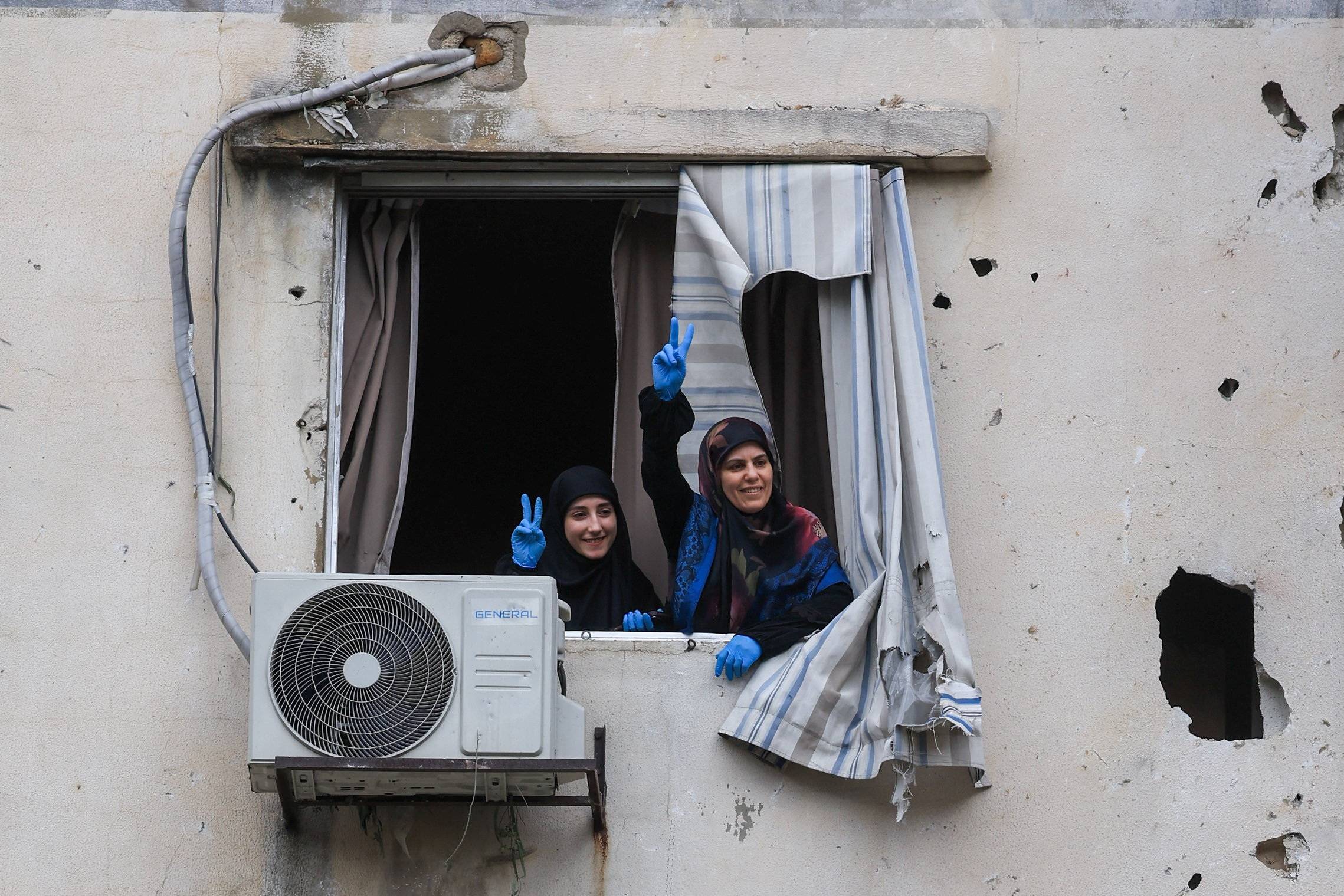
Women gesture while looking out from a window of a damaged building at the site of an Israeli strike carried out on Wednesday, in the southern suburbs of Beirut, Lebanon, April 10, 2026. (Reuters)

Al-Amine also pointed to a shift in the US approach, with no back channels opened with Hezbollah and clear support instead for the Lebanese government as the sole negotiating party.

Test for the state

As the outcome of the talks remains uncertain, al-Amine said the next phase hinges on the Lebanese state, particularly Salam and Aoun, taking practical steps to strengthen its position.

Chief among these is implementing the decision to make Beirut a demilitarized city, a key step toward restoring state authority and institutions, he said, noting that success will require serious Arab and international backing.

Hage said the negotiations mark a step forward and will focus on one central issue, the state’s ability to guarantee exclusive control over arms.

He added that Lebanese Forces ministers had submitted a memorandum to the Cabinet outlining a clear legal and political path to exit the current crisis, hold those responsible to account, and pursue Iran in international forums over the losses caused by Hezbollah dragging Lebanon to the war.



Gaza Civil Defense Says Israeli Strikes Kill Seven

Palestinians walk along a street surrounded by buildings destroyed during Israeli air and ground operations in Khan Younis, southern Gaza Strip, Thursday, April 9, 2026. (AP Photo/Abdel Kareem Hana)
TT

Gaza Civil Defense Says Israeli Strikes Kill Seven

Palestinians walk along a street surrounded by buildings destroyed during Israeli air and ground operations in Khan Younis, southern Gaza Strip, Thursday, April 9, 2026. (AP Photo/Abdel Kareem Hana)

Gaza's civil defense rescue service said on Saturday that Israeli airstrikes in the Palestinian territory had killed seven people overnight, despite the fragile ceasefire in place since October last year.

Mahmoud Bassal, spokesman for the group, which operates under the authority of the Hamas movement, said an Israeli drone had fired two missiles close to a police post in the Al-Bureij refugee camp.

In addition to the seven dead, he said, several more people were wounded, four of them critically.

The al-Aqsa hospital in central Gaza said it had received six bodies and seven wounded, "including four in a critical condition because of direct impacts to the face, torso and other parts of the body".

The nearby al-Awda hospital said it had received one fatality and two wounded.

Reached for comment by AFP, the Israeli military said it was working to verify the information.

Israel and Hamas regularly accuse each other of violating the ceasefire that came into effect on October 10, after two years of war triggered by the Palestinian movement's 2023 cross-border attack.

At least 738 Palestinians have been killed since the truce began, according to Gaza's Health Ministry, which is under Hamas authority and whose figures are considered reliable by the United Nations.

The Israeli army has reported five soldiers killed since the start of the truce.

Under the restrictions imposed on the media in Gaza and the difficulties of accessing the field -- the international press is still barred by the Israeli authorities from entering.


In Gaza, Fiberglass Homes Aim to Offer More ‘Dignity’ for Displaced

Boys (C) play with a ball amid tents at a makeshift camp for displaced Palestinians in Khan Younis, in the southern Gaza Strip on April 10, 2026. (AFP)
TT

In Gaza, Fiberglass Homes Aim to Offer More ‘Dignity’ for Displaced

Boys (C) play with a ball amid tents at a makeshift camp for displaced Palestinians in Khan Younis, in the southern Gaza Strip on April 10, 2026. (AFP)

In southern Gaza, aid workers are meticulously assembling fiberglass homes meant to shelter thousands of Palestinians still displaced six months after a ceasefire started between Israel and Hamas.

Nearly two million people in Gaza are living in makeshift shelters, and the humanitarian situation remains dire, according to aid agencies.

The fiberglass units are designed to offer a modicum of relief -- homes with slightly more comfort than a tent vulnerable to the coastal winds that hit Gaza.

Alessandro Markic, head of the United Nations Development Program office in Gaza, initiated the plan. He said families "are facing extremely difficult conditions".

Roughly 4,000 units are planned in the al-Mohararat area, west of Khan Younis.

Workers assemble walls, install small windows, and lay roofs for families who try to settle in with rugs and cushions inside.

"These are very basic and temporary solutions, while we continue to plan for recovery and reconstruction," Markic said. The homes, he added, "provide more dignity, privacy, and protection during the winter."

Some Gazans were visibly relieved to have an alternative to the tents where most displaced people continue to live.

Nasma Sharab has moved into one unit with her sons, and affirmed it was "better" than a tent.

The fiberglass homes "don't constantly blow away in the wind," she said.

But, she added, "it's a temporary solution while we wait for reconstruction to begin and for people to be able to go back to their homes."

Among those who remain in a tent is Ali Abu Nahl, in Beit Lahia in northern Gaza, after being displaced to the center and south of the territory with his children and grandchildren.

His house was destroyed during the devastating conflict that erupted with the Hamas attacks on Israel in October 2023.

"It's been half a year since the bombing stopped, but in Gaza, the war doesn't end when the strikes stop," he said.


Pressure Mounts on Hamas as It Weighs Response on Disarmament

Family members and friends mourn outside the Nasser Hospital, the day after a Palestinian was killed in an Israeli strike in Khan Yunis, in the southern Gaza Strip on April 10, 2026. (AFP)
TT

Pressure Mounts on Hamas as It Weighs Response on Disarmament

Family members and friends mourn outside the Nasser Hospital, the day after a Palestinian was killed in an Israeli strike in Khan Yunis, in the southern Gaza Strip on April 10, 2026. (AFP)

Diplomatic momentum is building around a Gaza ceasefire, as Hamas and other Palestinian factions prepare their final response to a “Board of Peace” plan on the movement’s disarmament and the second phase of the deal.

Talks were set to begin in Cairo on Friday and Saturday, with more meetings possible, bringing together Palestinian factions, Egyptian officials, and the Board of Peace’s high representative, Nickolay Mladenov.

Mladenov has held several rounds of talks in Egypt with officials and European representatives, following a second meeting last week with a Hamas delegation.

Sources from Hamas and other factions told Asharq Al-Awsat the group will present a unified Palestinian position, outlining its vision and proposed amendments to the plan submitted more than two weeks ago.

The response will stop short of outright acceptance or rejection, the sources said. Instead, Hamas will propose clear amendments and push for deeper negotiations to prevent Israel from using the process as a pretext to resume the war.

The group also aims to convince mediators, the United States, and the Board of Peace to broaden the talks beyond weapons, to include key provisions from both the first and second phases.

In its latest meeting with Mladenov, Hamas stressed that Israel must fully implement the first phase before any move to the second.

A Hamas source said the group would show flexibility with mediators to reach solutions that prevent renewed fighting, accusing the hardline government of Benjamin Netanyahu of seeking a return to war.

Resetting the terms

Hamas and other factions want a new negotiating framework that reflects Palestinian demands, rather than accepting imposed terms without binding commitments on Israel, another source said.

Details of the response remain undisclosed. But earlier discussions suggested handing over a limited number of vehicles mounted with “Dushka” machine guns, which Israel classifies as heavy weapons. At a later stage, factions could retain light arms under a mechanism overseen by mediators as part of a long-term truce.

Factions say they no longer possess what Israel defines as heavy weapons, such as rockets. Their remaining capabilities, they say, are limited to small numbers of anti-armor projectiles, explosive devices, light weapons such as Kalashnikov rifles, and some vehicle-mounted Dushka guns.

Pressure or coordination

Hamas sources acknowledge the group will face significant pressure in the coming talks, but say key mediators in Egypt, Türkiye, and Qatar understand its demands, even as they urge it to scale back proposed amendments.

A senior Hamas delegation has held meetings in Egypt and Türkiye, including with Turkish President Recep Tayyip Erdogan and intelligence chief Ibrahim Kalin, both of whom played key roles in the initial ceasefire negotiations.

Hamas said the meetings were part of consultations on Gaza and proposed amendments, denying that it was coming under pressure from Ankara.

The Board of Peace plan calls for full consolidation of all weapons, including light, heavy, tribal, and personal arms. Israel backs the plan. Hamas rejects it in its current form, citing security threats to its leaders and rejecting any link between disarmament and reconstruction of Gaza.

On the Israeli side, Yedioth Ahronoth reported that Israel is awaiting Hamas’s response. If it is negative, the decision would fall to Netanyahu’s government, which may move to enforce disarmament by force.

Israeli sources told the paper all options remain open, but with focus on the northern front with Lebanon, a return to fighting in Gaza in the coming days appears unlikely.