


Bread Shortage Deepens in Gaza as Hamas Accuses Israel of ‘Engineering Starvation’

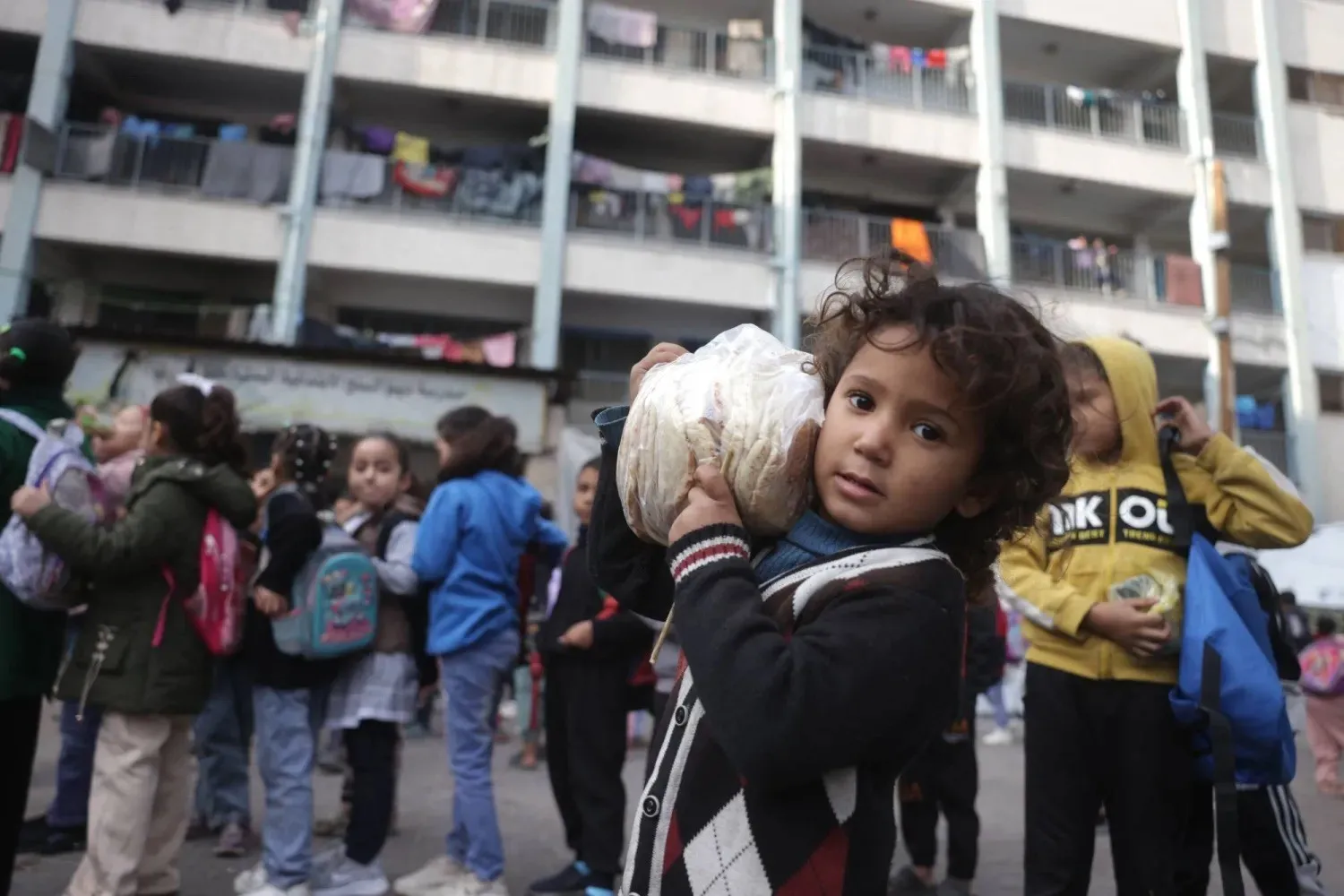
A Palestinian girl carries bread in Deir al-Balah, central Gaza Strip, last December. (AFP)
TT

Bread Shortage Deepens in Gaza as Hamas Accuses Israel of ‘Engineering Starvation’

A Palestinian girl carries bread in Deir al-Balah, central Gaza Strip, last December. (AFP)

A bread shortage in Gaza is worsening as Israeli restrictions on the entry of supplies continue to affect bakeries that had reopened following an October ceasefire.

The flow of aid and food supplies, including from the World Food Program (WFP), has declined further over the past month, amid Israeli measures that coincided with the outbreak of war with Iran.

Officials from Hamas accuse Israel of deliberately reducing aid as part of what they describe as a policy of “engineering starvation.”

Long queues at distribution points across Gaza underscore the difficulty of obtaining bread, with scuffles reported among residents vying for a single daily bundle.

Saed al-Laham, 41, from Al-Shati Camp west of Gaza City, said he spends more than three hours each day waiting in line for one bundle of bread, not enough for his family of six.

“Many times, I return to my tent, where I live with my family after our home was destroyed, without getting any bread because supplies run out and quantities are decreasing day by day,” he told Asharq Al-Awsat.

Flour is also increasingly scarce. A 20-kilogram sack that sold for about 20 shekels a month ago has surged to 140 shekels in recent days, he revealed.

Gaza is facing multiple crises alongside the bread shortage, including a sharp decline in already rationed cooking gas supplies. Distribution has slowed to once every three months instead of every six weeks, while firewood and other basic means of preparing food are largely unavailable.

Riham Salem, 52, from the Al-Nasser neighborhood in Gaza City, described similar struggles. She said she is forced, like many women, to vie with men in crowded lines to secure bread for her family of nine.

She has one sack of flour but cannot use it due to high firewood prices and the lack of gas and electricity.

Hassan Abu Riyala, deputy economy minister in the Hamas-run government, said Saturday that international support for bread production in Gaza had fallen by more than 60 percent, reducing daily output.

He noted that the territory consumes about 450 tons of flour per day. The WFP had been supplying 350 tons, but deliveries have dropped to about 200 tons in recent months.

“Israel controls the entry of goods and aid, allowing only limited quantities, including commercial flour, leading to a sharp decline in essential supplies,” he stated.

The WFP had been providing flour and diesel fuel to more than 30 contracted bakeries across Gaza, about 28 of which are still operating. But the drop in supplies is raising fears of renewed famine conditions, particularly as flour distribution to households by international and Arab organizations has largely stopped due to Israeli restrictions at border crossings.

Sources in the Hamas-run government and civil society groups said WFP officials had informed bakery owners they could no longer provide diesel to keep bakeries running, suggesting they import flour through private traders — a process also constrained by Israeli controls.

The Hamas-run government media office accused Israel of imposing a “total siege” on Gaza as part of a deliberate and escalating policy of “engineering starvation,” by tightly controlling the flow of essential goods, especially bread.

In a statement Sunday, it said the World Central Kitchen had halted its flour support entirely after previously supplying 20 to 30 tons of bread daily. It added that the World Food Program had reduced flour deliveries from 300 to 200 tons per day, while other organizations had also suspended bread and flour assistance, worsening the crisis.

About 30 bakeries are currently producing roughly 133,000 bundles of bread daily, including 48,000 distributed free and 85,000 sold at subsidized prices through 142 outlets. These quantities fall far short of demand, the statement read.

Hamas spokesman Hazem Qassem said continued restrictions on aid, including flour, are a “blatant violation” of the ceasefire agreement, which stipulated specific aid volumes that Israel has allowed only partially.

Separately, the “Global Sumud Flotilla,” a pro-Palestinian activist convoy, postponed its planned departure Sunday from Barcelona to Gaza due to bad weather, organizers said. The vessels will temporarily move to a nearby port until conditions improve.

Around 40 boats had been scheduled to depart Barcelona as part of a renewed attempt to reach Gaza, following a similar mission last year.


Former Syrian Regime Officer Arrested

Syrian Ministry of Interior in Damascus (Official Website)
TT

Former Syrian Regime Officer Arrested

Syrian Ministry of Interior in Damascus (Official Website)

Syria's Interior Ministry announced on Saturday the arrest of a former officer in Bashar al-Assad's regime holding the rank of major general and accused of committing crimes and violations.

In a statement, the ministry said that "based on precise monitoring and surveillance operations, Internal Security Forces carried out a special security operation that resulted in the arrest of criminal Mohammed Mohsen Nayouf."

"The criminal held the rank of major general under the former regime and occupied several prominent military and leadership positions, including service in the Third Corps, command of the 18th Tank Division, chief of staff of the 11th Division in 2020, and commander of the 105th Republican Guard Brigade in 2016."

According to the statement, the detainee was referred to the relevant authorities to complete investigations and take the necessary legal measures before being referred to the judiciary.

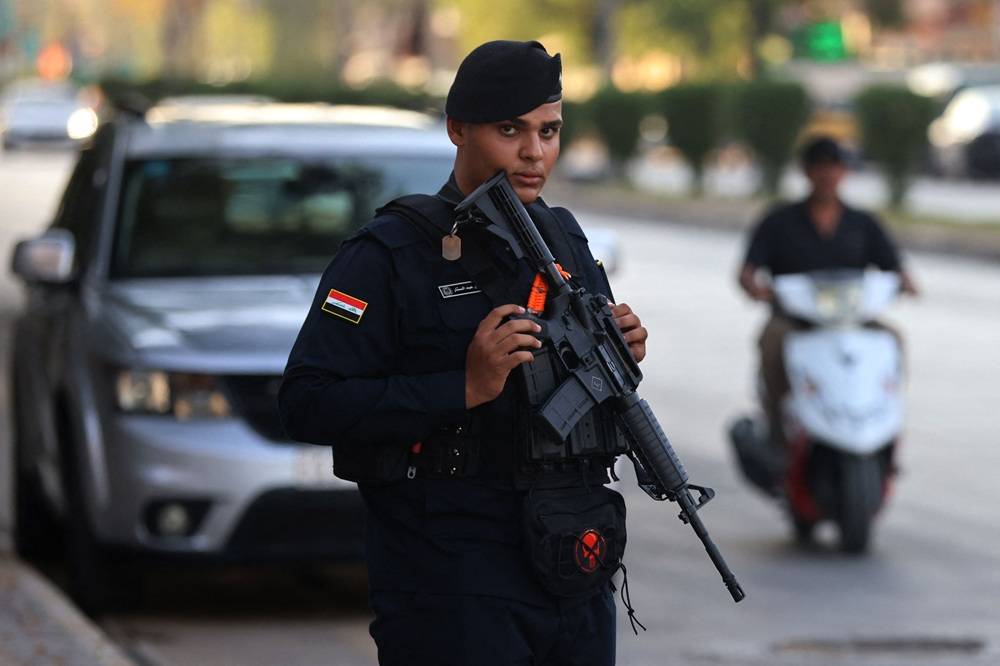
Syrian military police deployed near the explosion site in Bab Sharqi, near the headquarters of the Syrian Defense Ministry in Damascus, Syria, May 19, 2026. EPA/MOHAMMEDALRIFAI

The Syrian Arab News Agency (SANA) reported that the operation, carried out on Friday by the Salamiyah Security Directorate, which is affiliated with the Internal Security Command in Hama, comes "as part of the Interior Ministry's and relevant authorities' efforts to pursue and hold accountable those involved in crimes and violations committed against the Syrian people during the former regime, based on the principle of ending impunity, achieving transitional justice, and guaranteeing the rights of victims and their families."

Earlier on Friday, the Interior Ministry announced the arrest of Mohammed Imad Mahrez, one of the guards at Saydnaya prison during the former regime, making this the second such operation.


Hezbollah Says Message from Iran Shows it 'Will Not Give up' on Group

Displaced residents wave Hezbollah flags, including one bearing a picture of its leader, Naim Qassem, as they pass rubble of destroyed buildings in Dahiyeh, Beirut's southern suburbs, Lebanon, Friday, April 17, 2026, following a ceasefire between Israel and Hezbollah. (AP Photo/Bilal Hussein)
TT

Hezbollah Says Message from Iran Shows it 'Will Not Give up' on Group

Displaced residents wave Hezbollah flags, including one bearing a picture of its leader, Naim Qassem, as they pass rubble of destroyed buildings in Dahiyeh, Beirut's southern suburbs, Lebanon, Friday, April 17, 2026, following a ceasefire between Israel and Hezbollah. (AP Photo/Bilal Hussein)

Hezbollah said Saturday that a message from Tehran showed that Iran would not abandon the Lebanese militant group and that the Islamic republic's latest proposal to end the US-Iran war included a ceasefire in Lebanon.

Iran-backed Hezbollah said in a statement that its chief Naim Qassem had received a message from Tehran's Foreign Minister Abbas Araghchi, which indicated that Iran "will not give up its support for movements demanding justice and freedom, foremost among them Hezbollah".

In Iran's latest proposal through Pakistani mediators aimed at achieving "a permanent and stable end to the war, the demand to include Lebanon in the ceasefire was emphasised", the statement added.


South Lebanon Hospital Damaged in Israeli Strikes

Volunteers from the Lebanese Red Cross rescue a woman in the city of Nabatieh in South Lebanon (AFP)
TT

South Lebanon Hospital Damaged in Israeli Strikes

Volunteers from the Lebanese Red Cross rescue a woman in the city of Nabatieh in South Lebanon (AFP)

Israel kept up strikes on Lebanon on Saturday, hours after overnight raids on the country's south and east, including one that damaged a hospital, its chief executive told AFP.

Lebanon's state-run National News Agency (NNA) reported Israeli airstrikes on around a dozen locations in the south on Saturday including one targeting an agricultural area, "wounding several Syrian workers".

The NNA said an overnight strike in the southern city of Tyre that targeted a site near the hospital caused "severe damage" to the facility.

An AFP correspondent saw shattered glass, ceiling panels blown out and damaged medical equipment at the multi-storey Hiram hospital.

The Israeli military late on Friday night had issued evacuation warnings ahead of strikes on two locations in Tyre, saying it would target "Hezbollah facilities".

Accompanying maps advised people to leave areas within 500 metres (yards) of the target buildings, with the Hiram hospital shown within the advised evacuation area.

The hospital's CEO Dr Salman Aydibi told AFP that around 40 patients were in the facility when the warning was issued, including seven in intensive care.

"We took the patients to a safer location" elsewhere inside the hospital, he said, adding that none were harmed but some 30 staff sustained minor injuries.

He said an evaluation of the damage was ongoing and that the hospital has remained operational, though the emergency department briefly closed.

He said it was the third strike near the facility since the latest Israel-Hezbollah war erupted on March 2.

Israel's army said Saturday that it had targeted "Hezbollah infrastructure sites in Tyre" overnight where operatives from the Iran-backed group worked to "plan and execute attacks" against Israeli soldiers.

"Prior to the strike, steps were taken to mitigate harm to civilians, including the issuing of advance warnings, the use of precise munitions, and aerial surveillance," it added.

Another AFP correspondent saw heavy damage at both targeted sites in Tyre, with a man searching for his belongings among the debris at one location.

Israel's army also targeted east Lebanon overnight, saying it struck a "Hezbollah underground compound" used to manufacture weapons.

Lebanon's Hamas-aligned Islamist group Jamaa Islamiya and its armed wing the Al-Fajr Forces said Saturday in a statement that one of its members was killed in an Israeli strike in east Lebanon.

Under the terms of the ceasefire published by Washington, Israel reserves the right to act against "planned, imminent or ongoing attacks".
