

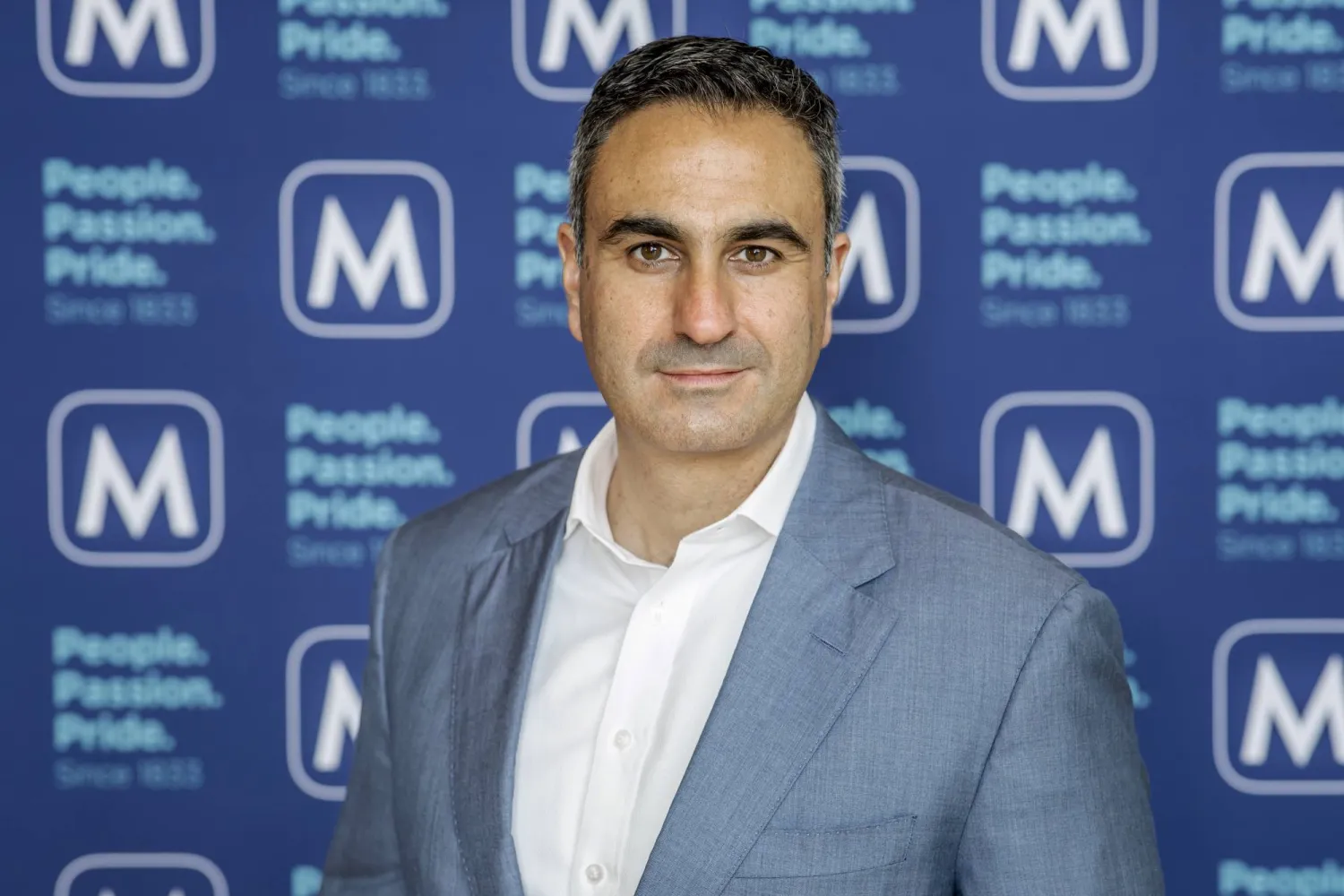

Menzies Chairman to Asharq Al-Awsat: Aviation Services Sector Highly Resilient Despite Regional Disruptions

Chairman of Menzies Aviation Hassan El-Houry. (Menzies Aviation)
TT

Menzies Chairman to Asharq Al-Awsat: Aviation Services Sector Highly Resilient Despite Regional Disruptions

Chairman of Menzies Aviation Hassan El-Houry. (Menzies Aviation)

The aviation services sector continues to demonstrate strong resilience amid geopolitical tensions disrupting air traffic across the Middle East, said Hassan El-Houry, chairman of Menzies Aviation.

While airspace closures, flight cancellations and reroutings have strained operations, El-Houry described the situation as a stress test for an industry that has historically rebounded from crises.

In an interview with Asharq Al-Awsat, he outlined a transformation phase for the company, which has surpassed $3 billion in annual revenue for the first time, while highlighting expansion plans and growing investment in artificial intelligence.

Recent tensions have affected Menzies’ operations in markets including Iraq, Pakistan and Jordan, with broader impacts on global cargo routes and international airports. Rising jet fuel costs have added further pressure.

However, El-Houry said the aviation sector has repeatedly proven its ability to absorb shocks, with demand for air travel typically rebounding after crises. He expects passenger confidence to recover gradually as regional stability improves.

Airlines, he added, are increasingly prioritizing efficiency, cost control and operational flexibility. This shift has accelerated demand for integrated service providers with global reach and the capability to maintain safe and reliable operations during periods of disruption.

The trend is particularly evident in Saudi Arabia, where low-cost carriers such as flynas and flyadeal are expanding rapidly, driving demand for cost-effective service partners.

Menzies reported a 16% rise in revenue in 2025, exceeding $3 billion. El-Houry attributed the growth to disciplined strategy execution, structured expansion and stronger multi-service partnerships with airlines and airports.

The company now operates at 347 airports in 65 countries, handling 5.3 million flights annually, with a customer retention rate of 90%.

Its acquisition of G2 Secure Staff has significantly expanded its footprint in the United States, reinforcing its position as a leading aviation services provider in the world’s largest market.

To address cost pressures, Menzies is investing in innovation, including AI-powered tools that use computer vision to measure cabin baggage and advanced baggage reconciliation systems to improve accuracy and reduce manual workloads.

A workforce planning optimization system is already deployed in more than 30 locations and is expected to cover over 22,000 employees by the end of 2026.

El-Houry said acquisitions remain central to long-term growth, with the company pursuing expansion in both established and high-potential markets. Saudi Arabia is a key focus, with the Kingdom aiming to reach 330 million passengers annually under Vision 2030.

On technology, Menzies is expanding its MACH cargo management system, now active at 46 sites and handling 55% of cargo volumes. The company is also developing AI-based risk detection systems to enhance safety oversight, while aiming for full AI integration in workforce planning by 2028.

Sustainability remains a priority, with more than $200 million invested to increase the share of electric ground support equipment to 25% globally, supporting a net-zero emissions target by 2045.

El-Houry also pointed to growth opportunities in emerging markets, particularly in the Middle East, Asia and Latin America. In India, Menzies has secured a ground handling license at Kempegowda International Airport in Bengaluru and launched a new site for Air Menzies International as part of its global expansion strategy.



IMF: Middle East Faces Pivotal Economic Moment

Azour speaks during a presentation of the Regional Economic Outlook update (AFP)
TT

IMF: Middle East Faces Pivotal Economic Moment

Azour speaks during a presentation of the Regional Economic Outlook update (AFP)

The International Monetary Fund said the Middle East, North Africa, and Pakistan were facing a pivotal and exceptionally difficult moment in their modern economic history after the war that broke out on Feb. 28, 2026, describing it as a severe and multifaceted shock to one of the world’s most strategically important economic corridors.

The IMF said the conflict was not merely a border crisis but had disrupted “three pillars of stability, energy markets, trade routes, and business confidence,” triggering a global energy shock and weakening supply chains.

Amid these challenges, Saudi Arabia’s economy emerged as a model of resilience, showing what the IMF described as “exceptional sturdiness” that enabled it to absorb the impact of disruptions to the Strait of Hormuz and a decline in regional output, supported by the pillars of Vision 2030, which strengthened fiscal discipline and logistical flexibility.

Jihad Azour, director of the IMF’s Middle East and Central Asia Department, said while presenting an update of the Regional Economic Outlook in Washington, on the sidelines of the IMF and World Bank Spring Meetings, that the war was reshaping the region’s economic outlook.

At the center of the shock was energy, he said, noting that the Strait of Hormuz, “the world’s most critical energy chokepoint, through which roughly one-fifth of global oil supply and about one-quarter of global LNG trade normally transit,” had come close to a standstill.

He said disruptions and shutdowns had cut oil and gas output across Gulf Cooperation Council countries, pushing Brent crude above $100 a barrel, while “European gas prices rose by roughly 60 percent, exceeding the spike observed after Russia’s invasion of Ukraine,” putting global energy security at risk.

He said energy disruptions caused by the war would weigh heavily on Gulf exporters, while oil-importing countries such as Egypt and Jordan were facing higher commodity prices and weaker remittance flows.

More broadly, the Middle East and North Africa region is expected to see a marked slowdown in growth this year, with real GDP projected at about 1.1%, significantly below pre-war forecasts, before a recovery in 2027, according to the IMF.

Azour said the shock extended beyond oil and gas, noting that “commodity disruptions extend beyond oil and gas,” affecting fertilizers, chemicals, and other products in which the region holds a strategic position.

He warned that rising food costs were directly threatening vulnerable populations, saying that “these price increases translate directly into higher food costs for some of the world’s most vulnerable populations,” particularly in import-dependent economies across the region and beyond.

He added that the conflict had also affected services, saying, “air traffic collapsed at major Gulf hubs, maritime insurance premiums surged, shipping routes lengthened, and logistics chains weakened,” highlighting the broad impact on aviation and logistics.

The IMF said some oil-importing economies in the region relied heavily on Gulf countries for energy imports and financial flows, leaving them exposed if the conflict intensified or persisted.

Saudi experience

Azour said one of the most important lessons from the war and the disruption of the Strait of Hormuz was the need to diversify trade routes.

“This shock underscores the importance of building greater resilience and strengthening integration,” he said, adding that this includes “diversifying trade routes and deepening regional cooperation,” to ensure the continued flow of goods and energy.

He said Saudi Arabia’s approach under its strategic vision went beyond infrastructure development to a broader reshaping of logistics networks. By expanding alternative ports on the Red Sea and strengthening land and rail connectivity, the kingdom reduced its reliance on a single maritime chokepoint.

He said this ability to create parallel trade routes allowed Saudi trade to continue effectively despite disruptions to regional corridors, offering a model for protecting economic security and ensuring uninterrupted supply flows.

Egypt

Azour said economic reforms implemented by Egypt, along with stronger policy buffers, were helping the country better manage external shocks.

He said allowing the exchange rate to become more flexible helped absorb shocks, while higher reserves provided reassurance to markets.

Regional divergence

The IMF report highlighted a sharp divergence across countries. Qatar faced a steep downgrade to growth forecasts due to damage to its gas infrastructure, while Oman showed relative resilience given its geographic position outside the Strait of Hormuz.

At the same time, financing pressures increased on Egypt, Pakistan, and Jordan as sovereign spreads widened, prompting Azour to stress that the IMF stood ready to support countries.

He said that if oil production recovered and the Strait of Hormuz fully reopened, countries would be able to increase output quickly, adding that higher oil prices compared with pre-2026 levels would help producers recover some of their losses from the crisis.


Pakistan Central Bank Receives $2 billion from Saudi Arabia as Part of Broader Financial Support Package

Mohammed Al-Jadaan and Muhammad Aurangzeb following the agreement for Saudi Arabia to provide an additional $3 billion in support to Pakistan (X).
TT

Pakistan Central Bank Receives $2 billion from Saudi Arabia as Part of Broader Financial Support Package

Mohammed Al-Jadaan and Muhammad Aurangzeb following the agreement for Saudi Arabia to provide an additional $3 billion in support to Pakistan (X).

Pakistan announced that it has received $2 billion from Saudi Arabia’s Ministry of Finance as part of a broader financial support package.

Earlier, Pakistan’s Finance Minister, Muhammad Aurangzeb, said that Saudi Arabia had committed to depositing an additional $3 billion, while extending an existing $5 billion loan for three years instead of renewing it annually.

This support comes as Pakistan faces repayment of $3.5 billion to the United Arab Emirates, putting pressure on its reserves, which stand at about $16.4 billion.

Saudi Arabia has a history of assisting Pakistan during economic crises, including a $6 billion support package in 2018 that included deposits and deferred oil payments.


Gold Rises as Middle East Optimism Calms Inflation Fears

Samples of gold displayed in a program affiliated with the Brazilian Federal Police specializing in tracking gold in Brasilia (Reuters)
TT

Gold Rises as Middle East Optimism Calms Inflation Fears

Samples of gold displayed in a program affiliated with the Brazilian Federal Police specializing in tracking gold in Brasilia (Reuters)

Gold prices rose on Thursday as growing optimism about a possible end to conflicts in the Middle East calmed inflation worries and improved prospects for lower interest rates.

Spot gold rose 0.5% to $4,815.15 per ounce by 0926 GMT, after rising to a one-month high in the previous session. US gold futures for June delivery gained 0.3% to $4,836.50.

"For the month of March gold was under pressure because of the need for liquidity in the metal following the war, but that is kind of mostly run its course, that need for liquidity," said Nitesh Shah, commodity strategist at WisdomTree.

Shah added that he expects gold prices to remain very well supported as concerns surrounding central bank independence and dollar debasement risk still remain prevalent, Reuters reported.

Optimism grew on Thursday that the war in the Middle East may be near an end, with a key Pakistani mediator in Tehran and the administration of US President Donald Trump talking up hopes for a deal that would open the crucial Strait of Hormuz.

Crude oil prices were up more than 1% on Thursday, but remained well below the $100-a-barrel mark.

"Gold remains supported amid renewed optimism around de-escalation. The pullback in oil prices is easing some of the inflation concerns that weighed on prices earlier in the conflict. The move reflects a broader shift in market focus," ING analysts said.

Global equities vaulted past their previous all-time highs in Asian trading as optimism grew about a deal to end the Iran war.

Gold prices fell to as low as $4,097.99 an ounce on March 23 as high inflation concerns due to soaring energy prices raised expectations of a more hawkish approach to intrest rates by the US Federal Reserve, weighing on the non-yielding metal's demand.

Prices have since recovered as investors now see a more than 34% chance of at least one US interest rate cut by 2026-end, up from 32% a day prior, as per CME's FedWatch Tool.

Among other metals, spot silver rose 1.4% to $80.12 per ounce, platinum gained 1% to $2,130.25, and palladium was up 0.9% at $1,587.25.