
Kering Seeks to 'Reignite Desirability' with Gucci Reset

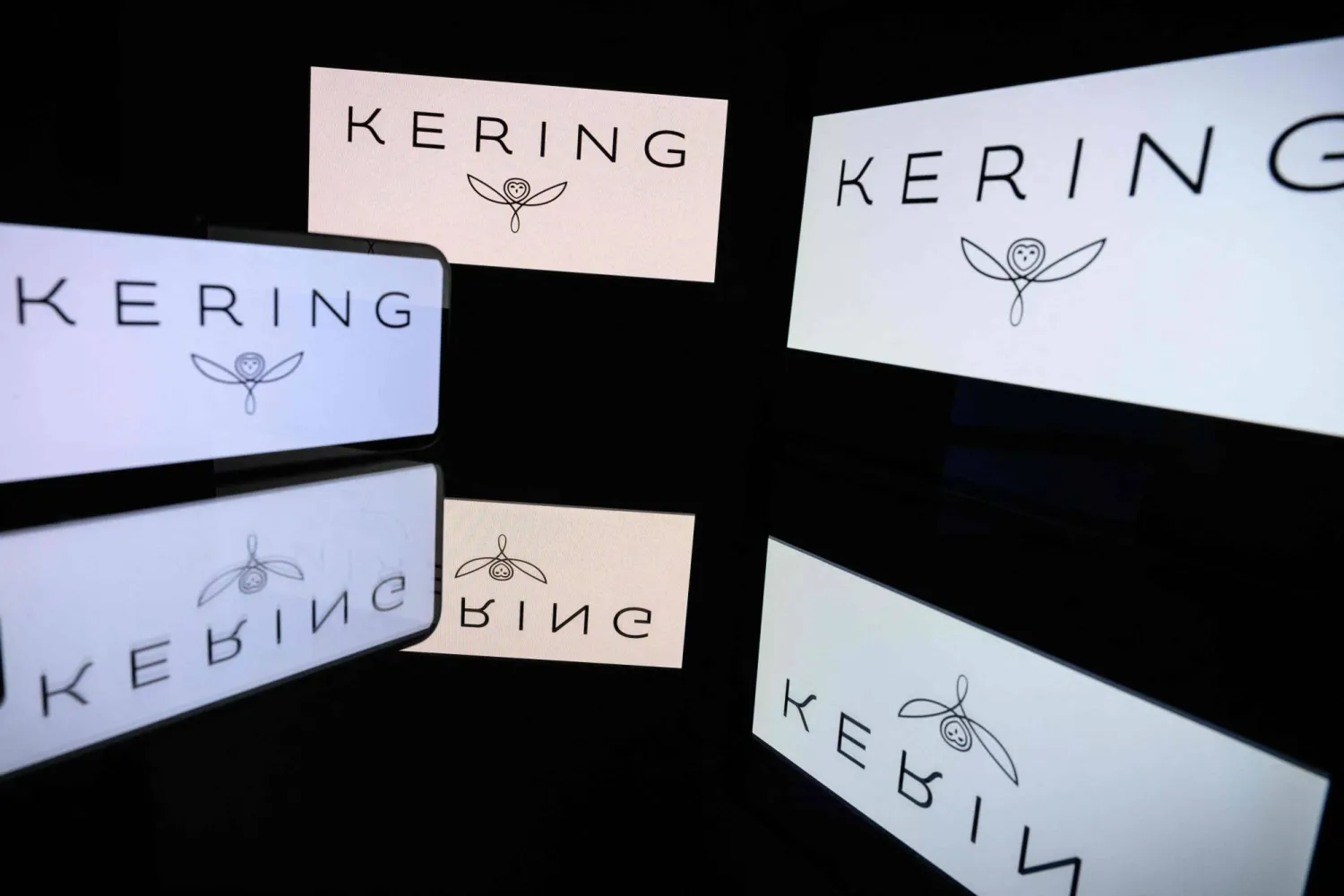
(FILES) This illustrative photograph shows screens displaying the logo of the French company Kering, listed on the CAC 40, the main stock market index of the Paris Stock Exchange, in Toulouse on March 31, 2026. (Photo by Lionel BONAVENTURE / AFP)
TT

Kering Seeks to 'Reignite Desirability' with Gucci Reset

(FILES) This illustrative photograph shows screens displaying the logo of the French company Kering, listed on the CAC 40, the main stock market index of the Paris Stock Exchange, in Toulouse on March 31, 2026. (Photo by Lionel BONAVENTURE / AFP)

French luxury group Kering vowed Thursday to "reignite desirability" of its flagging Gucci label, once the jet set's most coveted brand, as it seeks to turn around its financial performance.

The giant Paris-based fashion conglomerate, which also owns Yves Saint Laurent and Bottega Veneta, chose Florence, the birthplace of its flagship double-G brand, to unveil its turnaround plans to investors.

Kering plans a "structural reset" to be completed by the end of the year that will make it more efficient in order to improve margins and restore financial discipline to its brands, AFP quoted the company as saying.

Kering promises to offer "the agility of a challenger, a renewed focus on desirability and a stronger commitment to execution," Chief Executive Luca de Meo said in a statement.

Whether Kering's new plan -- called ReconKering -- will be enough to revive the struggling Gucci brand is yet to be seen, especially given the tough selling environment facing the entire luxury sector amid geopolitical tensions and more cautious consumer spending.

Long the bright spot in Kering's portfolio and the darling of the fashion set before the Covid pandemic, sales of Gucci have since slumped by over a third to six billion euros last year.

While Gucci accounted for two-thirds of Kering's sales in 2019, that share fell to under 40 percent in 2025, pointing to its lackluster reception by luxury shoppers.

Profitability also sagged over this period.

Last year, Kering brought in Georgian Gen Z streetwear favorite Demna as Gucci's new artistic director while poaching De Meo from Renault, where he revitalized the automaker's lineup and financial performance.

Kering said it will go about "reigniting desirability by refocusing the brand around what makes it unmistakably Gucci, with clear creative direction, disciplined codes and a revitalized heritage with true cultural impact."

Sales in Gucci's first quarter declined by 14 percent to 1.35 billion euros, hit by shrinking demand in its key market of China and a cautious consumer environment due to the war in the Middle East.

Shares of Kering fell nearly two percent on the Paris stock exchange, underscoring investor's tepid response to the turnaround plans.

Kering gave few clues as to how exactly it would right the ship at Gucci, which enjoyed its headiest days under designer Tom Ford in the 1990s, who turned the leather goods brand into a fashion powerhouse beloved of the jetset.

"Gucci has had all sorts of issues. It's had issues on distribution. It's had issues on product. It's had issues on pricing," said Flavio Cereda, a luxury sector specialist at GAM, an investment firm, ahead of the investor day.

"Do people care about Gucci today? I don't think they do. Can people care about Gucci in six months' time? It's perfectly possible. We just don't know."

Kering said a new group platform will consolidate key functions such as purchasing, logistics, research and development and quality control for all its brands.

That will allow each brand within the portfolio to operate with more "power, speed and efficiency", Kering said.

For the group as a whole, Kering envisions doubling its recurring operating margin in the medium term to reach at least 22 percent, while improving its return on capital -- another measure of profitability -- by 20 percent, helped by more controlled inventory and selective investments.

By the end of 2028, Kering said, the group "will be in a phase of renewed, sustainable growth."



Estee Lauder Still Open to Acquisitions After Failed Puig Talks, CEO Says

An Estee Lauder cosmetics counter is seen in Los Angeles, California, US, August 19, 2019. (Reuters)
TT

Estee Lauder Still Open to Acquisitions After Failed Puig Talks, CEO Says

An Estee Lauder cosmetics counter is seen in Los Angeles, California, US, August 19, 2019. (Reuters)

An Estee ‌Lauder merger with Jean Paul Gaultier-owner Puig failed to go through because of the price tag, Stephane de La Faverie, President and CEO of the US cosmetics maker said on Tuesday, but added the company was still open to acquisitions if they made financial sense.

Estee Lauder and Puig ended ‌negotiations late ‌last month that would have ‌created ⁠a premium beauty ⁠giant better positioned to compete with industry leader L'Oreal.

Leaks, disagreements between the powerful controlling families, and demands, including from make-up magnate Charlotte Tilbury, led the talks to collapse, five ⁠people with direct knowledge of the ‌deal told ‌Reuters.

Speaking at a Deutsche Bank consumer conference ‌in Paris, de La Faverie said ‌it was a matter of price.

"If we cannot reach the growth and the profitability at the right price point, then ‌that is not an option. And this is why, obviously, ⁠this ⁠deal didn't go through, because it was not at the right price," he said, adding that the company would continue to look at opportunities.

The Clinique and M.A.C owner in May said it would cut 9,000 to 10,000 jobs globally as it accelerates its "Beauty Reimagined" strategy, aiming to save as much as $1.2 billion in annual costs.


Luxury Brands Seek to Lure America’s AI Super-Rich

A model presents a creation by designer Veronique Nichanian as part of her Menswear Spring/Summer 2026 collection show for the fashion house Hermes during Men's Fashion Week in Paris, France, June 28, 2025. (Reuters)
TT

Luxury Brands Seek to Lure America’s AI Super-Rich

A model presents a creation by designer Veronique Nichanian as part of her Menswear Spring/Summer 2026 collection show for the fashion house Hermes during Men's Fashion Week in Paris, France, June 28, 2025. (Reuters)

European luxury brands have sharpened their focus on the United States, with a surge of store openings and fashion shows to lure a new crop of wealthy shoppers enriched by the AI and tech boom and offset weak consumer confidence in the rest of the world.

After two years of contraction, the luxury goods sector was showing signs of stabilization until the Iran war that began at the end of February, disrupting travel and denting luxury spending far beyond the Middle East.

And China, the biggest source of luxury sales growth for two decades, is still struggling to tackle deflation and the lingering impacts of a property crisis, so the sector needs rich Americans more than usual.

"The US high-end consumer has been much more resilient than we are seeing elsewhere, especially in Europe," said Marcus Morris-Eyton, portfolio manager at AllianceBernstein in London, adding that the continued AI rally and healthy wage growth have boosted this cohort of spenders.

Luxury ‌brands, such as ‌LVMH, Moncler and Gucci, have been quick to respond.

Dior and Gucci showing their cruise collections ‌in ⁠the US last month ⁠and Italian brand Zegna set to present its Summer 2027 collection on Friday in Los Angeles.

Even last year, North America for the first time took the top spot for new store openings, according to real estate firm Savills' global luxury retail report, which has tracked data since 2016.

The report found North America accounted for about 27% of global luxury store openings in 2025, compared with 26% of openings in Europe and 19% in China. Globally new luxury store openings fell to their lowest level since 2020.

US REPRESENTS SIGNIFICANT POTENTIAL

The US has fewer luxury stores relative to its numbers of super-rich consumers than China, according to Savills research.

"Many brands still view the US as unpenetrated ⁠relative to the scale of its wealth base," said Todd Siegel, Chicago-based president of US retail ‌at real estate firm Savills.

The investment in stores is focused not just ‌on major East and West Coast cities. It extends to second-tier states and cities where high-net-worth individuals have moved, attracted by lower tax rates than ‌California or New York, Siegel said.

Italian luxury outerwear group Moncler, for instance, has said most of its new stores will ‌be in the US this year.

It opened a store in the luxury ski resort of Aspen in January and plans to open its largest flagship store globally on New York’s Fifth Avenue in the second half of the year, as well as new locations in California’s Valley Fair, and in Dallas, Texas, among other cities.

French luxury group Hermes opened its first stores in Nashville, Tennessee, and Scottsdale, Arizona, last year. It plans ‌to open in the Plaza del Lago shopping center in Wilmette, north of Chicago this summer, and in Williamsburg, Brooklyn, in September.

US AND PART OF ASIA VERSUS EVERYWHERE ELSE

Consultancy Bain ⁠said the luxury sector reflected ⁠a "two-speed world" as the United States and parts of Asia grow, while Europe and the Middle East are impacted by weaker tourist spending in the ongoing Iran war.

Most luxury brands do not report US figures specifically, but their first-quarter reports show growth in the broader Americas region was much stronger than elsewhere.

Cartier owner Richemont's sales grew 18% in the Americas from January to March, the group's ninth consecutive quarter of double-digit sales growth in the region.

The strength of the US luxury consumer has also boosted American groups Ralph Lauren and Coach owner Tapestry whose sales have outpaced rivals.

"Our core customers are loyal and resilient," Ralph Lauren Chief Product & Merchandising Officer Halide Alagoz told Reuters. "What we see so far is that their behaviors are not changing. On the contrary, consumers during these turbulent times want to come to brands that they can trust."

Tapestry CEO Joanne Crevoiserat said there was potential to grow in North America. "We're building emotional connections and bringing new, younger consumers into the market in North America and beyond," she said.

Morgan Stanley analyst Edouard Aubin said upcoming US IPOs could drive spending on high-end watches and jewellery, but cautioned that US nationals account for about 20% to 22% of global luxury spend.

"It's nice, it's helpful, but you need China to get better as well for the sector to really recover," he said.


Kering Names Former Prada Brand CEO as New Alexander McQueen Boss

The logo of French luxury group Kering is pictured on the day of the Kering General Assembly meeting at the company's headquarters in Paris, France, May 28. (Reuters)
TT

Kering Names Former Prada Brand CEO as New Alexander McQueen Boss

The logo of French luxury group Kering is pictured on the day of the Kering General Assembly meeting at the company's headquarters in Paris, France, May 28. (Reuters)

Kering has appointed former Prada brand CEO Gianfranco D'Attis as chief executive of struggling British luxury house Alexander McQueen, the French group said on Monday.

D'Attis will start on June 3, Kering ‌said, as ‌the British label grapples ‌with ⁠a slump in ⁠sales, which have triggered a restructuring and layoffs.

Job losses recently led to a strike at the group's Italian operations where McQueen is cutting almost ⁠a third of its roughly ‌180-strong workforce ‌as it seeks to break ‌even after revenue fell by around ‌60% over the past three years, unions have said. The brand also confirmed job cuts in ‌its UK office last year.

D'Attis previously ran the Prada brand ⁠and ⁠left the role last year.

"Alexander McQueen is entering a new phase focused on strengthening its distinctive positioning, supported by a leaner and more disciplined model built around focused collections, a rightsized retail network and a streamlined organization," Kering said in a statement.