
Israel Intensifies Ceasefire Violations, Destroying and Burning Occupied Lebanese Villages

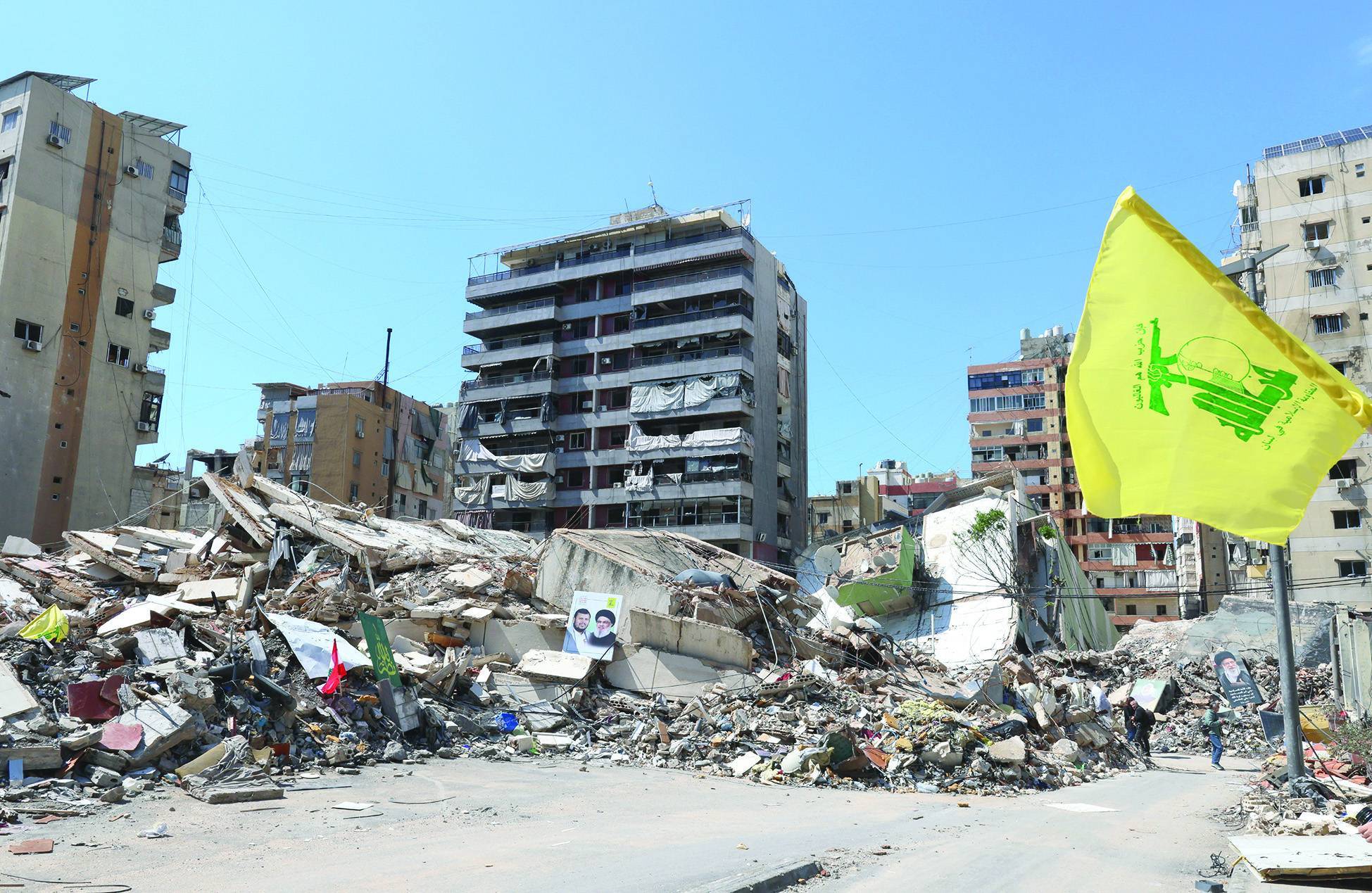
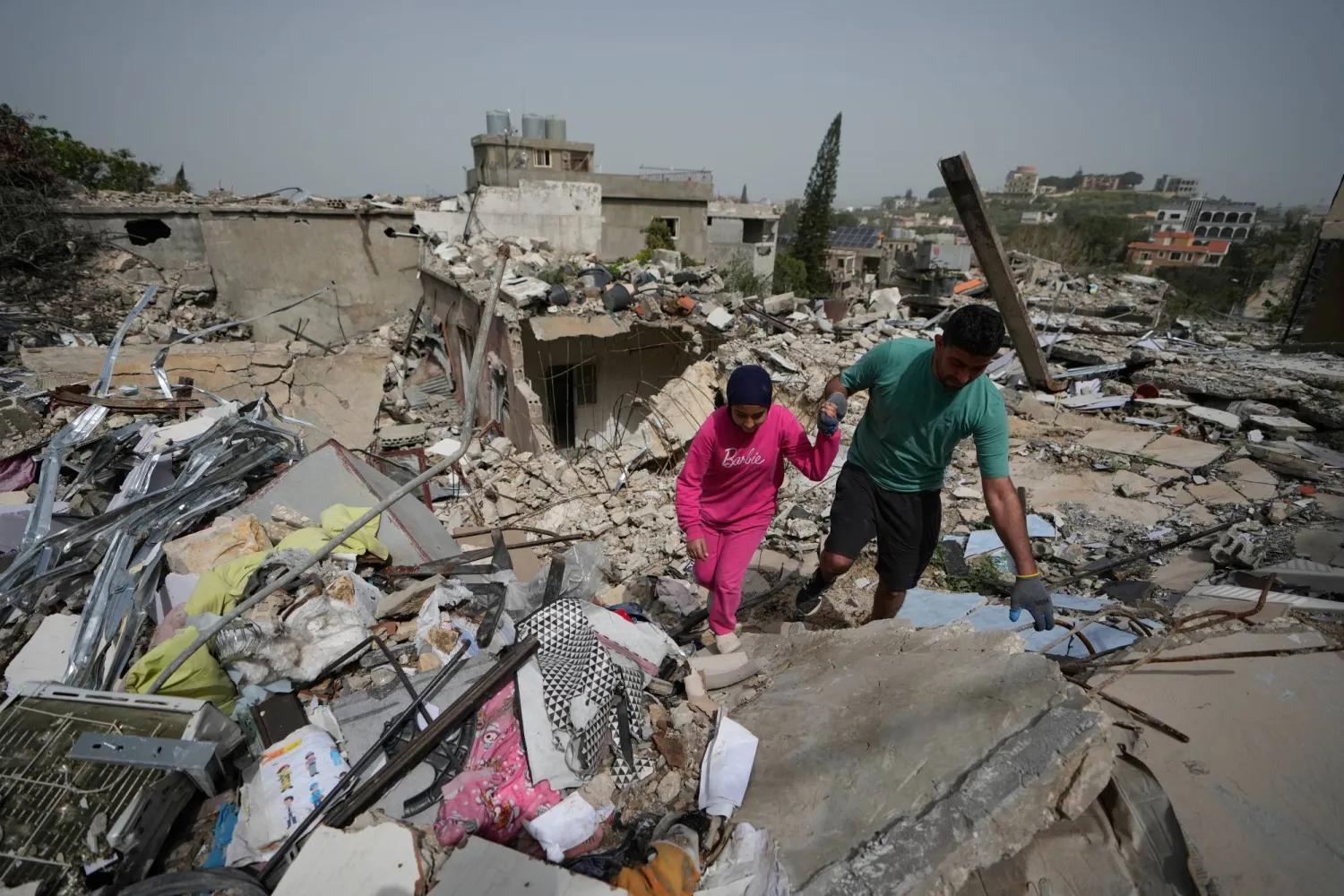
Residents walk on the rubble of destroyed houses on the second day of a ceasefire between Hezbollah and Israel in Jibchit village, south Lebanon, Saturday, April 18, 2026.(AP Photo/Mohammed Zaatari)
TT

Israel Intensifies Ceasefire Violations, Destroying and Burning Occupied Lebanese Villages

Residents walk on the rubble of destroyed houses on the second day of a ceasefire between Hezbollah and Israel in Jibchit village, south Lebanon, Saturday, April 18, 2026.(AP Photo/Mohammed Zaatari)

Israeli violations of the US-brokered ceasefire on the Lebanon front continue, as military operations and airstrikes persist against targets Israel claims are affiliated with Hezbollah. This has forced residents who had returned to some southern villages to leave again immediately, fearing a rapid return to fighting.

The yellow line

These violations coincide with the Israeli army’s announcement of the creation of a “yellow line” in southern Lebanon, similar to the one in Gaza, effectively preventing residents from returning to 55 Lebanese towns located within this line.

On Saturday, the Israeli army said it had established a separating “yellow line” in southern Lebanon, similar to the line dividing its forces from areas controlled by Hamas in Gaza. It stated that it had targeted suspected militants who approached its forces along this line.

The army said that over the past 24 hours, its forces operating south of the yellow line had identified individuals it described as militants who violated the ceasefire and approached from the north of the line in what it called a direct threat. This marked the first reference to the line since the ceasefire took effect.

It added that its forces struck those individuals in several areas of southern Lebanon immediately after detecting them, in order to eliminate the threat, stressing that it is authorized to act against threats despite the ceasefire.

In this context, military and security expert Brig. Gen. Fadi Daoud told Asharq Al-Awsat that the Israeli security line is unofficial but effectively constitutes a dangerous point of friction. He said it is known in the field as the Israeli technical line along the Lebanon-Israel border. It is not an internationally recognized boundary but a security measure imposed by Israel that extends beyond the Blue Line and is used to impose facts on the ground, and could quickly trigger clashes.

An unstable situation

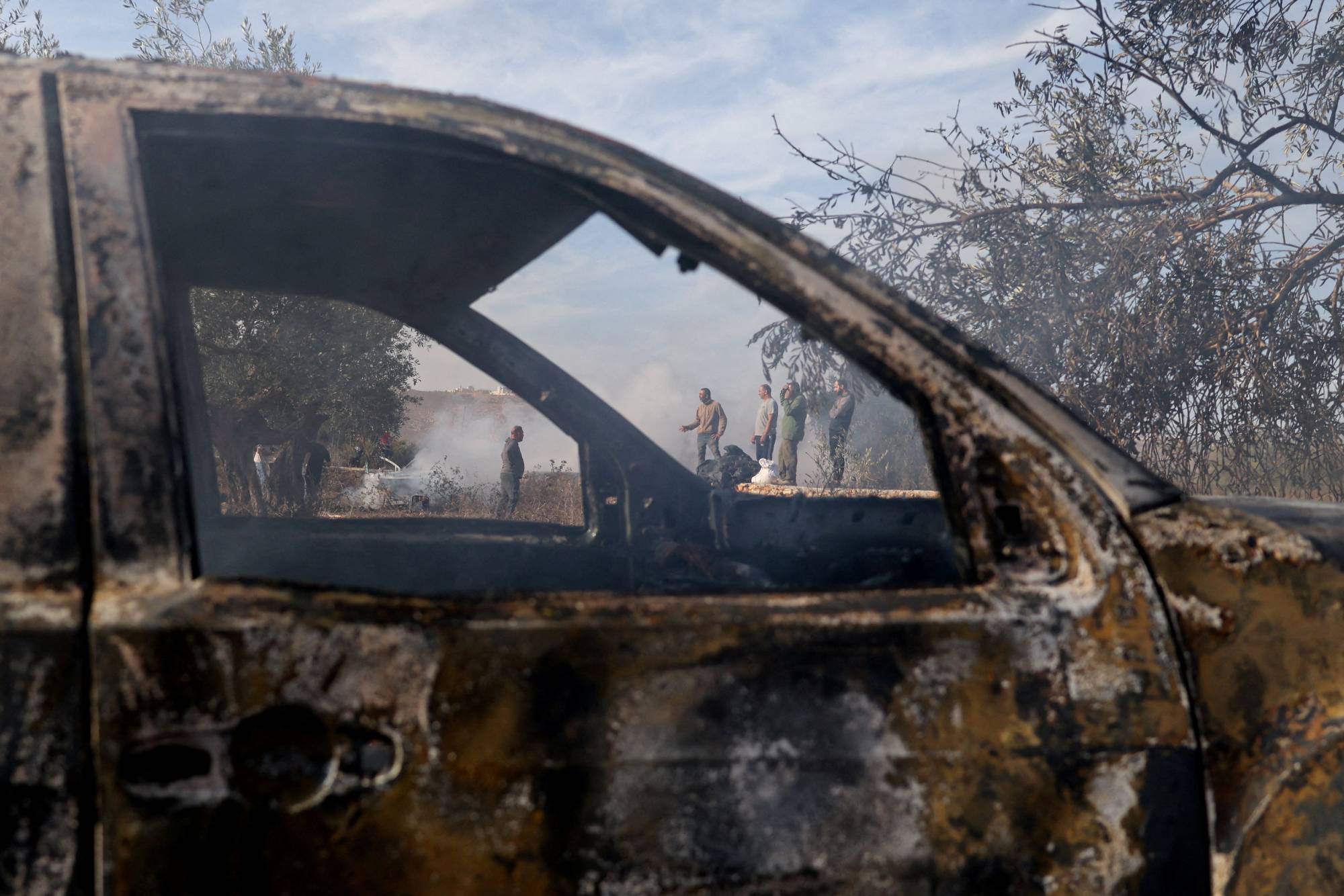
Amid the developments imposed by the recent war, it has become difficult to quantify Israeli violations, as UNIFIL forces are unable to enter towns under full Israeli control. A security source told Asharq Al-Awsat that violations are not limited to artillery shelling, drone strikes, or clashes with Hezbollah fighters, but also include the deliberate booby-trapping and complete demolition of homes under the pretext of destroying the group’s infrastructure.

The source described the situation in the south as unstable, warning of concerns about a return to a cycle of fighting. The source added that the Lebanese side had been monitoring developments through the mechanism committee, but the committee is currently not in place, leaving no mechanism to address new Israeli attacks.

On the ground, one person was killed in the town of Kounine and others were wounded by a suspicious object believed to be a cluster munition left over from Israeli bombardment, just hours after the ceasefire came into effect. Artillery shelling continues to be heard in several villages in the central sector, while Israeli forces fired bursts of gunfire toward the town of Aitaroun.

Field reports indicate that the town of Khiam continues to come under artillery fire. Israeli forces have also carried out demolitions in Khiam, Qantara, Shamaa, Bint Jbeil, and Bayyada. Explosions and sweeping fire were also reported in the vicinity of Bint Jbeil.

Two tracks of operations in the south

The ceasefire terms, which took effect at midnight between Thursday and Friday, have imposed a new and more difficult reality compared with the cessation of hostilities agreement reached between Lebanon and Israel on November 27, 2024.

Daoud said Israeli operations south of the Litani River are proceeding along two parallel tracks aimed at establishing a new reality on the ground. The first track involves efforts by the Israeli army to entrench its presence in villages it has taken control of, alongside continuing a policy of widespread destruction similar to what it previously carried out in Gaza.

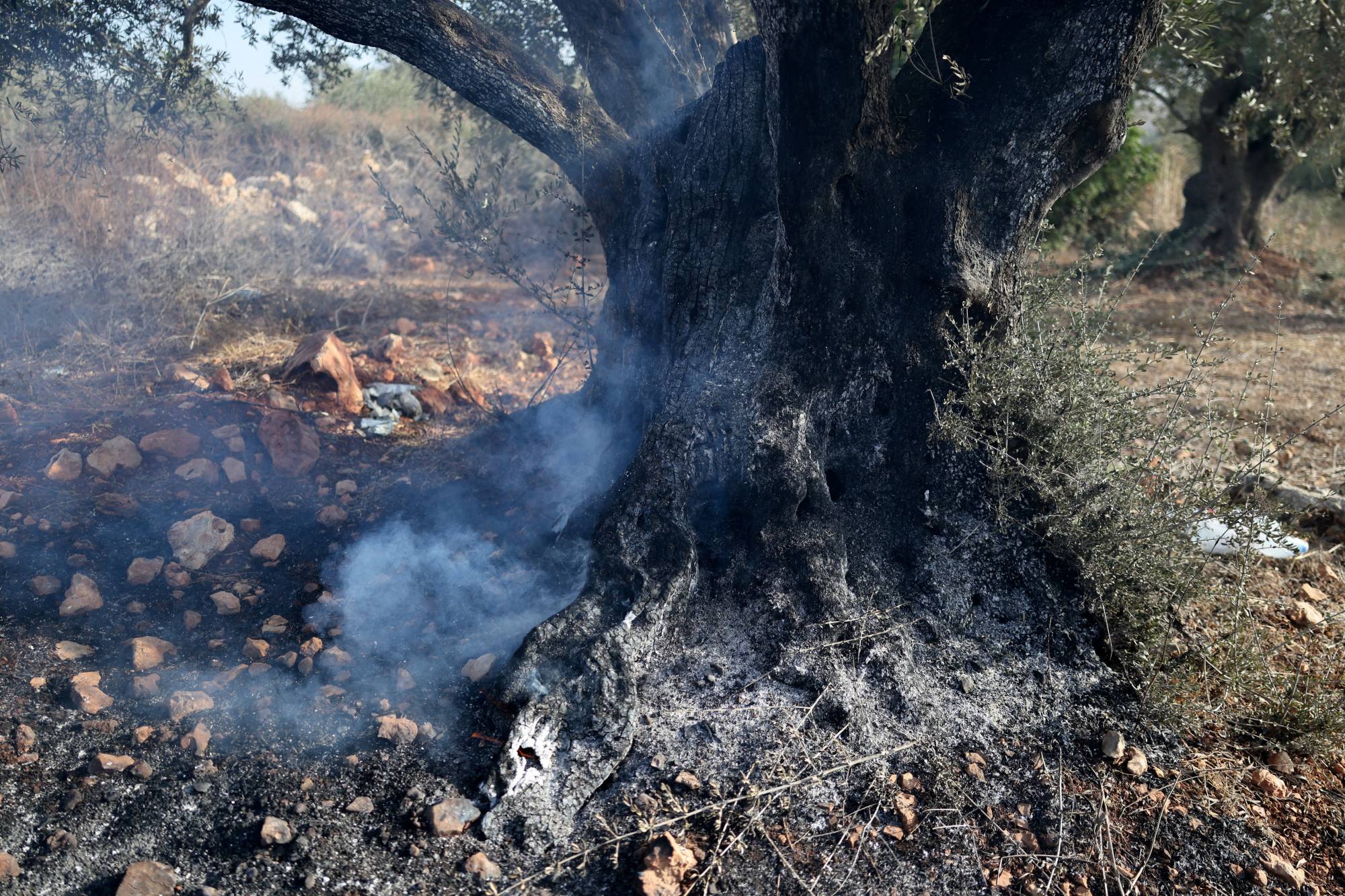
He said the Israeli army is focusing on demolishing buildings in villages it controls in the first and second defensive lines, uprooting trees including olive trees, and setting forests on fire to turn them into completely scorched areas. He added that Israel is also clearing the rubble of destroyed homes and transporting it for recycling, indicating an intention to fundamentally alter the nature of the area.

The battle for Bint Jbeil

The second track centers, according to Daoud, on the battle for Bint Jbeil. He said the battle has two main dimensions: a symbolic one, as Hezbollah has called the city the “capital of the resistance,” and a strategic one due to its geographic location near the border, allowing whoever controls it to influence both northern Israel and southern Lebanon.

The importance of Bint Jbeil is not limited to symbolism but extends to its surroundings. Daoud said controlling the city effectively means controlling surrounding roads and towns, as it provides a tactical advantage that allows fire control over the northeastern and western sectors of the area. He added that operations inside Bint Jbeil will continue regardless of the ceasefire.

He also suggested that if a US green light is given, Israel may continue operations under what is described as “low-intensity warfare” or guerrilla-style operations, aimed at completing control over remaining Hezbollah positions in the city.

Daoud stressed that Israel’s less visible operations reflect a scorched-earth policy, turning occupied towns south of the Litani into fully devastated areas, mirroring the operational pattern seen in Gaza.

Israeli Drone Strikes Near Beirut Kill 4 and Southern Airstrikes kill at Least 13

People ride a scooter past a destroyed car that was targeted by an Israeli strike, in Saadiyat, Lebanon, May 9, 2026. REUTERS/Mohamed Azakir
TT

Israeli Drone Strikes Near Beirut Kill 4 and Southern Airstrikes kill at Least 13

People ride a scooter past a destroyed car that was targeted by an Israeli strike, in Saadiyat, Lebanon, May 9, 2026. REUTERS/Mohamed Azakir

Three Israeli drone strikes on vehicles just south of Beirut on Saturday killed four people while a series of airstrikes on southern Lebanon killed at least 13, state media and the Health Ministry said.

The three drone strikes south of Beirut marked another escalation since a ceasefire between Israel and Hezbollah went into effect on April 17. Both Israel and Hezbollah have continued their daily attacks despite the truce.

On Wednesday night, Israel’s air force carried out an airstrike on a southern suburb in which Israel said it killed a senior Hezbollah military official. It was the first strike near the capital since the ceasefire was reached.

Two of the strikes on Saturday took place on the highway linking Beirut with the southern port city of Sidon in which several people were wounded, while the third happened on a road leading to Lebanon’s Chouf region killing three, the state-run National News Agency said.

An Associated Press journalist at the scene saw a dead body on the highway in the town of Saadiyat.

The Health Ministry said an Israeli airstrike on the southern village of Saksakiyeh killed at least seven, including a child, and wounded 15. The ministry said this was an initial count.

The agency reported strikes in southern Lebanon, including one on the village of Bourj Rahhal that killed three and another in Maifadoun that killed one.

The Health Ministry, meanwhile, said three Israeli drone strikes killed a Syrian man who was riding a motorcycle with his 12-year-old daughter in the city of Nabatiyeh.

The ministry said that after the initial strike, the man and his daughter managed to move away from the site only to be attacked again by the drone instantly killing the man. The girl then moved about 100 meters (yards) away and was hit again by the drone after she had been already wounded. The girl later died in a hospital, NNA said.

Residents search for survivors through the rubble of houses damaged by an Israeli airstrike in the village of Saksakieh, south Lebanon, Saturday, May 9, 2026. A car is seen damaged at the site. (AP Photo/Mohammed Zaatari)

“The Ministry of Public Health denounces this barbaric targeting and the deliberate violence against civilians and children in Lebanon,” the ministry said in its statement added that the strike marks an ongoing series “of grave violations of International Humanitarian Law.”

The Israeli military said Hezbollah fired explosive drones into Israel near the border with Lebanon adding that three soldiers were wounded, one of them seriously, in one of the attacks. It added that Hezbollah fired drones inside Lebanon as well in which one hit an Israeli vehicle without inflicting casualties.

Hezbollah claimed several attacks inside Lebanon as well as firing a drone at an Israeli military post in the northern town of Misgav Am.


Syria President Discusses Security with Visiting Lebanon PM

Syrian President Ahmad al-Sharaa and Lebanese Prime Minister Nawaf Salam in Damascus in 2025 (File photo: AFP)
TT

Syria President Discusses Security with Visiting Lebanon PM

Syrian President Ahmad al-Sharaa and Lebanese Prime Minister Nawaf Salam in Damascus in 2025 (File photo: AFP)

Syrian President Ahmed al-Sharaa met Lebanon's Prime Minister Nawaf Salam in Damascus on Saturday on a visit tackling issues including security, transport and energy.

Beirut and Damascus have been rebuilding their ties after the December 2024 overthrow of longtime ruler Bashar al-Assad in Syria, whose family dynasty exercised control over Lebanese affairs for decades and is accused of assassinating numerous officials in Lebanon who expressed opposition to its rule.

A statement from the Syrian presidency said the officials discussed "developing economic and trade cooperation... and bolstering security coordination in order to support stability and confront challenges", as well as regional and international developments, AFP reported.

Syrian state news agency SANA said the visit aimed to "develop joint cooperation... particularly the economy, transportation and energy" sectors.

Salam was accompanied by Deputy Prime Minister Tarek Mitri as well as Lebanese ministers for energy, economy and transport.

Salam hailed "significant progress" on joint issues at the end of the visit, telling reporters that "we discussed continuing efforts to address the issue of detained Syrians (in Lebanon) and to uncover the fate of the missing and forcibly detained in both countries".

In March, Lebanon transferred more than 130 Syrian convicts to their home country to serve the remainder of their sentences there, as part of an agreement signed a month earlier.

Lebanon has also been seeking information on political assassinations in the country under the Assad dynasty.

The discussions also addressed "the need for stricter Syria-Lebanon border controls and preventing all types of smuggling", Salam added.

Lebanon and Syria share a porous, 330-kilometre (205-mile) border notorious for the smuggling of people and goods.

Last month, the main border crossing was closed for several days due to an Israeli threat to target it, with Israel accusing Hezbollah of using the crossing for military purposes and smuggling, though it ultimately did not carry out the strike.

Israel and Hezbollah have been fighting since the Iran-backed group drew Lebanon into the Middle East war with rocket fire at Israel on March 2, though a ceasefire was announced last month.

Hezbollah, which fought alongside Syrian government forces during the country's civil war, lost a major ally and cross-border supply route with Assad's ouster.

Syria's new authorities are hostile to the Lebanese group and its sponsor, and have announced the arrest of alleged Hezbollah-affiliated cells in recent months, while the group has denied having any presence in Syria.

Salam said that "we will not allow Lebanon to be used as a platform to harm any of its Arab brothers, including Syria".


Settlers Force Re-burial of Palestinian Man in West Bank, Family Says 

Israeli settlement structuers being installed in Sanur near Jenin, in the Israeli-occupied West Bank, May 9, 2026. REUTERS/Mohamad Torokman
TT

Settlers Force Re-burial of Palestinian Man in West Bank, Family Says 

Israeli settlement structuers being installed in Sanur near Jenin, in the Israeli-occupied West Bank, May 9, 2026. REUTERS/Mohamad Torokman

Israeli settlers in the occupied West Bank forced Palestinians to exhume the body of their father from his freshly dug village grave, his family said, near a settlement re-established by Prime Minister Benjamin Netanyahu's government.

Hussein Asasa, 80, died on Friday of natural causes and was buried that evening at the cemetery of Asasa village near Jenin, with all the necessary permits from Israel's military, whose forces were at the site, his son Mohammed said.

But shortly after the burial, the family was called back by some of the villagers, who said settlers were at the grave, ordering the grave be dug up.

"They said the land was for settlement and that burial was not allowed. We told them that this is the village's cemetery, not part of the settlement," said Asasa, Reuters reported.

The settlers then threatened to dig the grave up with a bulldozer, Asasa said, so the family decided to exhume their father's body themselves.

"We found that they already dug the grave and reached the body," Asasa said. "We continued digging and got the body and buried him in another cemetery," he said.

VIDEO SHOWS PEOPLE REMOVING A BODY

Video circulating on social media appeared to show settlers watching as people dig in the ground of a hill slope. They then carry away what looks like a body as Israeli troops walk behind them. Reuters verified the location as Asasa.

The Israeli military said that the funeral had been coordinated with it and that it had not instructed the family to rebury their father. Soldiers were sent to the scene following a report about a confrontation with settlers who were "digging in the area," the military said. "The soldiers confiscated digging tools from the Israeli civilians and remained at the location in order to prevent further friction," the military said. It added that it condemns actions that violate the "dignity of the living and the deceased".

The UN Human Rights Office condemned the incident.

"This is appalling and emblematic of the dehumanisation of Palestinians that we see unfolding across the OPT (Occupied Palestinian Territories). It spares no one, dead or alive," said Ajith Sunghay, head of the OHCHR Palestinian office.

Sa-Nur was one of 19 settlements evacuated under the 2005 Israeli disengagement plan, which also included Israel's withdrawal of settlers and troops from Gaza. Netanyahu's government approved Sa-Nur's re-establishment a year ago and construction has advanced rapidly, according to Peace Now, an Israeli settlement watchdog.

The West Bank is among the territories that Palestinians seek for an independent state. Israel cites historical and biblical ties to the land, as well as security needs.

Netanyahu's government, which staunchly opposes the establishment of a Palestinian state, has been accelerating settlement building, while a rise in attacks by settlers on Palestinians has drawn international alarm. The United Nations and most countries deem Israel's settlements on West Bank land captured in the 1967 war illegal, a view that Israel disputes.