

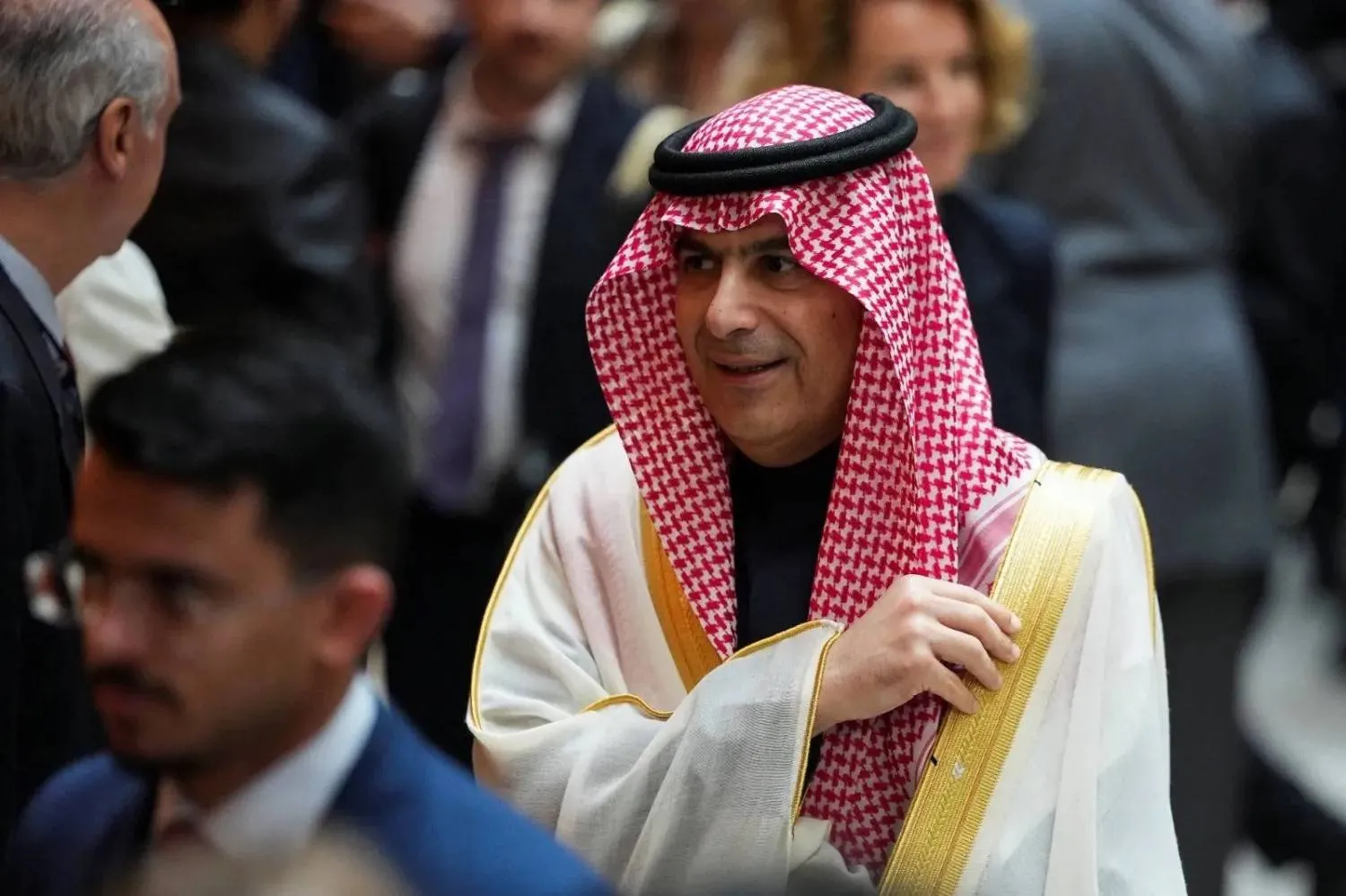

Saudi Central Bank Governor Says National Model Has Shielded Economy from Shocks

Saudi Central Bank Governor Ayman Alsayari. (International Monetary Fund)
TT

Saudi Central Bank Governor Says National Model Has Shielded Economy from Shocks

Saudi Central Bank Governor Ayman Alsayari. (International Monetary Fund)

Saudi Arabia’s economy has emerged as a model of resilience and crisis readiness, Central Bank Governor Ayman Alsayari said, citing steady progress under the Kingdom’s Vision 2030 reform agenda.

He stressed that continued implementation of the plan has helped protect the economy from regional shocks, underpinned by solid growth, contained inflation and prudent monetary and fiscal policies.

This strength, he noted, reflects decades of structural reforms and strategic investment in infrastructure and institutions, equipping the Kingdom with the capacity and flexibility to absorb shocks while sustaining investor and consumer confidence.

Addressing the International Monetary and Financial Committee of the International Monetary Fund, chaired by Saudi Finance Minister Mohammed Al-Jadaan, Alsayari highlighted the importance of Saudi Arabia’s diversified energy and trade infrastructure in maintaining supply flows under pressure.

He pointed to long-term investments such as the East-West pipeline, which runs to Red Sea ports in Yanbu, describing it as a vital artery for both Saudi exports and global energy supplies.

The ability to reroute exports and secure access to Red Sea ports and strategic facilities, he said, underscores the importance of long-term planning in preventing supply disruptions.

It also reinforces the need to treat energy security as integral to global financial stability, while avoiding policies that sideline the role of fossil fuels in sustaining trade and growth.

Alsayari warned that the war in the Middle East poses a serious test for the global economy and could revive conditions reminiscent of the stagflation era of the 1970s.

He welcomed progress on the “Diriyah Guiding Principles,” describing them as a milestone in efforts to reform IMF governance after nearly two decades of stagnation. The principles, reflecting the Diriyah Declaration, combine realism and ambition and provide a basis for strengthening the fund’s representation of the global economy.

Alsayari said that the step is essential to enabling the IMF to carry out its core functions in surveillance and lending, while keeping pace with technological shifts such as artificial intelligence and digital assets, and safeguarding the international monetary system against geopolitical risks and stagflation.

Saudi Arabia is translating its economic gains into tangible international support, including a $279 million pledge for IMF capacity development and the opening of a regional office in Riyadh to strengthen cooperation with countries in the region and beyond, Alsayari added.

He also cited platforms such as the AlUla Conference on Emerging Market Economies as tools to share expertise and advance reforms that support resilience and long-term growth.



Strait of Hormuz Blockade Drives up Costs at Panama Canal

Aerial view of the One Contribution container ship sailing under the Tokio flag as it enters the Panama Canal in Panama City on April 21, 2026. (EPA)
TT

Strait of Hormuz Blockade Drives up Costs at Panama Canal

Aerial view of the One Contribution container ship sailing under the Tokio flag as it enters the Panama Canal in Panama City on April 21, 2026. (EPA)

The war in the Middle East has boosted demand to move vital cargo through the Panama Canal to such an extent that one vessel carrying liquefied natural gas (LNG) paid $4 million to skip the line and avoid a wait that can take up to five days, according to an official report.

A surge in such payments has been recorded since the US-Israeli attacks on Iran began February 28, which led to the blockade of the Strait of Hormuz, a critical waterway for one-fifth of the world's oil and natural gas exports from Gulf countries.

To meet fuel demand, Asia's refineries are choosing to buy oil or gas from the United States and ship it through the transoceanic waterway instead of purchasing from Gulf countries who rely on the Strait of Hormuz, according to reports from the Panama Canal Authority.

The average number of ships passing through the canal on a daily basis has "remained strong," the authority told AFP in a statement Tuesday, with 34 ships in January and 37 ships in March. Some days exceeded 40 transits.

"The increase reflects changes in global trade patterns and market conditions, including geopolitical factors affecting key routes," the authority said.

Ships transiting the canal book their passage well in advance, and ships without bookings wait an average of five days to get through, but there is an auction where last-minute transits can be purchased.

The most recent auction included a $4 million bid for an LNG vessel, and in recent weeks two oil tankers exceeded bids of $3 million, the authority said.

Past average auction prices between October and February stood at around $130,000, and rose to $385,000 in March and April.

Five percent of global maritime trade passes through the Panama Canal, and its main users are the US and China. The route primarily connects the US East Coast with China, South Korea and Japan.

In the first half of the 2026 fiscal year, which runs October to September, the Panamanian waterway recorded passage of 6,288 ships, a year-on-year increase of 3.7 percent, according to official figures.


UK Inflation Jumps in March as Middle East War Propels Energy Prices

Vehicles pass a petrol station as they make their way down the A3 during the morning rush hour near Ripley, south-west of London on April 22, 2026. (AFP)
TT

UK Inflation Jumps in March as Middle East War Propels Energy Prices

Vehicles pass a petrol station as they make their way down the A3 during the morning rush hour near Ripley, south-west of London on April 22, 2026. (AFP)

Britain's annual inflation rate jumped to 3.3 percent in March as the Middle East war sent oil and gas prices surging, official data showed Wednesday.

The Consumer Prices Index (CPI) increased from 3.0 percent in the 12 months to February, the Office for National Statistics said in a statement.

"Inflation climbed in March, largely due to increased fuel prices, which saw their largest increase for over three years," Grant Fitzner, chief economist at the ONS, said in a statement.

Finance minister Rachel Reeves reiterated the Labour government's opposition to a conflict that has increased the cost of living for millions of Britons.

"This is not our war, but it is pushing up bills for families and businesses. That's why it's my number one priority to keep costs down," Reeves said in a statement.

At 3.3 percent, the latest UK inflation figure matches the March print for the United States. But the pace of the CPI increase in the world's biggest economy was far sharper, having stood at 2.4 percent in February.

Britain's inflation rate is also much larger than in the eurozone, where annual inflation rose to 2.6 percent in March from 1.9 percent in February.

The US-Iran war began on February 28, sending energy prices rocketing.

They have since pulled back on a ceasefire that US President Donald Trump extended Tuesday. But oil and gas prices remain far above their pre-war levels as Gulf supplies remain largely blocked from transiting the Strait of Hormuz.


Pakistan Receives Additional $1 Billion from Saudi Arabia Under $3 Billion Package

The State Bank of Pakistan logo is seen at a reception desk at its headquarters in Karachi (Reuters)
TT

Pakistan Receives Additional $1 Billion from Saudi Arabia Under $3 Billion Package

The State Bank of Pakistan logo is seen at a reception desk at its headquarters in Karachi (Reuters)

Pakistan’s central bank said Tuesday it had received $1 billion from Saudi Arabia’s finance ministry as a second tranche of a recently agreed $3 billion deposit package between the two countries.

In a post on its official X account, the State Bank of Pakistan said the funds were credited on April 20, 2026. The transfer comes just days after Islamabad received a first tranche of $2 billion, which was deposited on April 15.

With this latest payment, Saudi Arabia has completed the full transfer of the agreed $3 billion support in a short period, providing immediate liquidity that strengthens Pakistan’s monetary policy flexibility.

Ongoing Saudi support

The inflow caps a week of major Saudi financial moves aimed at supporting Pakistan’s economic stability and easing balance-of-payments pressures. In addition to the new $3 billion package, Riyadh last week renewed an existing $5 billion deposit held at the State Bank of Pakistan.

Analysts say the combination of rolling over existing deposits and injecting new funds lifts total Saudi deposits at the central bank, directly bolstering foreign exchange reserves and giving Islamabad a stronger footing in ongoing negotiations with international financial institutions.

Impact on Pakistan’s economy

Saudi support is seen as a key pillar of Pakistan’s efforts to restore macroeconomic stability. The funds are expected to help stabilize the rupee against the US dollar, improve the country’s financial position and its ability to meet external obligations, and provide a buffer against external shocks and high energy costs.

The financial measures underscore the depth of the strategic partnership between Riyadh and Islamabad, and reflect Saudi Arabia’s commitment to supporting Pakistan’s economic stability as part of its broader role in promoting regional and global financial stability.