


Oil to Fabric: Middle East Crises Reshape Global Fashion

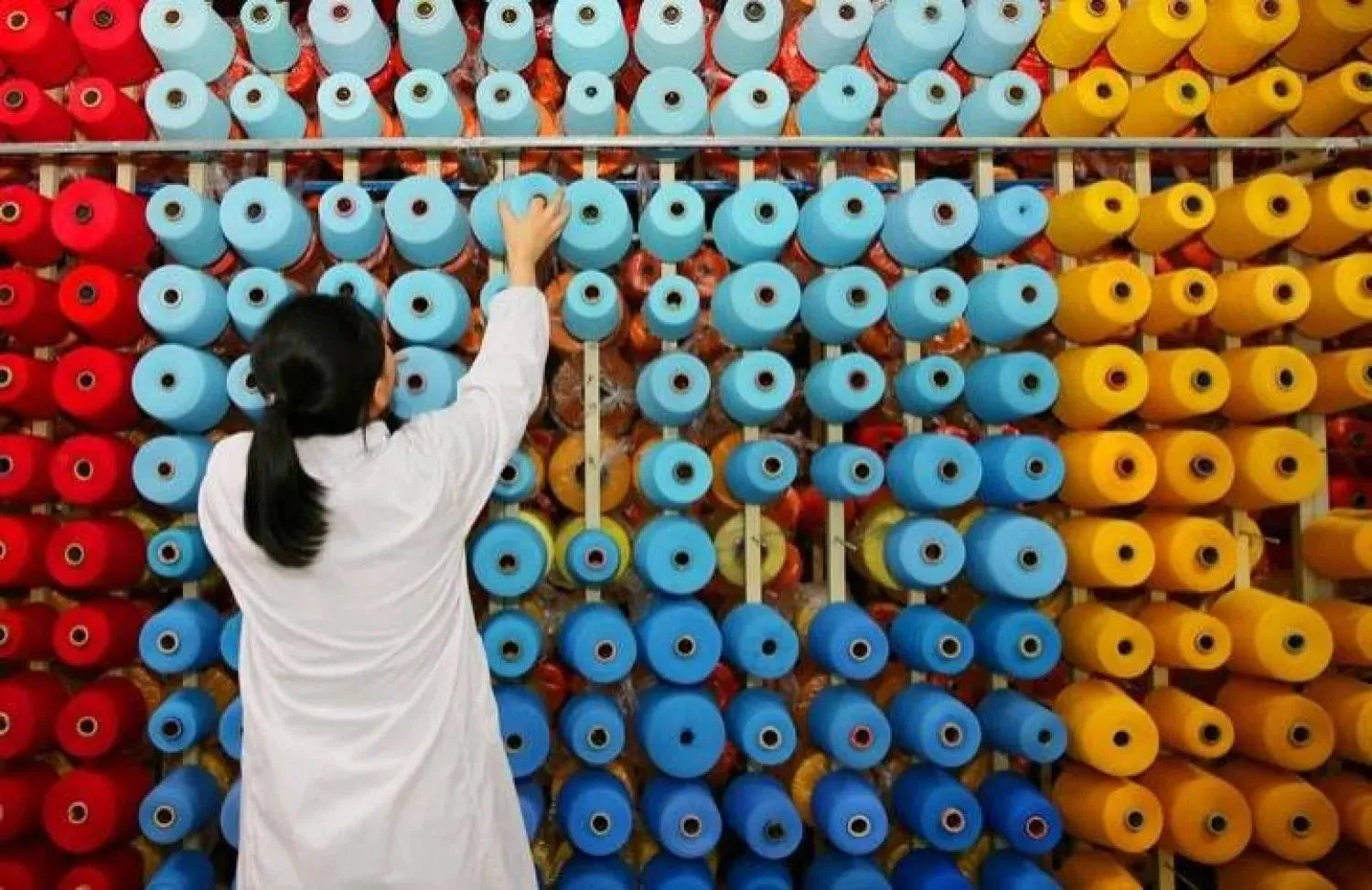
A worker arranges spools of thread at a textile factory in Haiyan, Jiangsu province, China (Reuters)
TT

Oil to Fabric: Middle East Crises Reshape Global Fashion

A worker arranges spools of thread at a textile factory in Haiyan, Jiangsu province, China (Reuters)

Rising oil prices are no longer just an energy market story; they are feeding directly into the cost of clothing. From petrochemical plants to fabric mills and retail racks, a complex supply chain is passing on higher costs, pushing up the final price consumers pay.

According to the “Materials Market 2025” report by the Organization for Textile Exchange, polyester makes up about 59% of global fabric output, with roughly 88% produced from non-recycled petroleum sources, leaving the industry exposed to energy price swings.

Oil prices have surged about 32% since the start of the US-Israeli war on Iran on Feb. 28, approaching $100 per barrel.

Fabrics under oil pressure

Amal Saqr, a textile design consultant, said the sector is highly sensitive to shifts in oil prices because of its reliance on synthetic fibers.

More than 60% of fabrics used in global clothing production depend on petroleum-based materials such as polyester, nylon and acrylic, she said, adding that any rise in oil prices feeds directly into fabric costs.

She pointed to 2008, when polyester prices jumped about 30% within three months as oil hit record highs, forcing Asian spinning mills to cut output by 20% to 25%.

Disruptions in the Red Sea between 2023 and 2024 also drove shipping costs up by about 300%, raising raw material costs and straining supply chains.

Yemen’s Iran-aligned Houthis began targeting ships linked to Israel on Nov. 19, 2023, using drones and missiles.

Natural fabrics not immune

Natural fibers such as cotton and linen avoid direct reliance on oil, but are still exposed to energy costs, Saqr said, noting that farming depends on fertilizers, fuel and transport.

The global fertilizer crisis in 2021 pushed prices up about 80%, driving cotton prices higher by roughly 40%. Later disruptions in the Strait of Hormuz added another 40% increase in fertilizer costs due to shipping delays.

Global cotton production reached about 24.5 million tons in 2024, or roughly 19% of total fiber output, making it less dominant than synthetic fibers but relatively more stable in pricing, according to the Textile Exchange report.

Rising production costs

Higher energy prices are hitting every stage of production, from spinning to dyeing and drying, Saqr said.

With already thin margins, textile factories face a stark choice: raise prices or cut output, both of which ultimately hit consumers.

World Bank data shows operating costs for textile factories in several countries have risen by about 18% following recent energy price increases.

Import markets feel it fast

Import-dependent markets are quick to absorb shocks from shipping or energy disruptions, Saqr said.

Shipping costs from Asia have lifted synthetic fabric prices by 10% to 18%, while imported cotton prices have climbed by 15% to 25%.

Rerouting shipments from the Strait of Hormuz to the Cape of Good Hope has added 10 to 14 days to transit times, leading to shortages and swings in the availability of fabrics and garments.

Value chains under rethink

Burak Cakmak, chief executive of the Saudi Fashion Commission, said the impact of oil prices is not immediate, as final pricing reflects a full value chain including production, marketing and distribution.

Instead of passing costs on, many brands are rethinking how to create value, improving efficiency and working more closely with suppliers, he said.

He also pointed to a shift toward localized production, with brands operating closer to their markets and managing inventory more tightly to control costs and improve flexibility.

Sustainability gains urgency

Sustainability is no longer just an environmental concern; it is tied to efficiency and long-term economic viability, Cakmak said.

The sector is moving toward circular models, including recycling and waste reduction, practices that are becoming essential to improving operations.

Designers double down

Anna Zinola, director of Istituto Marangoni in Riyadh, said rising oil prices are reinforcing, not reshaping, designers’ shift toward more conscious material choices.

Sustainability is embedded in the curriculum as a core approach guiding every design decision, she said.

Students are trained to balance cost, sustainability and consumer demand, while exploring material innovations that combine environmental and commercial goals.

Prices set to rise

Reports by McKinsey and Euratex expect global clothing prices to rise by 8% to 12% over the next year, as supply chain pressure persists and shipping costs remain elevated.


US Stocks Dip on Mixed Earnings as Markets Monitor Iran

A trader works on the floor of the New York Stock Exchange (NYSE) at the opening bell in New York on March 24, 2026.  (Photo by ANGELA WEISS / AFP)
A trader works on the floor of the New York Stock Exchange (NYSE) at the opening bell in New York on March 24, 2026. (Photo by ANGELA WEISS / AFP)
TT

US Stocks Dip on Mixed Earnings as Markets Monitor Iran

A trader works on the floor of the New York Stock Exchange (NYSE) at the opening bell in New York on March 24, 2026.  (Photo by ANGELA WEISS / AFP)
A trader works on the floor of the New York Stock Exchange (NYSE) at the opening bell in New York on March 24, 2026. (Photo by ANGELA WEISS / AFP)

Wall Street stocks retreated from records early Thursday as markets digested a trove of mixed earnings reports and monitored the latest dynamics between the United States and Iran.

Analysts cited profit-taking after both the S&P 500 and Nasdaq shrugged off a jump in oil prices to finish at records on Wednesday.

About 10 minutes into trading, the Dow Jones Industrial Average was down 0.4 percent at 49,311.39, AFP reported.

The broad-based S&P 500 dipped 0.2 percent to 7,126.19, while the tech-rich Nasdaq Composite Index declined 0.3 percent to 24,588.07.

David Morrison, senior market analyst at FCA, called Thursday's early trading action "a mild bout of profit-taking triggered by some worrying reports of hostile action between the US and Iran," according to a note.

The US Defense Department said its forces boarded a vessel in the Indian Ocean that was transporting oil from Iran, while President Donald Trump announced on social media that he ordered the Navy to "shoot and kill" boats placing mines in the Strait of Hormuz.

Iran vowed it would keep the strait closed to all but a trickle of approved vessels for as long as the United States blockaded its ports.

Among companies reporting results, Tesla fell 1.7 percent and Lockheed Martin dropped 3.7 percent, while American Airlines jumped 4.9 percent.


What Does the Inclusion of Saudi Bonds in the J.P. Morgan Index Mean?

Saudi woman walks at the Saudi stock market in Riyadh - Reuters
TT

What Does the Inclusion of Saudi Bonds in the J.P. Morgan Index Mean?

Saudi woman walks at the Saudi stock market in Riyadh - Reuters

Saudi Arabia’s debt market is set for a strategic shift in early 2027, following J.P. Morgan’s announcement that local-currency bonds will be included in its global emerging markets bond index. The move represents a vote of confidence in the Kingdom’s structural reforms and is expected to open the door to substantial capital inflows that will help finance major economic transformation projects.

In a note, J.P. Morgan said the move follows a series of reforms to improve foreign investor access and enhance local market capabilities.

The bank added that Saudi sukuk, Shariah-compliant debt instruments that function similarly to bonds, with a remaining maturity of up to 15 years, will be eligible for inclusion in the Government Bond Index-Emerging Markets (GBI-EM), the most widely tracked benchmark of its kind, with $233 billion in assets tracking it.

J.P. Morgan said eight sukuk issues would be eligible for inclusion, with a total value of $69 billion.

The Kingdom’s inclusion in the index is expected to boost liquidity and demand for sovereign debt, contributing to lower borrowing costs.

In September, J.P. Morgan had placed Saudi Arabia on “Positive Index Watch,” paving the way for its eventual inclusion in the GBI-EM.

Commenting on the decision, Saudi Finance Minister Mohammed Al-Jadaan told Bloomberg that the move reflects continued confidence in the Kingdom’s economic transformation trajectory. He said the inclusion marks a new milestone in Saudi Arabia’s integration into global financial markets, adding that its immediate impact will be seen in broadening and diversifying the investor base and supporting long-term capital inflows into the domestic debt market, thereby strengthening the resilience and stability of the national economy.

The Significance of the Index

The importance of J.P. Morgan’s index lies in its role as a benchmark guiding major global fund allocations, particularly passive funds that track indices automatically. With an expected weighting of around 2.52 percent, Saudi bonds will become a core component of international investor portfolios, increasing government bond liquidity and reducing borrowing costs over the long term, a critical factor for the Kingdom’s economy.

Passive funds play a key role in ensuring steady inflows. Trillions of dollars globally are managed through such funds. Once Saudi Arabia is included in the index, these funds will purchase Saudi bonds to remain aligned with it. Unlike active investors, they do not rapidly buy or sell based on daily news or market sentiment, but continue to hold bonds as long as they remain in the index, providing significant stability to the Saudi debt market. Their participation also ensures a constant base of large-scale buyers, facilitating bond trading at any time.

Reforms That Paved the Way

This inclusion is the result of a series of regulatory reforms highlighted by the bank in its note. Saudi Arabia has improved international investor access by linking to the global Euroclear system, expanding its network of primary dealers to include international banks, and facilitating cross-border settlement and trading. These measures have enhanced legal certainty and transparency, making the Saudi debt market an attractive and secure destination for foreign capital.

Financial Stability Amid Regional Challenges

Beyond its economic dimensions, the move carries strategic significance amid ongoing geopolitical tensions in the region. Increased inflows into local bonds are expected to strengthen the government’s ability to manage any economic fallout from regional instability. It underscores the resilience and attractiveness of the Saudi economy, demonstrating its capacity to attract quality investment and secure the financing needed for its development plans regardless of external challenges.


S&P Warns African Sovereign Credit Rating Risks Likely to Worsen

Central Bank of Egypt building (A.P.)
TT

S&P Warns African Sovereign Credit Rating Risks Likely to Worsen

Central Bank of Egypt building (A.P.)

S&P Global Ratings warned on Thursday that the risks to African sovereign credit scores were likely to worsen the longer the Middle East war drags on.

The ratings agency said that higher fuel and fertilizer import costs would increase inflation and fiscal strains for countries, "potentially leading to rating pressure".

Egypt, Mozambique and Rwanda are among the "most exposed" the agency said, although Egypt's deep domestic capital markets and Rwanda's high levels of concessional debt provide some offset, according to Reuters.

Less exposed are net-oil exporters Nigeria, Angola and Congo-Brazzaville as well as Morocco, due to stronger foreign-currency reserves.

S&P's "base case" assumed that the conflict will peak and that the Strait of Hormuz will gradually reopen but related disruptions will likely persist for months. A resumption of hostilities and a more prolonged conflict would present a greater threat to many African sovereigns.

The ratings agency said it expected Africa's borrowing costs to increase due to war's impacts and as a result of global risk aversion.

S&P in recent weeks kept Egypt's credit rating on a "stable" outlook and affirmed ratings for Morocco, Ghana and Mozambique.
