


ISIS Shifts Priorities, Seeks to Raise Cost of Rule in Syria

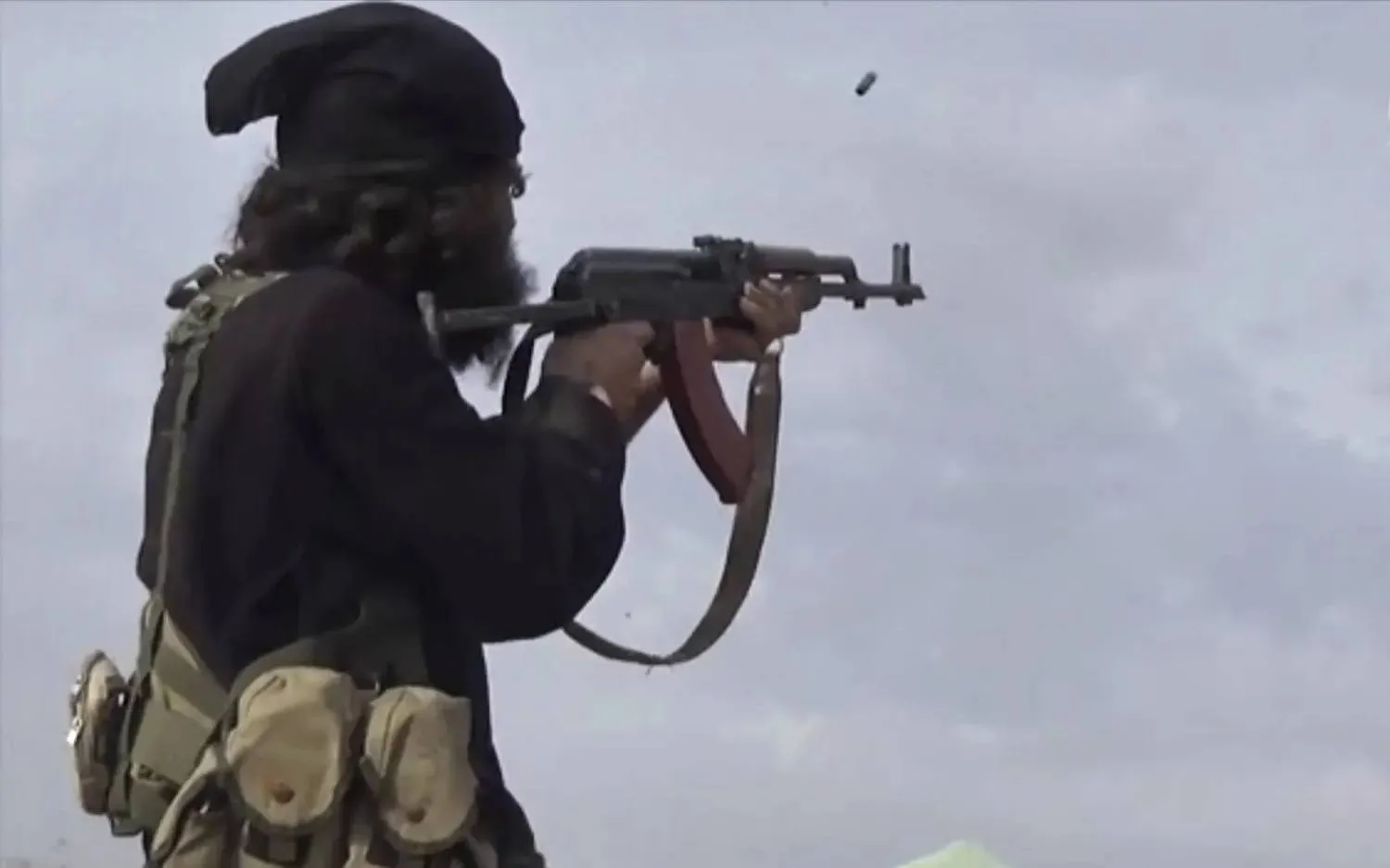
An ISIS fighter in Baghouz, Syria, in 2019, in a photo released by the group’s Amaq agency (AP)
TT

ISIS Shifts Priorities, Seeks to Raise Cost of Rule in Syria

An ISIS fighter in Baghouz, Syria, in 2019, in a photo released by the group’s Amaq agency (AP)

Syria has moved since early this year from internal unrest in the northeast, the coast, and the south to relative calm and attempts to impose a new security and political order, most clearly seen in the security file and in an agreement with the Syrian Democratic Forces.

But the shift has set up an undeclared race with ISIS across multiple regions and social environments.

ISIS has re-emerged as a destabilizing force, seeking to regain a foothold by exploiting gaps in security control. It is leaning on an aggressive narrative and targeted attacks that intensified from mid-February, eased in early March, then picked up again.

The Jazira region, spanning Deir al-Zor, Raqqa and Hasaka, is the main test ground for the group in 2026. Damascus’s takeover of areas east of the Euphrates in late January, after a US troop repositioning and full withdrawal, along with the earlier pullback of SDF forces, created a new security landscape that ISIS is trying to exploit.

The US withdrawal and repositioning at bases such as Kharab al-Jir and Rmelan caused temporary disruption along control lines.

ISIS’s weekly al-Nabaa newsletter reported a rise in attacks on government checkpoints and positions, using roadside bombs and direct assaults. The group carried out about 22 attacks across Syria in March 2026 alone, targeting military sites and civilians.

Ability to hit high-value targets

An attack on Syria’s 86th Division in Deir al-Zor, and on its positions near the Panorama area at the city’s southern entrance, underscored ISIS’s ability to strike deep inside government-held territory and hit sensitive targets.

The group has fully shifted to guerrilla warfare, deploying small, mobile units across vast desert areas that still offer cover despite heavy US airstrikes.

Its messaging, including a Feb. 5 speech by spokesman Abu Hudhayfah al-Ansari, signals an effort to recast itself as the “only legitimate resistance” to the new order. Content in al-Nabaa shows a shift from monitoring to a broad ideological offensive.

The spokesman declared a “new phase of operations” targeting governance in Damascus, signaling a move from defending desert pockets to a war of attrition in cities. Al-Nabaa has stepped up attacks on the new government, branding it an “updated version of apostasy,” and focusing on Syrian President Ahmed al-Sharaa, still referred to by his former nom de guerre.

Undermining military credibility

ISIS casts al-Sharaa’s shift from jihadist leader to head of state as a “great betrayal.” It is trying to draw in fighters from Hayat Tahrir al-Sham and other factions frustrated by integration into the “new Syrian army” or by perceived leniency toward former regime officials.

It also questions Syria’s role in the US-led coalition, framing it as a concession.

By escalating attacks since mid-February, ISIS appears intent on undermining the government’s ability to enforce security and stability, while casting doubt on the military effectiveness of newly formed forces. It promotes a narrative that al-Sharaa serves US interests, presenting itself as a more ideologically rigid alternative.

Exploiting fault lines

ISIS is betting on social tensions as Damascus reasserts control over areas once run by autonomous authorities or foreign-backed factions, especially in the northeast and parts of the north.

It taps into tribal concerns over central rule, positioning itself as a fallback or covert ally against perceived abuses. At the same time, the state’s focus on remnants of the former regime and opposition militias on the coast and in Sweida gives ISIS more room to move in the east.

Despite losing territory, ISIS retains the ability to survive through flexibility, continued recruitment and enough funding to sustain operations.

Its strength lies in decentralization. Regional branches now operate with autonomy after the weakening of central leadership following the killing of its fourth “caliph,” Abu al-Hussein al-Husseini al-Hashimi. Cells can recruit and act without waiting for orders.

The group has also rebuilt small support hubs in rugged parts of the Homs desert, some hit by US strikes this year, including raids on Jabal al-Amour near Palmyra, making full clearance difficult.

The United States said it carried out 10 airstrikes between Feb. 3 and 12 on more than 30 targets across Syria, many in Homs province, including the Sukhnah desert and gas field areas, raising fresh concerns after the US withdrawal.

Recruiting a new generation

ISIS is targeting teenagers and young men raised in displacement camps or economic hardship, using encrypted platforms to avoid detection. It also exploits sectarian and political narratives to reinforce a sense of marginalization among Sunni communities.

But it faces mounting pressure. Coordination between Damascus and the international coalition has tightened, limiting ISIS’s ability to exploit divisions. Advances in surveillance and drone technology have also reduced the advantage of desert terrain.

Still, the group is betting on potential economic failure or weak public acceptance of the government in newly retaken areas. It is also trying to destabilize tribal dynamics in Deir al-Zor by exploiting arrests of local figures or disputes over oil resources.

Momentum shifts

A security campaign launched in late February by the Interior Ministry, with army support, shifted the balance on the ground. Operations swept eastern Hama, the central desert, and areas around Aleppo and the coast.

In early March, authorities said they foiled a major attack targeting military sites in Aleppo and dismantled three sleeper cells on the coast and in the Homs countryside, disrupting ISIS’s internal networks and communications.

By mid-March, attacks had dropped to levels not seen since late 2024. Small groups were seen moving to the rural edges of Raqqa and Deir al-Zor to regroup.

Some fighters reportedly sought settlements with authorities amid funding shortages and a lack of basic supplies.

Researcher Zain al-Abidin al-Akeidi said ISIS had previously exploited Arab tribal resentment toward the SDF, but areas still under SDF control are now mostly Kurdish, limiting the group’s reach.

He warned of continued recruitment despite the government's experience in tracking ISIS cells, noting that resolving the al-Hol camp issue and restoring state control east of the Euphrates could weaken ISIS propaganda.

But he said security conditions in the Jazira region remain “very difficult,” citing poor living conditions, weak services and drug trade as factors ISIS exploits.

A Syrian army colonel, Mohammed al-Amer, said “tribal fronts” in eastern Syria have links to ISIS and have mediated with some fighters to leave the group after ideological reviews.

He said some were detained and others monitored, adding, “We use all methods to end ISIS’s presence in Syria, especially through security and intelligence work.”

Harassment over control

ISIS no longer aims to seize territory, but to raise the cost of governing. It retains the ability to harass Damascus, even if at a limited level.

Attacks in late March were largely defensive, targeting small patrols or abandoned positions on desert fringes, reflecting weaker planning capacity and a shift toward symbolic presence.

Lying low

By early April, ISIS appeared to enter a “dormancy” phase, pulling back from frontlines, reorganizing and reassessing. This likely precedes a familiar strategy of hiding and rebuilding after losses, as seen in Iraq in 2007.

Worsening economic conditions could aid recruitment, but Damascus's progress in building a unified army and stabilizing living conditions could undermine the group.

ISIS may have lost its aura of dominance in 2026, but not its will to fight. Its attacks on the president and government reflect recognition of the threat posed by the new state.

A dual test

The drop in ISIS activity reflects a mix of security, military and economic pressures. Campaigns have disrupted its structure, forced a partial withdrawal, and triggered internal reorganization and a shift away from direct attacks.

Small cells remain active along desert edges and at the frontlines between Deir al-Zor and Raqqa, suggesting a temporary phase of regrouping.

Past patterns show ISIS exploits downturns to reposition and capitalize on instability. Regional conditions could help it reopen supply lines or reconnect with affiliates.

The coming months will test whether Syrian forces can hold recent gains, and whether ISIS can endure sustained pressure. It may either fade into a marginal threat or re-emerge through sporadic, targeted attacks to signal its presence without entering open conflict.

Either way, the next phase will be decisive in shaping the security landscape in northern and central Syria and defining the trajectory of the fight between the state and ISIS.



Israeli Fire Kills Five in Gaza and the West Bank, Medics Say

 Election campaign banners showing candidates for the upcoming municipal elections hang on a building in Deir el-Balah in the central Gaza Strip on April 21, 2026.  (Photo by Eyad Baba / AFP)
Election campaign banners showing candidates for the upcoming municipal elections hang on a building in Deir el-Balah in the central Gaza Strip on April 21, 2026. (Photo by Eyad Baba / AFP)
TT

Israeli Fire Kills Five in Gaza and the West Bank, Medics Say

 Election campaign banners showing candidates for the upcoming municipal elections hang on a building in Deir el-Balah in the central Gaza Strip on April 21, 2026.  (Photo by Eyad Baba / AFP)
Election campaign banners showing candidates for the upcoming municipal elections hang on a building in Deir el-Balah in the central Gaza Strip on April 21, 2026. (Photo by Eyad Baba / AFP)

Israeli airstrikes killed at least four Palestinians in Gaza on Thursday, while soldiers shot and killed a 15-year-old child during an army raid in the Israeli-occupied West Bank, Palestinian health officials said.

One person was killed in a strike in southern Gaza's Khan Younis in which several others were wounded, local medics said. Israel's military said it had targeted militants transporting munitions, who it said had posed a threat to Israeli soldiers, Reuters reported.

Three others, including a rescue worker, were killed in a separate strike in Maghazi, a Palestinian refugee camp in the Deir al Balah area in central Gaza, health officials said. Israel's military had no immediate comment on that strike.

Israel has carried out repeated strikes on Gaza since a US-brokered ceasefire came into effect in October. Both Israel and Hamas have accused each other of ceasefire violations.

There is no mechanism for enforcing the ceasefire. Four Israeli soldiers and more than 780 Palestinians have been killed in Gaza since the ceasefire started.

At Gaza City's Al Shifa Hospital, the territory's largest medical facility, relatives stood among mourners gathered to bury five people, including three children, who were killed on Wednesday in an Israeli airstrike on a northern Gaza town.

"There is no ceasefire, no truce, nothing at all," said Mohammed Baalousha, a relative of one of the victims. "There is no safety in any area."

Israel's military has not commented on the strike.

WEST BANK VIOLENCE

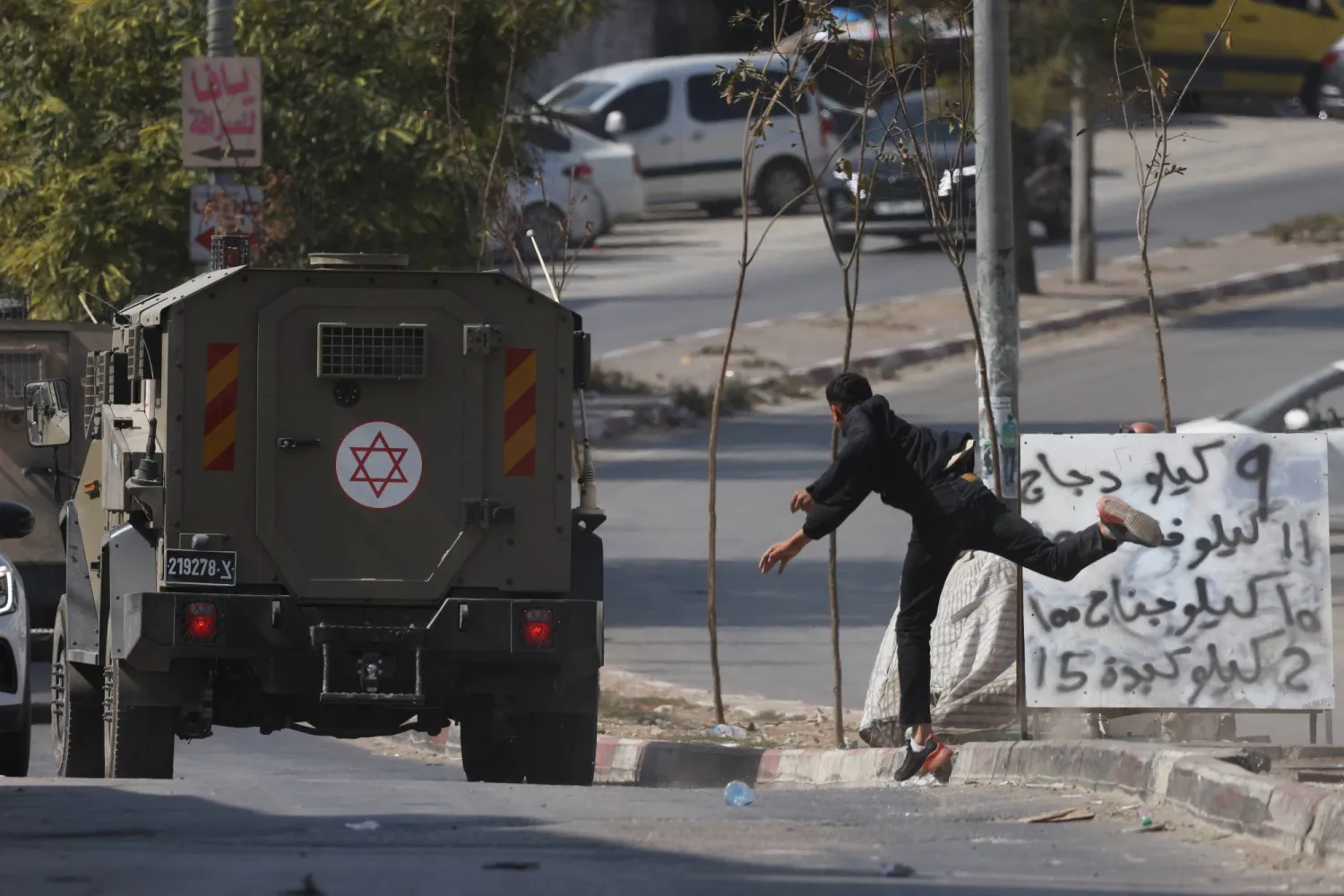
In the West Bank city of Nablus, health officials said Israeli forces shot and killed a teenager during an ongoing raid in the city.

The health ministry said Israeli settlers shot and killed a 25-year-old Palestinian man in Deir Dibwan town near Ramallah a day ago, in the latest in what human rights groups have described as a surge in violence against Palestinians waged by Israeli settlers and soldiers.

The Israeli military did not immediately comment on either incident. The Palestinian health ministry said at least 15 people had been killed by Israeli settlers' attacks so far this year.


Disputes Over Quotas Stall Iraq Government Talks

A handout image released by the Iraqi Parliament Media Office on April 11, 2026, shows Iraqi members of parliament attending a session to elect a new president, in Baghdad. (Photo by IRAQ PARLIAMENT MEDIA OFFICE / AFP)
TT

Disputes Over Quotas Stall Iraq Government Talks

A handout image released by the Iraqi Parliament Media Office on April 11, 2026, shows Iraqi members of parliament attending a session to elect a new president, in Baghdad. (Photo by IRAQ PARLIAMENT MEDIA OFFICE / AFP)

Rivalries within Iraq’s Shiite Coordination Framework have led to a political deadlock over naming a new prime minister, as internal disagreements persist over both the selection mechanism and the division of ministerial posts among the bloc’s factions.

According to sources, a meeting of Coordination Framework leaders - postponed several times in recent days - will focus on finding a solution that reconciles two approaches: one based on the “electoral weight” of member blocs, and the other on “political consensus” to choose a compromise candidate acceptable to all parties.

The bloc has failed to agree on a nominee during two previous meetings after votes between two leading candidates ended in a tie, deepening divisions and delaying a decision. The upcoming session is seen as potentially decisive, though another postponement remains possible if differences persist.

An Iraqi political source said a decision on the prime minister could come within hours as the constitutional deadline approaches.

“I expect the matter to be settled one way or another, because next Saturday marks the final deadline, and continued delay is already having a negative impact even among their own base,” the source said.

The source added that if the alliance adopts the criterion of electoral weight, Ihsan al-Awadi, the candidate backed by Prime Minister Mohammed Shia al-Sudani, would have the strongest chances. However, if the decision remains confined to the bloc’s leadership, the contest would stay within a pool of 12 votes, with the balance possibly tipping in favor of Bassem al-Badri.

The dispute extends beyond the selection mechanism to include internal bargaining over the distribution of ministries and sovereign portfolios. Some factions have tied their support for any candidate to the size of their share in the next government, further complicating negotiations.

Two prominent candidates have emerged with nearly equal backing within the Coordination Framework, resulting in a deadlock and reviving the option of a compromise candidate if neither consensus nor a majority decision can be reached.

The Coordination Framework, formed after the most recent elections, includes several major Shiite forces, among them alliances led by former prime ministers Nouri al-Maliki and Haider al-Abadi, as well as the bloc of current Prime Minister Mohammed Shia al-Sudani, who is heading a caretaker government. Political pressure is mounting as the constitutional deadline nears for the president to designate a new prime minister.

The election of President Nizar Amidi has triggered the formal government formation process, with a constitutional deadline set to expire on April 26, placing political forces under pressure to avoid a return to prolonged deadlock.

With complications persisting, there are many scenarios, including a last-minute agreement, further delay, or a shift toward a compromise candidate. The standoff underscores fragile cohesion within the Shiite camp and a widening gap between electoral calculations and the demands of political consensus.


Fallout from Iran War Casts Shadow over Egypt’s New Budget

Egypt’s House of Representatives being briefed on the government’s outlook on the state budget (House of Representatives)
TT

Fallout from Iran War Casts Shadow over Egypt’s New Budget

Egypt’s House of Representatives being briefed on the government’s outlook on the state budget (House of Representatives)

The economic fallout from the Iran war has cast a shadow over Egypt’s new state budget, Finance Minister Ahmed Kouchouk told parliament on Wednesday, as he presented the draft before it was referred to specialized committees for discussion, with the government pledging swift amendments “to enhance its ability to deal with current and potential risks.”

Kouchouk’s statement came a day after Prime Minister Mostafa Madbouly addressed the House of Representatives, focusing on the damage caused by the conflict and ways to manage its repercussions.

He said the government was treating the current regional escalation as a “prolonged crisis,” whose end is difficult to predict given the complexity and overlap of regional and international dynamics, and suggested its economic effects could last through the end of the year.

During the presentation of the 2026-2027 fiscal year budget, 600 billion Egyptian pounds ($11.5 billion) were allocated for energy subsidies, including electricity support, which rose by 39%, according to the finance minister.

A total of 832.3 billion pounds was earmarked for social protection - a 12% annual increase - to support the most vulnerable groups, alongside 90 billion pounds set aside for programs to support economic activity. (The dollar is equivalent to about 52 Egyptian pounds.)

The minister said spending priorities focus on healthcare, education, social protection, and support for production and exports, alongside flexible precautionary policies to address potential challenges and strike a balance between fiscal discipline and economic stimulus. He pointed to “uncertainty in markets and disruptions in trade and supply chains,” describing them as “major challenges and pressures on economies, especially emerging markets.”

Data presented to lawmakers also indicated a 3% reduction in fuel consumption and a 15% cut in electricity and lighting use in response to recent developments. Regarding national projects, the government decided to postpone or slow the implementation of “slow-moving” or fuel-intensive projects on an exceptional basis for three months, renewable if needed.

According to the minister, the government has also decided to limit spending in the final quarter of the current fiscal year to essential expenditures only, including wages, salaries, pensions, and the needs of the health, electricity and petroleum sectors.

Egypt’s budget has been affected by rising costs of securing energy supplies, prompting the government to increase subsidy allocations in the new budget while relying on consumption rationalization and hedging against future developments in the conflict, said economist Mohieddin Abdel Salam. He noted that Egypt has been significantly impacted by rising oil and gas prices.

Figures presented by the finance minister showed the government has mobilized about 135.6 billion pounds since early March to ensure the stability of vital sectors. This includes 90.6 billion pounds for the energy sector, 30 billion pounds to secure essential commodities, subsidized goods, wheat and sugar, and 15 billion pounds to support the healthcare sector and provide medicines.

Abdel Salam told Asharq Al-Awsat that uncertainty remains over Egypt’s ability to attract foreign investment, as some investors are wary of committing funds in the region due to war-related risks. However, he said Egypt could still benefit from opportunities if it manages to distance itself from ongoing tensions.

He noted that these conditions have led to tighter fiscal policies, reflected in holding interest rates steady rather than cutting them, as well as austerity measures and reduced spending by government institutions.

This can be seen in the new budget, he added, which focuses on vital sectors and strengthening social support, particularly amid declining revenues from the Suez Canal and tourism, and potential impacts on remittances from Egyptians abroad.