
A Lesson from 1915 … Why the Strait of Hormuz Can’t be Taken by Force

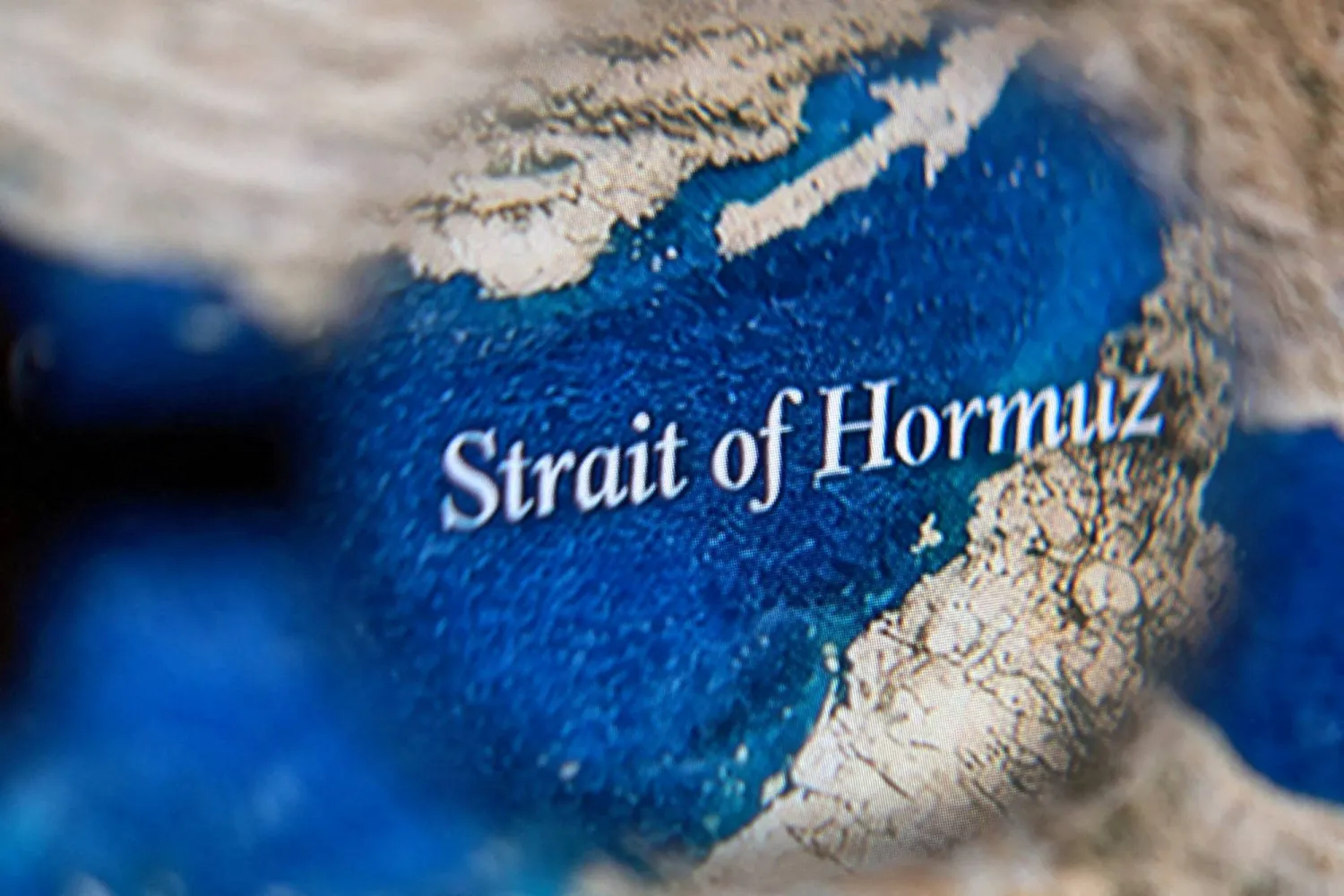
FILE PHOTO: Strait of Hormuz map is seen in this illustration taken April 15, 2026. REUTERS/Dado Ruvic/Illustration/File Photo
TT

A Lesson from 1915 … Why the Strait of Hormuz Can’t be Taken by Force

FILE PHOTO: Strait of Hormuz map is seen in this illustration taken April 15, 2026. REUTERS/Dado Ruvic/Illustration/File Photo

The debate over reopening the Strait of Hormuz represents one of the most sensitive issues in politics and security. As questions continue to grow about why US President Donald Trump did not take practical steps to remove the obstacles blocking the vital passageway, this discussion sheds light on the nature of the military challenges that make any attempt to open it by force extremely dangerous, especially given the presence of non traditional threats such as naval mines and warfare.

The answer as to why nothing has been done to reopen the Strait of Hormuz is simple, according to The Independent.

As his advisers will have told Trump before he attacked Iran, it is almost impossible to clear a passage through a minefield when the shoreline is held by the enemy, without being prepared to take significant casualties. And this, it seems, the US is not prepared to do.

It is one thing to bomb a less technologically sophisticated enemy from the air, but quite another to get involved in a real fight at sea level with an opponent who has been planning this form of asymmetric warfare for a very long time.
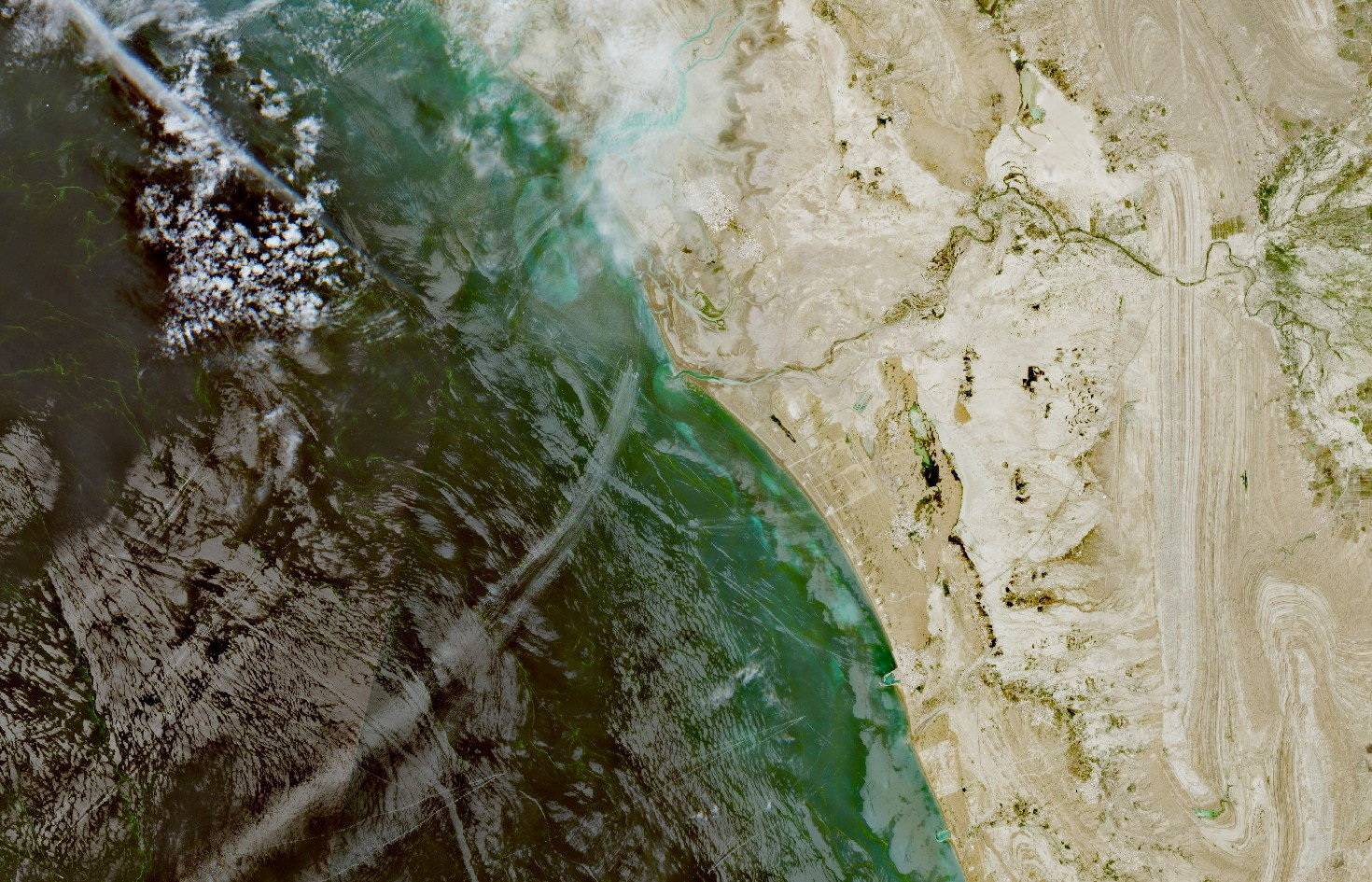
 

A satellite image shows a fleet of small boats at sea, north of the Strait of Hormuz near the Kargan coast, Iran, April 22, 2026. European Union/Copernicus Sentinel-2/Handout via REUTERS

According to the British newspaper, history gives a stark lesson on why America needs to tread warily – a page from the First World War.

It was March 1915. The “straits” concerned were the Dardanelles – the narrow passage linking the Mediterranean to the Black Sea and giving access to Istanbul. The Turks were the defenders, the British and the French the attackers.

They were in the middle of a shooting war. A vital waterway, which would normally be open for the world’s commerce, was closed because of the actions of Türkiye, the bordering power. The coastline was heavily defended, and there was a high probability that mines had been laid to block the channel.

A decision was made by the British and French that the straits were to be reopened by force – and a very considerable force was assembled for that purpose.

It comprised no fewer than 14 “capital” ships (in those days “battleships” and “battlecruisers”) supported by escorts and a large force of minesweepers.

The plan was a good one. The capital ships would stand off in clear water and bombard the shore defenses. When these had been silenced, the minesweepers would go ahead and sweep another clear area.

The capital ships would then move forward again into swept water and recommence their bombardment – successive waves of big ships moving up, but always into water which had been swept for mines. In this way, the whole channel would be cleared, and the straits reopened.

The big push commenced on 18 March 1915. To start with, it all went well. Four capital ships – HM ships Queen Elizabeth, Agamemnon, Lord Nelson and Inflexible – formed the first attacking line.

The second line was composed of four French ships, Gaulois, Charlemagne, Bouvet and Suffren. They, in turn, were to be supported by six more British ships – HM ships Ocean, Irresistible, Albion, Vengeance, Swiftsure and Majestic – which would form a third line to pass through and relieve the French in line two.

The bombardment was started by the RN ships in line one at 11am. By 12.20pm, the French ships of line two had steamed through the first line to take up their advanced positions.

By 1.45pm, the fire from the shore batteries had slackened under the onslaught of the guns of the eight capital ships, and it was deemed safe enough to send in the minesweepers for the next phase. The third line of six ships was also called up to move the force forward.

However, 15 minutes later, everything started to go wrong. FS Bouvet hit a mine, and in a matter of minutes, she capsized and sank. There were only 75 survivors out of a ship’s company of 718.

The action continued. HMS Irresistible of the third wave was bombarding the forts when she, in turn, struck a mine at 3.14pm. She developed a severe list but continued with the action until she hit another mine, and her main engines were put out of action completely.

An attempt was made to take her in tow, but the situation was hopeless, and the order was given to abandon ship. More than 600 men were taken to safety.
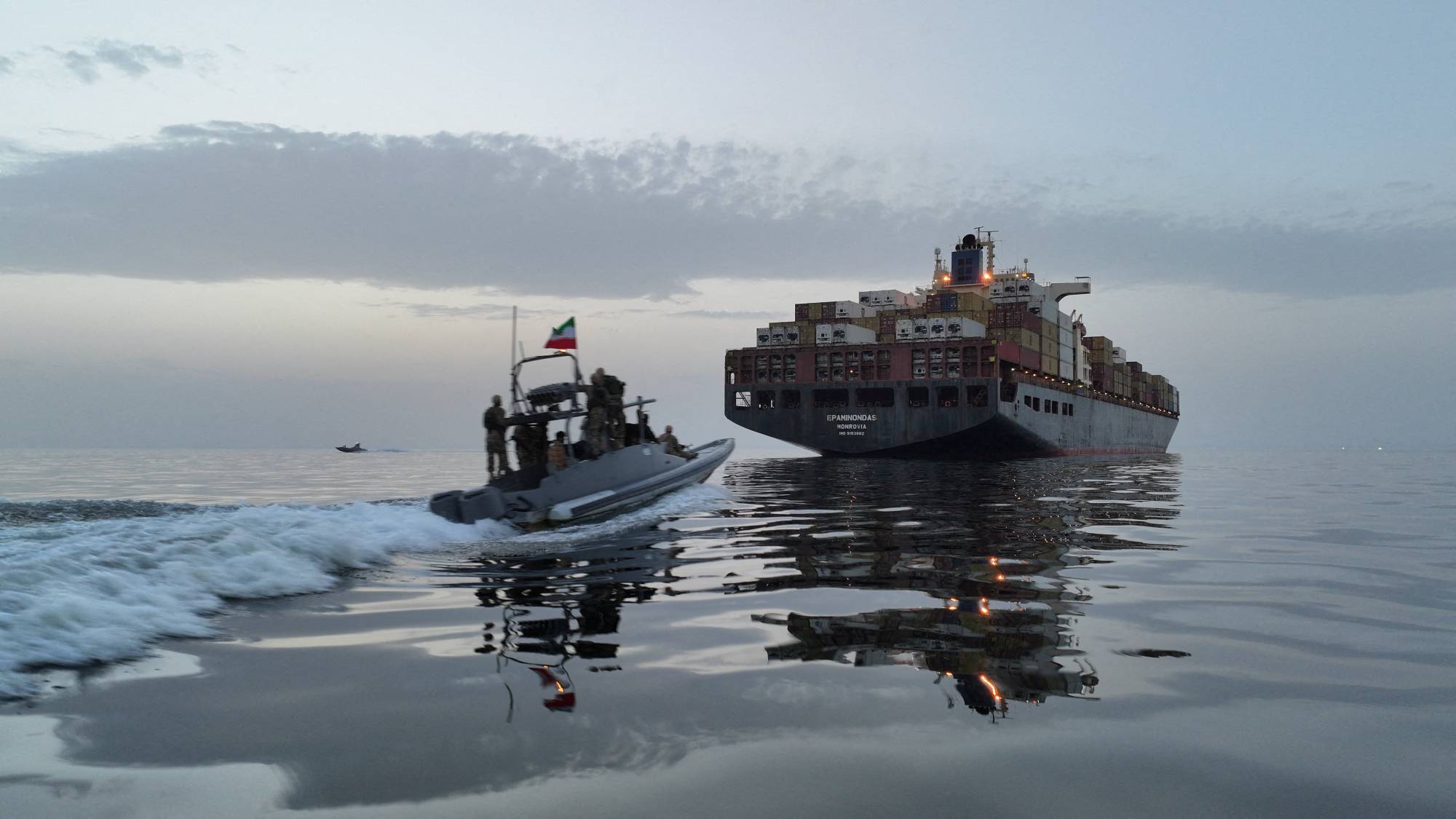
 

The Epaminondas ship is seen during seizure by the Revolutionary Guard Corps in the Strait of Hormuz, Iran, in this image obtained by Reuters on April 24, 2026. Meysam Mirzadeh/Tasnim/WANA (West Asia News Agency) via REUTERS

Meanwhile, shortly after 4pm, HMS Inflexible struck a mine. She remained capable of steaming slowly and was ordered to withdraw. However, she had a 30ft x 26ft hole below the waterline and had to be beached to save her from sinking. She was later towed to Malta for repairs and was out of action for three months.

After these disasters, Vice-Admiral John de Robeck, the British admiral in charge of the Allied naval forces during the crucial stages of the campaign, finally decided that the waters which had been considered to be safe and swept of mines were anything but.

Accordingly, at 5.50pm, less than seven hours into the operation, he signalled a “General Recall” to withdraw the ships and return to the safe waters outside the straits.

Fifteen minutes later, at 6.05pm, HMS Ocean struck another mine, developed a major list and was deemed not to be capable of being saved. The ship’s company were taken off and she was left to her fate. Both Irresistible and Ocean later sank.

Fourteen major warships had attempted to force the straits. Within four hours, three of them had been sunk and one had been so badly damaged that she was out of action.

This one day of disaster was the end of trying to take the Dardanelles passage by solely naval means. The attempt was never repeated.



China Missile Test Deepens Pacific Divide Over Growing Militarization

The headquarters for the Pacific Islands Forum in Suva, Fiji, August 7, 2026. (Reuters)
TT

China Missile Test Deepens Pacific Divide Over Growing Militarization

The headquarters for the Pacific Islands Forum in Suva, Fiji, August 7, 2026. (Reuters)

China's test of a nuclear-capable missile last month has exposed the limits of Pacific leaders' ambition to make the region an "Ocean of Peace", free from the crossfire of major-power rivalry.

The July launch, China's first known ballistic-missile test into the Pacific since September 2024, was fired into the Pacific just hours after Fiji and Australia signed a major defense treaty, marking Fiji's first ever alliance.

More than a month after the test, Pacific Islands foreign ministers were unable to agree on a collective statement condemning Beijing's missile test, despite individual leaders expressing alarm, publicly and privately, about militarization of the region.

The test was "totally inappropriate", Papua New Guinea Foreign Minister Justin Tkatchenko told Reuters on the sidelines of the foreign ministers' meeting in Suva last week.

"China is a very close friend and ally to Papua New Guinea, but we feel this doesn't help at all," he said, adding that Beijing had given PNG advance notice of the launch but no details on where ‌the missile would ‌land.

At the time of the launch, Chinese Foreign Ministry spokesperson Mao Ning said it was ‌conducted "safely", ⁠adding: "We hope relevant ⁠countries will not over-interpret the matter."

The missile launch capped a year of more visible military activity across the Pacific, which is fiercely contested between the US and China for influence. That has included Chinese naval deployments and live-fire drills in the Tasman Sea, US-allied exercises around Guam and Hawaii, and a steady flow of warship visits linked to expanding security partnerships.

The United States, meanwhile, retains a substantial military presence across the region, including in Hawaii, Guam and the Marshall Islands.

Tuvalu permanent foreign secretary Pasuna Tuaga, who was speaking in a personal capacity, was concerned about growing militarization, not only because of the missile test but also security arrangements such as the AUKUS partnership between Australia, ⁠Britain and the United States.

UNITED, BUT DIVIDED

In September 2025, Pacific Leaders endorsed the Ocean ‌of Peace Declaration, which committed to safeguard the region, recognized the right of the ‌people to peace, and resolved to contribute to and strengthen international peace and security.

David Peebles of the Australian National University's Pacific Security College said ‌Pacific countries had long resisted having peace and security defined by outside powers and their competing Indo-Pacific strategies. The Ocean ‌of Peace initiative was an attempt to reclaim that agenda, he said.

The regional declaration inspired the defense pact signed between Australia and Fiji last month, known as the Ocean of Peace Alliance.

Australia's Department of Foreign Affairs and Trade did not immediately respond to a request for comment on concerns that the growing number of regional security pacts could further militarize the Pacific.

For many governments, security partnerships bring benefits: surveillance against illegal fishing, ‌disaster response, policing support and access to equipment and training. But critics fear a proliferation of bilateral arrangements could leave Pacific countries with little say over how their territory, waters and infrastructure ⁠are used.

Solomon Islands Foreign Minister ⁠Rick Houenipwela, who chaired the talks in Suva, said the region's agenda must remain "conceived by the Pacific, shaped by the Pacific and only by the Pacific."

Yet by the end of the one-day meeting, no unified statement in response to the missile test had emerged.

Kiribati and Nauru, which have deepened ties with Beijing since switching diplomatic recognition from Taiwan in 2019 and 2024 respectively, did not support the statement's wording, according to an official familiar with the discussions.

New Zealand Foreign Minister Winston Peters blamed foreign influence for the failure to reach consensus, without naming a country.

The impasse illustrates the central challenge facing these small island nations which have different economic, political and security interests.

In the northern Pacific, where the US has maintained a military presence for decades, some governments want deeper security engagement with the US while others remain wary.

Fiji Foreign Minister Sakiasi Ditoka said Pacific governments faced an unavoidable tension.

Countries wanted "to be free of all these war-making paraphernalia," he said, but also recognized that some security capabilities helped keep them safe. "I believe it's maintaining that balance."

Fiji for the first time participated last month in US-led war games in the Pacific known as RIMPAC.

Pacific leaders will meet in Palau in three weeks for the Pacific Islands Forum leaders meeting, where the missile test and regional unity are expected to return to the agenda.


One year after Putin-Trump Summit, 'Spirit of Anchorage' Dissipated

FILE - US President Donald Trump greets Russian President Vladimir Putin, Aug. 15, 2025, at Joint Base Elmendorf-Richardson, Alaska. (AP Photo/Julia Demaree Nikhinson, File)
TT

One year after Putin-Trump Summit, 'Spirit of Anchorage' Dissipated

FILE - US President Donald Trump greets Russian President Vladimir Putin, Aug. 15, 2025, at Joint Base Elmendorf-Richardson, Alaska. (AP Photo/Julia Demaree Nikhinson, File)

In the year since Donald Trump hosted Vladimir Putin on US soil for a summit designed to broker an end to Russia's offensive on Ukraine, the diplomatic initiative has fizzled out and the conflict has escalated.

For months, Russian officials talked up the "spirit of Anchorage" -- a supposed climate of detente, renewed dialogue with Washington and a framework for finding a way out of the deadliest European conflict since World War II, said AFP.

Now there are few traces of that atmosphere. US mediation efforts are at a standstill, both Russia and Ukraine are ramping up attacks and more civilians are being killed than at any point since the first months of the war.

- 'Ending the war'-

On August 15, 2025, Trump broke with the West's policy of isolating Putin, rolling out the red carpet as the Kremlin chief stepped off his plane at the Elmendorf-Richardson air base in Alaska.

It remains unclear what was decided or discussed behind closed doors.

Russia has always maintained some kind of understanding on a peace deal was struck -- "a compromise proposal", as Foreign Minister Sergei Lavrov called it.

Washington has rebuffed any talk of a deal being reached.

"There was a proposal in Alaska, but there was no agreement. If there had been an agreement, we would have had an end of the war," Secretary of State Marco Rubio said in June.

Moscow had hoped the summit would lay the foundations for a "lasting peace" by addressing what it calls the "root causes" of the conflict, said political analyst Sergei Markov -- designated a "foreign agent" but still close to the Russian authorities.

For years -- including right before launching its offensive in February 2022 -- Russia has called for a new overarching security deal with the United States over Europe, NATO and arms control.

The "compromise" Russia tabled in Alaska, Markov told AFP, was to limit its territorial claims on Ukraine to the eastern Donbas region in exchange for recognition of Russia's new borders by Washington and the lifting of sanctions.

- Disenchantment -

Those Russian demands were included in a 28-point document drafted by the United States -- later cut down to 19 -- after separate negotiations with Kyiv and Moscow.

The document was never published officially and never came to fruition.

US-brokered direct talks between Russia and Ukraine in early 2026 broke down, chiefly over the issue of territory.

Ukraine refuses to cede land it still controls and wants an immediate ceasefire along the current front line, with territorial status to be decided during fuller peace talks.

And since late February, Washington's attention has been consumed by the war on Iran.

Trump has since issued fresh sanctions on Russia and the last remaining nuclear arms control agreement -- New Start -- has been allowed to lapse.

Having once sensed a window of opportunity to press its demands and been at pains to praise Trump's efforts, Russia has lately allowed itself to publicly question Washington's commitment to diplomacy.

"I don't even want to imagine that Alaska ... was conceived to gain time in order to strengthen Ukraine militarily," Lavrov said in June.

A meeting between Lavrov and Rubio in Manila in July -- their first since September 2025 -- lasted only around 30 minutes.

"We'll have to find new suggestions and new ideas" that both "Russia and Ukraine can agree to," Rubio said after that meeting.

"That's going to require a lot of work," he added.

- Escalation -

The two sides' conditions for peace are irreconcilable.

Russia demands territory alongside political and military concessions that Ukraine rejects as capitulation.

At the same time, both are convinced force can improve their negotiating position.

"The Russian armed forces will continue their mission to liberate the Donbas and Novorossiya in line with the approved plan," Russia's army chief Valery Gerasimov told Putin in a televised meeting in early July -- referring to land stretching across eastern and southern Ukraine.

Buoyed by European support, Kyiv is banking on its long-range strike campaign to tip Russia's economy and society over the edge.

Its attacks triggered a nationwide fuel crisis over the summer, and have forced Moscow-installed authorities to put the annexed Crimean peninsula under a local "state of emergency".

Russia has upped its missile attacks on Kyiv, killing dozens there in recent weeks.

It has also brought Ukrainian exports through the Black Sea to a standstill through a campaign of port and ship strikes.

"The spirit of Anchorage has dissipated," said Russian political analyst Fyodor Lukyanov -- close to the ruling elite -- in August.

The result? "Brutal escalation."


Pleasing No One: Netanyahu Puts Election First with Gaza Decision

Israeli Prime Minister Benjamin Netanyahu speaks during a press conference in Jerusalem on March 19, 2026. (AFP)
TT

Pleasing No One: Netanyahu Puts Election First with Gaza Decision

Israeli Prime Minister Benjamin Netanyahu speaks during a press conference in Jerusalem on March 19, 2026. (AFP)

Faced with a divisive US-led Gaza plan just before elections that could end his career, Israeli Prime Minister Benjamin Netanyahu had to choose between pleasing his ally Donald Trump or his right-wing base.

In rejecting the plan, he may not please anyone.

The decision is a tactical and PR victory for Hamas, analysts say, with the movement publicly backing the deal under which it would disarm, without taking any steps yet to do so.

Netanyahu, who has built his decades-long career on hawkish security positions, had voiced concerns but softly after the US president on July 30 hailed what he called the historic milestone on ending the Gaza war.

He finally rejected the plan Sunday during a cabinet meeting after pushback from the far-right, which strongly opposes the 15-point deal that would see Israel eventually withdraw troops from much of Gaza.

Netanyahu, Israel's longest-serving prime minister, is by nature "a procrastinator" and is struggling to secure the trust of the hard-right ahead of the October 27 vote, said Yossi Mekelberg, an expert on Israeli politics at London-based think tank Chatham House.

Netanyahu's calculation is to dissuade votes for the opposition by creating the impression that he is "still the only bastion of power that will stop Hamas", Mekelberg said.

"Netanyahu knows that falling out with Trump doesn't serve him or Israel. On the other hand, he knows the minute that he agrees to the 15 points, he would be attacked not only by the right wing, but that some opposition parties will attack him, too," he said.

"He's trying to appease everyone. At the end of the day, he will be appeasing no one."

- Cooperating despite rejection -

Israel will be voting for the first time since the trauma of Hamas's October 7, 2023, attack, the deadliest ever against Israel, which retaliated with an overwhelming offensive in Gaza.

Despite Netanyahu's public rejection of Trump's plan, Israel in practice appears to be complying with a key part of it. Israel has stopped air strikes since August 3, although Gaza authorities report periodic Israeli gunfire.

"These strikes could be resumed and even intensified at any time. It is one of the cards Israel can maneuver with," said Ehud Eilam, a former analyst at Israel's defense ministry.

He noted that Israel had not succeeded in its goal of completely destroying Hamas after October 7.

"Therefore, Israel at least seeks to disarm Hamas, which is also a very difficult task," Eilam said.

"Hamas will anyway refuse to completely disarm, and for now can continue to use Netanyahu as an excuse to avoid or at least slow down this process," he said.

Netanyahu had long campaigned on his close rapport with Trump, who has taken unprecedented steps such as moving the US embassy to Jerusalem and joining Israel in attacking Iran.

But Trump's popularity in Israel took a nosedive in April when he called a ceasefire with Iran and sought a settlement, seeing the Middle East war as politically and economically damaging.

Netanyahu could be willing to take some steps forward on Gaza to please Trump in return for new US action against Iran, Eilam said.

"For Netanyahu, the Gaza Strip, and Lebanon too for that matter, are not the most urgent concerns; Iran is," he said.

- Tactical win for Hamas -

Hamas publicly backed the disarmament agreement shortly after it chose a new leader, Khalil al-Hayya.

"I think Hamas, from the get-go, did this for tactical reasons," said Ghaith al-Omari, a former Palestinian Authority official who is now a senior fellow at the Washington Institute for Near East Policy.

He said that Hamas wanted to be seen as a "reasonable actor" -- and that Netanyahu's rejection worked in its favor.

"What this does is actually give Hamas and mediators reason to say, look, Hamas has committed, Israel has not committed -- the ball is in Israel's court," he said.

"It lets the pressure off Hamas."