

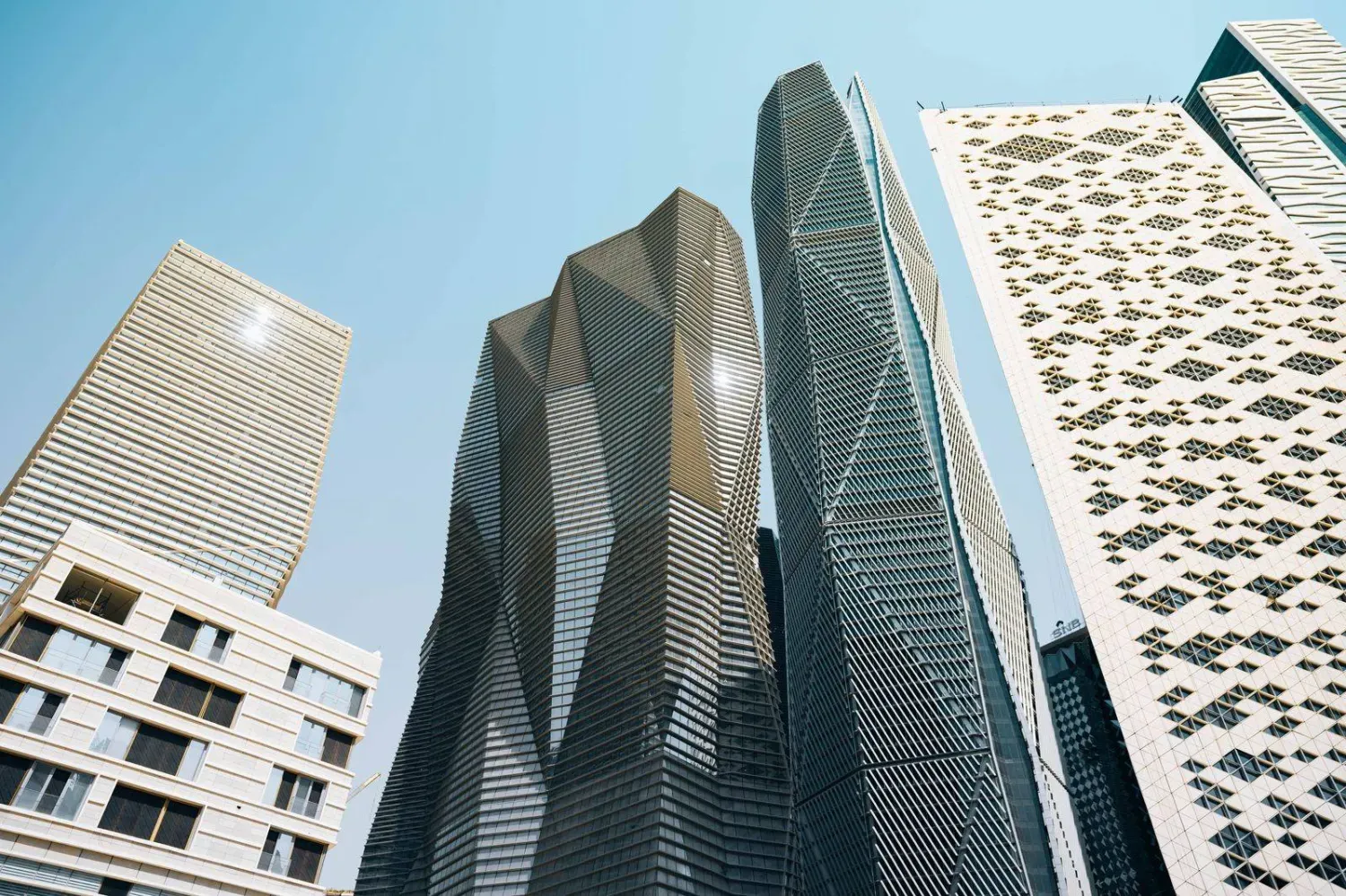

PIF: The Cornerstone of a Sustainable Economy Under Saudi Vision 2030

The Public Investment Fund Tower in King Abdullah Financial District in the Saudi capital, Riyadh (KAFD)
TT

PIF: The Cornerstone of a Sustainable Economy Under Saudi Vision 2030

The Public Investment Fund Tower in King Abdullah Financial District in the Saudi capital, Riyadh (KAFD)

With confident strides and a proactive vision, the Public Investment Fund (PIF) is leading the major economic diversification journey, creating opportunities and redrawing the national investment map.

Through its ambitious strategy, which entered its third phase in 2026, the Fund has succeeded in establishing an integrated ecosystem of major companies and projects that form the cornerstone of building a sustainable economy.

The current work not only aims for financial growth but also seeks to empower the private sector and open unprecedented horizons for advanced industries and sophisticated infrastructure.

Roots and Historical Transformation

Since its establishment in 1971, the Fund has solidified its position as one of the most prominent strategic engines in Saudi Arabia's economic transformation, by supporting national development, financing major projects, and establishing national companies that contributed to building an economic base extending for decades.

With the launch of Vision 2030, the Fund's role shifted from a traditional financing entity to an investment arm driving economic diversification, boosting the growth of non-oil sectors, and reshaping the investment landscape through distinctive local and international partnerships.
This transformation has made it one of the Kingdom's most crucial tools for attracting opportunities and consolidating its economic presence on a global scale.

Phases of Strategic Transformation

PIF's work within Vision 2030 unfolded through three consecutive phases characterized by integration and evolution.

The first phase extended until 2020, focusing on institutional restructuring, integrating the Fund into Vision realization programs, and launching an ambitious strategy aimed at developing ten strategic sectors, alongside updating regulatory frameworks to enhance investment efficiency.

The second phase, spanning from 2021 to 2025, saw a significant expansion in the Fund's scope of work, targeting investments in 13 strategic sectors and accelerating the implementation of mega-projects.

During this phase, distinctive projects such as Diriyah, The Red Sea Project, and Qiddiya emerged, contributing to strengthening the Kingdom's position as a global destination for tourism and investment.

Upon entering the third phase in 2026, the Fund refocused its strategy to encompass six key sectors: tourism, travel and entertainment; urban development and regeneration; advanced industries and innovation; industry and logistics services; clean and renewable energy and water infrastructure; and NEOM.

This includes strengthening the private sector's role in operating mega-projects and capitalizing on growing investment opportunities, reflecting a transition towards a more mature and sustainable economic model.

Tangible Economic Outcomes

These phases have yielded significant economic results, with the Fund's assets under management substantially doubling to 3.41 trillion Saudi Riyals ($909.3 billion) in 2025. Non-oil GDP rose to historic levels, with the Fund's contribution reaching approximately 10 percent. It also contributed to creating over one million direct and indirect job opportunities since 2018, in addition to enabling the private sector to participate in diverse strategic projects.

Future Investment Initiative

The Public Investment Fund has enhanced its international presence by building strategic partnerships and attracting global capital. The Future Investment Initiative (FII), launched by the Fund, has also become an annual international platform bringing together economic leaders, investors, and experts to discuss the future of investment and global challenges, making it one of the most prominent economic events worldwide.

This presence has contributed to cementing the Kingdom's position as an influential hub in the global economy, in addition to enhancing the Fund's brand value, which has become among the fastest-growing sovereign wealth funds globally, thanks to its investment performance and adoption of governance and sustainability standards.

Empowering the Private Sector

The Fund has placed significant emphasis on empowering the private sector, working to create extensive investment opportunities for local companies, including small and medium-sized enterprises (SMEs), by increasing local content and expanding economic partnerships. This has contributed to raising the private sector's contribution to the economy to approximately 51 percent.

PIF has also launched supporting initiatives such as the Private Sector Forum, the Private Sector Hub, and training and qualification programs like the Musahemah program, the Industrial Business Accelerator, and the Azm program, all of which have helped build a more competitive and sustainable business environment.

Sustainability and Green Economy

The Fund has moved to bolster sustainability as part of its investment strategy, becoming one of the first sovereign wealth funds to issue green bonds. This path began in 2022 with the issuance of the first green bond, followed by a second in 2023, and a new one in 2025.

The proceeds from these issuances totaled approximately $9 billion, directed towards 91 environmental projects in renewable energy, energy efficiency, green buildings, and water management. This contributes to reducing emissions by about 10.1 million tons of carbon dioxide, supporting the net-zero target.

Investment Environment

The investment environment in the Kingdom has undergone a radical transformation with Vision 2030, through regulatory and legislative reforms including the new Investment Law, the Bankruptcy Law, the TAYSEER program, and the establishment of the National Competitiveness Center and the Small and Medium Enterprises General Authority.

This has contributed to enhancing the Kingdom's investment attractiveness, with the value of non-oil investments rising to approximately 797 billion Saudi Riyals ($212.5 billion), and the contribution of investment to the economy increasing from 22 percent to 30 percent.

Furthermore, the private sector's contribution to total investments has grown to 76 percent, making it the largest driver of economic growth.

PIF continues to play its role as a key driver in reshaping the Saudi economy, leading the transformation towards diversification and sustainability, and enhancing the Kingdom's position as a global investment destination capable of competing and influencing the global economy.



Saudi Economy Surpasses $1 Trillion Mark, Grows 80% Since Vision 2030’s Launch

The Saudi Center for Competitiveness and Business offers support for investors in the local market (SPA)
TT

Saudi Economy Surpasses $1 Trillion Mark, Grows 80% Since Vision 2030’s Launch

The Saudi Center for Competitiveness and Business offers support for investors in the local market (SPA)

Saudi Arabia’s economy has surpassed the $1 trillion mark for the first time, expanding by 80 percent since the launch of Vision 2030, according to the Kingdom’s 2025 Vision 2030 report.

The milestone underscores the impact of fiscal reforms and diversification efforts aimed at reducing dependence on oil. Non-oil activities now account for 55 percent of the economy, up from 45 percent in 2016, while non-oil government revenues have risen more than 170 percent, from SAR185.7 billion ($49.5 billion) in 2016 to SAR505 billion ($134.6 billion) last year.

The report said the gains reflected investment in growth sectors, legal reforms and a more attractive business climate.

Fiscal discipline, rising liquidity

Saudi authorities noted that fiscal policy remained anchored in spending discipline and sustainability, with deficit targets ranging between 5 percent and 7 percent of gross domestic product.

Liquidity reached a record SAR3.167 trillion in 2025, up from about SAR1.799 trillion in 2016.

Officials said expansionary spending had been directed toward strategic sectors linked to economic growth and living standards.

Debt low, reserves rise

Despite higher spending, Saudi Arabia has maintained one of the lowest debt burdens in the G20, with public debt below 50 percent of GDP. Foreign reserves rose to SAR1.7 trillion ($453.3 billion), their highest level in five years.

Real GDP growth accelerated from 1.7 percent in 2016 to 4.5 percent last year, the report said.

Competitiveness gains

Saudi Arabia rose 15 places between 2021 and 2025 in the IMD World Competitiveness Yearbook to rank 17th globally, placing fourth among G20 countries last year.

The government introduced more than 1,000 reforms and 1,200 regulatory measures in recent years, including allowing full foreign ownership in most sectors and implementing a new bankruptcy law. The measures improved transparency, dispute resolution and legal certainty for investors.

Saudi Arabia has also expanded support for small and medium-sized enterprises through Monshaat, the SME Bank and Saudi Venture Capital Company.

The number of SMEs exceeded 1.7 million by the end of 2025, employing around 8.88 million people and contributing 22.9 percent to GDP. More than 474,000 businesses are owned by young Saudis, according to the report.

Growth outlook

The International Monetary Fund projects Saudi growth of 3.1 percent this year and 4.5 percent in 2027. The World Bank forecasts growth of 4.3 percent in 2026 and 4.4 percent next year.

The Organization for Economic Cooperation and Development (OECD) expects growth of 4 percent this year and 3.6 percent in 2027. For its part, Saudi Arabia’s Finance Ministry forecasts growth of 4.6 percent in 2026 and 3.7 percent next year.


Vision 2030 Redefines Saudi Arabia's Wealth from Oil Supplier to Global Energy Hub

Solar power in Saudi Arabia (SPA)
TT

Vision 2030 Redefines Saudi Arabia's Wealth from Oil Supplier to Global Energy Hub

Solar power in Saudi Arabia (SPA)

Saudi Arabia has chosen to rethink its relationship with its resources, asking a different question: How can we make what we have work to its fullest potential in a rapidly changing world?

This was the essence of Vision 2030, which saw valuable opportunities in diversifying energy sources and maximizing the value of oil and gas to achieve greater prosperity, keeping pace with global environmental changes.

The first clear sign of this shift was the renaming of the Ministry of Petroleum and Mineral Resources to the Ministry of Energy, a clear indication of expanding the horizon from oil and gas alone to a comprehensive energy system that includes renewables at its core.

A Naturally Qualified Land

This choice was not made without study. The Kingdom possesses geographical enablers that give it an exceptional competitive position: a climate conducive to successful solar energy projects, vast areas suitable for wind power projects, and geographical diversity that contributes to the development of hydrogen energy, all supported by accumulated investment capabilities and research expertise.

On this fertile ground, a series of initiatives and projects were launched: The National Renewable Energy Program, the Custodian of the Two Holy Mosques Renewable Energy Initiative, and the establishment of the National Renewable Energy Data Center, followed by solar and wind power projects aimed at enhancing electricity generation efficiency.

The results speak clearly: The production capacity for electricity generation from renewable sources increased from 3 gigawatts in 2020 to 46 gigawatts in 2025. The total number of projects related to this sector reached 64, distributed among 40 solar power projects, 9 wind power projects, and 15 energy storage projects.

Hydrogen: The Big Bet

At the heart of NEOM, an unparalleled project is being born: the green hydrogen project, the largest and first of its kind globally, with a production capacity of 600 tons of green hydrogen per day.

To support this direction, the first phase of the Yanbu Green Hydrogen Hub was launched, equipped with facilities for generating electricity from renewable sources, desalination plants, electrolysis units, facilities for converting hydrogen into green ammonia, and a dedicated export terminal.

The Battery Race

Figures in the energy storage sector are no less exciting; the Kingdom is approaching China in the global battery storage project cost race, with a cost of $409 per kilowatt for projects with a four-hour storage capacity, compared to $404 for China.

The total capacity of proposed energy storage projects reached 30 gigawatt-hours, while 8 gigawatt-hours have been connected to the electricity grid.

In a remarkable achievement, Aramco successfully operated the world's first renewable energy storage system to support gas well production operations, with a capacity of 1 megawatt-hour, capable of supporting 5 wells for 25 years.

This system relies on a Saudi patent and represents a reliable alternative to traditional solar energy solutions, offering high efficiency in harsh climatic conditions and intelligent response to changing energy needs.

SPARK... When Industry Becomes the Value

Vision 2030 recognized that production alone is no longer sufficient, and that true value lies in building industries, localizing supply chains, and enhancing local content. This is where the idea for King Salman Energy Park "SPARK" was born, with investments exceeding 12 billion Saudi Riyals (3.2 billion dollars) and involving more than 60 local and international investors.

SPARK is located in a strategic position close to energy sources, shipping, and export networks, and includes a dry port allowing faster access. So far, 7 factories have been opened, while another 14 are currently under construction.

Balance, Not Compromise

While the world moves towards transitioning to alternatives to oil and gas, the Kingdom adopts a different vision, believing that an accelerated transition could harm global security and growth, given that renewable energy alone cannot fully meet developmental needs.

Therefore, the Kingdom continues to invest in exploring and developing oil fields, most notably the development of the unconventional Jafurah field, the largest of its kind in the Middle East, which will contribute to maximizing the value chains of gas and petrochemical industries.

Thus, the Kingdom walks a fine line, balancing the preservation of global energy supplies with investment in technologies that eliminate carbon emissions, positioning itself today as a comprehensive energy hub and a model of prudent management.


Saudi Vision 2030 Enters Third Phase with 93% of Targets Met

The Saudi capital, Riyadh (SPA)
TT

Saudi Vision 2030 Enters Third Phase with 93% of Targets Met

The Saudi capital, Riyadh (SPA)

Saudi Arabia will enter the third phase of its Vision 2030 reform program in 2026, with 93% of performance indicators having met, exceeded or nearly reached their targets, according to the initiative’s 2025 annual report.

Custodian of the Two Holy Mosques King Salman bin Abdulaziz Al Saud said the Kingdom was moving toward a better future through the achievements of Vision 2030, describing it as a model for harnessing resources and capabilities to deliver broad-based development.

Crown Prince Mohammed bin Salman, for his part, stressed that a decade of reforms under Vision 2030 had produced an “exceptional transformational model,” translating ambitions into tangible results through the efforts of Saudi citizens and state institutions.

“What we have achieved in recent years places upon us a great responsibility to redouble efforts and intensify plans and tools in a way that strengthens gains and ensures sustainable impact,” he stated.

The report highlighted that Saudi Arabia was entering the third and final five-year phase of Vision 2030, running through 2030, after a decade of economic and social reforms aimed at diversification and sustainable growth.

Vision 2030 is structured in three five-year phases. The first, from 2016 to 2020, focused on legislative and institutional foundations, including regulatory reforms, creation of new entities and restructuring of the Public Investment Fund as a driver of growth.

The second phase, from 2021 to 2025, accelerated implementation of national strategies across sectors and regions while investing in new growth opportunities.

Performance indicators

Official data showed 93% of performance indicators under Vision programs had achieved or exceeded annual targets, or were close to doing so.

Of 390 active indicators, 309 met or surpassed interim targets, while 52 had achieved between 85% and 99% of their goals. Of 1,290 active initiatives, 935 have been completed since the launch of the plan, while 225 are progressing on schedule, meaning 90% are either complete or on track.

Economic indicators

Real GDP grew 4.5% in 2025 from a year earlier, the highest annual expansion in three years, while non-oil activities accounted for more than half of the economy, the report said.

Saudi unemployment fell to 7.2% at the end of 2025 from 12.3% at the end of 2016, helped by labor market reforms and broader economic growth. Inflation remained relatively stable at 2.0%.

Major ratings agencies maintained positive sovereign assessments. Moody’s affirmed an Aa3 rating with a stable outlook, while Fitch Ratings and S&P Global Ratings maintained A+ ratings with stable outlooks.

Growth forecasts

The International Monetary Fund forecasts Saudi growth of 3.1% in 2026 and 4.5% in 2027. The World Bank projects growth of 4.3% and 4.4% in those years, while the Organisation for Economic Co-operation and Development forecasts 4.0% and 3.6%. For its part, Saudi Arabia’s Finance Ministry projects growth of 4.6% in 2026 and 3.7% in 2027.

Social and sector reforms

Home ownership among Saudi households rose and participation in physical activity increased. Non-oil exports reached record levels, driven by industrial growth and logistics development, while the Kingdom improved its position in global competitiveness rankings.

Efforts to digitize government services and expand access to data continued, alongside growth in volunteering and volunteer opportunities.

Third phase

The report said the third phase would maintain long-term goals while adapting implementation methods to new requirements.

Governance and regular monitoring of performance indicators would remain central to measuring progress and adjusting course amid global economic shifts requiring flexibility and spending efficiency aligned with national priorities.