


Asharq Al-Awsat Reveals Details of New Gaza Proposal

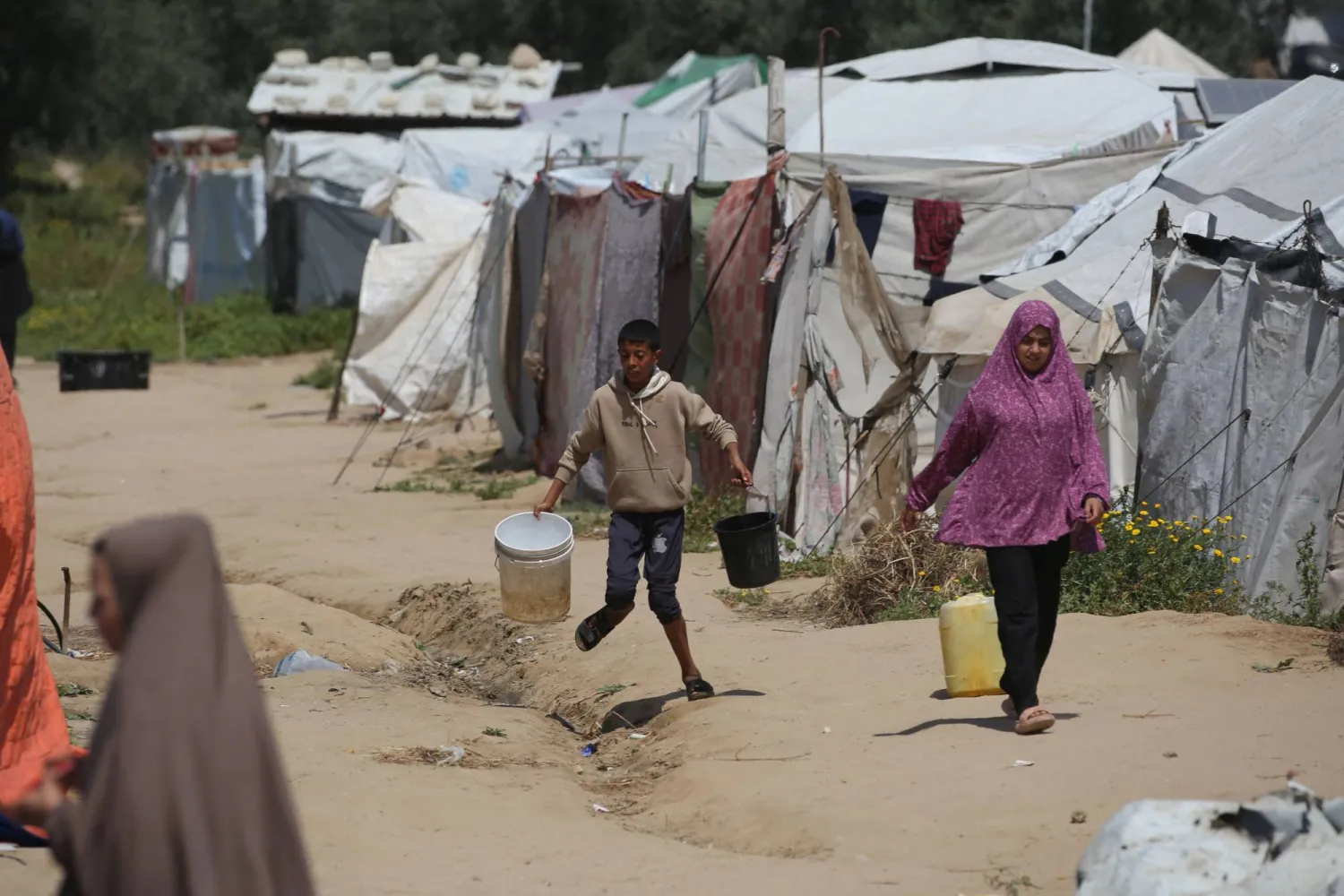
People fetch drinking water at the Bureij camp for Palestinian refugees in the central Gaza Strip on April 28, 2026. (Photo by Eyad Baba / AFP)
TT

Asharq Al-Awsat Reveals Details of New Gaza Proposal

People fetch drinking water at the Bureij camp for Palestinian refugees in the central Gaza Strip on April 28, 2026. (Photo by Eyad Baba / AFP)

Asharq Al-Awsat has obtained details of a new proposal drafted by representatives of the Board of Peace, including the board’s high representative, Nickolay Mladenov, mediators from Egypt, Qatar and Türkiye, as well as the United States, concerning the Gaza Strip, particularly on the issue of disarmament.

The document - described as a “roadmap” for completing implementation of US President Donald Trump’s comprehensive peace plan for Gaza - has 15 provisions to carry out the second phase of the ceasefire agreement that entered into force on Oct. 10, 2025.

A senior Hamas source told Asharq Al-Awsat the proposal had also been conveyed to Israel, and meetings in Cairo could begin Wednesday to discuss responses from all parties, including Hamas and other factions.

The source declined to clarify Hamas’ position following internal consultations. Other sources said Monday that Mladenov would visit Israel before arriving in Egypt on Tuesday for discussions on Israel’s position on the proposal.
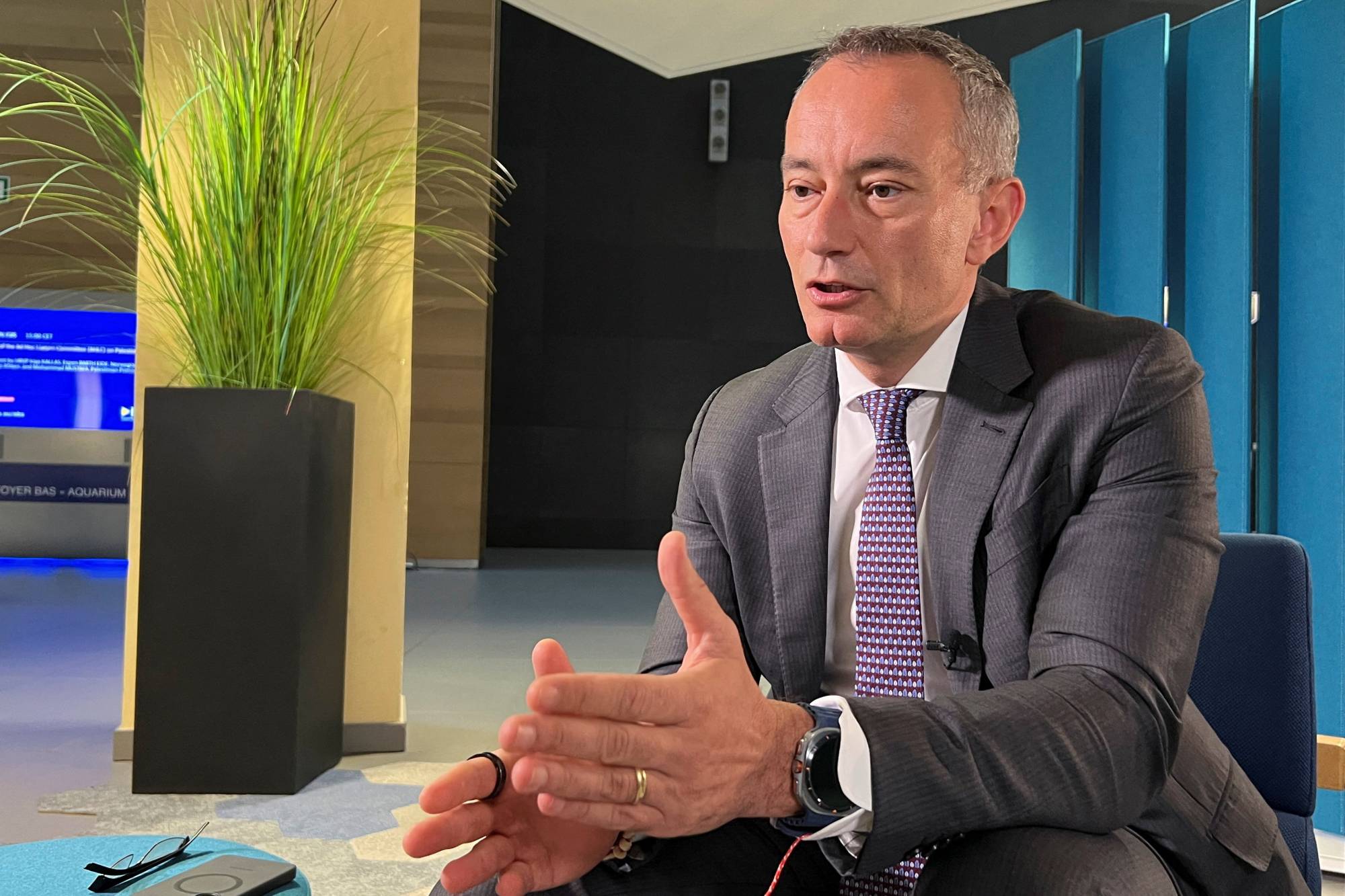
Nickolay Mladenov, the Board of Peace's lead envoy for Gaza, speaks during an interview with Reuters during a visit to Brussels, Belgium April 20, 2026. REUTERS/Christian Levaux

The document calls for establishing a committee known as the Implementation Verification Committee, to be created by the High Representative for Gaza and composed of guarantor states, the International Stabilization Force and the Board of Peace, to ensure all parties fulfill their obligations. The committee would be reinforced through an enhanced monitoring mechanism.

In its first provision, the document stresses the importance of all parties fully implementing UN Security Council Resolution 2803 and Trump’s comprehensive plan, describing them as an agreed international framework to guide the process toward restoring civilian life, enabling Palestinian governance, reconstruction, security and economic recovery, and creating conditions for a credible path to Palestinian self-determination and statehood.

The proposal adopts Palestinian demands recently presented by a Hamas and factional delegation, requiring Israel to complete all outstanding commitments from the first phase in full and without delay before moving to the second phase, under the supervision of the verification committee.

According to the document, movement from one stage of the second phase to the next would be conditional on completing all obligations in the preceding stage, under monitoring by the verification committee.

It grants the Board of Peace a mandate to oversee governance, reconstruction and development in Gaza until a reformed Palestinian authority can resume its responsibilities and conditions are created for a credible path to Palestinian statehood.
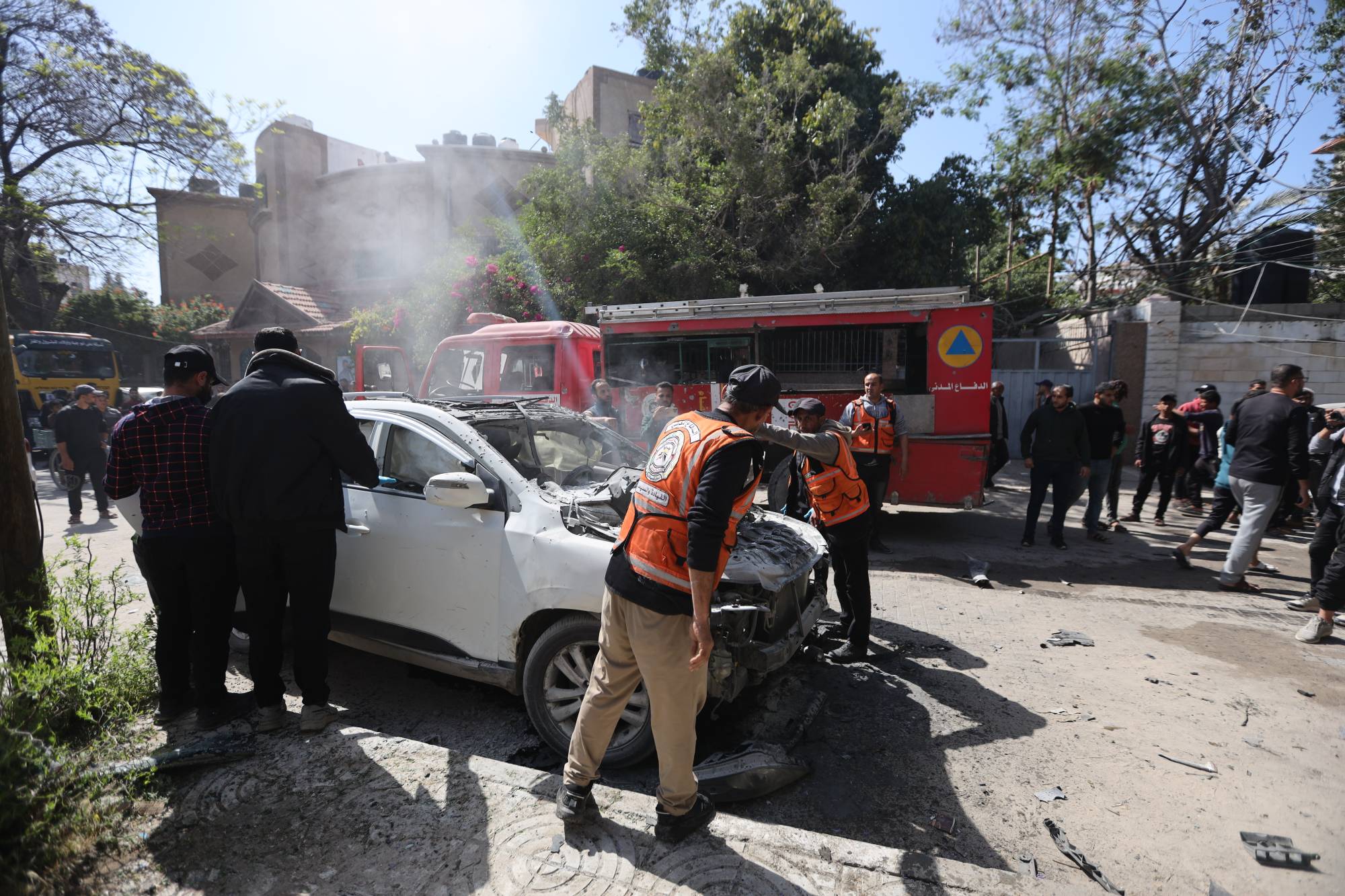
28 April 2026, Palestinian Territories, Gaza: Palestinian Civil Defense personnel and civilians inspect a vehicle after it was targeted by an Israeli missile on Gaza. Photo: Hadi Daoud/APA Images via ZUMA Press Wire/dpa

The Board of Peace would also be authorized to establish the International Stabilization Force and make arrangements necessary to implement the plan’s objectives.

The document explicitly states Hamas and all Palestinian factions would have no direct or indirect role in governing Gaza. Current civil servants affiliated with Hamas serving in civilian ministries would be dealt with legally and fairly, with full respect for their rights.

It says Gaza must be governed according to the principle of one authority, one law and one weapon, with arms permitted only for individuals authorized by the national committee, while all armed groups would cease military activities.

Newly trained police personnel would be integrated into existing police structures and subjected to security vetting. Those who fail to meet standards would be offered alternative unarmed roles or compensation packages. All police weapons would be transferred to committee control upon its entry into Gaza.

On weapons control, the document outlines a phased disarmament process linked to an agreed implementation timetable, monitored and supported by the office of the High Representative and the verification committee.

The process would be under Palestinian leadership, with weapons transferred to the national committee. All armed groups would participate in inventorying infrastructure and collecting all weapons, though they would not be required to transfer weapons to Israel. The process would be monitored by the verification committee.

The national committee for administering Gaza would have sole authority to register weapons, issue and revoke licenses, and collect unlicensed arms, primarily personal weapons.

Through a gradual process using buyback programs, reintegration assistance and social support, the national committee would oversee weapons collection, with factions committed to cooperating.

The document says surrender of personal weapons by armed members would occur only in parallel with the handover of militia weapons, under conditions ensuring security and police capacity to guarantee personal safety.

It also calls for signing a social peace agreement to prevent internal fighting and violence, ban shows of force, military parades and armed demonstrations, and halt retaliatory acts.

Regarding the International Stabilization Force, the document says it would deploy between areas controlled by Israeli forces and areas under the national committee’s control, but would not conduct policing activities. It would be permitted to support disarmament and humanitarian operations and provide protection for them.

The proposal calls for Israel to complete a phased withdrawal toward Gaza’s borders according to an agreed and implementable timetable, linked to verified progress in the disarmament process.

The national committee would address any security breaches in areas where weapons have been collected.

It also says reconstruction of the enclave would proceed through the entry of building materials into areas where disarmament has been carried out and which are effectively under the administration of the national committee.



Lebanon President Says Israel Must 'Fully Implement Ceasefire' before Talks

 Smoke rises following an Israeli airstrike in a southern Lebanese village, as seen from the Upper Galilee 29 April 2026, amid a ceasefire between Israel and Lebanon.  EPA/ATEF SAFADI
Smoke rises following an Israeli airstrike in a southern Lebanese village, as seen from the Upper Galilee 29 April 2026, amid a ceasefire between Israel and Lebanon. EPA/ATEF SAFADI
TT

Lebanon President Says Israel Must 'Fully Implement Ceasefire' before Talks

 Smoke rises following an Israeli airstrike in a southern Lebanese village, as seen from the Upper Galilee 29 April 2026, amid a ceasefire between Israel and Lebanon.  EPA/ATEF SAFADI
Smoke rises following an Israeli airstrike in a southern Lebanese village, as seen from the Upper Galilee 29 April 2026, amid a ceasefire between Israel and Lebanon. EPA/ATEF SAFADI

Lebanese President Joseph Aoun said Wednesday that Israel must "fully implement" the ceasefire between the two countries before beginning direct negotiations, adding that Beirut was waiting for Washington to set a date for the talks, AFP reported.

Israel "must first fully implement the ceasefire in order to move on to negotiations... Israeli attacks cannot continue as they are," Aoun said in a statement shared by the presidency.

"We are now waiting for the United States to set a date to begin direct negotiations" with Israel.

Despite the ceasefire, Israel and Iran-backed Lebanese militant group Hezbollah have both engaged in fighting, trading blame over violations of the fragile truce.


Over 1.2 mn People in Lebanon to Face Acute Hunger due to War

UN forces operate in southern Lebanon, as seen from northern Israel, Wednesday, April 29, 2026. (AP Photo/Ariel Schalit)
TT

Over 1.2 mn People in Lebanon to Face Acute Hunger due to War

UN forces operate in southern Lebanon, as seen from northern Israel, Wednesday, April 29, 2026. (AP Photo/Ariel Schalit)

A UN-backed report said Wednesday that more than 1.2 million people in Lebanon were expected to face acute hunger due to the latest war between Israel and Hezbollah.

The figure was announced in a joint statement by the UN's Food and Agriculture Organization, the World Food Program and Lebanon's agriculture ministry.

Some "1.24 million people -- nearly one in four of the population analysed -- are expected to face food insecurity" at crisis levels or worse between April and August 2026, they said.

They were referring to analysis from the Integrated Food Security Phase Classification (IPC), a UN-backed group that monitors hunger and malnutrition.

This marks a "significant deterioration" from before the war erupted in March, "when an estimated 874,000 people, roughly 17 percent of the population, were experiencing acute food insecurity", the statement said.

"The deterioration is due to conflict, displacement and economic pressures," it added.

A ceasefire since April 17 has paused six weeks of war between Israel and Iran-backed militant group Hezbollah that has killed more than 2,500 people in Lebanon and displaced more than one million, according to the authorities.

Israeli forces are operating in south Lebanon near the border where residents have been warned not to return, and both sides have been trading fire despite the truce.

"Acute food insecurity is likely to deepen without sustained and timely humanitarian and livelihood support," the statement added.


Syria Says Australia Won't Repatriate Families from Camp for Those with Alleged Ties to ISIS Militants

A brick wall surrounds a tent camp housing people with alleged ties to ISIS militants at Roj Camp in eastern Syria, Friday, April 24, 2026. (AP)
TT

Syria Says Australia Won't Repatriate Families from Camp for Those with Alleged Ties to ISIS Militants

A brick wall surrounds a tent camp housing people with alleged ties to ISIS militants at Roj Camp in eastern Syria, Friday, April 24, 2026. (AP)

A group of Australian women and children who left a camp in Syria that houses people with alleged ties to ISIS group are stuck in the country because Australian authorities have refused to allow their return, Syrian officials said Wednesday.

Thirteen women and children from four families last week left Roj camp, a remote facility near the border with Iraq that houses relatives of suspected militants, on Friday and traveled to Syria's capital.

An official at the camp at the time said that the families were expected to remain in Damascus for around 72 hours and then be sent to Australia.

In response to an Associated Press inquiry about their status, Syria's information ministry said in a statement that after the families left the camp, the foreign ministry was informed that "the Australian government had refused to receive them.”

They were turned back from reaching Damascus International Airport, the information ministry's statement said.

“These families are still awaiting a solution, which can only be achieved through coordination with the relevant international parties.”

Australian Prime Minister Anthony Albanese said at a news conference on Wednesday that “we are providing no support for repatriation and no assistance for these people.”

Syria's information ministry said that the families, through a lawyer, had obtained passports that were delivered by an “individual” that it didn't identify while they were still in northeastern Syria in an area under the control of the Kurdish-led Syrian Democratic Forces, or SDF.

A Lebanese-Australian doctor, Jamal Rifi, previously told Australian media that he was helping to coordinate the repatriation effort. Rifi couldn't be reached for comment.

A previous attempt to return 34 women and children to Australia from the camp in February was turned back by Syrian authorities.

Former ISIS militants from multiple countries, along with their wives and children, were held in a network of camps and detention centers in northeast Syria after the militant group lost control of its territory in Syria in 2019. Though defeated, the group still has sleeper cells that carry out deadly attacks in Syria and Iraq.

The larger al-Hol camp has now been closed down, and thousands of suspected ISIS militants previously held in Syria were transferred to Iraq by the US military to stand trial there.

The moves came after fighting between government forces and the SDF in January. Government forces seized much of the territory formerly held by the SDF. Amid the chaos, many detainees fled al-Hol and some prisoners escaped from a detention center.

Australian governments have repatriated Australian women and children from Syrian detention camps on two occasions. Other Australians have also returned without government assistance.