



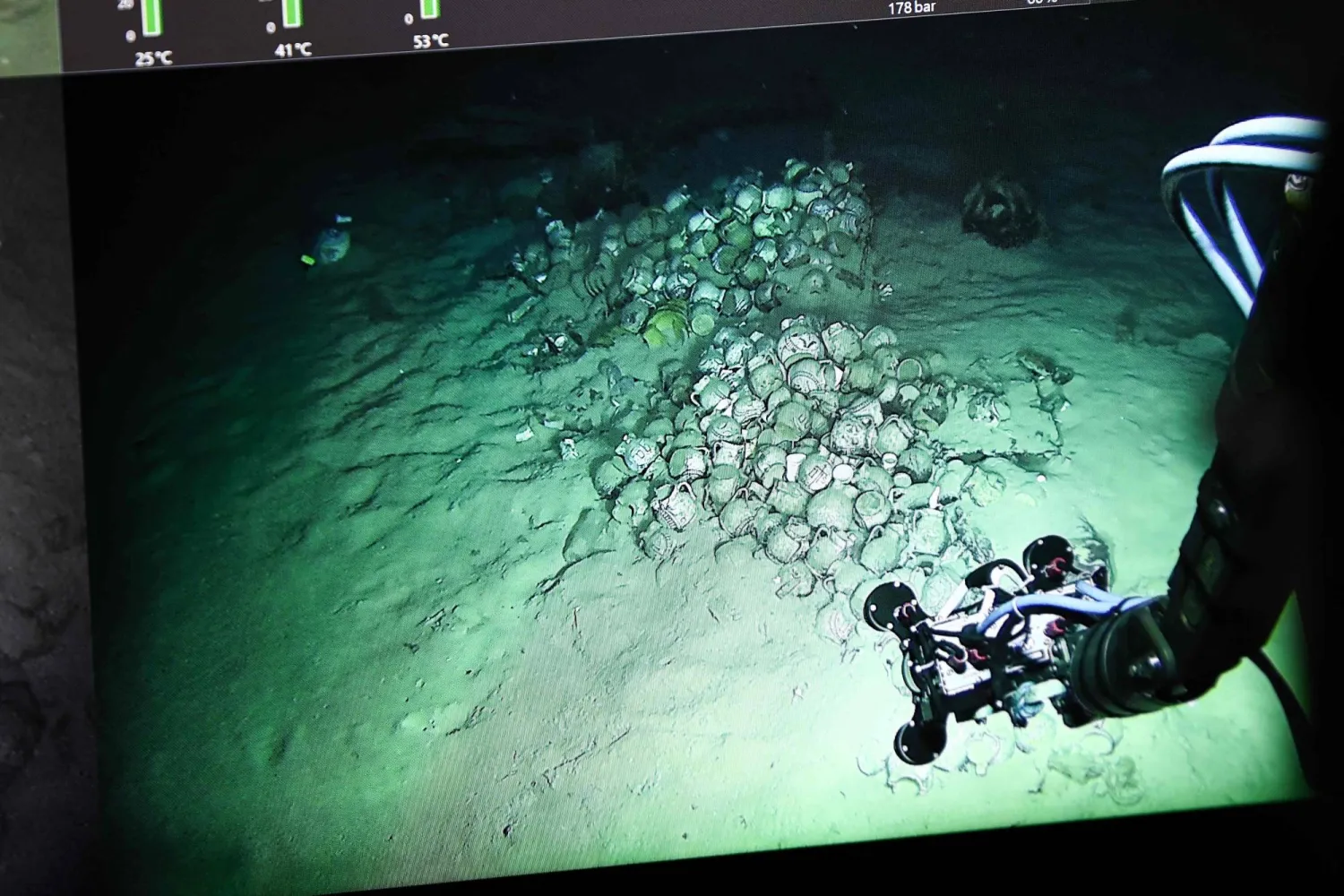

Deep in the Mediterranean Sea off the French coast, the pincer of a remotely guided underwater robot closed around a centuries-old jug resting near the wreck of a 16th-century merchant ship.
A French navy officer identified only as Sebastien, who did not disclose his full identity for security reasons, said handling the site requires extreme precision to avoid damaging the wreck or stirring up sediment that could impair visibility.
According to CBS News, Sebastien is overseeing the first mission in a series of archaeological explorations at what is considered the deepest shipwreck in French territorial waters, located about two hours from the French Riviera.
The shipwreck was discovered by chance last year during a routine military seabed survey off Ramatuelle, near Saint-Tropez. Archaeologists believe the vessel was sailing from northern Italy, carrying ceramics and metal ingots, before sinking.
The French navy has now returned, in cooperation with the culture ministry’s underwater archaeology department, to examine artifacts preserved at a depth of more than 1.5 miles below the surface.
Cannons and Ceramic Jugs on the Seabed
The navy is keeping the wreck’s location confidential, referring to it as “Camarat 4,” despite the fact that reaching it requires advanced technical capabilities due to its depth.
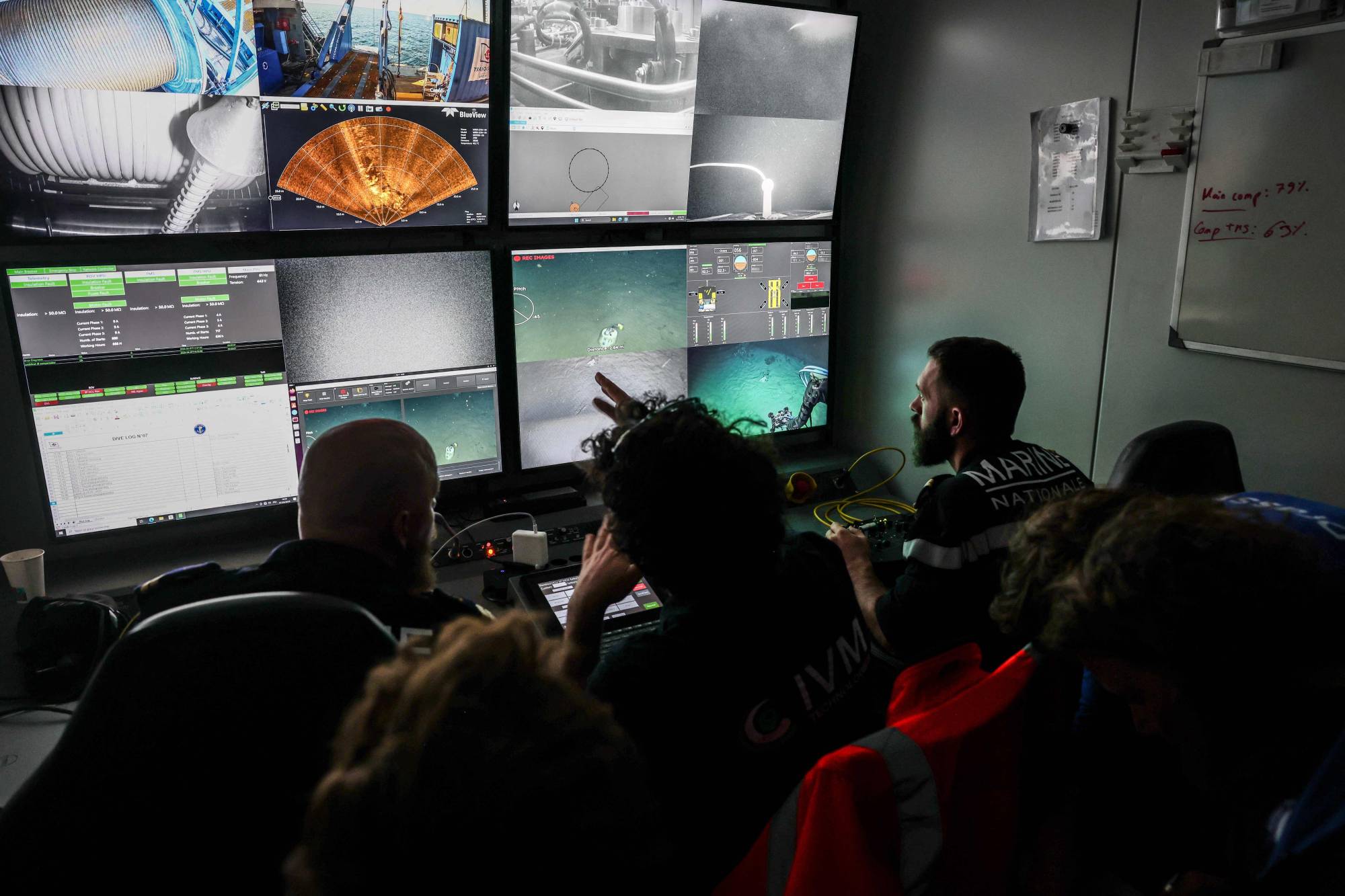
At dawn, a mission vessel arrived at the site carrying a remotely operated underwater robot, along with two large containers serving as field laboratories for marine archaeologists.
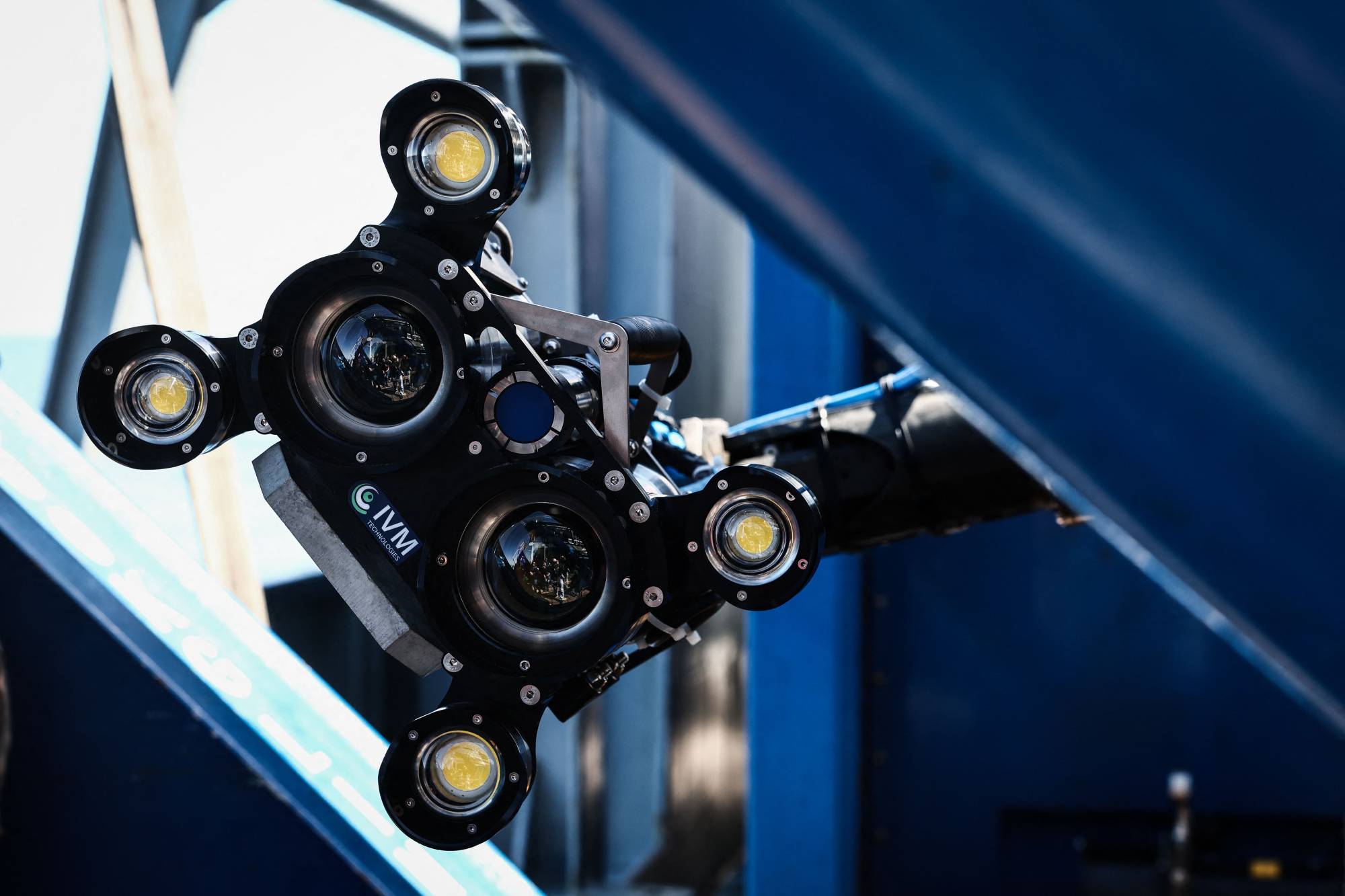
The robot, equipped with cameras and claw-like arms, was lowered into the depths via a long cable, while experts monitored its movements on screens.
After about an hour, it began gliding over piles of rounded ceramic jugs scattered across the seabed.
Images transmitted to the surface revealed details of the wreck, including cannons alongside hundreds of jugs and plates decorated with plant motifs, crosses and fish shapes.
The robot captured eight images per second over three hours, enabling the collection of more than 86,000 images, later used to produce a precise three-dimensional model of the site.
Archaeologist Franca Cibecchini said the clarity at that depth was striking: “It was excellent, something you wouldn’t imagine at this depth.” She added that the ship was likely a merchant vessel carrying glazed ceramics from Liguria in northwestern Italy, possibly loaded in the ports of Genoa or Savona.
Earlier surveys had identified two cauldrons, an anchor and six cannons at the site, along with modern debris such as a drinks can and an empty yogurt container visible near the anchor.
Recovering One of the Deepest Finds
Marine Sadania, head of the excavation team, said the findings represent an important source for understanding 16th-century maritime trade, given the limited detailed historical records available.
During the recovery operation, the team carefully guided the robot as it lowered its arm to gently lift a crate, although one ceramic piece broke during the process.
Several jugs and plates were successfully retrieved and later examined in laboratories in Marseille, where initial analysis revealed dark blue lines and multicolored geometric patterns.
Sadania said these items are among the deepest artifacts ever recovered from a shipwreck in France.
The discovery follows the 2019 identification of the submarine La Minerve off Toulon at a depth of about 1.4 miles. The vessel sank in 1968 with 52 sailors aboard.
In a separate development, officials announced the discovery of another 16th-century shipwreck found during military exercises off Sweden’s coast.


