


Why Iran’s Oil Industry Is Increasingly Threatened by US Blockade

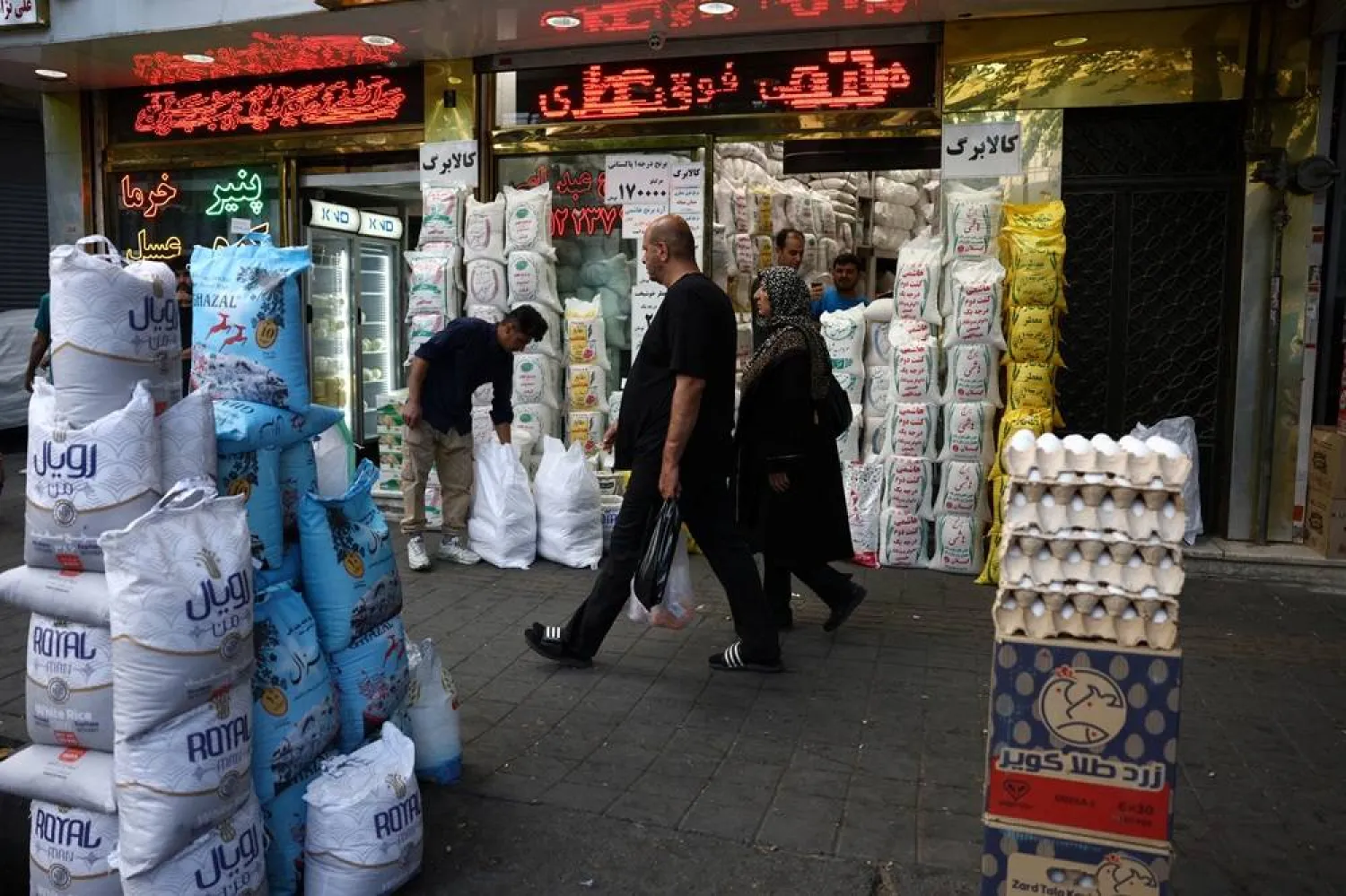
People walk in a local market in Tehran, Iran, April 28, 2026. Majid Asgaripour/WANA (West Asia News Agency) via Reuters
TT

Why Iran’s Oil Industry Is Increasingly Threatened by US Blockade

People walk in a local market in Tehran, Iran, April 28, 2026. Majid Asgaripour/WANA (West Asia News Agency) via Reuters

Even as Iran squeezes world energy supplies with its chokehold on the Strait of Hormuz, its own oil industry is increasingly being threatened by an American blockade.

With no way to export the oil it is pumping out and diminishing room to store it at home, Iran may be forced to dramatically reduce or cease production from some of its wells, perhaps beginning in as little as two weeks, experts say.

The situation likely isn’t as dire as US President Donald Trump recently described, colorfully suggesting pipelines could start exploding within days. But once shut down, production from the aging wells may not be restarted so easily, if at all, undermining Iran’s future oil output. Iran appears to have begun dialing back production already, analysts say, to avert outright shutdowns.

The pressure is building as the US Treasury Department ratchets up sanctions on Iranian oil shipments already at sea. The US military has seized at least two tankers off Asia believed to be carrying Iranian oil.

With its oil trade constrained, Iran is seeing less hard currency flow back into an economy mauled by weeks of war, months of unrest and decades of international sanctions. But with fewer tankers shipping Iranian oil, the effects of the Strait of Hormuz shutdown are only being magnified, leading to shortages of jet fuel and rising gasoline prices around the world.

Iran's leaders “are really resisting” shutting down oil wells because of how painful that would be long-term, said Miad Maleki, a former sanctions expert at the US Treasury who is now a senior fellow at the Washington-based Foundation for Defense of Democracies.

“They’ve been under sanctions, they’ve been isolated for 47 years now. Those oil wells are not maintained well. Their machinery is not maintained well," Maleki said. Once shut off, he added, the wells won't easily “snap back after a few months.”

The squeeze on Iran intensifies

Iran had been pumping over 3 million barrels of crude oil a day before the war, with a little more than half going toward its domestic market. But since the American blockade began on April 13, ships have been filled with oil and unable to get out.

“It looks like there’s been a significant slowdown in production,” said Antoine Halff, the co-founder and chief analyst at Kayrros, an environmental intelligence company that tracks emissions and energy supply chains. He pointed to signs that storage is not filling as fast as usual at Kharg Island, Iran’s main oil export terminal in the Gulf.

Iran is likely storing some of its oil in tankers positioned around Kharg Island, Halff noted.

Kpler, a firm monitoring commodities markets, said it believes Iran has enough capacity left to store about two weeks worth of oil production, even after reducing output.

“While the immediate revenue impact is limited, operational constraints are now forcing production cuts and setting up a delayed but significant financial squeeze,” wrote Homayoun Falakshahi, an analyst at Kpler.

Wood Mackenzie, another oil analysis firm, estimates Iran will run out of storage capacity in about three weeks.

“If the blockade persists, cuts become inevitable,” wrote Alexandre Araman of Wood Mackenzie. Shutdowns of more than a month “risk long-term damage” to Iran’s oil reservoirs, he wrote, adding that recovering older fields “remains uncertain.”

Iran’s oil industry long a shaky lifeline

From the moment it first struck oil in 1908, Iran’s oil industry has been entangled in the region’s politics. A move to nationalize Iran’s oil fields and wrest control from the British sparked the CIA-backed 1953 coup that cemented Shah Mohammad Reza Pahlavi’s rule.

That also lit a long fuse to Iran’s 1979 revolution that toppled the shah. During the revolution, oil workers went on strike and brought production down from 6 million barrels a day to around 1.5 million.

Iran’s oil industry never recovered and faced decades of international sanctions, during which its infrastructure aged and faltered.

In his first term, Trump exerted a “maximum pressure” campaign, hiking sanctions to severely cut Iran’s oil exports. Forced to store oil in tankers at sea, the Iranian government lost tens of billions of dollars in revenues. Still, the pressure failed to push Tehran into reaching a nuclear deal with the US.

Now Iran faces a combination of hiked sanctions and the blockade. Trump on Tuesday claimed that Iran was “in a ‘State of Collapse.’”

US Treasury Secretary Scott Bessent piled on, writing on X, “Iran’s creaking oil industry is starting to shut in production thanks to the US BLOCKADE. Pumping will soon collapse. GASOLINE SHORTAGES IN IRAN NEXT!”

There have been no immediate signs of any gasoline shortages in Iran. However, Iran does seem to be acknowledging some of the pain indirectly.

A segment on state TV, which is run by hard-liners, included journalists discussing the possibility of an oil storage crisis. One noted that if empty tankers get blocked from returning to Iran, “we won’t be able to export.” Oil Minister Mohsen Paknejad on Monday praised oil terminal staff for their “continuous perseverance."

Maleki, the analyst from the Foundation for Defense of Democracies, said that if the blockade continues and production slows further or halts, oil workers could potentially lose their jobs — which could cause new unrest.

“In 1979 when the oil industry was disrupted, in the 1980s war with Iraq ... you can go and look at to see how effective they were in really pressuring the regime,” he said. “It’s really going to affect some of the most strategic provinces in Iran and the most strategic industry.”


Nothing Left: Nepal Flood Survivors Face Loss and Uncertainty

An aerial view shows houses standing amid debris during a helicopter flight from Nuwakot to Rasuwa following the deadly flash floods and mudslides in Nepal, September 3, 2026. (Reuters)
TT

Nothing Left: Nepal Flood Survivors Face Loss and Uncertainty

An aerial view shows houses standing amid debris during a helicopter flight from Nuwakot to Rasuwa following the deadly flash floods and mudslides in Nepal, September 3, 2026. (Reuters)

In Nepal's flood-ravaged Rasuwa district, Yangee Tamang grapples with grief and uncertainty, days after deadly torrents swept away entire villages, leaving a landscape of mud, rock and debris.

From a helicopter flying up the valley of destruction, the ground below resembles a puzzle with missing pieces. Entire sections of settlements have vanished.

Picturesque villages of green paddy fields and houses sit beside vast chunks of land washed away.

Tamang's house sits on a hillside in Syabrubesi in Rasuwa district, but the flood swept away the settlement below, where her relatives lived and markets were.

"It is all gone, nothing is left. No one is left," Tamang told AFP, after tracing the route of the August 26 destruction by air on Thursday, with roads below washed out.

Rescue teams in Nepal have recovered more than 1,250 bodies, and more than 5,000 are missing, after the gigantic wave triggered by a rock and ice avalanche roared down the China-Nepal border.

What were once busy villages, markets, green hillsides and winding roads in Rasuwa have been transformed into vast stretches of mud, broken rock and debris.

"It wasn't really water, it was gas-like, all black and it moved like boiling water," she said.

"It was all so sudden, it was not possible for anyone to run away."

- 'Hope has died' -

About 100 people are feared trapped in hydropower tunnels.

Tamang's husband is safe, but his workplace, the nearby Chilime Hydropower Project, which was smashed by the flood.

"I don't know what we will do. Nothing is left here for us to live," she said.

The river, still flowing brown, traces a path of destruction, and the enormous amount of debris has changed the shape and course of the waterways.

The floodwaters, carrying huge quantities of mud and rocks, rushed through river valleys with tremendous force.

In narrow gorges between the lush green hills, soil lies exposed where the flood stripped away trees and grass.

Roads that once connected remote communities have been washed away, while bridges lie destroyed or have completely disappeared.

Vehicles remain stranded on washed-out roads along hillsides.

Along the route, many surviving buildings are buried beneath thick layers of mud.

Some remain standing but are left empty, the people gone.

Risang Tamang, another resident, said for those left, the future is bleak.

"It is difficult -- roads are is such a state, so many bridges have been swept away. Now, even if you have money, there is nowhere to buy anything," he told AFP.

"Any hope that we can live here has died."


Ali al-Taher Ridge Emerges as Flashpoint in Israel-Hezbollah War

A photograph taken from the southern Lebanese area of Nabatieh shows smoke as it rises from the site of Israeli strikes that targeted the hilltops of the mountainous area of the strategic Ali al-Taher Ridge on August 14, 2026.  (Photo by AFP) /
A photograph taken from the southern Lebanese area of Nabatieh shows smoke as it rises from the site of Israeli strikes that targeted the hilltops of the mountainous area of the strategic Ali al-Taher Ridge on August 14, 2026. (Photo by AFP) /
TT

Ali al-Taher Ridge Emerges as Flashpoint in Israel-Hezbollah War

A photograph taken from the southern Lebanese area of Nabatieh shows smoke as it rises from the site of Israeli strikes that targeted the hilltops of the mountainous area of the strategic Ali al-Taher Ridge on August 14, 2026.  (Photo by AFP) /
A photograph taken from the southern Lebanese area of Nabatieh shows smoke as it rises from the site of Israeli strikes that targeted the hilltops of the mountainous area of the strategic Ali al-Taher Ridge on August 14, 2026. (Photo by AFP) /

The Ali al-Taher ridge in southern Lebanon, which is named after a Shi'ite Muslim scholar whose shrine sits at its summit, has become one of the most contested pieces of ground in the Israel-Hezbollah war.

The cluster of hills is not especially large. But what it overlooks in southern Lebanon — and what Hezbollah is suspected to have built beneath it — thrust it to the center of the fight between Israel and the Iran-backed militant group.

WHERE IS IT?

Located about 15 km (10 miles) from the Israeli border, the Ali al-Taher ridge has a commanding view of a broad sweep of southeastern Lebanon. Israel held it during a 22-year occupation of south Lebanon that ended in 2000.

After the current war erupted on March 2, Israeli troops pushed deep into southern Lebanon and seized key hilltops, including the historic Beaufort Castle on the ‌route to Ali al-Taher.

In ‌June, Israel's military described the ridge as one of its "primary operational focuses," ‌and ⁠included it in ⁠a map of an expanded, self-declared buffer zone where its troops are operating.

The ridge has effectively become a dividing point between a swathe of Lebanese territory occupied by Israeli troops to the south, and towns to the north that Israel's air force has bombed heavily, including Nabatieh.

WHY IS IT STRATEGIC?

Hezbollah is believed to have built an underground command center and weapons stores within the ridge itself, Lebanese security sources told Reuters in July. At 600 meters above sea level, it granted Hezbollah an advantage in launching short-range missiles and drones towards northern Israel, according to analysts.

Ali al-Taher also connects border areas ⁠in southern Lebanon to the hilly Iqlim al-Tuffah region further north, which has long ‌served as a key logistical and operational base for Hezbollah, the ‌Lebanese security sources said.

The Israeli air force has struck the ridge heavily in recent months.

In June, an Israeli military official, ‌speaking on the condition of anonymity, told Reuters that Hezbollah fighters were stuck underground without food or water. The ‌Times of Israel, citing a military probe, said on June 20 that one Israeli soldier was killed and 13 wounded during operations to capture a major underground Hezbollah facility beneath the ridge.

Hezbollah has said that Israel has sought to advance but that its fighters still had "full control over the area and are at complete readiness to confront any attempt by the enemy forces to ‌advance or infiltrate."

In July, the Israeli military said it would "not allow Hezbollah terrorists to emerge from the underground terrorist infrastructure and operate in the area or pose ⁠a threat" to Israeli soldiers.

WHAT ⁠IS THE POLITICAL SIGNIFICANCE?

Ali al-Taher lies near Zawtar Al Gharbiyeh, a town from which Israeli troops withdrew in July as part of a US-brokered roadmap that would see Israeli troops gradually withdraw from southern Lebanon as Lebanese troops disarm Hezbollah.

But with Hezbollah refusing to give up its weapons — and Israel saying it won't withdraw until the group disarms — that plan has ground to a halt.

As Israeli elections planned for October draw closer, capturing Ali al-Taher could be an attractive prize for Israeli Prime Minister Benjamin Netanyahu's government.

"Before the elections, Israel needs a big win in an area that has always been seen as a Hezbollah stronghold," said Andrea Tenenti, a strategic communications expert and former spokesperson for the UN force in Lebanon, UNIFIL.

Still, it may prefer a slow siege to avoid Israeli troop casualties, said Hassan Jouni, a Lebanese analyst and retired army general.

"Israel is hesitant to storm Ali al-Taher for fear of casualties, especially at this sensitive moment before elections," Jouni told Reuters.

The deadlock in Lebanon mirrors the wider Middle East standoff — negotiations between the United States and Iran remain stalled, with no breakthrough in sight.


Not Just Nvidia: These Power and Cooling Firms Are Riding the Trillion-Dollar Data Center Boom

An aerial view of an Amazon Web Services IAD10 data center on August 26, 2026 in Sterling, Virginia. (Getty Images/AFP)
TT

Not Just Nvidia: These Power and Cooling Firms Are Riding the Trillion-Dollar Data Center Boom

An aerial view of an Amazon Web Services IAD10 data center on August 26, 2026 in Sterling, Virginia. (Getty Images/AFP)

While Nvidia is synonymous with the AI boom, a lesser-known group of power and cooling equipment suppliers is cashing in on a global data center construction spree as developers race to avoid infrastructure bottlenecks.

Energy-hungry data centers have triggered a surge in demand for equipment ranging from transformers to advanced cooling systems, creating winners across Asia's supply chain, though earlier stock-price gains have moderated.

McKinsey forecasts nearly $7 trillion in data-center investment globally by 2030; Nvidia last week said it expects AI spending to remain robust for years.

But building data centers fast enough to meet demand is becoming more difficult. Hyperscalers often want facilities delivered within six months, but grid connection delays can stretch as long as 24 months in some emerging markets and more than eight years in major developed markets, according to consultancy Pivotale AI.

"Outside the industry circle, people are talking about (graphics processing units), but within the circle, people most certainly question you about the lead time for generators and transformers," said Wing Kin Cheung, the CEO of digital infrastructure service provider BodaData.

Transformers convert high-voltage electricity from grids into levels suitable for servers, cooling systems and power distribution units.

AI SCRUTINY DEEPENS

Leading transformer suppliers including ‌South Korea's HD Hyundai Electric ‌and China's Hainan Jinpan Smart Technology reported surging demand in the first half of 2026 tied to AI ‌infrastructure projects, ⁠particularly in North America.

HD ⁠Hyundai Electric recently said demand in Europe was rising as US hyperscalers expanded investments in markets like Finland, Germany and Britain, while Middle Eastern demand remained strong.

Its order backlog rose 23% to $8.5 billion at the end of June from six months earlier, and it said it expects data center demand to remain robust.

"We currently have an order backlog covering more than three years, with a substantial portion of production capacity for major power equipment secured for the coming three years," the company told Reuters.

"We are also in order discussions with some key customers for volumes scheduled for delivery as far out as 2030."

For Jinpan, new data-center orders in the first half more than quadrupled from a year earlier, while its related backlog nearly tripled.

As AI chips consume more electricity, equipment makers are also betting on technologies aimed at improving efficiency and reducing ⁠environmental impacts, amid growing public scrutiny over data centers' consumption of water and electricity.

Bank of America estimates power ‌consumption per AI rack could climb to more than 1.5 megawatts by the end of 2030, nearly 100 ‌times that of a conventional rack, citing Nvidia's roadmap.

One technology attracting greater attention is the solid-state transformer (SST), a device that replaces bulky magnetic coils and copper windings with semiconductors ‌to transform and route electricity.

UBS estimates SSTs will increase power efficiency by around 4% and reduce costs. While commercial adoption remains in its early stages, the ‌bank expects their penetration to climb to 40% in 2030 and forecasts that Chinese companies will gain share thanks to technological expertise and cost advantages.

HD Hyundai Electric and Jinpan said they are deepening SST development, while Taiwan's Delta Electronics, a major supplier of power infrastructure, said a small data center is using its SSTs.

Delta told Reuters that demand for AI power, cooling and data center infrastructure solutions remains a growth engine and it is expanding its production footprint across Thailand, the US and China to meet increased demand.

COOLING RACE

Cooling ‌systems are emerging as another growth area as operators struggle to manage the heat generated by powerful AI chips.

"Power and cooling basically go hand in hand; so basically the more power you use, the more cooling you ⁠need to use because you generate heat," ⁠said Matty Zhao, Bank of America's Asia-Pacific head of research for basic materials, oil and gas.

The bank forecasts liquid cooling will account for 70% of new AI data-center installations versus air cooling by 2030, up from about 30% today. Liquid cooling can reduce energy consumption by over 27%, McKinsey says.

Developers are also exploring unconventional approaches, including floating facilities, underwater data centers and servers in caves or tunnels.

That is creating opportunities for a broader range of suppliers.

"With the expansion of data center self-generation and the floating data center market, opportunities are also opening up to enter new markets for marine medium-speed engines," HD Hyundai Electric said.

Strong demand for thermal-management products is lifting Delta and local peers Asia Vital Components and Auras Technology, as well as China's Shenzhen Envicool Technology. All are suppliers in Nvidia's ecosystem.

SUPPLY CHAIN CONSTRAINTS

Despite surging orders, the stock-price gains of suppliers have moderated as investors question elevated valuations amid intensifying competition.

Delta's shares are up more than 90% this year, while HD Hyundai Electric has stayed largely flat, cooling from gains of more than 100% last year. China's Jinpan and Envicool have fallen nearly 30% and 20%, respectively, after surging 118% and 244% in 2025.

"Even if revenue increases, I think gross margin will probably remain at roughly this level," Delta Chairman Ping Cheng said in July.

"There are many variables in the market, including new product platforms, deployment delays and component shortages. These issues may become somewhat more serious in the second half of this year."

Bank of America's Zhao said investors should be aware of potential risks.

"Not everyone can win," she said. "You have to be cherry-picked for the leaders who actually get the customers."
