



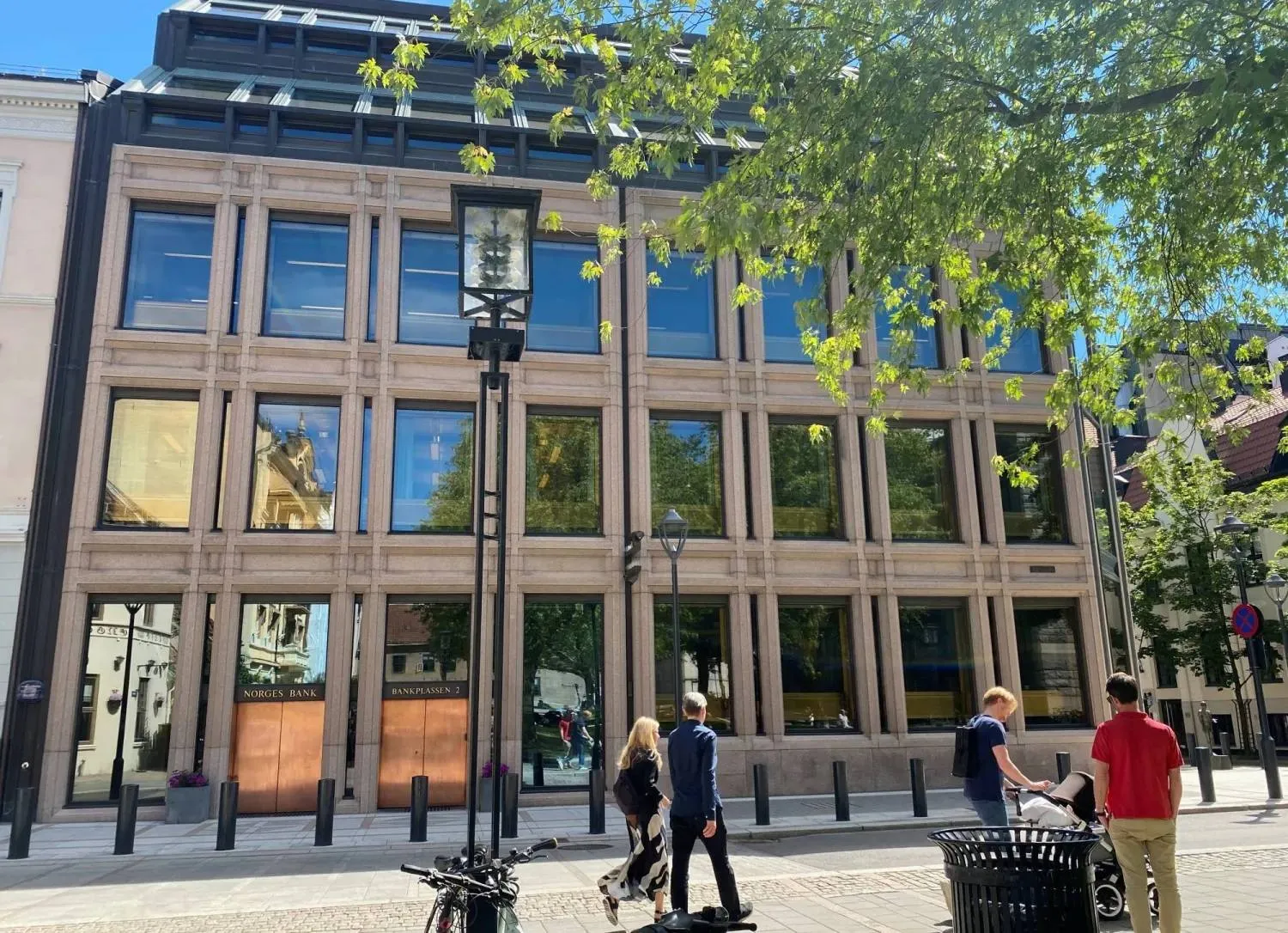

Norway’s central bank became one of the first to raise interest rates as a result of the US-Israeli attacks on Iran, warning that the conflict in the Middle East had lifted inflationary pressures as well as heightened economic uncertainty.
Meanwhile, the Swedish central bank, the Riksbank, kept its key rate unchanged and said that while the risk of higher inflation had increased somewhat due to the war in the Middle East, it could wait on developments before adjusting its policy.
On Thursday, Norway’s Norges Bank increased its policy rate by 0.25 percentage points to 4.25 %, following the lead of Australia among advanced economy central banks in raising rates.
The move was sooner than most analysts in a Reuters poll had expected.
The rich Scandinavian country is western Europe’s largest petroleum producer and has struggled to get inflation down to the central bank’s 2% target despite cutting interest rates far less in recent years than the European Central Bank, US Federal Reserve or Sweden’s Riksbank, which on Thursday held its own rates unchanged.
“The war in the Middle East is still causing substantial uncertainty about the economic outlook,” said Ida Wolden Bache, Norges Bank’s governor. She added: “Inflation is too high and has run above target for several years.”
Norway's annual core inflation rate came in at 3.0% in March, slightly lower than forecast but well above the central bank's target of 2.0%.
Norges Bank said that the Iran conflict meant “external price pressures appear to be slightly stronger” than in March, but that the recent appreciation in the krone should damp imported inflation.
It warned that if war in the Middle East changed the economic outlook, it would be forced to revise its rate forecast.
Norges Bank estimated in March that mainland GDP in Norway — stripping out the effects of oil and gas — would increase by 1.6% this year, lower than in 2025.
A majority of respondents, 15 of the 23 economists in a Reuters poll conducted ahead of the announcement, had said Norges Bank would keep the policy rate on hold today, while the remaining eight expected a 25-basis-point hike.
The Norwegian crown strengthened to 10.85 against the euro by 0948 GMT, from 10.92 just before the announcement.
The bank’s statement points to a further rate hike this year, Sparebank 1 Chief Economist Elisabeth Holvik said.
“Norges Bank will raise borrowing costs again after the summer, so that the policy rate reaches 4.5% by year-end,” Holvik said.
For its part, Sweden's central bank earlier on Thursday kept its policy rate unchanged at 1.75%, as expected, but said the risk that the war in the Middle East will lead to higher inflation had increased somewhat.
The Riksbank has been in wait-and-see mode since cutting interest rates by a quarter percentage point in September last year, according to Reuters.
“There is scope to wait until there is a clearer picture of the effects of the war and the supply shocks it entails,” the central bank said in a statement.
In Poland, the central bank Governor Adam Glapinski said the likelihood of interest rate increases has grown over the past month although a hike is not a forgone conclusion for policymakers.
“Rate hikes are likely but they may not occur,” Glapinski told a news conference on Thursday. On the other hand, “rate cuts are very unlikely.”


