


Who Are the Radwan Commanders Israel Has Killed in Lebanon?

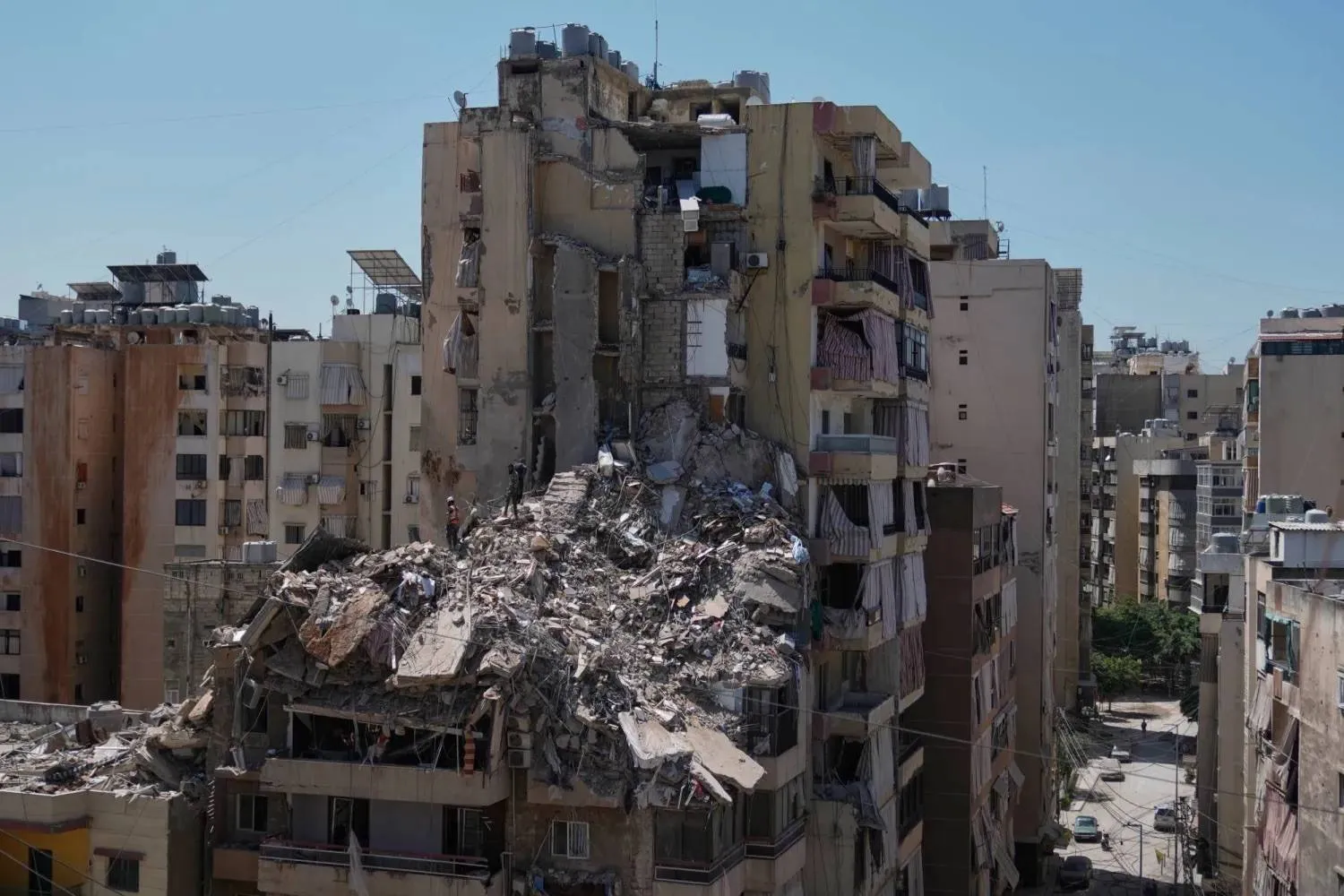
Rescue workers search through the rubble of a building destroyed in an Israeli airstrike targeting Beirut’s southern suburbs, a day after the attack that took place on the evening of Wednesday, May 7, 2026 (AP). 
TT

Who Are the Radwan Commanders Israel Has Killed in Lebanon?

Rescue workers search through the rubble of a building destroyed in an Israeli airstrike targeting Beirut’s southern suburbs, a day after the attack that took place on the evening of Wednesday, May 7, 2026 (AP). 

Israel’s announcement that it had killed Ahmad Ghaleb Ballout in a strike targeting the Haret Hreik area of Beirut’s southern suburbs on Wednesday renewed focus on the series of assassinations targeting commanders of Hezbollah’s Radwan Force since the outbreak of the Gaza war.

The strikes seem to be a concentrated campaign aimed at weakening the leadership structure of the group’s elite unit.

Since the early months of the confrontation, the Radwan Force has become a primary target of Israeli strikes, both in south Lebanon and Beirut’s southern suburbs, as Israel pursued field and military commanders responsible for offensive operations and oversight of drone, assault and combined operations units.

Israeli army spokeswoman Ella Waweya said the military “carried out a strike on Wednesday and eliminated Ahmad Ghaleb Ballout, a commander in the Radwan Force, Hezbollah’s elite commando unit, in Beirut’s southern suburbs.”

According to the Israeli account, Ballout held several positions within the Radwan Force over the years, most notably operations commander, where he was responsible for the unit’s “combat readiness and mobilization against the Israeli army.”

Waweya said Ballout also played a role in “efforts to restore the capabilities of the Radwan Force,” particularly what Israel refers to as the “plan to occupy the Galilee,” long viewed by Israel’s military establishment as one of the main threats posed by Hezbollah’s elite unit.

Over recent months, details have gradually emerged about commanders who played central roles within the force before becoming direct targets in the ongoing assassination campaign.

Wissam al-Tawil: The first major target

Wissam Hassan al-Tawil was the first prominent Radwan commander whose killing was announced by Israel after the start of the confrontation linked to Hamas’ Oct. 7 attack on Israel. Born in 1970 in Tyre, he joined Hezbollah at a young age and rose through the group’s military ranks.

According to the Israeli announcement, Tawil “was known as one of the overseers of the external operations and military manufacturing portfolio” and was also a member of Hezbollah’s central Shura Council, making him one of the influential military figures within the organization.

On Jan. 8, 2024, an Israeli drone targeted the vehicle carrying him in the southern town of Khirbet Selm, in what marked the beginning of a new phase in the targeting of Radwan commanders.

Mohammad Nasser: Commander of the western sector

Mohammad Nasser emerged as one of the leading commanders of the Aziz Unit, part of the Radwan Force and responsible for the western sector of the southern front.

Born in 1965 in the southern town of Haddatha, he joined Hezbollah in 1986 and participated in operations against the Israeli army during the occupation period. His military role later expanded to include fighting alongside Syrian government forces between 2011 and 2016.

After the killing of commander Hassan Mohammad al-Hajj in Syria in 2015, Nasser took command of the Aziz Unit and oversaw operations involving drones, rockets and combined attacks during Hezbollah’s campaign of support for Hamas.

In July 2024, Israel announced it had killed him in a strike targeting his vehicle in Tyre.

Ibrahim Aqil and Ahmad Wahbi: Targeting the most experienced circle

While the assassination of field commanders placed operational pressure on the Radwan Force, targeting leaders involved in planning and training appeared even more sensitive for Hezbollah, as reflected in the killings of Ibrahim Aqil and Ahmad Wahbi.

Aqil, who served as commander of the Radwan Force and was among the founding figures of Hezbollah’s military wing, joined the group in the 1980s before becoming one of its leading military commanders.

His name was linked to sensitive security and military files. The United States accuses him of involvement in the 1983 bombing of the US Embassy in Beirut and the attack on the US Marine barracks the same year. Within Hezbollah, he was a member of the Jihad Council and played a major role in developing the Radwan Force’s military capabilities. He also helped oversee operations in Syria after Hezbollah became involved in the conflict there.

On Sept. 20, 2024, Israel killed him in an airstrike targeting a meeting of Radwan Force commanders that he was chairing in the Jamous area of Beirut’s southern suburbs. Several senior commanders in the unit were also killed in the strike.

Ahmad Wahbi: Architect of training and ambushes

Ahmad Wahbi was regarded as one of the key architects behind the training of Radwan Force fighters. He joined Hezbollah shortly after its founding and took part in operations against the Israeli occupation before being captured by Israel in 1984.

His name later emerged as one of those involved in the 1997 Ansariya ambush targeting Israel’s Shayetet 13 naval commando unit, before he assumed responsibilities related to central training within Hezbollah.

According to the Israeli military, Wahbi had overseen training for the Radwan Force since 2012 and played a pivotal role in developing its manpower and military capabilities. He also assumed additional responsibilities after the killing of Wissam al-Tawil.

In the same strike that killed Ibrahim Aqil in September 2024, Wahbi was killed alongside several Radwan commanders, in what was described as one of the heaviest blows suffered by the force since its establishment.




Palestinians Decry Israeli Push for Control over Ancient West Bank Sites

Pillars and archaeological remains in the ancient village of Sebastia, near Nablus in the Israeli-occupied West Bank, June 4, 2026. REUTERS/Ammar Awad
TT

Palestinians Decry Israeli Push for Control over Ancient West Bank Sites

Pillars and archaeological remains in the ancient village of Sebastia, near Nablus in the Israeli-occupied West Bank, June 4, 2026. REUTERS/Ammar Awad

An Israeli bill that would extend civil control over ancient sites in the West Bank has drawn criticism from Palestinians and Israeli rights groups who say it is tantamount to annexation of occupied land and would expand Jewish settlements.

The "Heritage Authority in Judea and Samaria" bill passed one of three votes by Israel's parliament in May, but it is unclear whether the final vote will be held before parliament disperses ahead of an election expected by October 27.

The bill would bring management of Roman, Byzantine and Crusader-era sites under Israeli Ministry of Heritage management and allow related "expropriation and purchase of real estate" in the West Bank, which Israel calls by its Hebrew biblical name, Reuters reported.

That in effect would strip away oversight of some ancient sites from the Western-backed Palestinian Authority, which under the 1990s Oslo peace accords has exercised limited self-rule in parts of ‌the West Bank, ‌territory Israel captured in a 1967 war.

The PA's tourism minister, Hani Al-Hayek, said "control over these ‌antiquities ⁠is intended to ⁠expand control and expand settlements in these areas, deep inside Palestinian territories."

Israel says the bill's purpose is to protect ancient sites.

VILLAGE NEAR ANCIENT SEBASTIA SITE FACES LAND CONFISCATION

Peace Now, an Israeli settlements watchdog, said the bill "constitutes an annexationist measure in every respect" and would lead to broad-scale confiscation of Palestinian land.

Using archaeology to expand settlements is not a new practice, but the scope of the Israeli government's measures has been unprecedented, Peace Now said.

One example is the Palestinian village of Sebastia in the northern West Bank where residents, many of whom trace their roots to the land back centuries, rely heavily on tourism to a nearby archaeological site.

The ancient site in ⁠Sebastia has ruins from the 9th-century B.C. Israelite kingdom as well as Roman, Byzantine, Crusader ‌and Ottoman remnants, archaeologists say. It is on a tentative list for inclusion as ‌a UNESCO World Heritage Site.

In late 2025, Israel announced a plan to seize about 1,800 dunams (445 acres) at the site, which it ‌said was meant to develop the area, affecting around 5,000 olive trees growing in the village groves, village officials said.

"They ‌are incorporating areas containing water resources, roads and antiquities, leaving us as residents without any resources. It is part of settlement expansion," said Sebastia Deputy Mayor Nizar Kayed.

Business had already been suffering since late 2023 with tourism dropping because of war in the region, said Nahed Sakha, whose Sebastia restaurant is on land slated for confiscation.

"It seems that the Israeli plan (is) to isolate the archaeological site from the people," Sakha said.

ISRAEL CITES ‌ANCIENT TIES TO THE LAND

Israeli parliament member Zvi Sukkot, who has been key in advancing the new bill, says extending Israeli control over the sites is meant to safeguard ⁠ancient remnants dating back to biblical ⁠times.

"There's nothing here that changes the legal status of Judea and Samaria," he told Reuters.

"There are many people who are bothered by our desire to prove the ties between the people of Israel and this land," he said. "All the stories of the Bible, all our history, the people (of Israel) were born in Judea and Samaria."

Sukkot is a member of the pro-settler Religious Zionism party. Like many in Prime Minister Benjamin Netanyahu's coalition, he opposes the creation of a Palestinian state and advocates annexation of the West Bank.

UN bodies and most countries view Israel's settlements as illegal under international law, violating the Fourth Geneva Convention provision barring the transfer of civilian population into occupied territory.

Israel rejects this view, saying the West Bank, which it captured in the 1967 war, is disputed territory. It cites security needs and biblical and historical ties to the land.

But the new bill has also caused concern among legal officials in Israel's defense establishment and Israeli scientists.

In an open letter to Netanyahu and Sukkot, the Israel Academy of Sciences and Humanities called for it to be scrapped.

"This will undoubtedly lead to an immediate deterioration in Israel's international relations in the field of archaeology, and it will also have an impact on other areas of science and research," the academy said.


Israel Says One Soldier Killed in Lebanon after Vehicle Overturned

Israeli soldiers carrying the coffin of a soldier killed in southern Lebanon during his funeral in Kfar Saba, Israel, on Sunday (dpa)
TT

Israel Says One Soldier Killed in Lebanon after Vehicle Overturned

Israeli soldiers carrying the coffin of a soldier killed in southern Lebanon during his funeral in Kfar Saba, Israel, on Sunday (dpa)

An Israeli military official ‌said ‌on Thursday a ‌soldier ⁠was killed in ⁠southern Lebanon after a vehicle ⁠had ‌overturned.

The official ‌described the ‌incident ‌as an accident, Reuters said.

Earlier, the ‌military said a soldier ⁠had ⁠died during "operational activity".

The pace of violence in Lebanon has eased recently, but Israeli Defense Minister Israel Katz stressed that his forces would remain in southern Lebanon.

“We have stated that, in any case, we will not withdraw, and up to this moment — and this is a diplomatic achievement — there has been no US request for Israel to withdraw from Lebanon,” Katz said in an interview during a conference of local leaders in Tel Aviv.

Israel and Lebanon are currently holding US-mediated talks in Washington aimed at reaching a diplomatic solution to the conflict, including the disarmament of Hezbollah and the withdrawal of Israeli forces.

Since April, Lebanon has engaged in direct talks with Israel under US pressure, with the aim of ending the latest war between Hezbollah and Israel.

Lebanese authorities have stressed their determination to keep Lebanon’s file separate from negotiations involving Iran, Hezbollah’s main backer.

On Wednesday, Lebanese President Joseph Aoun stressed that “the negotiations in Washington are separate from the meetings held in Switzerland last week between the United States and Iran, which were followed by Qatar and Pakistan.”


Iraqi Judiciary Applies ‘Terrorism Provisions’ to Drones

People watch as smoke billows from an oil warehouse in the Kani Qirzhala area on the outskirts of Erbil, the capital of Iraq's autonomous Kurdistan region, following a suspected drone strike, on April 1, 2026. (Photo by AFP)
TT

Iraqi Judiciary Applies ‘Terrorism Provisions’ to Drones

People watch as smoke billows from an oil warehouse in the Kani Qirzhala area on the outskirts of Erbil, the capital of Iraq's autonomous Kurdistan region, following a suspected drone strike, on April 1, 2026. (Photo by AFP)

Iraq’s Supreme Judicial Council has instructed the country’s courts to apply the provisions of the Anti-Terrorism Law to anyone who manufactures, uses, or possesses drones for unlawful purposes, while a security official said the directive is aimed specifically at curbing the activities of armed factions.

In a brief statement on Wednesday, the Council said it had directed the competent courts to enforce Anti-Terrorism Law No. 13 of 2005 against “anyone who manufactures, uses, or possesses drones employed for purposes contrary to the law.”

The law is Iraq’s principal legal framework for prosecuting terrorist crimes that threaten national unity and public safety, carrying penalties of up to the death sentence for perpetrators, instigators, planners, and financiers.

The directive comes amid months of government efforts to bring all weapons under state control and dismantle armed groups operating outside official security institutions.

An Interior Ministry security official told Asharq Al-Awsat that the judicial directive is “exclusively linked to armed factions” and is intended to increase pressure on them. He said the measure places drone-related offenses under terrorism statutes even though Iraqi law permits the use of officially licensed drones, indicating that it is directed at attacks carried out - or potentially to be carried out - by armed factions.

Speaking on condition of anonymity, the official described drones as one of Iraq’s most serious security challenges because they are easy to transport and operate, while the country lacks effective counter-drone capabilities, a weakness exposed during recent attacks.

Since the outbreak of the US-Israeli war against Iran on February 28, armed factions have carried out hundreds of attacks, many involving drones, against civilian and military targets.

Kurdish sources say cities in the Kurdistan Region alone have come under more than 800 attacks by Iran-aligned factions, ostensibly because of the presence of US forces and Iranian Kurdish opposition groups.

The factions have also launched dozens of drone attacks against vital assets in several Gulf states and Jordan, prompting those countries to issue a joint statement on March 25 condemning the attacks and urging Baghdad to take immediate action to halt operations by Iran-backed armed groups.

Iraq has long permitted drones for civilian, commercial, and official security purposes, provided operators obtain prior approval from the Iraqi Civil Aviation Authority and the relevant security agencies.

In early February, the authority introduced new regulations governing licensing, operating requirements, legal obligations, and approved uses, including media production, filmmaking, advertising, tourism, protection of oil and energy pipelines and public utilities, agriculture, environmental monitoring, border security, and official Interior Ministry thermal-drone operations against smugglers.

Drone manufacturing is also “common in Iraq,” according to Ahmed al-Janabi, a software and telecommunications engineer, though primarily for civilian and service-related uses. He said drone components are widely available on Iraqi markets and enter the country through multiple routes, including smuggling networks from Iran via Sulaymaniyah.

Specialized import offices also supply drones, often disguising component shipments. While authorities routinely confiscate unauthorized drones and impose relatively light prison sentences on violators, al-Janabi said the key change is that such offenses are now prosecuted under the Anti-Terrorism Law.
