

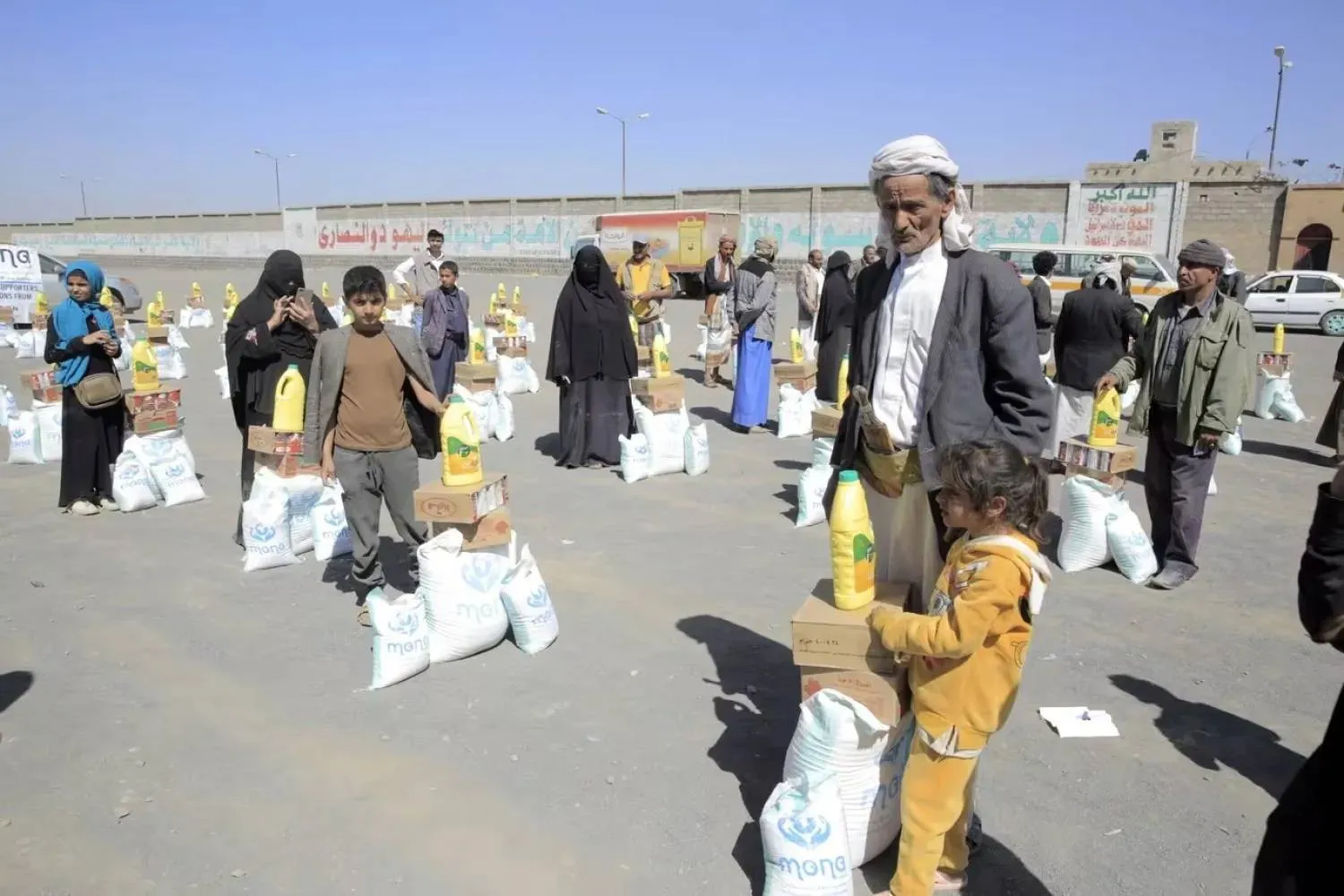

International, Local Bodies Warn of Impending Famine in Yemen

Funding shortfall in Yemen has increased the risk of food insecurity (EPA) 
TT

International, Local Bodies Warn of Impending Famine in Yemen

Funding shortfall in Yemen has increased the risk of food insecurity (EPA) 

A number of UN, international and local bodies said Yemen is again on the brink of widespread humanitarian disaster, characterized by accelerated hunger, widespread displacement, funding shortfall, in addition to worsening economic and climate pressures that are leaving millions in deeper levels of deprivation amid ongoing political and economic instability.

UN agencies and international organizations reveal that the crisis is no longer limited to food shortages, but includes a simultaneous threat to food, shelter and income, at a time when more than a decade of conflict and economic decline continue to erode the resilience of communities in Yemen.

A recent UN report indicates that approximately 5.2 million internally displaced persons (IDPs) in Yemen are among the most severely affected by the nation's food insecurity crisis.

The reports came while the Yemeni government plans to establish the High Commission for Relief and to organize several workshops that address issues related to overlapping authorities, as announced earlier by Minister of Local Administration, Badr Basalma.

The Minister’s plan focuses on organizing relief efforts between the central government and the liberated governorates to ensure aid reaches vulnerable populations through official channels.

In its latest assessment of food security in Yemen, the World Food Program (WFP) stated that the country continues to host the fifth largest internal displacement crisis globally, exacerbated by ongoing conflict and deteriorating economic and humanitarian conditions.

“With an estimated 5.2 million IDPs, Yemen remains the fifth largest internal displacement crisis in the world. WFP remote monitoring data revealed a relative improvement in the food security among surveyed IDPs in March 2026,” it said.

WFP also noted that food consumption gaps remain notably worse among IDPs compared to residents, particularly for those living in camps.

In March, it showed, around 39% of surveyed IDPs in Yemen experienced moderate to severe hunger, double the level recorded among residents.

This trend was more pronounced among IDPs in camps (50%) compared to community-based IDPs (34%). Additionally, 17% of surveyed IDPs nationwide reported at least one member spending an entire day and night without eating, more than double the rate among residents.

Compounding these vulnerabilities, WFP said nearly one-third of IDPs nationwide live in informal displacement sites as last resort, while 92% cannot afford rent and face eviction risk.

Last week, the Executive Unit for Managing Displacement Camps in Marib governorate reported a dire, looming humanitarian crisis threatening over a quarter of a million IDPs in the province after they faced the imminent threat of losing their rented homes due to severe economic deterioration, escalating living conditions, accumulated rental debts and lack of income sources.

It showed that the most affected groups include 118,000 women, 72,000 children, and 8,200 seniors, who may find themselves homeless in the coming months.

Meanwhile, the International Organization for Migration (IOM) said last Tuesday that from January 1 to May 2, Yemen tracked 923 households (5,538 Individuals) who experienced displacement at least once, indicating that economic reasons and conflict remain the main drivers of new displacement.

The Famine Early Warning Systems Network (FEWS NET) estimated that the scale and severity of acute food insecurity are expected to remain high across Yemen through September.

It said outcomes of the Crisis, or the third level of the Integrated Food Security Phase Classification (IPC 3), are expected to remain widespread, with Emergency (IPC Phase 4) outcomes persisting in Hodeidah, Hajjah, and Taiz.

Households most likely to face Emergency (IPC Phase 4) outcomes include those with minimal income sources, the displaced, and those with limited or no access to humanitarian assistance, the Network showed.

It said funding gaps remained substantial in 2025, with only 22% of food security and agriculture requirements funded, while coverage remained similarly low in nutrition (9%) and water, sanitation, and hygiene (22%).

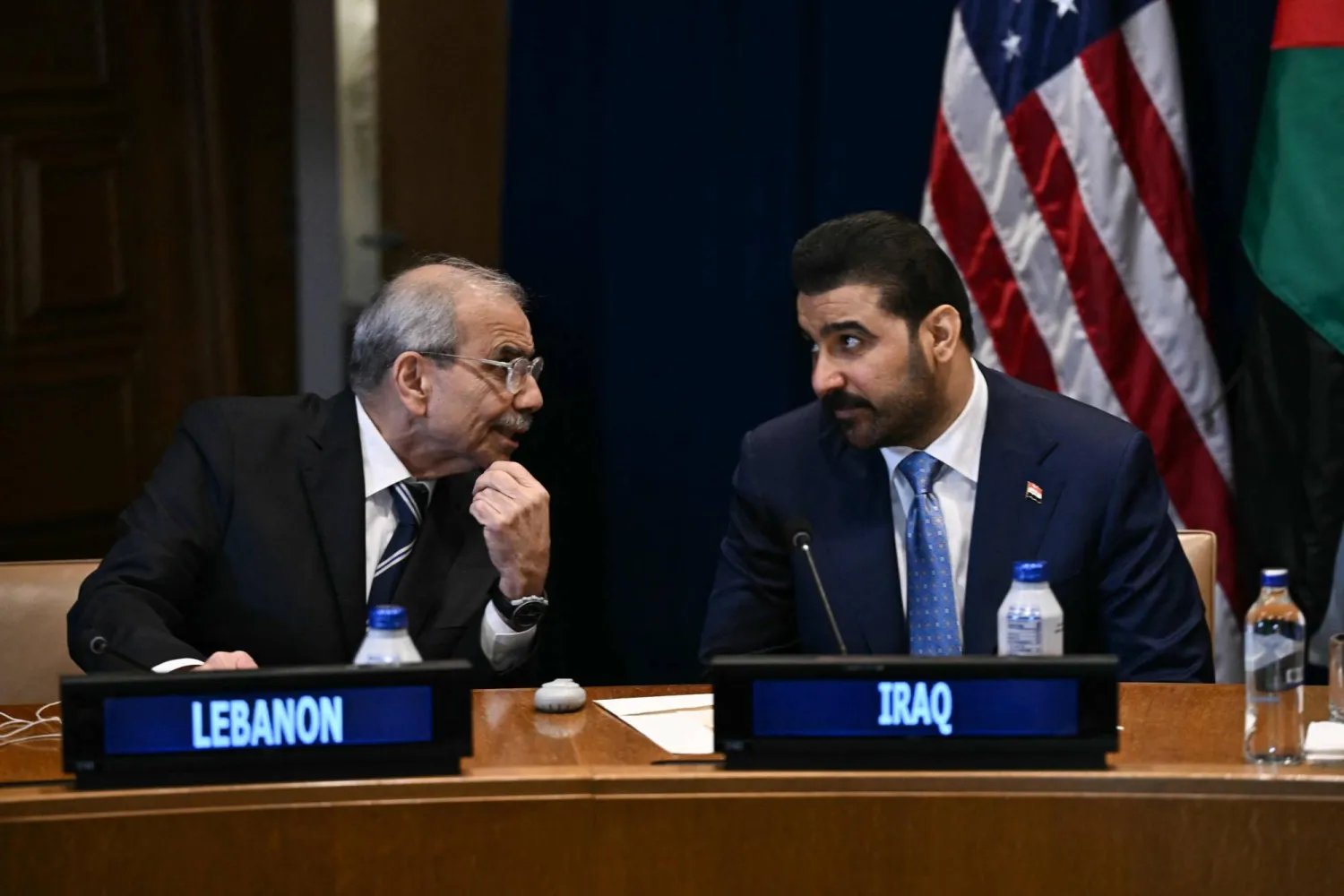


Iran Reacts with Concern to Reports of Clandestine Israeli Base in Iraq

Iraq's parliamentary security and defense committee meets on Sunday. (Iraqi parliament)
TT

Iran Reacts with Concern to Reports of Clandestine Israeli Base in Iraq

Iraq's parliamentary security and defense committee meets on Sunday. (Iraqi parliament)

Iran has reacted with concern to media reports of a clandestine makeshift Israeli military that was used during the recent war on Iran.

Iranian Foreign Ministry spokesman Esmail Baghaei said on Monday: “We are not ruling out anything related to the Zionist entity in the region.”

“Anything must be taken seriously and this issue is important and will certainly be discussed with Iraq,” he added.

Israeli forces established a makeshift base using an old airstrip in Iraq's desert during the war against Iran, two security officials told AFP on Sunday, confirming a report by The Wall Street Journal.

Early in the war, which was ignited by joint US-Israeli attacks on Iran on February 28, the troops were detected in the Najaf desert in the country's southwest and clashed with Iraqi forces, killing one soldier and wounding two others.

Iraq has scrambled to address the reports. The parliamentary security and defense committee said it will meet with security leaders to probe “foreign military breaches and activities.”

Iraq’s security media cell denied that a new airdrop had taken place in the Karbala desert in what seen as an attempt to avoid directly addressing the reports about the alleged Israeli base.

Commenting on the western reports, head of the cell Saad Maan said they tackled an incident that took place on March 5.

“Iraqi security and military forces engaged in combat with an unlicensed force at a time, leading to the death of a member of the security forces and injury of two others,” he said. WSJ had not spoken about a new military deployment in the area.

Maan continued: “A search of the area last month and this month did not reveal traces of any unlicensed forces or equipment. Our forces will continue to carry out their duties.”

There are no “unlicensed forces” in any other region in Iraq, he added.

Hussein Allawi, advisor to outgoing Prime Minister Mohammed Shia al-Sudani, offered a different account of what happened.

Speaking to Al Arabiya, he said that the airdrop “aimed at collecting something that had fallen from the sky over the Iraqi desert during the US-Israel war on Iran.”

A shepherd who was in the area informed security forces of unusual activity. The forces then headed to the scene, which thwarted the airdrop, he explained.

He denied that Israel had set up a base in Iraq, saying the WSJ report was “inaccurate and aimed to stir up certain issues.”

On Sunday, the parliamentary security and defense committee said it will host security leaders to investigate “foreign military breaches and activities” in the border regions between Karbala and al-Anbar.

It stressed its “categorical” rejection that Iraq become an arena for settling scores or that it be turned into a platform for attacks against neighboring countries.

Committee member Karim Aliwi Al-Muhammadawi told the Iraqi News Agency that he had previously warned of the presence of US forces in the region between Karbala and al-Anbar.

He confirmed the shepherd report of foreign forces in the area.

“Preliminary reports found that efforts had been made to turn the region into a support point for military operations against Iran,” he revealed, saying the drone and rocket attacks would have been launched from there.

The committee will meet with the security leaders to further investigate the issue, he said. The government will take the necessary measures to tackle the violation of Iraq’s sovereignty.


Land Registration in East Jerusalem Israeli ‘Tool’ to Expel Palestinians

Palestinian workers rest during the demolition of shops before the arrival of an Israeli army demolition team in the occupied Palestinian West Bank town of Al-Eizariya adjacent to East Jerusalem on Sunday (AFP) 
TT

Land Registration in East Jerusalem Israeli ‘Tool’ to Expel Palestinians

Palestinian workers rest during the demolition of shops before the arrival of an Israeli army demolition team in the occupied Palestinian West Bank town of Al-Eizariya adjacent to East Jerusalem on Sunday (AFP) 

Initial data from a land registration drive launched in Israeli-annexed east Jerusalem point to a “deeply alarming” trend of land appropriation by the Israeli state, an Israeli rights group said Monday.

Land registration in East Jerusalem began during the British Mandate between 1923 and 1948, and continued under the Jordanian administration starting in 1949.

Israel resumed land registration in east Jerusalem in 2018, reviving a process that had largely been suspended after it occupied and annexed the territory in 1967, said Bimkom, an Israeli rights group focused on urban planning and the protection of Palestinian rights in east Jerusalem.

The rights group examined the first official data covering roughly 2.3 square kilometers, or about 3% of east Jerusalem, where registration procedures have been completed.

It found that 82% of the land surveyed had been registered under the Israeli state or the Jerusalem municipality.

Another 9% was listed under “unknown owners” -- a classification the group described as an initial step toward eventual state takeover -- while 4% was registered to Jewish owners, most of them connected to the settler movement, according to AFP.

According to Bimkom, approximately 4% of the plots were registered to churches, while only 1% were recorded under Palestinian ownership.

Bimkom warned that the registration process is being used by Israeli authorities for “effectively taking land ... from beneath people's feet,” calling it “deeply alarming.”

“This data clearly indicates that the renewed... procedures do not serve -- and were not intended to serve -- the Palestinian residents of the city, but rather to provide a bureaucratic tool for the appropriation of Palestinian land for the benefit of the state,” it said.

The registration process advances plot by plot and lacks transparency, Bimkom architect Sari Kronish told AFP.

“There is no transparency regarding why and how the choices of where to begin are made,” Kronish said.

The areas where registration has already been completed largely correspond to vacant land earmarked for settlement construction, a pattern Bimkom says reinforces concerns that political motivations are driving the process.

The NGO added that a small part of these zones include Palestinian homes, but most of which have been registered under the state or entities linked to settlement groups.

Until Monday noon, Israel's justice ministry, which oversees the registration process, did not respond to requests for comment.

Bimkom denounced what it described as increasingly restrictive measures toward Palestinians, for whom proving land ownership has become nearly impossible.

Jerusalem lies at the core of the Israeli-Palestinian conflict.

Also, the report said that in 2025, Israeli authorities approved only about 640 housing units for Palestinians in East Jerusalem, compared to roughly 9,000 units approved for Jewish residents across the city.


Hamas Nears Final Step in Choosing New Political Chief

A billboard of Hamas' slain leader Yahya Sinwar is displayed at the Palestine square in Tehran, Iran, 19 October 2024. EPA/ABEDIN TAHERKENAREH
TT

Hamas Nears Final Step in Choosing New Political Chief

A billboard of Hamas' slain leader Yahya Sinwar is displayed at the Palestine square in Tehran, Iran, 19 October 2024. EPA/ABEDIN TAHERKENAREH

Hamas is close to electing a new head of its political bureau, who will oversee the movement until the end of this year or early next year, pending broader internal elections in the Palestinian territories and abroad.

Asharq Al-Awsat learned from three Hamas sources outside Gaza that members of the movement’s political bureau — excluding those already in Gaza and the West Bank — along with members of its Shura Council, have been meeting in Istanbul for several days. Participants also attended funeral ceremonies for Azzam Al-Hayya, the son of Khalil Al-Hayya, Hamas’ political leader in Gaza.

According to the sources, Khalil Al-Hayya traveled from Türkiye to Qatar to be with his family after his son Azzam was killed in an Israeli airstrike last Wednesday. The strike also reportedly killed a field commander from the elite forces of the Al-Qassam Brigades, Hamas’ armed wing.

The sources said Al-Hayya is expected to return to Istanbul to resume his duties, including preparations for the final phase of selecting Hamas’ new political bureau chief.

Hamas is facing what observers describe as its most severe crisis since the movement was founded in 1987. Israeli operations launched after the October 7, 2023 attack have targeted multiple branches and leadership levels within the organization, creating significant organizational and financial strains.

Current assessments suggest that Khaled Meshaal, Hamas’ external political chief, and Khalil Al-Hayya are the leading contenders for the top position.

The movement is waiting for what sources described as “appropriate security and political conditions” before holding comprehensive elections across Palestinian territories and Hamas’ overseas branches to choose a new Shura Council, political bureau, executive body, and regional leadership structures.

For roughly the past year and a half, Hamas affairs have been managed by a temporary “leadership council.” Earlier this year, the movement began efforts to select a leader to complete the remainder of the current political bureau’s term, which was originally due to end in 2025 but was extended by one year until broader elections can be held late this year or early next year.

Momentum Builds Around Al-Hayya

Sources outside Gaza said Hamas could announce the identity of its new political bureau chief within days, possibly by the end of this week or early next week.

A fourth Hamas source in Gaza told Asharq Al-Awsat that some within the movement are pushing for Al-Hayya’s election, particularly after the killing of his fourth son.

With Azzam Al-Hayya’s death last week, Khalil Al-Hayya has now lost four sons in Israeli strikes. Earlier, Azzam’s twin brother, Hammam Al-Hayya, was killed in a strike targeting Hamas leaders in Doha in September 2025.

New Mediation Proposal Expected

A Palestinian faction source said mediators, particularly Egypt, are expected to present a revised proposal aimed at narrowing gaps between Hamas and Israel. The source said Israel’s response to the latest framework remained negative, citing disputes over weapons, withdrawal terms, and reconstruction conditions.

Meanwhile, Israel intensified accusations that Hamas is rebuilding military infrastructure, manufacturing weapons, and exploiting humanitarian aid through taxation. Hamas spokesman Hazem Qasim rejected the claims, saying they were intended to justify continued Israeli military escalation and tighter restrictions on Gaza.

Qasim also said Hamas remains committed to the Sharm El-Sheikh ceasefire agreement signed in October 2025, despite what he described as thousands of Israeli violations since the truce took effect. According to the report, more than 856 Palestinians have been killed since the ceasefire began.
