


New Zealand Moves to Halt Lawsuits over Climate Damage

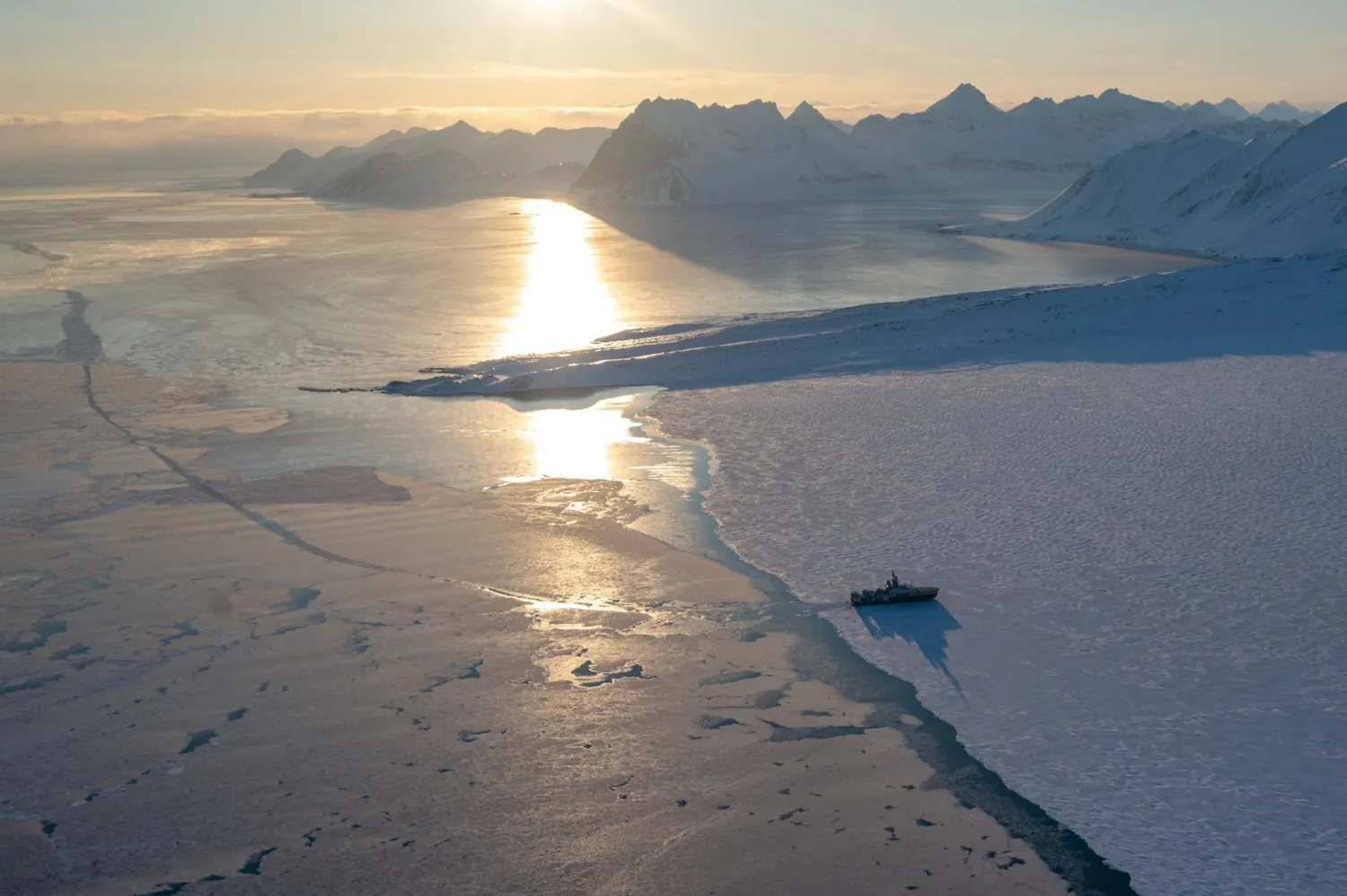
(FILES) This photograph shows the scientific ice-going "Kronprins Haakon" sailing through the sea ice in eastern Spitzbergen, in the Svalbard archipelago, on April 10, 2025.  (Photo by Olivier MORIN / AFP)
(FILES) This photograph shows the scientific ice-going "Kronprins Haakon" sailing through the sea ice in eastern Spitzbergen, in the Svalbard archipelago, on April 10, 2025. (Photo by Olivier MORIN / AFP)
TT

New Zealand Moves to Halt Lawsuits over Climate Damage

(FILES) This photograph shows the scientific ice-going "Kronprins Haakon" sailing through the sea ice in eastern Spitzbergen, in the Svalbard archipelago, on April 10, 2025.  (Photo by Olivier MORIN / AFP)
(FILES) This photograph shows the scientific ice-going "Kronprins Haakon" sailing through the sea ice in eastern Spitzbergen, in the Svalbard archipelago, on April 10, 2025. (Photo by Olivier MORIN / AFP)

New Zealand will change the law to prevent lawsuits that seek to hold companies liable for "climate change damage" linked to greenhouse gas emissions, Justice Minister Paul Goldsmith said on Tuesday.

Goldsmith cited a lawsuit launched by Indigenous Maori climate activist Michael Smith, who is seeking to hold six prominent New Zealand companies responsible for environmental harms linked to climate change.

He said such cases were "creating uncertainty in business confidence".

New Zealand would change the law to "prevent findings of liability" for "climate change damage or harm caused by greenhouse gas emissions", Goldsmith said.

"The courts are not the right place to resolve claims of harm from climate change, and tort law is not well-suited to respond to a problem like climate change which involves a range of complex environmental, economic and social factors," Goldsmith said.

Tort law deals with civil cases in which people seek compensation for harmful or negligent actions.

Climate activist Smith said the government's announcement was "an affront to democracy".

"If parliament can cancel a live court case, then no legal claim is secure at all, once it becomes politically inconvenient," he told national broadcaster Radio New Zealand.

Smith's case named some of New Zealand's biggest and best-known companies, including dairy farming giant Fonterra.

The laws are all but certain to pass parliament, given New Zealand's ruling coalition holds a majority of seats.

Climate targets

New Zealand's right-leaning government has unraveled a string of environmentally friendly policies since coming to power in 2023.

It has cancelled a clean car discount incentivizing electric vehicle uptake, reversed a ban on oil and gas exploration, and begun a fast-track scheme for mining permits.

From South Korea to Germany, a growing body of litigation around the world is pushing courts to take climate change more seriously.

New Zealand is currently facing a separate legal challenge over its emissions targets.

In January 2025, the government said it aimed to reduce carbon emissions by 51 percent from 2005 levels by 2035.

The target was barely changed from a 50-percent cut targeted for 2030.

Lawyers for Climate Action and the Environmental Law Initiative took Climate Change Minister Simon Watts to court in March, arguing the government was not doing enough.

New Zealand's goal, enshrined in law, is to have net-zero greenhouse gas emissions by 2050, excluding methane produced by waste and agriculture.



In Search of Happiness: Young People in South Korea Resort to Dopamine Sites

Instead of spending money, the sites offer a form of digital role-play, capturing the experience of consumption while protecting your bank account (File/Reuters)
TT

In Search of Happiness: Young People in South Korea Resort to Dopamine Sites

Instead of spending money, the sites offer a form of digital role-play, capturing the experience of consumption while protecting your bank account (File/Reuters)

Online “dopamine sites” are now trending among young people in South Korea by offering fake consumption experiences such as a fake food delivery service and a virtual cigarette, all for a quick escape from financial and social pressure.

According to Psychology Today website, these sites capture the pleasure associated with buying without the financial cost, splitting the emotional experience of anticipation from any real-world consequences.

People using these sites have experienced a surge of desire, happiness, or excitement generated by mentally simulating the future purchase. The anticipation often generates a psychological reward equal to, or sometimes greater than, the actual purchase.

We often hear dopamine described as the brain’s “pleasure chemical,” but that description overlooks the role of anticipation. Dopamine plays a major role in motivation, learning, and anticipating rewards. Much of the activity in dopaminergic reward systems occurs before a reward is received.

The sites are hyper-realistic, mocking major Korean e-commerce giants and food delivery apps.

One popular site, FoodNeverComes, mimics a food delivery app where you can compare menu items, read reviews, pick your favorites, fill your cart, and even watch a virtual courier make progress toward your house on a live map.

Other platforms simulate cigarette breaks, allowing users to sit in virtual break rooms with strangers that recreate the ritual of stepping away from work without lighting a cigarette.

The trend has gone viral among young South Koreans facing rising living costs and growing pressure to consume.

Instead of spending money, these sites offer a form of digital role-play, capturing the experience of consumption while protecting your bank account.

According to the Korean Times, one user found the fake delivery site helpful for managing late-night cravings, and a college student reported less loneliness after visiting a smoke-break site while studying for exams.

The Comfort of Rituals

Ordering food, shopping, and taking cigarette breaks are social rituals. They tap into familiar and enjoyable behaviors that provide structure, anticipation, a sense of control, and temporary relief from stress.

Virtual breaks replicate the social and restorative aspects of stepping away from work. Sitting in a simulated break room with anonymous others creates a sense of presence and social connection that, for some users, takes the edge off loneliness.

In digital environments, neural systems involved in empathy and social cognition can bridge the physical gap; by processing virtual people as real, the brain creates the sense of shared experiences that can support empathy and connection.

Coping Skill or Digital Detour?

Reactions to the popularity of dopamine sites have been mixed. The benefits depend on how the platform is used. A virtual experience can be beneficial as entertainment, stress relief, or imaginative play.

However, if virtual experiences replace meaningful real-world activities, if simulated purchases increase a sense of deprivation, or if they reinforce rather than address compulsive behaviors, then the benefits may come with psychological costs.

Whether fake takeout sites catch on in the West remains to be seen. But by splitting the emotional experience of anticipation from the financial transaction, the “dopamine site” trend highlights how much of our enjoyment of consumption rests in the emotions associated with imagined futures rather than ownership itself.

“Better understanding that distinction in our own lives can help us make more intentional choices about how we spend both our time and our money,” the website noted.


Guinness Crowns Canberra Town Crier as the World's Loudest Person at 122.4 Decibels

In this image taken from video, Joseph McGrail-Bateup demonstrates his loud voice in Canberra, Australia, Tuesday, June 23, 2026, after he was been recognized by Guinness World Records as the world's loudest person. (Australian Broadcasting Corp. via AP)
TT

Guinness Crowns Canberra Town Crier as the World's Loudest Person at 122.4 Decibels

In this image taken from video, Joseph McGrail-Bateup demonstrates his loud voice in Canberra, Australia, Tuesday, June 23, 2026, after he was been recognized by Guinness World Records as the world's loudest person. (Australian Broadcasting Corp. via AP)

Joseph McGrail-Bateup, an Australian professional air conditioner cleaner and honorary town crier, has been recognized as the world’s loudest person.

Guinness World Records last week acknowledged the 58-year-old Canberra resident recorded the loudest ever shout by an individual. He yelled “now” at 122.4 decibels.

That broke the previous record of 121.7 dB set by Northern Ireland schoolteacher Annalisa Flanagan in 1994. She had yelled an ear-piercing “quiet”, The Associated Press said.

That is in the noise range of a chain saw, a jet aircraft taking off and an ambulance siren at close range.

The record attempt was not something McGrail-Bateup could train for, he said Tuesday.

“There’s no way that you can actually practice for it. You have to just keep it for the day, especially with the world record attempt,” McGrail-Bateup said.

“It took me seven attempts just for one word, which was the word ‘now,’ and my voice was shot for the next couple of days as well. It was husky. It was terrible. So no, you can’t really practice for it. But it’s a lot of fun when you’re doing it,” he added.

McGrail-Bateup considered himself the world’s loudest man rather than the loudest person, he said. There was no previous record for the loudest man.

“I’m pleased that she (Flanagan) gets to keep her record. So she’s still the loudest woman in the world and I’m the loudest male in the world,” McGrail-Bateup said.

McGrail-Bateup said he stumbled upon Flanagan's record when searching Guinness World Records unsuccessfully for feats in the realm of town crying.

He became competitively loud when he was appointed the official town crier of the national capital Canberra in 2017. It’s an honorary and part-time role established by the local government which he considers “a bit of fun.” His town crier name is Lord Joseph.

He makes announcements at community events, school fetes and car shows.

With the job came membership of the Ancient and Honorable Guild of Australian Town Criers, a competitive professional organization dedicated to preserving members’ historic and ceremonial roles.

He won a 2024 guild competition with the loudest “Oyez, Oyez, Oyez,” at 98 dB. That was a command for silence and attention before an Australian town crier makes a proclamation.

He experimented with several words for his world record attempt before settling on “now.”

His shout was recorded May 2 in a Canberra radio studio by a professional acoustic engineer and with witnesses present. The files were sent to Guinness World Records, which announced the record Friday.

It’s the second time McGrail-Bateup has broken a world record. In 2019, he broke a speed record for an archer shooting 10 arrows. His time of 60.03 seconds shaved a fraction of a second off a record that had stood since 2015.

Nine months later, a 7-year-old boy shattered McGrail-Bateup's record by 11.4 seconds.

McGrail-Bateup wasn’t interested in attempting to regain the archery record or in keeping his shouting record.

“If someone beats me, that’s fantastic,” he said. “Records are meant to be broken.”


Sri Lanka Troops to Battle Deadly Dengue Mosquitoes as Cases Rise

A worker from the Medical Officer of Health (MOH) department fumigates a residential area during a mosquito control program in Colombo, Sri Lanka, June 19, 2026. (Reuters)
TT

Sri Lanka Troops to Battle Deadly Dengue Mosquitoes as Cases Rise

A worker from the Medical Officer of Health (MOH) department fumigates a residential area during a mosquito control program in Colombo, Sri Lanka, June 19, 2026. (Reuters)

Sri Lanka is deploying the military to contain the spread of mosquito-borne dengue fever, as health authorities warned on Tuesday that hospitals are being overwhelmed with more than 1,000 admissions daily.

President Anura Kumara Dissanayake's office said army, navy and air force officers would join a special unit to identify and destroy mosquito breeding sites.

Dengue causes high fevers, headaches, nausea, vomiting, muscle pain and, in the most serious cases, bleeding that can lead to death.

Nearly 50,000 cases have been reported this year, with 29 deaths, although that is still far below the 2017 peak, when 186,000 patients and 440 deaths were reported.

The Aedes mosquito that spreads dengue -- identifiable by its black and white striped legs -- breeds in stagnant pools.

"Laws will also be strictly enforced against those allowing mosquito breeding on their premises, in addition to setting up the special military unit," the statement said.

A nationwide campaign to clean up breeding sites will be launched on Wednesday.

The World Health Organization (WHO) has warned that dengue and other mosquito-borne viruses are spreading faster and further due to climate change.

Sri Lanka has seen a surge in dengue cases since the start of June, with more than 1,000 reported in a single day this week, according to official data.

The government's dengue unit said it feared state and private hospitals may not be able to handle a further increase.

"Hospitals are already under pressure," the head of the unit, Kapila Kannangara, told reporters in Colombo. "We don't want to have a situation like the one we faced in 2017."

Monsoon rains, stagnant water from recent flooding, and haphazardly dumped waste have created ideal conditions for the rapid spread of mosquitoes.