



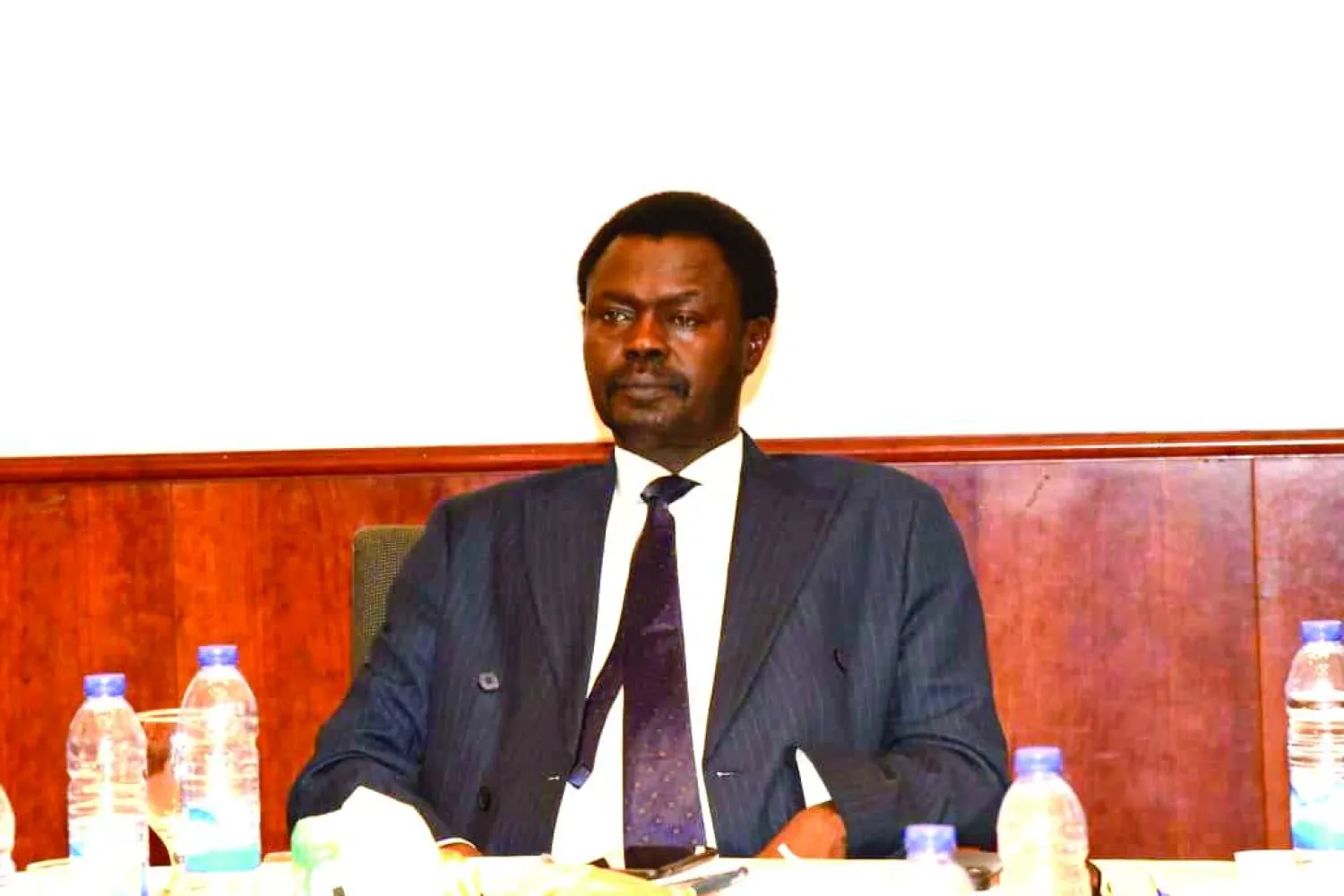

From the heart of Sudan’s war and its tangled complexities, Minni Minnawi, head of the Sudan Liberation Movement and governor of Darfur, justified his forces’ participation in the conflict alongside the Sudanese army as “a necessity imposed by the nature of the targeting of the Sudanese people, their history and their land.”
He said the Rapid Support Forces had committed the country’s gravest crimes, stressing that Sudan is collapsing under the weight of war.
As the humanitarian tragedy worsens and displacement and destruction spread, Minnawi acknowledged that speaking of “achievements” amid such devastation seemed far removed from reality. He said the war had drained everything, from lives to resources.
Minnawi told Asharq Al-Awsat that the parties that joined the fighting had done so “under compulsion,” explaining that the targeting was not limited to those taking part in the war, but also extended to civilians and the foundations of life across Sudan.
He criticized the slow implementation of the Juba Peace Agreement for Sudan, expressing regret over what he described as a “major weakness” in its implementation.
He said no more than 20% of the agreement had been implemented in practice.
The agreement was signed in October 2020 between the Sudanese government and several armed movements, most notably the Justice and Equality Movement led by Jibril Ibrahim, the Sudan Liberation Movement led by Minnawi, and the Sudan People’s Liberation Movement - North, led by Malik Agar, under what was known as the Revolutionary Front Alliance.
It aimed to achieve peace and redistribute power and wealth.
In February 2023, the parties signed an updated addendum to complete outstanding provisions. But the outbreak of war on April 15 froze most of the agreement and split the signatory movements between the two sides of the conflict, leaving its future dependent on ending the war.
Regarding the security and humanitarian situation in Darfur, Minnawi said the region could not be separated from the broader Sudanese context, noting that the scale of deterioration in security varied from one area to another.
He accused the Rapid Support Forces of committing the “largest and gravest” crimes in Darfur, attributing this to what he described as the forces’ tribal foundations.
On the humanitarian front, Minnawi described conditions in displacement camps as “catastrophic,” particularly in Darfur.
He said basic services had almost completely collapsed, including education, health care, and public services, while citizens had been subjected to widespread looting and impoverishment.
Estimates indicate tens of thousands of people have been killed and more than 10 million displaced inside and outside Sudan.


