


Saudi Arabia Leads Efforts to Stabilize Global Energy Supplies amid Warnings of Prolonged Conflict

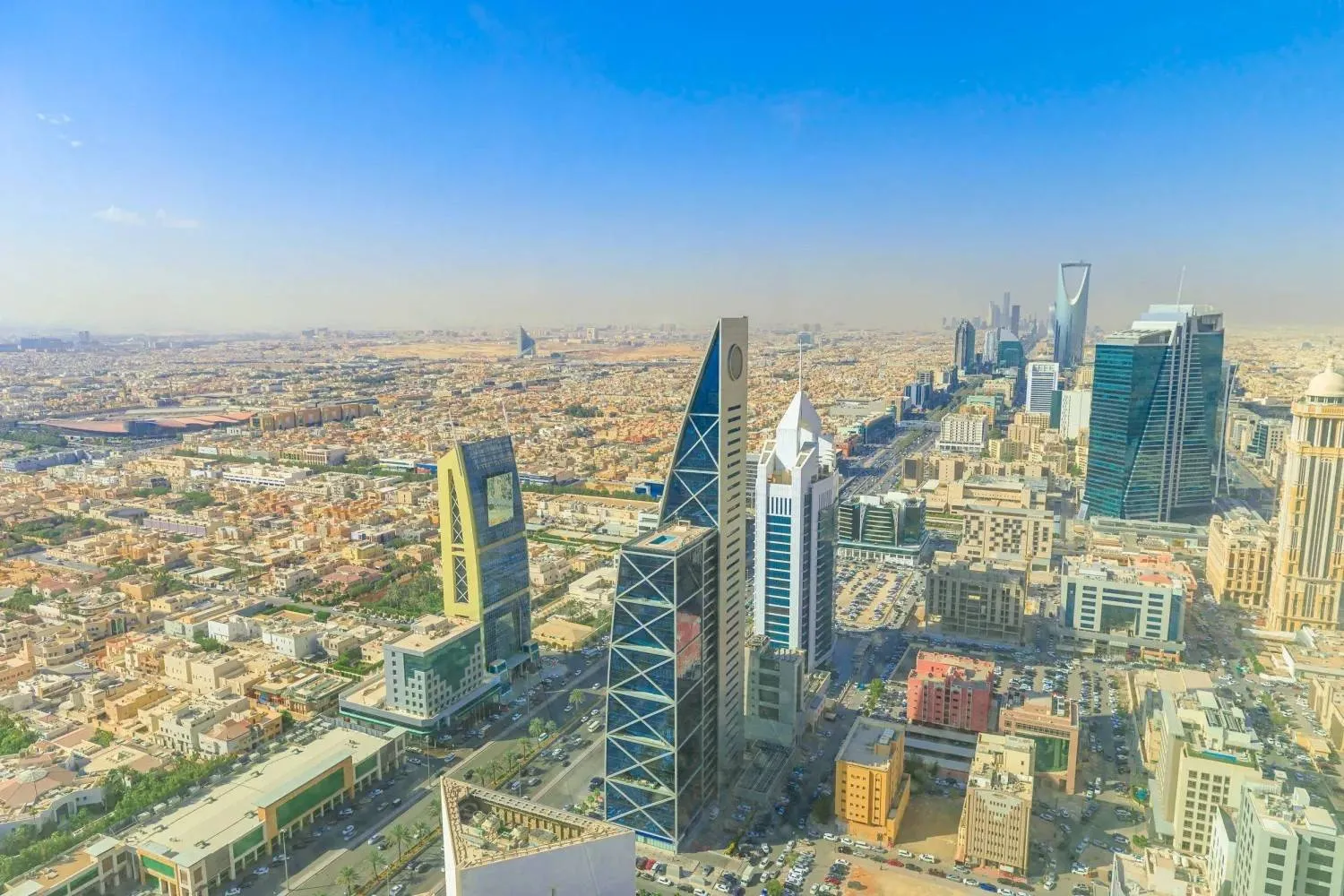
The Saudi capital, Riyadh (SPA)
TT

Saudi Arabia Leads Efforts to Stabilize Global Energy Supplies amid Warnings of Prolonged Conflict

The Saudi capital, Riyadh (SPA)

Saudi Arabia is spearheading international efforts to stabilize global oil markets and contain the fallout from a supply crisis triggered by the Iran war and the halt to navigation through the Strait of Hormuz.

Using strategic logistics infrastructure, Riyadh has secured energy flows to consumers and helped prevent prices from soaring, as academic and industry warnings mount that the conflict’s structural impact on oil facilities and refineries could last for years, even if the war ends militarily and the strait reopens.

Dr. Ibrahim Al-Mohanna, adviser to the Saudi energy minister, told Asharq Al-Awsat that the Kingdom’s role was “very important” and had spared the global oil market a serious crisis.

He said the East to West pipeline transported about 7 million barrels of oil to the Red Sea, bypassing the Strait of Hormuz, and supplied international markets with crude and refined products, helping prevent prices from rising “insanely,” as he put it.

Al-Mohanna made the remarks after a seminar hosted by King Saud University titled "Media Narratives: The US-Israeli-Iranian War."

He said that when the Iran war began on Feb. 28, “the pace of events was very fast, and oil prices were highly volatile, even within a single day, amid blurred information and unclear facts.”

That, he said, led to “weak and scattered media coverage of oil issues and a lack of wise oil analysis,” which deepened price volatility. “There was even a major and unprecedented disconnect between the futures market and the spot market, with the gap sometimes reaching $50 a barrel,” he added.

Al-Mohanna said the Gulf states, particularly Saudi Arabia, the UAE, Kuwait and Qatar, along with Iran and Iraq, form the world’s most important oil region, not only because they produce about 20% of global oil needs, but also because of their refining capacity and production and export of liquefied gas, which is vital to many industries.

“The world lost about 13 million barrels per day because of the war, a very large amount by all standards,” he said.

“It represents the biggest crisis facing the global oil market.” He added that the conflict had major economic repercussions, while the closure of the Strait of Hormuz further complicated the situation and triggered another price spike.

Asked how long the war’s impact on the market could last, Al-Mohanna said the answer depended directly on the duration of the conflict, the closure of the Strait of Hormuz, and the shutdown of fields and production in countries where wells and facilities suffered severe damage.

He said uncertainty remained over when the war would end and when flows of crude and petroleum products would return to normal. Questions also persisted, he said, over the scale of structural damage to fields and facilities, which could take a very long time to rehabilitate.

Al-Mohanna warned that the war’s impact on the energy sector would last for years, not months, even if the conflict ends militarily and politically and the Strait of Hormuz reopens.

He said production, and export disruptions that have built up since the start of the war would take time to correct. The longer the strait remains closed, he added, the harder and more complex it becomes to restore production to previous levels.

He stressed that the Kingdom, the Gulf states, and OPEC more broadly are working continuously to limit these negative effects and protect global consumers by focusing on two main pillars: balancing supply and demand and stabilizing prices.

Al-Mohanna also underlined the strong, consistent link between oil prices and the media, especially in major producing and consuming regions. During economic, political and military crises, he said, media outlets move beyond reporting news to become a real gauge for markets and investors and a force shaping the direction of global prices.

Dr. Abdulaziz bin Salamah, a former Saudi deputy minister of information, described the American and Israeli war on Iran as “unprecedented in several respects,” saying it was “the first war waged by Israel and America together without prior consultation with NATO allies.”

Speaking at the seminar, Bin Salamah said European media coverage rested on two main concerns: military security and the economy.

He pointed to “a growing sense of disappointment and shaken confidence among Europeans toward the United States during President Donald Trump’s term,” as well as European fears that Iranian ballistic missiles could reach deep into the continent.

Dr.Ibrahim Al-Beayeyz, former head of the university’s media department, said US media initially relied on “the official government narrative,” presenting the war as “a preemptive act to curb Iran’s nuclear ambitions.”

But over time, he said, “signs of breaking away from the official narrative began to appear, along with rising voices opposing the war.”

Dr. Mutlaq Al-Mutairi, a professor of media at the university, said: “What Israel is doing cannot be understood only within its traditional military framework, but within its broader framework linked to managing perception and producing meaning in contemporary conflicts.”

He said the Israeli narrative operates on three main levels: redefining the threat, legitimizing military action through a preventive logic, and cementing Israel’s status as a key security ally of the West.

The public, he said, was facing “a model of how media and narratives are employed in contemporary conflict, where politics overlaps with security, and media with perception, in shaping the balance of power.”

Meshel Alweil, a faculty member in the department, said Tehran relied on two different narratives in its media approach.

The first was directed at the Iranian domestic audience and focused on mobilizing local public opinion, while the second targeted external media through political and media messages aimed at international and Arab audiences.



Exxon Mobil to Supply South Africa's First Planned LNG Terminal

AUSTIN, TEXAS - JUNE 16: Gas prices are displayed at an Exxon Mobil gas station on June 16, 2026 in Austin, Texas. Brandon Bell/Getty Images/AFP
TT

Exxon Mobil to Supply South Africa's First Planned LNG Terminal

AUSTIN, TEXAS - JUNE 16: Gas prices are displayed at an Exxon Mobil gas station on June 16, 2026 in Austin, Texas. Brandon Bell/Getty Images/AFP

Exxon Mobil has signed a preliminary deal to supply liquefied natural gas to Zululand Energy Terminal, which will be South Africa's first LNG import facility once built, the companies said on Wednesday.

The planned terminal is part of South Africa's pivot away from coal-fired power generation, which accounts for the bulk of its electricity supply.

Reuters reported in March that the Zululand Energy Terminal (ZET) hoped to strike a deal with Exxon Mobil on LNG supply.

Exxon Mobil's ⁠participation helps reinforce ⁠the importance of Richards Bay port, where ZET is being built on South Africa's east coast, as an entry point for LNG and supports plans to unlock a "competitive and sustainable gas market", said Oliver Naidu, ZET director.

Exxon Mobil has identified South Africa ⁠as a priority market and wants to grow its LNG supply to more than 40 million metric tons per annum (mtpa) by 2030.

"This agreement reflects Exxon Mobil's global LNG experience and our commitment to support South Africa's energy security with reliable supply," said Andrew Barry, chairman of ExxonMobil LNG Market Development Inc.

Earlier this month, South African state power utility Eskom signed a long-term LNG agreement with ZET that will support a planned ⁠3,000 ⁠megawatt gas-to-power plant project.

Phase 1 of the terminal includes a floating storage unit and an onshore regasification system with capacity of around 3 mtpa, or 400 million standard cubic feet of gas a day.

Phase 2, which will bring the project's total expected cost to $1 billion, will introduce extra regasification capacity and storage onshore, boosting total volumes to 4.5 mtpa, or about 600 million standard cubic feet a day, Naidu said.


IEA Sees Gradual Hormuz Recovery Tipping Into Significant 2027 Surplus

Vessels at the Strait of Hormuz, as seen from Musandam, Oman, June 16, 2026. REUTERS/Stringer
TT

IEA Sees Gradual Hormuz Recovery Tipping Into Significant 2027 Surplus

Vessels at the Strait of Hormuz, as seen from Musandam, Oman, June 16, 2026. REUTERS/Stringer

The world oil market will recover gradually from the closure of the Strait of Hormuz before tipping into a significant surplus in 2027, the International Energy Agency said in its monthly oil market report on Wednesday.

The US and Iran reached an agreement to end the three-month-old war, which includes Iran reopening the Strait of Hormuz ⁠and the US lifting ⁠its naval blockade, potentially bringing an end to the largest oil supply disruption in history which shut in over 14 million barrels per day of Middle East oil output, according ⁠to the IEA.

"If the deal holds, exports and production from the Gulf should see a gradual recovery – not least because Iranian oil exports can fully resume once the US blockade is lifted," the agency, which advises industrialized countries, said.

The oil market will then enter a significant supply overhang next year, the IEA said ⁠in ⁠its first look at 2027, with global oil supply set to surge by 8 million bpd and demand rising by just 2 million bpd.

"This may provide a welcome respite to the market and an opportunity to replenish depleted inventories, or to build new strategic reserves, as countries review their energy strategies and policies in response to the crisis."


US Fed Set to Hold Rates Steady at Warsh’s First Meeting in Charge

Federal Reserve Chair Kevin Warsh delivers a speech on the day of his swearing-in ceremony, in the East Room of the White House in Washington, DC, US, May 22, 2026. (Reuters)
TT

US Fed Set to Hold Rates Steady at Warsh’s First Meeting in Charge

Federal Reserve Chair Kevin Warsh delivers a speech on the day of his swearing-in ceremony, in the East Room of the White House in Washington, DC, US, May 22, 2026. (Reuters)

The US Federal Reserve is expected to hold interest rates steady on Wednesday at Kevin Warsh's first meeting in charge of the central bank, with rate hikes potentially on the horizon to combat surging inflation.

Warsh has presided over the two-day meeting of the Fed's open market committee (FOMC) this week, with a decision to be announced at 2:00 pm local time (1800 GMT) on Wednesday.

US inflation came in at a three-year high in April. It has been fueled this year by President Donald Trump's war on Iran, which saw energy prices skyrocket, with knock-on effects on a range of sectors.

With the labor market firming, Fed policymakers flagged an increased concern about inflation, and rate hikes are potentially in the pipeline to tame raging prices.

Such a move would be sure to anger Trump, who has launched an unprecedented campaign of intimidation to pressure the Fed to lower interest rates.

Warsh has backed interest rate cuts in the recent past, despite inflation remaining well above the Fed's long-term two-percent target -- it was 3.8 percent in April, according to the central bank's preferred gauge.

On Wednesday, however, analysts expect Warsh to join other policymakers in allowing the energy price shock to wash over the world's largest economy before making a move.

"I think he's going to be in the wait-and-see camp," said Dan North of Allianz Trade. "It's pretty hard to justify a cut when you've got inflation in the pipeline already."

- 'Fractured' -

While Wednesday's decision is all but certain to hold interest rates at a range between 3.50 and 3.75 percent, all eyes will be on the language the Fed uses in its statement.

At least four of 12 voting members of the committee have backed a change in wording to indicate that the next rate move could just as likely be a hike as a cut.

Warsh himself has called for removing the Fed's forward guidance messaging altogether, arguing that it locks policymakers into a position rather than allowing them to react to changing situations.

Still, change at the central bank tends to be gradual, and analysts do not expect Warsh to take a big swing at his first meeting in charge.

"It may be a more fractured environment, certainly," Greg Daco, chief economist at EY-Parthenon, told AFP.

"In this first instance, he may be going to suggest some changes to communication, and we may be in the early steps of a move towards more discretionary decisions when it comes to monetary policy."

Wednesday's announcement will also see the release of the Fed's quarterly summary of economic projections, which includes policymakers' expectations on inflation, growth and the interest-rate path.

As part of his "reform-oriented" agenda, Warsh has called for the Fed to drop its "dot-plot," an anonymized projection of where Fed leaders expect rates to go.

On Wednesday, the new Fed chair is expected to withhold his own "dot," but analysts say he is unlikely to drop the entire exercise immediately.

- 'Not helping his case' -

Pao-Lin Tien, an economics professor at George Washington University, told AFP that moving towards more opaque monetary policymaking could mean inflation expectations are less anchored.

"I think our fear would be that without the forward guidance, inflation expectations might become a little bit more volatile," she said.

As for Trump, any move short of a rate cut is likely to anger the Republican, who wants to see the Fed lower borrowing costs to increase economic activity -- despite the already high inflation.

"President Trump is not helping his own case by making these demands so openly, it makes it harder for anyone he appoints to actually do that," said Tien.

"He does the opposite of what he needs to do in order to make sure the rates go lower," she added, referring to the war on Iran.