


SpaceX Reveals Plans for What Could be Biggest-ever Initial Public Offering

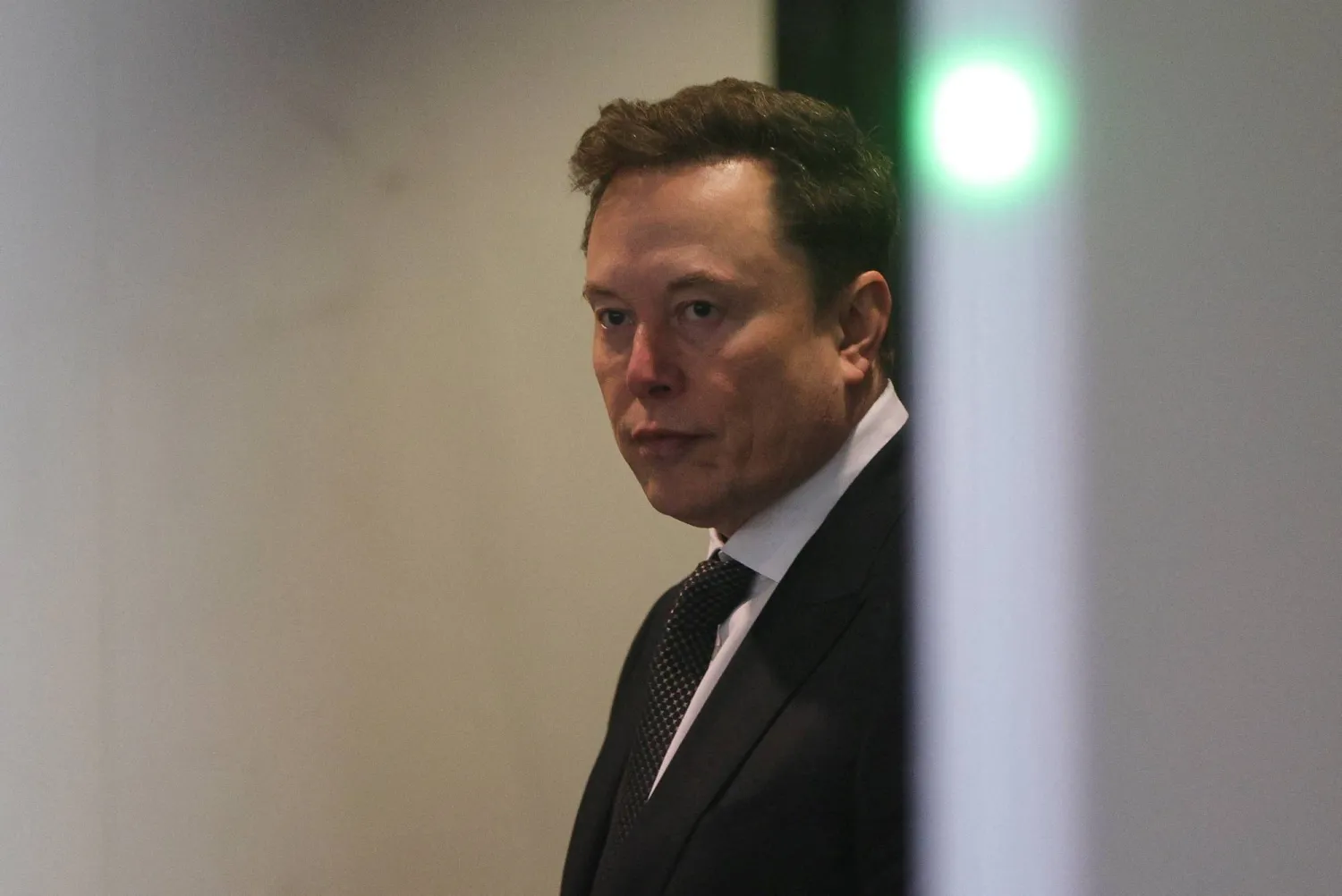
FILE PHOTO: Elon Musk walks to attend the trial in his lawsuit over OpenAI for-profit conversion at a federal courthouse, in Oakland, California, US, April 29, 2026. REUTERS/Manuel Orbegozo/File Photo
TT

SpaceX Reveals Plans for What Could be Biggest-ever Initial Public Offering

FILE PHOTO: Elon Musk walks to attend the trial in his lawsuit over OpenAI for-profit conversion at a federal courthouse, in Oakland, California, US, April 29, 2026. REUTERS/Manuel Orbegozo/File Photo

Elon Musk announced plans Wednesday for one of the biggest stock sales ever by taking public a space company that is currently losing billions of dollars a year.

A filing shows that his SpaceX lost $2.6 billion from operations last year on $18.7 billion in revenue, and the losses kept piling up at the start of this year, too.

The prospectus did not put a dollar figure on the amount Musk hopes to raise, but various reports have put it at $75 billion or so.

SpaceX, formally known as Space Exploration Technologies Corp., has said the money will help finance projects to put people on the moon and Mars in its quest to make humans an intergalactic species as they face existential threats that could wipe out civilization.

“We do not want humans to have the same fate as dinosaurs,” the filing states.

The prospectus reads in part like a Hollywood fantasy version of the future, detailing in one section how part of Musk’s compensation will be granted only if he maintains “a permanent human colony on Mars with at least one million inhabitants.”

Short of that, the stock sale alone could make Musk, a major owner who founded SpaceX in 2002, the world’s first trillionaire. Forbes currently puts his net worth at $839 billion.

In addition to making reusable rockets to hurl astronauts into orbit, SpaceX has other businesses, some successful, some struggling — and with plenty of questions marks.

The document shows that Starlink, the world’s largest satellite communications company, is a big source of cash for the company, generating $4.4 billion in operating income last year. The business uses 10,000 satellites in low orbit to provide internet service to 10 million people in 150 countries and territories.

Among the struggling businesses are two Musk units that were recently acquired by SpaceX — his social media platform X, formerly Twitter, and his artificial intelligence business, xAI.

Those purchases were blasted by some SpaceX investors as bailouts because they are big money losers.

The prospectus said its AI business lost $6.4 billion in operations last year.

The original SpaceX business, making rockets and staging launches, has been helped by massive government contracts, which raises questions that could come back to haunt the company. Given Musk’s close relation to the Trump administration, government ethics lawyers and watchdogs have asked if he has gotten special treatment to win taxpayer money and whether that good luck will run out once President Donald Trump is out office.

SpaceX has won contracts worth $6 billion from NASA and the Defense Department and other government agencies in the past five years, according to USAspending.gov. The company noted in its filing that a fifth of its revenue last year was from the federal government, The Associated Press reported.

Musk was the biggest donor to Trump’s presidential campaign and is still a big backer despite their sometimes rocky relationship after his stewardship of the government cost-cutting effort called DOGE early last year.

Like many corporate CEOs, Musk’s compensation will go far beyond his annual salary, which was $54,080 in 2025 and has remained unchanged since 2019, according to the filing.

The prospectus says stock grants for him would be sliced into 15 nearly equal amounts — 67 million shares each — and would vest only as the company achieves preset market cap goals. In addition to the Martian colony, SpaceX’s stock market value would have to reach $7.5 trillion for him to receive the full award.

He would get even more stock awards if SpaceX manages to get giant data centers the size of football fields in space.

The document shows Musk will be able to exert big control over the business.

It says he and certain other shareholders will receive shares in a special class of stock that gives them 10 votes for each share they hold. Those shareholders will be able, among other things, to elect a majority of the company’s board of directors.

“This will limit or preclude your ability to influence corporate matters and the election of our directors,” SpaceX said in a warning to prospective investors.

SpaceX will be able to pitch the offering to investors — in what’s known in Wall Street parlance as a “road show” — 15 days after making its prospectus public. In this case, that works out to June 4.



'Handful' of G20 Countries Reject US Stance on Excess Industrial Capacity

US Trade Representative Jamison Greer speaks on the second day of the G20 Trade Ministerial Meeting in Milwaukee, Wisconsin - October 1 (AFP)
TT

'Handful' of G20 Countries Reject US Stance on Excess Industrial Capacity

US Trade Representative Jamison Greer speaks on the second day of the G20 Trade Ministerial Meeting in Milwaukee, Wisconsin - October 1 (AFP)

A "handful" of Group of 20 trade ministers rejected US calls to curb excess industrial capacity and "non-market" policies, the US Trade Representative's office said on Friday, exposing divisions within the group of major economies.

The US, this year's G20 chair, issued the statement a day after a trade meeting in Milwaukee that revealed that only two countries — Mexico and Argentina — signed on to a US-led statement calling for more work and cooperation to eliminate goods produced with forced labor from supply chains, Reuters reported.

The rejection from the vast majority of G20 countries follows the Trump administration's imposition of ‌tariffs of 10% or ‌12.5% on goods from 59 countries and the European Union over allegations ‌that ⁠they fail to ⁠adequately enforce bans on forced labor.

USTR also is conducting a second "Section 301" tariff investigation into 16 trading partners that show signs of excess industrial capacity. The probe is widely expected to lead to new duties in coming months.

The USTR statement did not name countries that objected to the excess-capacity statement. But China had objected to a similar G20 statement denouncing forced labor and non-market economic policies that lead to excessive exports at a finance leaders' meeting a month ago in North Carolina.

"The draft ministerial statement was supported by all but a handful ⁠of members, a few of whom firmly rejected creating this pathway toward cooperative ‌action" on excess capacity, the statement said, adding that this "severely ‌disappointed" the US G20 presidency.

China's excess industrial capacity and industrial subsidies have been key themes of the US-led G20 ministerial ‌meetings so far this year. Beijing has rejected claims that its industrial policies have created excess capacity, ‌accusing Western countries of using the issue to justify protectionist measures.

The US said that G20 trade ministers reached consensus on denouncing the weaponization of food trade, with members agreeing that trade in food or agricultural inputs should not be used as a tool for economic or political coercion.

In that G20 joint statement, the ministers defined the weaponization of ‌food as measures to "slow, stop, block or direct the flow of food and agricultural inputs" to exert coercive pressure to extract unrelated geopolitical concessions.

"We ⁠condemn food weaponization, as ⁠it poses a significant humanitarian and economic threat," the G20 trade ministers said.

After pressure from US President Donald Trump that included the threat of a US diesel export ban, Group of Seven countries on Friday agreed to release some 100 million barrels of diesel reserves to try to drive down record-high US diesel prices. The fuel is widely used in agricultural production.

TARIFF STRUCTURE DISCUSSIONS

US Trade Representative Jamieson Greer said on Thursday that he did not seek a joint statement on a fourth discussion topic, reforming the "most favored nation" system of published, unconditional global tariff rates that underpin the World Trade Organization. MFN tariffs have defined the global trading system since the end of World War Two.

Greer has argued that the MFN principle has been abused by non-market-oriented economies such as China that have subsidized industries, but it does not allow these countries to be treated differently.

The US statement said some G20 members had expressed a willingness to consider changes to MFN, including expanding exceptions to the principle and issuing new legal interpretations to enable greater use of existing exceptions.


DOJ Will Not Reopen Criminal Probe into Fed's Powell

(FILES) US Federal Reserve Chair Jerome Powell speaks during a press conference following the Federal Open Market Committee meeting at the Federal Reserve Board Building in Washington, DC, on March 18, 2026. (Photo by Brendan SMIALOWSKI / AFP)
TT

DOJ Will Not Reopen Criminal Probe into Fed's Powell

(FILES) US Federal Reserve Chair Jerome Powell speaks during a press conference following the Federal Open Market Committee meeting at the Federal Reserve Board Building in Washington, DC, on March 18, 2026. (Photo by Brendan SMIALOWSKI / AFP)

The US Justice Department is not reopening a criminal probe into former Federal Reserve Chair Jerome Powell for cost overruns related to the central bank's building renovation project, a DOJ spokesperson said on Friday.

Attorney General Todd Blanche, in comments to Bloomberg News, which first reported the development, said he ‌has not ruled out ‌continuing to look into ‌the ⁠project's oversight and potentially ⁠take action if evidence of wrongdoing came to light.

The Fed's Inspector General on Wednesday said it found no grounds for a criminal referral or evidence of administrative misconduct tied to the project cost overruns, ⁠but its conclusion there was lax ‌oversight drew a ‌fresh call from President Donald Trump for Powell's ‌resignation. Powell has remained at the ‌Fed as a governor since stepping down as chair in May.

His successor Fed Chairman Kevin Warsh said on Thursday he would hire an independent ‌auditor to "verify accuracy and compliance" for all of the project's costs.

Blanche told ⁠Bloomberg ⁠News that if this new review finds any evidence of criminal wrongdoing, the Justice Department could investigate.

At his final press conference as Fed chief in April, Powell said he would not leave the Board "until this investigation is well and truly over, with transparency and finality."

A Fed spokesperson had no immediate comment on Blanche's statements.


Copper Crawls Higher on Softer Dollar and Supply Issues

FILE PHOTO: A coil of copper rod sits on the production line for copper flat wire at the Wellascent factory in Ganzhou, Jiangxi province, China, August 14, 2025. REUTERS/Florence Lo/File Photo
TT

Copper Crawls Higher on Softer Dollar and Supply Issues

FILE PHOTO: A coil of copper rod sits on the production line for copper flat wire at the Wellascent factory in Ganzhou, Jiangxi province, China, August 14, 2025. REUTERS/Florence Lo/File Photo

Copper prices edged higher on Friday, supported by a weaker dollar and supply issues, but gains were modest due to worries about high oil prices hitting demand.

Benchmark three-month copper on the London Metal Exchange rose 0.5% to $14,319 a metric ton in official open-outcry trading. That marked a decline of 2% since the end of last week.

"Metals have seen light turnover again so far this session with copper finding some support with a slightly softer dollar, but the broader tone remains cautious," Neil Welsh, head of metals at broker Britannia Global Markets, said in a note.

"High energy costs stemming from the ⁠ongoing US-Iran conflict and ⁠signs of industrial weakness in China have weighed on sentiment across the complex."

The dollar index hit its strongest in 17 months this week, but weakened on Friday, making commodities priced in the US currency cheaper for buyers using other currencies.

LME copper has gained 16% over the past six months, largely due to a large shift in ⁠inventories to the US attracted by the prospect of tariffs there, creating shortages elsewhere.

Stocks in warehouses monitored by the Shanghai Futures Exchange <CU-STX-SGH> have slumped by 79% over the past four months to 38,744 tons, their lowest since January 2024.

The SHFE was closed for China's National Day and will reopen on October 8.

The prospect of less output in the world's largest copper producer Chile has also underpinned the market, with data on Wednesday showing production fell 12.8% year-on-year in August.

Supervisors at Chile's Escondida copper mine, the world's largest, rejected a collective ⁠contract offer, ⁠paving the way for a potential strike and adding to supply fears.

"This adds to an overall slump in output, as the industry struggles to maintain aging infrastructure amid difficult operating conditions," Reuters quoted Daniel Hynes, senior commodity strategist at ANZ, as saying in a note.

Among other metals, LME aluminium dipped 0.1% in official activity to $3,121.50 a ton and nickel also shed 0.1% to $15,620.

Zinc rose 0.2% to $3,732.50, lead ticked 0.3% higher to $1,863 and tin was little changed at $54,350.