Moody's Affirms its Credit Rating of Saudi Arabia at 'Aa3' with Stable Outlookhttps://english.aawsat.com/business/5276315-moodys-affirms-its-credit-rating-saudi-arabia-aa3-stable-outlook
Moody's Affirms its Credit Rating of Saudi Arabia at 'Aa3' with Stable Outlook
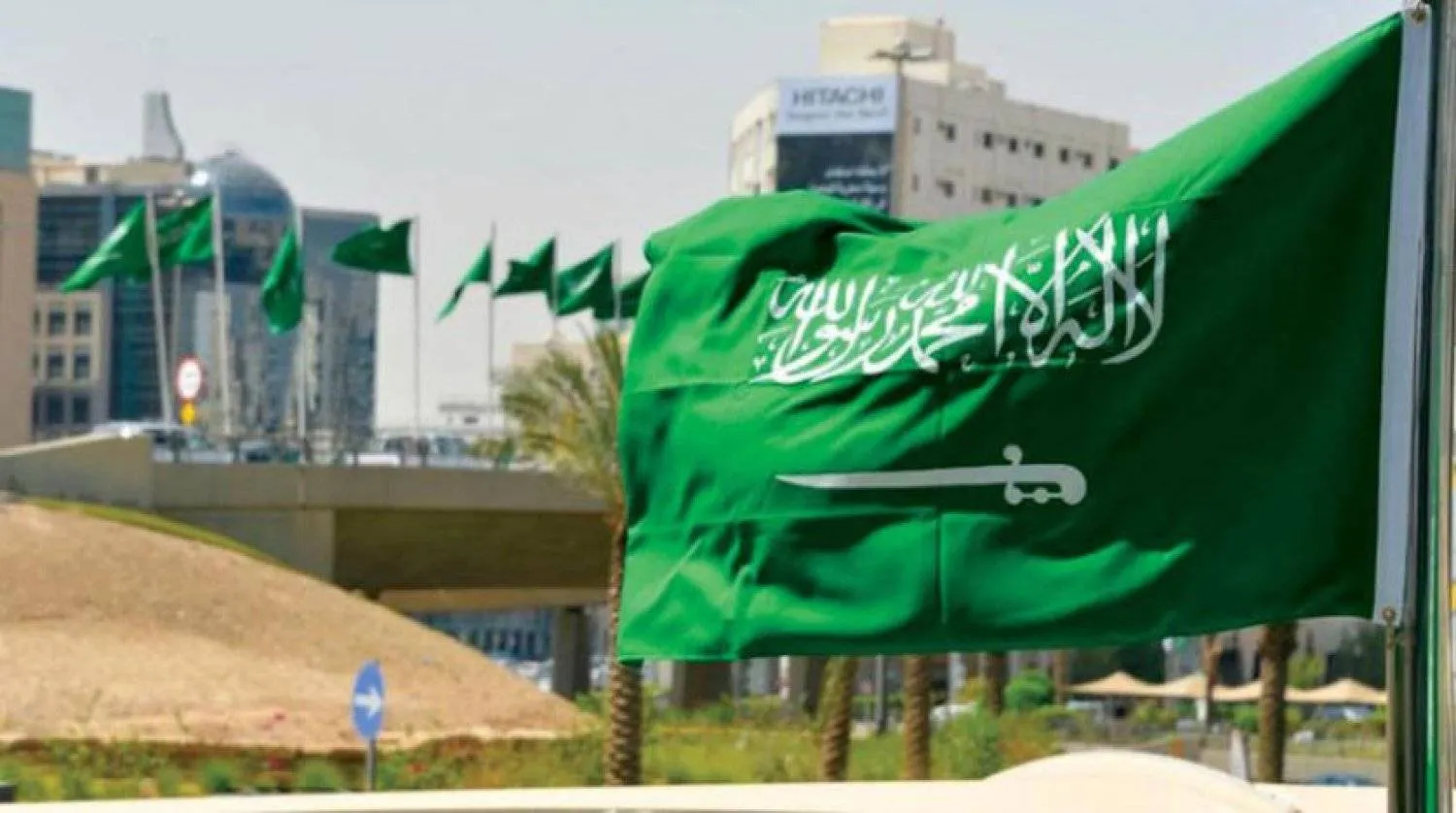
The Saudi flag. Asharq Al-Awsat
The credit rating agency Moody’s has affirmed Saudi Arabia’s credit rating at “Aa3” with a “stable” outlook.
The agency said Friday that the affirmation at Aa3 reflects Saudi Arabia’s large and wealthy economy, supported by its vast hydrocarbon endowment, and highly competitive position in global energy markets, alongside improving institutional and policy effectiveness.
Progress under Vision 2030 has underpinned solid non-hydrocarbon growth, supported by sustained public investment, structural reforms, and gradually improving fiscal and economic transparency.
Moody’s noted that Saudi Arabia’s stable outlook reflects the Kingdom’s resilience against regional geopolitical risks and potential trade disruptions, supported by strong and continued oil exports flexibility through the East-West pipeline and Red Sea terminals.
The agency also expects that the Kingdom’s progress on economic diversification is likely to continue and the momentum will be sustained over the coming years. It is supported by significant progress to date in implementing a broad-based reform agenda, including judicial, business and social reforms that have accelerated the development of the services sector and the broader non-oil economy.
Moody's expects non-hydrocarbon private sector GDP growth to return to around 4-5% after the Middle East conflict subsides, among the strongest rates in the Gulf Cooperation Council (GCC), reflecting ongoing structural reforms, sustained public investment and improving private sector participation.
Diversified Oil Export Routes Pave the Way for a Strong Saudi Economic Recovery in 2027https://english.aawsat.com/business/5329374-diversified-oil-export-routes-pave-way-strong-saudi-economic-recovery-2027
Diversified Oil Export Routes Pave the Way for a Strong Saudi Economic Recovery in 2027
Cars drive past city skyscrapers in Riyadh on October 11, 2026. (Photo by Fayez Nureldine / AFP)
As war reshapes the map of energy flows across the region, the International Monetary Fund is projecting a strong recovery for the Saudi economy in 2027, with growth expected to reach 7.9 percent, driven by a rebound in production and exports as shipping disruptions ease.
Compared with Gulf economies that are more exposed to disruptions in transit through the Strait of Hormuz, this forecast is underpinned by the diversification of Saudi Arabia’s oil export routes, which helps cushion the impact of the shock.
The projection comes as the IMF revised its forecast for the Saudi economy in 2026, estimating a smaller contraction than in its previous projections. This means the trajectory of the recovery will depend on how long the disruptions last and how quickly energy and trade flows return to normal.
The IMF’s forecasts reflect both the scale of the shock facing regional economies and the recovery expected as those pressures subside. In its World Economic Outlook, titled Resilience Under Strain: Urgent Choices, the Fund expects the economies of the Middle East and Central Asia to contract by 0.3 percent in 2026, followed by growth of 6.3 percent in 2027.
Compared with its April estimates, the IMF lowered its 2026 forecast by 2.2 percentage points while raising its 2027 projection by 1.7 percentage points. The revision reflects an assumption that the Strait of Hormuz will remain closed for longer than previously expected, increasing pressure on regional economies this year but also making the anticipated rebound stronger once it reopens and production, exports, and transportation recover.
Under this scenario, the Fund expects Kuwait’s gross domestic product to contract by 16.7 percent in 2026, Iraq’s by 16 percent, Qatar’s by 15.6 percent, and Bahrain’s by 11.3 percent. In 2027, all four economies are expected to rebound strongly, with Iraq growing by 19 percent, Qatar by 18.8 percent, Kuwait by 17.1 percent, and Bahrain by 13.9 percent as production, exports, and logistics return to normal.
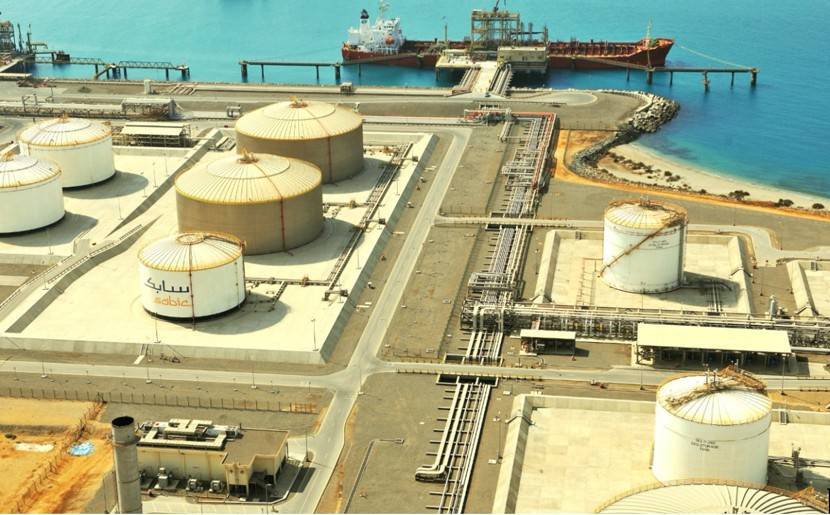
File photo of storage facilities and docks at King Fahd Industrial Port in Yanbu (SPA)
Saudi Arabia Forecasts
By contrast, the IMF expects the impact of the disruptions on Saudi Arabia to be relatively less severe. It lowered its estimate for the Saudi economy’s contraction in 2026 to 3.3 percent, compared with 5 percent in its July forecast and 6.4 percent in April.
At the same time, it raised its forecast for Saudi economic growth in 2027 to 7.9 percent, up from 2.4 percent in its July update and 3.4 percent in April. The Ministry of Finance, meanwhile, expects stronger growth of 12.8 percent, according to its pre-budget statement.
The estimates reflect optimism about the recovery expected next year, although they differ over its magnitude, amid hopes that production, exports, and trade will regain momentum as shipping disruptions subside.
This outlook is broadly aligned with World Bank projections. In its October report on the economic outlook for the Middle East, North Africa, Afghanistan, and Pakistan, the bank projected a strong rebound in regional growth in 2027. It expects the region’s economies, excluding Iran, to grow by 7.8 percent if the conflict subsides by the end of 2026.
The World Bank attributed the recovery primarily to the restoration of hydrocarbon production and exports as trade routes reopen and energy flows gradually normalize. In Saudi Arabia, it noted that the East-West Pipeline enabled exports to be rerouted to the Red Sea port of Yanbu, helping the Kingdom limit the impact of disruptions to shipping through the Strait of Hormuz.
The IMF’s forecast contraction for the Saudi economy this year is smaller than the Ministry of Finance’s estimate, which projects a 3.6 percent decline in real GDP in 2026.
The projected recovery is also consistent with the IMF’s assessment during its July Article IV consultations with Saudi Arabia, which highlighted the economy’s resilience in the face of disruptions to oil and trade flows, supported by the diversification of energy and logistics infrastructure and the ability to reroute shipments.
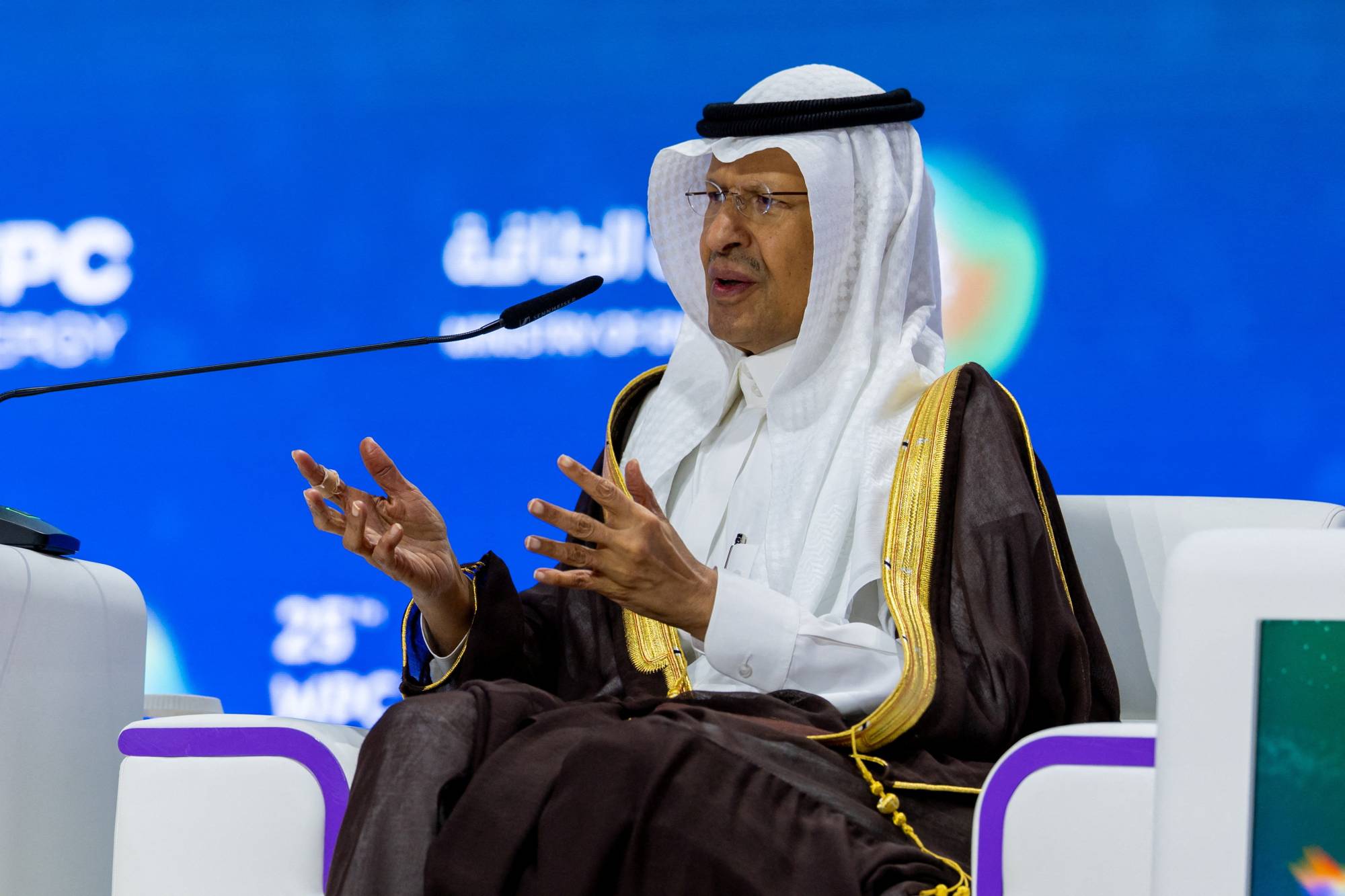
Saudi Minister of Energy Prince Abdulaziz bin Salman Al Saud speaks at the 25th WPC Energy Congress in Riyadh, Saudi Arabia, October 12, 2026. 25TH WPC ENERGY CONGRESS/Handout via REUTERS
Oil Export Routes
Against this backdrop, the Kingdom is benefiting from multiple oil export routes and is working to strengthen its ability to deliver supplies to global markets through the Red Sea.
Energy Minister Prince Abdulaziz bin Salman announced plans to raise Saudi Arabia’s oil export capacity to about 10 million barrels per day within two to three years by upgrading the East-West Pipeline and strengthening associated infrastructure.
He said a pipeline designated for transporting gas could temporarily be converted to carry oil, adding around 1.2 million barrels per day of capacity within seven to eight weeks, before being returned to its original use to meet summer demand.
These measures strengthen the Kingdom’s ability to diversify its export outlets, while the IMF’s 2027 projections are based on the assumption that production, exports, and trade will return to normal as shipping disruptions ease.
In this context, data from Kpler showed that Saudi crude oil exports rose to 6.67 million barrels per day in September, their highest level in seven months, returning to prewar levels. This reflects renewed momentum in the Kingdom’s oil flows, with exports through the Strait of Hormuz increasing since September alongside continued use of diversified export routes.
Alongside the anticipated recovery, Moody’s Ratings had forecast that expenditure restraint and a reprioritization of government investment would support fiscal recovery in 2027 and help the Kingdom preserve fiscal space to continue pursuing economic diversification projects.
The agency said prolonged trade disruptions and additional spending had limited the fiscal improvement it had previously expected. It also noted that disruptions to strategic maritime shipping routes could persist until mid-2027, potentially affecting oil production.
Regarding key economic indicators, the IMF expects inflation in Saudi Arabia to reach 1.9 percent in 2026 before rising to 2.2 percent in 2027. It also projects the current account deficit at 3.5 percent of GDP this year, narrowing to 1.3 percent next year.
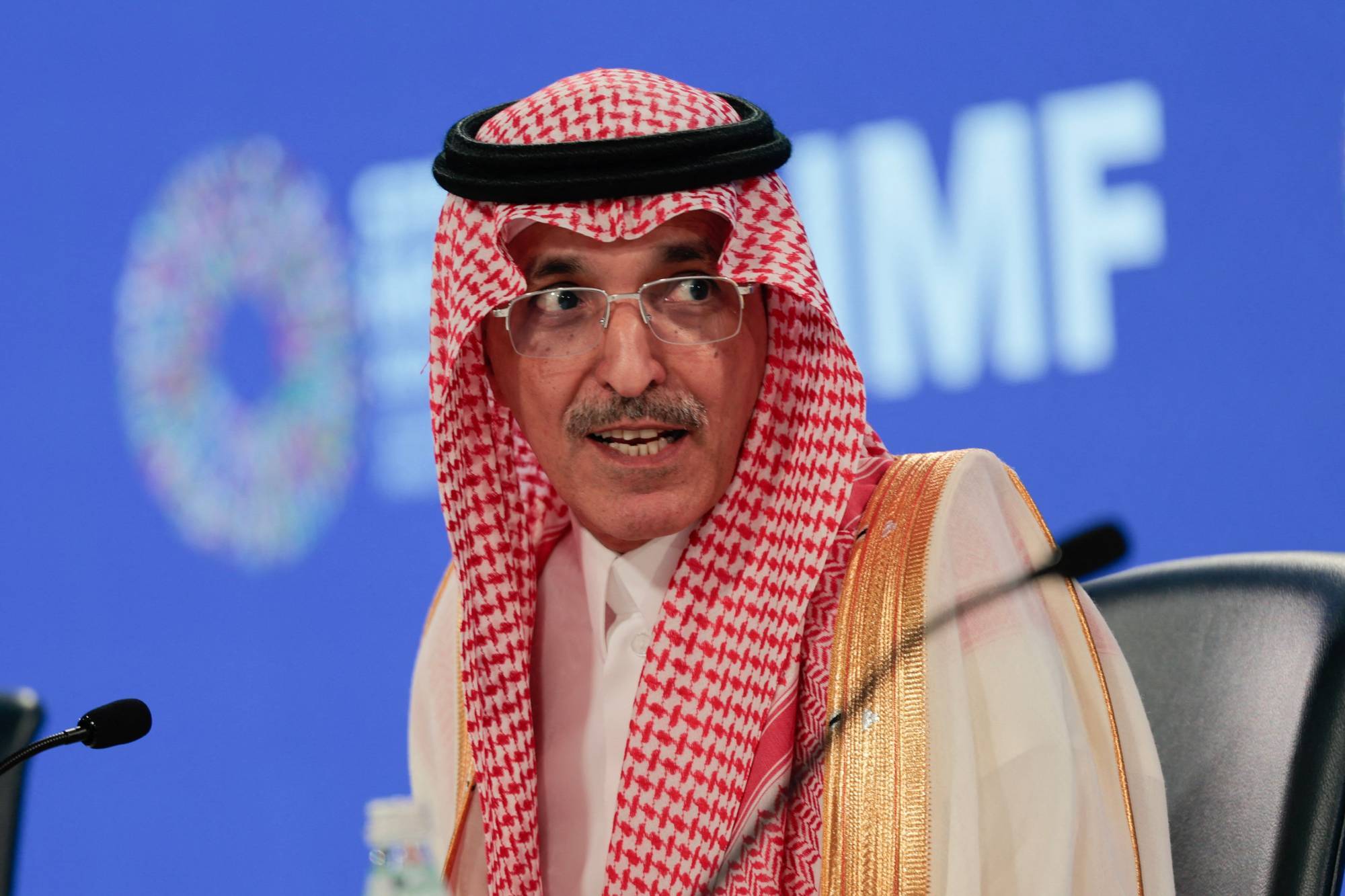
Al-Jadaan speaks at a press conference following a meeting of the International Monetary and Financial Committee during the Spring Meetings in April 2026 (AFP)
International Monetary and Financial Committee Meeting
These projections come as the repercussions of the war and their effects on growth, trade, and energy flows dominate the agenda of the annual meetings of the International Monetary Fund and World Bank Group, being held in Bangkok from October 12 to 17.
Saudi Finance Minister Mohammed Al-Jadaan is heading the Kingdom’s delegation to the meetings. He is also chairing the meeting of the IMF’s International Monetary and Financial Committee, which is discussing the global economic outlook, risks to growth, economic policy priorities, and the Fund’s role in helping member countries address current challenges.
These discussions have taken on particular significance given the varying impact of the conflict on regional economies, which face pressures from disruptions to production and trade on the one hand, and prospects for recovery as energy flows and exports resume on the other.
Ultimately, the trajectory of Saudi Arabia’s recovery in 2027 will remain tied to the speed at which energy and trade flows are restored. At the same time, diversified export routes and non-oil activities, together with the reprioritization of spending and investment, provide supporting factors that can strengthen the economy’s ability to overcome the repercussions of regional disruptions.
Saudi Arabia Drives September Surge in OPEC+ Output Despite Iran War Disruptionshttps://english.aawsat.com/business/5329239-saudi-arabia-drives-september-surge-opec-output-despite-iran-war-disruptions
Saudi Arabia Drives September Surge in OPEC+ Output Despite Iran War Disruptions
An oil tanker at Ras Al-Khair port, north of Dammam, in 2019. REUTERS
OPEC+ crude output surged in September as Saudi Arabia ramped up production, despite continued disruption to oil shipments through the Strait of Hormuz caused by the Iran war, OPEC said in its monthly report on Tuesday.
The Organization of the Petroleum Exporting Countries raised its forecast for global oil demand growth in 2027 to 2.55 million barrels per day (bpd) from 2.36 million bpd, citing the need to replenish inventories depleted by war-related supply disruptions.
But it cut its demand growth forecast for this year for a sixth straight month, to 180,000 bpd from about 380,000 bpd in its August estimates.
OPEC+, which groups OPEC members and allies including Russia, pumped an average of 39.068 million bpd in September, up 903,000 bpd from 38.165 million bpd in August, the report showed.
Output has risen by about 1.36 million bpd since July, when it stood at 37.710 million bpd, according to the secondary sources OPEC uses to track production.
OPEC members drove the increase, raising output by about 920,000 bpd to 25.097 million bpd from 24.177 million bpd a month earlier. Production by participating non-OPEC countries fell by about 18,000 bpd.
Saudi Arabia leads surge
Saudi Arabia posted the alliance's largest production increase. Output climbed to 8.372 million bpd in September from 6.238 million bpd in August, a gain of more than 2 million bpd, according to figures the kingdom submitted to OPEC.
The increase comes as Saudi Arabia seeks to restore oil flows and strengthen the resilience of its exports against war-related disruptions. Aramco increased oil loadings at Gulf export terminals in September after an attack on the East-West pipeline disrupted shipments through the Red Sea.
Inventory rebuilding to support demand
OPEC expects global oil demand to rise by 2.55 million bpd in 2027 to average 108.3 million bpd, compared with 108.19 million bpd in last month's forecast.
The forecast assumes demand growth in 2026 will slow as currently expected, with the need to replenish depleted inventories supporting growth next year, OPEC said.
For 2026, the group expects demand growth of just 180,000 bpd. It also cut its fourth-quarter demand estimate to 107.73 million bpd from 107.85 million bpd in last month's report.
Demand in countries belonging to the Organisation for Economic Co-operation and Development is forecast to shrink by about 210,000 bpd this year, while demand in non-OECD economies is expected to grow by 390,000 bpd.
Oil supply from outside OPEC+ is forecast to grow by 640,000 bpd in 2026 and 620,000 bpd in 2027.
Russian output declines
Russian oil output fell by 38,000 bpd in September to 8.643 million bpd, the report showed, amid continued Ukrainian strikes on Russian energy infrastructure, including refineries.
Russian Deputy Prime Minister Alexander Novak said the country would trim oil production this year. Russia's Economy Ministry lowered its 2026 output forecast to a 17-year low amid the war with Ukraine.
Kazakhstan's production rose by 22,000 bpd in September to 1.851 million bpd, according to the OPEC report.
From Hydrogen to AI, Energy Leaders Map the Sector’s Global Futurehttps://english.aawsat.com/business/5329233-hydrogen-ai-energy-leaders-map-sector%E2%80%99s-global-future
From Hydrogen to AI, Energy Leaders Map the Sector’s Global Future
A panel discussion examines challenges and opportunities at the World Petroleum Congress in Riyadh (Asharq Al-Awsat)
Green hydrogen, artificial intelligence and strategic partnerships took center stage at the World Petroleum Congress in Riyadh, as sessions mapped the energy sector’s future amid rapid technological and industrial change.
Progress on clean energy projects, led by the NEOM Green Hydrogen Project, now 96% complete, intersected with the challenge of cutting emissions from transport, which accounts for about 30% of global energy demand.
The discussions highlighted a widening agenda: developing energy sources and reshaping how energy is produced and used to improve efficiency and sustain supplies.
Saudi Aramco said it plans to increase gas sales by 80% by 2030 compared with 2020 and 2021 levels, and to build and start operating six to seven gas and liquefied gas facilities between 2025 and 2027.
Decarbonization
Transport and logistics account for about 30% of global energy demand, Saudi Vice Minister of Transport and Logistics Services Rumaih Al-Rumaih told a conference session.
Decarbonization is a long journey that requires a broader energy mix, he said, stressing the need for available, reliable, affordable and safe supplies.
The Saudi Green Initiative provides a framework for reaching net-zero emissions by 2060, with transport playing a major role, Al-Rumaih said.
Saudi Arabia is expanding public transport and cutting urban emissions to meet its commitments, he added. The Riyadh Metro network spans 187 kilometers and has 85 stations.
Green hydrogen
National Development Fund Governor Abdulaziz Al-Arifi said the fund had provided financing and strategic support for the NEOM Green Hydrogen Project alongside local banks and other entities and organizations.
That support helped advance one of the clean energy sector’s leading projects, strengthening investment opportunities and local content, he told the conference.
ACWA Power Chairman Mohammad Abunayyan said local resources, knowledge and expertise accounted for about 90% of those used in new projects. He reaffirmed the company’s commitment to expanding investment and overcoming challenges on the ground in major global markets such as China.
At the same session, Saudi Aramco Executive Vice President of Gas Abdulkarim Al-Ghamdi discussed operational readiness and supply chains.
Resource localization under the company’s iktva program had reached levels ranging from more than 75% to 90%, he said, offering strong protection against external disruptions.
Saudi personnel and technological integration are the two pillars of sustained gas-sector growth and future resilience, he said.
Artificial intelligence
A panel at the 25th World Petroleum Congress explored how energy powers artificial intelligence, how the two sectors interact and how AI can sharpen decisions, improve operations and raise energy efficiency.
Speakers said development of the energy and electricity sectors under Vision 2030 aims to meet demand and attract investment, including in AI data centers that need reliable, competitively priced electricity.
The approach involves anticipating sectors’ needs and connecting them with investors. Speakers stressed the need to integrate infrastructure, data, technology and human expertise, drawing on Saudi Arabia’s strengths to develop solutions and bring them to global markets.
Smart meters
AI can improve forecasts of electricity loads and demand and detect grid faults early, helping planners respond faster, speakers said.
Smart meter data can track consumption, forecast bills, show electricity use by appliance and flag unusual usage.
In oil and gas exploration and resource development, particularly drilling, AI can analyze data in real time and combine engineering models with geological information.
This can speed up decisions, improve accuracy, shorten the gap between planning and execution, enhance safety and support risk assessments and investment decisions.
To expand these applications, companies must deliver tangible business value and integrate the tools into operations, speakers said.
They must also ensure data quality and timely collection, train personnel to assess outputs and keep people involved in final decisions, while using digital tools to reduce risks.
لم تشترك بعد
انشئ حساباً خاصاً بك لتحصل على أخبار مخصصة لك ولتتمتع بخاصية حفظ المقالات وتتلقى نشراتنا البريدية المتنوعة