


Azerbaijan Promotes Caucasus Corridors to Link Saudi Logistics With Central Asia

Azerbaijan's ambassador in Riyadh told Asharq Al-Awsat that new agreements are being developed and praised ACWA Power's projects in his country.

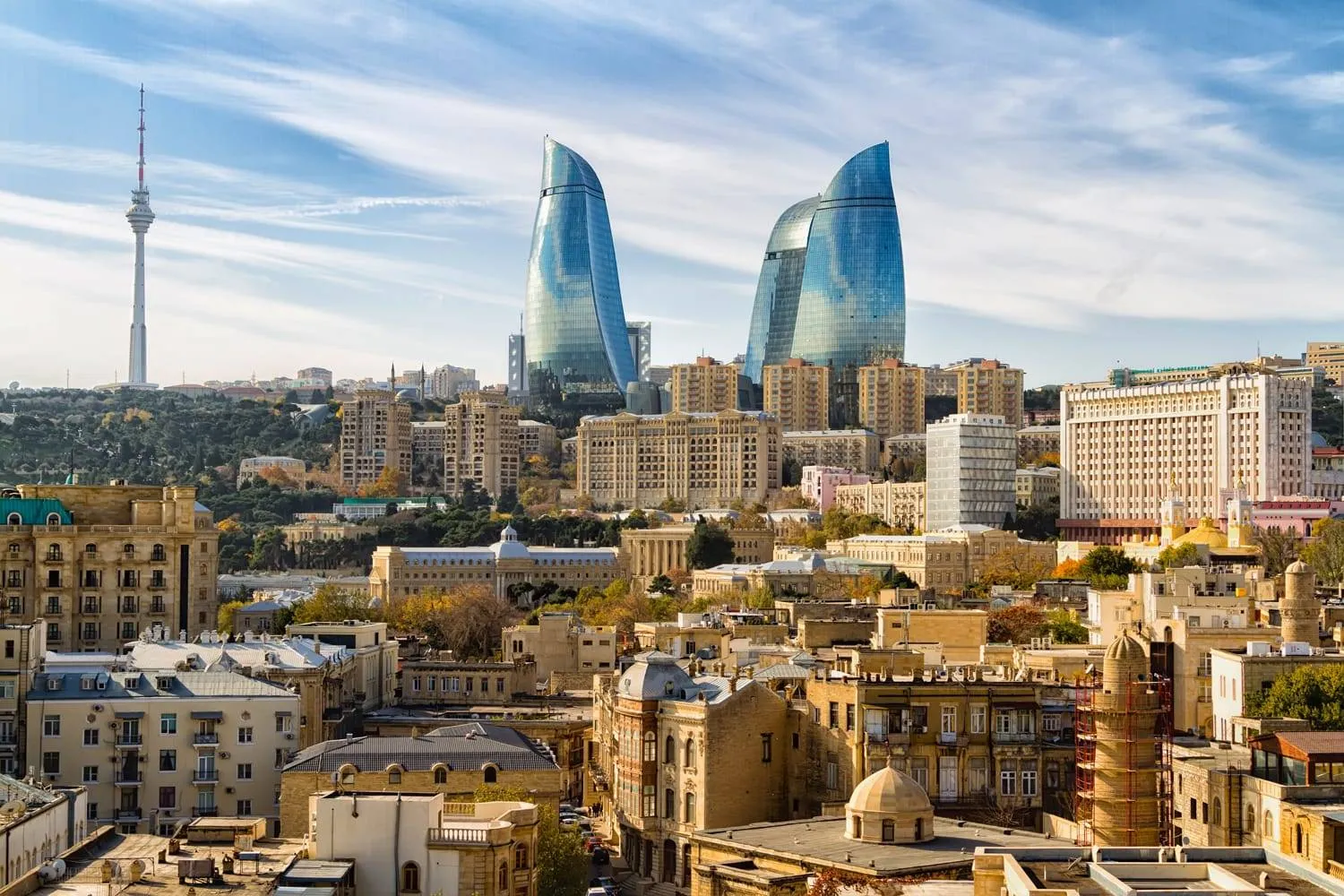
Azerbaijan's capital Baku with the city's famous architectural landmarks in the background (X)
TT

Azerbaijan Promotes Caucasus Corridors to Link Saudi Logistics With Central Asia

Azerbaijan's capital Baku with the city's famous architectural landmarks in the background (X)

As global markets search for logistical lifelines to secure supply chains and energy flows amid ongoing geopolitical disruptions, Azerbaijan is promoting major transport and logistics projects, foremost among them overland freight routes through the Caucasus and across the Caspian Sea, as a strategic safeguard for the future. These initiatives aim to create faster and more efficient shipping links while integrating the Gulf Cooperation Council states, particularly Saudi Arabia's logistics strategy, into a vital connectivity network stretching across the South Caucasus and deep into Central Asia.

Ahead of his country's Independence Day on May 28, Azerbaijan's Ambassador to Saudi Arabia Mutallim Mirzayev told Asharq Al-Awsat that Baku is leveraging its unique position as a strategic bridge to strengthen investment flows and trade, driven by a strong desire to deepen its comprehensive partnership with Riyadh and translate existing understandings into concrete projects on the ground. These include nearly 30 official agreements and important contracts covering the economy, trade, investment, and agriculture, in addition to a proposed joint investment fund. Mirzayev stressed that Azerbaijan is "uniquely positioned as a strategic bridge connecting Central Asia, the South Caucasus, and the Gulf region."

These logistics ambitions come at a time when Saudi-Azerbaijani relations are experiencing a peak in investment activity, with the two countries pursuing major strategic partnerships in both conventional and renewable energy sectors. In this regard, the ambassador praised the leading role played by Saudi companies in Azerbaijan, particularly ACWA Power, which he described as a vital partner driving the country's green energy transition, water management projects, and sustainable infrastructure development. He noted that cooperation is expanding rapidly, reflecting the peak level of investment activity between the two nations.

A key example is the Khizi-Absheron Wind Power Plant, officially inaugurated by Saudi Arabia's ACWA Power earlier this year. The project has a generation capacity of 240 megawatts and an investment value of $300 million. It is the first and largest fully foreign-funded renewable energy project in Azerbaijan and is expected to contribute significantly to the country's energy security.

In conventional energy, Saudi investments also maintain a significant presence through the participation of companies affiliated with the Kingdom's sovereign and development institutions in strategic oil and gas projects in Azerbaijan. These include contributions to the development of the giant Azeri-Chirag-Gunashli oil field, reinforcing the role of both countries in regional and international energy security.
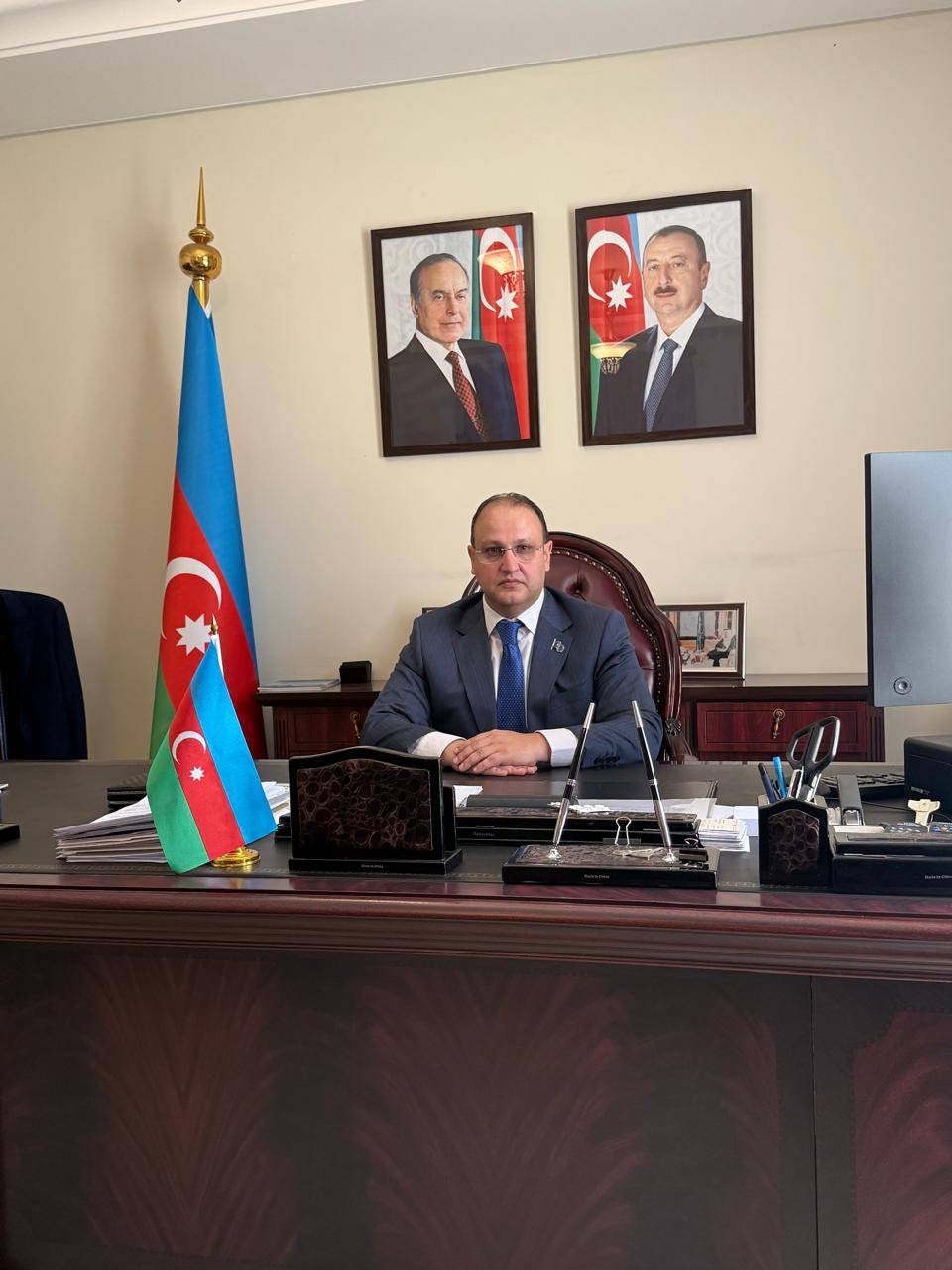
Mutallim Mirzayev, Azerbaijan's ambassador to Saudi Arabia. (Asharq Al-Awsat)

Urban Momentum and the Joint Fund

Mirzayev praised Saudi Arabia's active, high-level participation in the 13th session of the World Urban Forum (WUF13), hosted recently in Baku. The forum featured leading Saudi initiatives and projects in urban development and sustainable housing, reflecting the growing depth of bilateral coordination.

The Azerbaijani ambassador noted that the forum successfully transformed Baku into a global platform for dialogue on the future of smart cities, modern urban planning, and climate resilience. He said these strategic principles are fully embedded in Azerbaijan's ongoing reconstruction and redevelopment plans, under which entire cities and villages are being rebuilt in the liberated territories.

Trade Momentum and the Joint Fund

Turning to economic cooperation, Mirzayev said efforts are advancing steadily to activate the proposal for a joint investment fund aimed at pooling capital and directing it toward priority sectors and shared economic objectives, including agriculture, food security, tourism, advanced technologies, and infrastructure, as well as strengthening trade in industry and advanced logistics services.

On people-to-people ties, he said tourism has become a key pillar of growth amid increasing visitor flows and growing interest among Saudi tourists in Azerbaijan as a distinctive cultural and tourism destination.
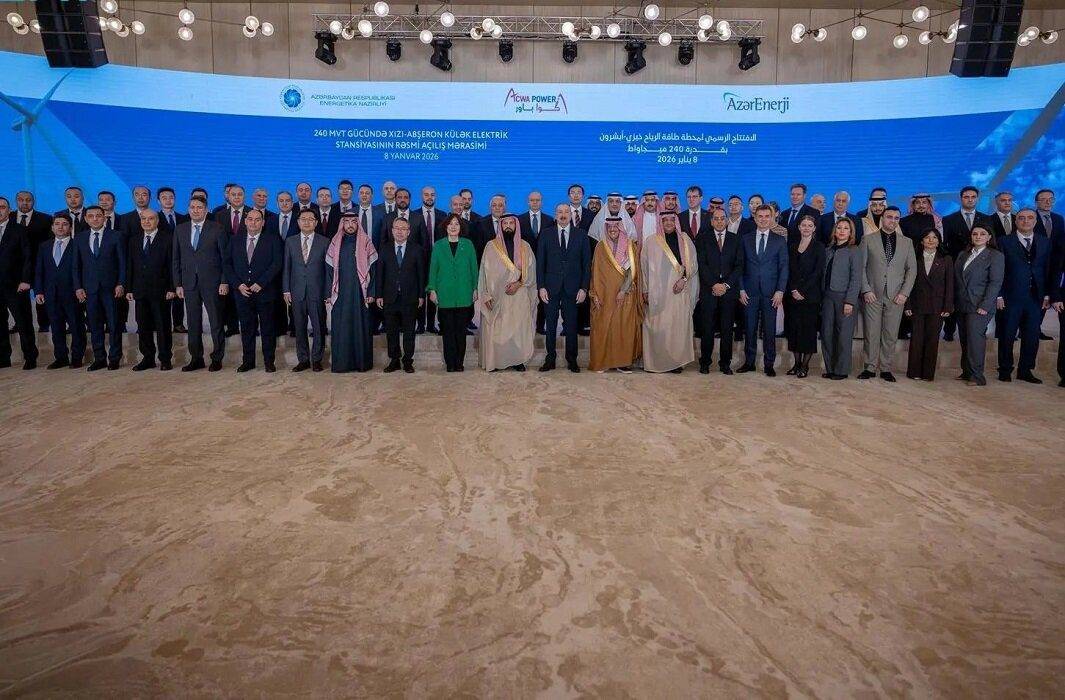
The official inauguration of the Khizi-Absheron Wind Power Plant, developed by ACWA Power, in January 2026. (X)

Vision 2030 and the Organization of Islamic Cooperation

"On the occasion of our Independence Day, I would like to express my sincere appreciation for the friendship, solidarity, and close cooperation between our two countries," Mirzayev said. He also praised the remarkable achievements and transformation witnessed in the Kingdom, noting that "the ambitious reforms and development initiatives implemented within the framework of Saudi Vision 2030 are making significant contributions to sustainable development, economic diversification, regional stability, and prosperity."

He added that Azerbaijan "highly values the Kingdom's principled support for Azerbaijan's sovereignty," while emphasizing that Baku attaches great importance to its relations with Saudi Arabia as one of the leading countries in the region. He reiterated Azerbaijan's future-oriented vision, highlighting the country's ongoing large-scale reconstruction and redevelopment efforts in the liberated territories, where entire cities and villages are being rebuilt in accordance with modern urban planning principles, smart city concepts, green energy, and sustainable development.

In the multilateral arena, Mirzayev revealed that Azerbaijan's upcoming chairmanship of the Organization of Islamic Cooperation summit will focus heavily on strengthening economic cooperation among member states, supporting climate action, science and innovation, youth empowerment, and sustainable development, all in the service of global stability.

He also reiterated that tourism has become an increasingly important pillar of bilateral relations, driven by the growing number of Saudi visitors traveling to Azerbaijan.
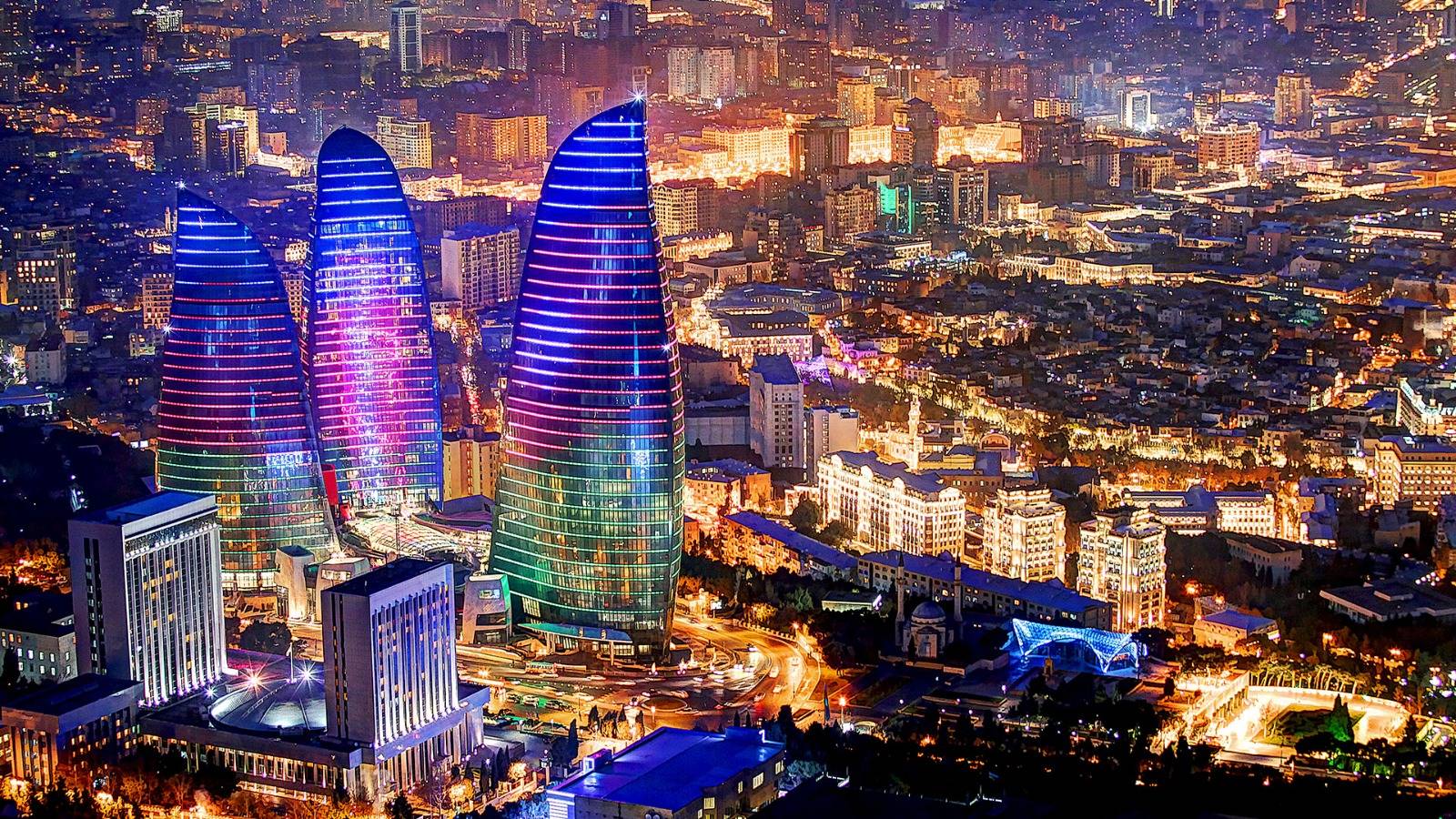
A view of Baku illuminated at night. (X)

The Geopolitics of the Middle Corridor and Shipping Alternatives

Azerbaijan's transport and logistics proposals are gaining strategic significance in economic circles. At the center of these plans is the Middle Corridor, officially known as the Trans-Caspian International Transport Route, which serves as a secure land-and-sea alternative connecting China with Central Asia, the Caucasus, Türkiye, and ultimately Europe. The corridor is particularly attractive because it can reduce cargo transit times to approximately 12 to 15 days, bypassing the constraints of traditional maritime shipping and the geopolitical complications associated with northern transport routes.

In the same logistics framework, the planned Zangazur Corridor, which would connect mainland Azerbaijan with the Nakhchivan Autonomous Republic and onward to Türkiye, represents a vital artery for regional economic integration. The corridor would establish direct and rapid road and rail connectivity and intersect with the Middle Corridor, creating an extensive logistics network stretching from the Turkic world and Central Asia to the ambitious transport systems being developed by the Gulf Cooperation Council states.

Shaping the Logistics Map

Regarding regional integration between the Gulf and Central Asia, Mirzayev emphasized that Azerbaijan's strategic location makes it a vital link connecting Central Asia, the South Caucasus, and the Gulf region. This geographical advantage is reinforced by modern transport infrastructure that enables Azerbaijan to facilitate trade, investment, and energy flows between the two regions in the face of global economic challenges.

The ambassador stressed that regional cooperation mechanisms are becoming increasingly important in addressing current global economic and geopolitical challenges, adding that Azerbaijan actively supports all initiatives aimed at strengthening integration, connectivity, and economic partnership between Central Asia and the Gulf region.

In this context, Mirzayev said major transport projects, particularly the Middle Corridor and the Zangazur Corridor, carry exceptional strategic weight for regional transportation, logistics services, international trade, and cross-border economic integration. Their ability to create faster, safer, and more efficient land and rail shipping links connecting Central Asia, the South Caucasus, and Türkiye with the Gulf region can strengthen global supply-chain security and open promising investment opportunities for all parties, including Saudi Arabia's logistics strategy as it seeks to diversify its gateways to the world.



China Temporarily Bans Helium Exports as US-Iran Tensions Flare Again

Ships and containers at a Chinese port (Reuters)
TT

China Temporarily Bans Helium Exports as US-Iran Tensions Flare Again

Ships and containers at a Chinese port (Reuters)

China announced on Friday a temporary export ban on helium, effective immediately, as resumption of military conflict in the Middle East threatens to trigger new shortages of the gas critical for chip manufacturing.

Earlier this year, the US-Israeli war on Iran led to helium shortages, disrupting companies globally, including in China, where the AI industry increasingly relies on domestic chips for training and ⁠running AI models. Helium is essential for heat management in semiconductor production.

The helium ban is the latest example of Beijing seeking to prevent domestic shortages of critical materials by curbing exports. It has previously imposed similar measures on fuel, fertilizers and sulfuric acid.

China is also looking to boost domestic chip manufacturing capacity and reduce the industry's dependence on cutting-edge Nvidia semiconductors that fall under US export controls.

China is heavily ⁠dependent on overseas helium despite efforts to expand domestic production.

Still, the export ban could squeeze global supply further because Chinese companies have increasingly acted as intermediaries, importing Russian helium and re-exporting some volumes to overseas markets, including Europe.

According to Reuters, analysts ⁠estimate China imports around 85% or more of its helium requirements. Qatar accounts for a major share of global helium output and has supplied more than half ⁠of China's imports in recent years.

Helium is extracted from natural gas fields with unusually high helium concentrations and cannot be quickly manufactured from ⁠other industrial processes.

In chipmaking, it is used for wafer cooling, plasma etching, chemical vapor deposition, atomic layer deposition, lithography support and leak detection.


IEA Says Global Oil Demand Picks Up Despite War Fears

FILE PHOTO: A drone view of three berths able to load vessels with oil is seen after their construction at Westridge Marine Terminal, the terminus of the Canadian government-owned Trans Mountain pipeline expansion project in Burnaby, British Columbia, Canada, April 26, 2024. REUTERS/Chris Helgren/File Photo
TT

IEA Says Global Oil Demand Picks Up Despite War Fears

FILE PHOTO: A drone view of three berths able to load vessels with oil is seen after their construction at Westridge Marine Terminal, the terminus of the Canadian government-owned Trans Mountain pipeline expansion project in Burnaby, British Columbia, Canada, April 26, 2024. REUTERS/Chris Helgren/File Photo

The International Energy Agency said Friday that "a recovery" in global oil demand had started as supplies tentatively start moving through the strategic Strait of Hormuz again and prices ease.

"A recovery in world oil demand is underway, with consumption set to rise from its May nadir," AFP quoted the IEA's monthly report as saying.

The agency had in June predicted a fall in demand of 1.1 million barrels a day (mbd) through 2026 because of the Middle East war, which strangled traffic through the strait. It now expects a one million barrel a day fall.

"Global oil supply rebounded by a sharp 4.1 mbd to 98.8 mbd in June, as a resumption of flows through the Strait of Hormuz underpinned a partial recovery in Gulf production. World output was nevertheless some 9.4 mb/d below pre-war levels," it said.

"Total Gulf oil exports, including volumes bypassing the Strait, surged by 6.5 mbd in June, to 16.1 mbd - a big jump but still well below the 24 mbd average before the war started."

According to the IEA, world supply improved to 102.6 mbd in June and would continue to get better if there was "a swift de-escalation of renewed hostilities".

"If transit volumes improve, oil supply will expand by 7.5 mbd next year," the agency added.

The agency said world oil reserves increased for the first time since the US-Israeli attacks on Iran on February 28 set off the war.

It added that stocks in the richest nations had fallen as their oil imports remained low despite the rise in volumes being transported by sea.

While oil prices fell dramatically in June, fresh fighting between US and Iranian forces this week "clouds the outlook", the IEA said.

"Renewed exchanges of fire in the Gulf this week highlight the risks of not reaching a lasting peace agreement, which is a must for the normalization in oil markets," it commented.


Humain, Cohere Launch Strategic Partnership to Expand AI Infrastructure in Saudi Arabia

Logo of the Saudi company Humain (Asharq Al-Awsat)
TT

Humain, Cohere Launch Strategic Partnership to Expand AI Infrastructure in Saudi Arabia

Logo of the Saudi company Humain (Asharq Al-Awsat)

Humain, the company building an integrated artificial intelligence ecosystem, and Canadian sovereign AI company Cohere have announced a strategic partnership to develop AI computing infrastructure and support the development of sovereign AI models and enterprise AI solutions in Saudi Arabia.

The agreement was announced during Canadian Prime Minister Mark Carney’s visit to the Kingdom, marking Cohere’s first international expansion outside North America.

Under the partnership, Humain will allocate at least 50 megawatts of AI-dedicated computing capacity to support the next generation of foundation models being developed by Cohere.

The capacity may be expanded over the next five years in line with growing demand, with the infrastructure scheduled to become operational in the fourth quarter of 2027.

The collaboration also includes the development of customized AI solutions for enterprises, sovereign Arabic-language models, and specialized models for various economic sectors, supporting the secure adoption of AI applications across the Kingdom.

Humain Chief Executive Officer Tareq Amin said access to computing capacity will be the defining factor in the future of artificial intelligence.

He added that Cohere’s decision to establish its first large-scale international computing deployment in Saudi Arabia reflects the strength of the infrastructure Humain is developing to support advanced AI research and foundation models.

For his part, Aidan Gomez, Cohere’s co-founder and chief executive officer, said developing new generations of AI models requires sustained access to high-performance computing.

He added that the partnership with Humain provides the infrastructure and flexibility needed to support the company’s long-term strategy, while also enabling collaboration on sovereign AI models and initiatives that will benefit both Saudi Arabia and global markets.

The partnership aims to combine Humain’s AI infrastructure with Cohere’s expertise in developing large language models, strengthening regional AI computing capabilities and creating a scalable platform to meet growing demand for enterprise AI solutions.

It also seeks to enable organizations to deploy secure, production-ready AI applications tailored to business needs.