


Saudi Fintech, Cloud Services Drive Technology Sector Profit Boom

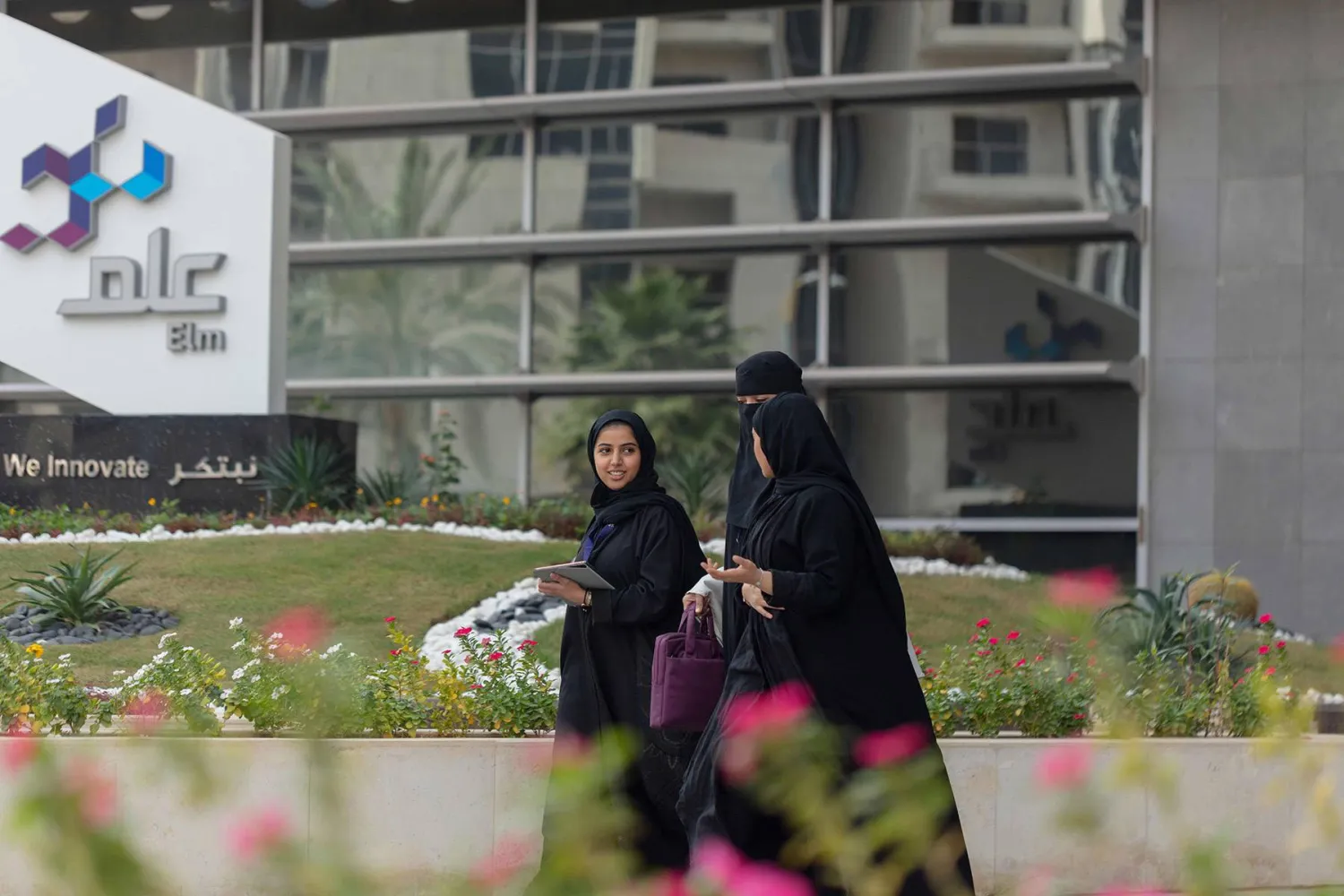
Women walk through the lobby of Elm Co. in the Saudi capital Riyadh. (Public Investment Fund)
TT

Saudi Fintech, Cloud Services Drive Technology Sector Profit Boom

Women walk through the lobby of Elm Co. in the Saudi capital Riyadh. (Public Investment Fund)

Saudi Arabia’s listed technology companies posted strong first-quarter earnings for 2026, reflecting a structural shift in the sector as digital revenue growth converged with tighter control over operating and administrative costs.

Combined net profits for companies in the Kingdom’s applications and technology services sector rose 16% year-on-year to SAR1.07 billion ($285 million), up from SAR920 million ($245 million) in the same period last year. The performance underscores the sector’s growing ability to diversify revenue streams across cybersecurity, digital identity, managed services and cloud computing.

Analysts said the gains were fueled by the continued expansion of Saudi Arabia’s digital transformation programs, the rapid maturation of the fintech industry, infrastructure development and rising investment in cloud computing.

Strong corporate demand is also pushing the Kingdom’s information and communications technology market toward what analysts expect will exceed $100 billion in spending by 2031.

The sector includes five listed companies, four of which reported profits during the quarter: Elm Co., Solutions by stc, 2P Perfect Presentation and Al Moammar Information Systems Co. Bahr Al Arab Systems Information Technology continued to post quarterly losses through the end of the first quarter.

Elm accounted for roughly 61% of total sector profits, recording the highest net income at SAR656 million in the first three months of the year, up 32% from SAR495 million a year earlier. The company benefited from a 31% rise in revenue to SAR2.47 billion, in addition to lower research and development expenses.

Solutions by stc ranked second, posting profits of SAR370 million, up 2.5% from SAR361 million in the same quarter last year. The increase was supported by lower operating costs, reduced selling and administrative expenses, and a 6.3% rise in revenue to SAR3 billion.

2P Perfect Presentation came third in sector profitability, reporting net income of SAR33.06 million, up 2.4% from SAR32.28 million a year earlier. The company cited strong performance across most operating segments, particularly call center services, while revenue climbed 14% to SAR330.08 million.
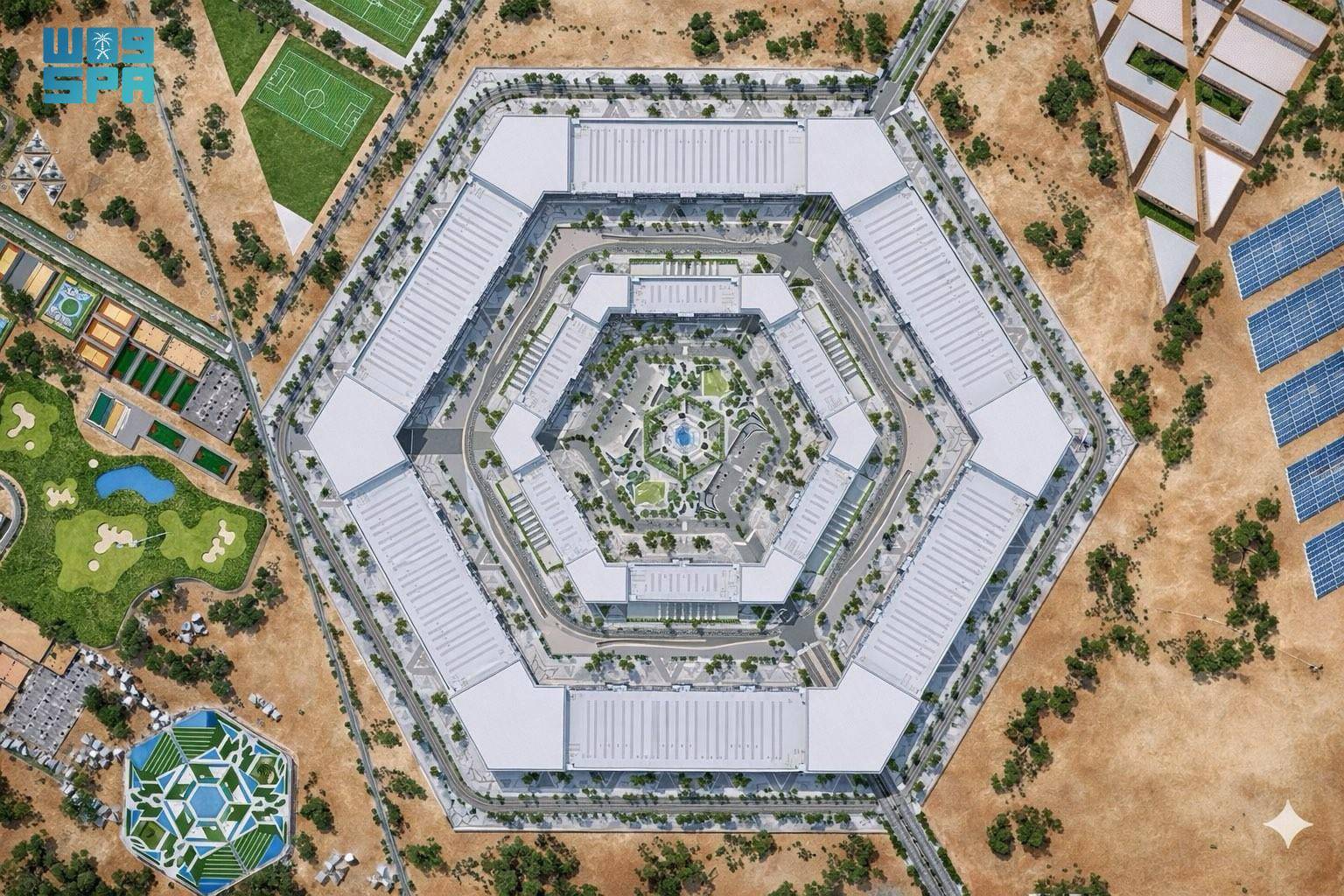
The Saudi Data and AI Authority's (SDAIA) "Hexagon" data center, the largest government data center in the world. (SPA)

Five drivers behind the growth

Financial analyst Nasser Al-Rashid told Asharq Al-Awsat that the strong earnings growth reflects the intersection of several operational and strategic factors centered on five main pillars.

The first is sustained government and private-sector spending on digital transformation, which remains the sector’s largest growth engine, he explained. As government agencies and major corporations expand automation and strengthen digital infrastructure, demand has increased for technology solutions, data management, cybersecurity and cloud services, creating stable long-term revenue streams for companies with major public-sector contracts.

The second pillar is the rapid development of the fintech sector, which has accelerated adoption of digital payments, e-services, digital identity tools and smart business platforms. This has directly boosted recurring revenues and profit margins for technology and applications companies, Al-Rashid said.

Third, companies have improved operational efficiency, as reflected in lower operating and administrative costs and reduced sales and distribution expenses. This demonstrates that firms are not relying solely on revenue growth but are also improving profitability through tighter cost controls, he added.

The fourth driver is the expansion of cloud computing and data center services, among the industry’s most profitable activities, he continued.

Rising demand from businesses for cloud hosting, data analytics and managed services has increased returns on technology contracts as institutions reduce reliance on traditional infrastructure.

The fifth pillar is the diversification and quality of revenue streams, said Al-Rashid.

Major companies are no longer dependent on a single source of income but now generate returns from digital operations, cloud solutions, business platforms, call center services and systems management, reducing exposure to operational volatility and improving earnings sustainability, he went on to say.

Market analyst Tariq Al-Ateeq told Asharq Al-Awsat that Elm’s contribution of more than 60% of sector profits highlights the strength of its innovation-driven model built around government digital services, data and specialized solutions.

He added that the Saudi technology sector has formally entered a phase of “sustainable operational growth,” supported by Vision 2030, rapid digitalization and rising spending on technology infrastructure.

Al-Ateeq expects technology and applications companies to maintain solid earnings and revenue growth in coming quarters, albeit at a more balanced pace than in previous years.

The sector’s long-term expansion will continue to be driven by government digital transformation spending, the rapid growth of cloud and artificial intelligence services, and rising private-sector demand for automation, he remarked.



Saudi Arabia Expands Investment Prospects in Military Industries

The Saudi pavilion reinforced the Kingdom’s position as a leading investment destination in the military industry sector. (Asharq Al-Awsat)
TT

Saudi Arabia Expands Investment Prospects in Military Industries

The Saudi pavilion reinforced the Kingdom’s position as a leading investment destination in the military industry sector. (Asharq Al-Awsat)

Saudi Arabia used the Eurosatory 2026 defense and security show to open new investment horizons, showcasing promising opportunities and a regulatory environment designed to attract capital.

The participation helped sharpen the appeal of the Kingdom’s military industries and drew the attention of major global companies seeking strategic partnerships that support Saudi localization targets.

The Saudi pavilion, held at the Paris exhibition from June 15 to 19, reinforced the Kingdom’s position as a leading investment destination in the military industry sector.

Organized by the General Authority for Military Industries (GAMI), the pavilion brought together 10 government and private entities alongside the authority.

The participation underlined Saudi Arabia’s welcome to investors from around the world seeking opportunities in the military industries sector. It also highlighted the Kingdom’s efforts to localize more than 50% of military spending by 2030.

On the sidelines of the exhibition, GAMI Governor Ahmad Al-Ohali met Patrick Pailloux, French Director General for Armament (DGA), as well as representatives of major global defense companies.

The meetings focused on ways to strengthen cooperation in military industries and exchange expertise, supporting the development of a sustainable sector, improving the readiness of military equipment, boosting self-sufficiency and contributing to the national economy.

The Saudi participation also saw the signing of several agreements and memorandums of understanding, part of GAMI’s efforts to develop military industries, strengthen supply chains and enable strategic partnerships.

The authority organized a workshop titled “Developing Supply Chains in Military Industries,” which discussed how an attractive investment environment for local and international investors can help build a diversified and prosperous economy in the sector.

The pavilion showcased the integration of government efforts, national industrial and service capabilities, and the innovative technologies presented by participating Saudi companies. It also highlighted the country’s attractive investment environment and the rapid growth of its military industries sector.

The sector’s contribution to GDP rose from 2.2 billion riyals, or about $587 million, in 2021 to 6.6 billion riyals, or about $1.76 billion, in 2024. The localization rate of military spending also climbed to nearly 25% in 2024, as the Kingdom works toward localizing more than 50% of military spending by 2030.

GAMI said the Saudi pavilion’s participation strengthened the Kingdom’s position as a trusted international partner, expanded its network of relations with major global companies and enabled national firms to showcase their capabilities while exploring opportunities for growth and expansion in global markets.


Iraq Raises Southern Oil Output to 1.75 Million bpd

Technicians working at the Majnoon oil field in Basra, Iraq. (Reuters)
TT

Iraq Raises Southern Oil Output to 1.75 Million bpd

Technicians working at the Majnoon oil field in Basra, Iraq. (Reuters)

Iraq has increased crude oil production from its southern fields by 250,000 barrels per day to around 1.75 million barrels per day as more tankers load crude from the country's ports, Iraqi oil officials told Reuters on Friday, Reuters reported.


The officials said Iraq plans to raise production further to two million barrels per day in the coming few days.


Iraq, like other Gulf oil producers, has suffered the biggest drop in oil revenue as a result of the effective closure of the Strait of Hormuz amid the US-Iran War.


Saudi Arabia Showcases Tourism Success at FII Europe Summit

The minister's participation in the leading global forum aims to underline the global success story of Saudi Arabia's tourism sector - SPA
TT

Saudi Arabia Showcases Tourism Success at FII Europe Summit

The minister's participation in the leading global forum aims to underline the global success story of Saudi Arabia's tourism sector - SPA

Minister of Tourism Ahmed Al-Khateeb participated in the FII PRIORITY Europe Summit, held in Rome from June 17 to 19, 2026, where he showcased Saudi Arabia's remarkable transformation of its tourism sector in line with the ambitious goals of Saudi Vision 2030.

As part of the summit's official program, the minister participated in a fireside chat titled "Resilient by Design: Vision 2030 and the Architecture of Enduring Value." During the session, he shared insights into the evolution of Saudi Arabia's tourism sector, highlighting its robust performance amid regional challenges over the past six months and emphasizing the sector's resilience, its ability to recover quickly, and its continued momentum toward sustained growth, SPA reported.

Al-Khateeb also underscored the Kingdom's significant investments in developing world-class tourism destinations, noting the tangible economic and social impact these investments are generating, including the creation of employment opportunities for Saudi nationals.
Addressing the role of emerging technologies, Al-Khateeb spoke about the integration of artificial intelligence (AI) in the tourism sector: "In Saudi Arabia, we are using AI, and we will continue to use AI, because we are very advanced when it comes to technology.

At the same time, we are committed to preserving the human element in the sector. We want AI to empower people, support them, and help them in welcoming our guests and sharing our culture and hospitality".

The minister's participation in the leading global forum aims to underline the global success story of Saudi Arabia's tourism sector, which in less than a decade has evolved into a dynamic, integrated ecosystem, offering a wide range of investment opportunities across destinations, hospitality, infrastructure, digital services, and human capital development.

The participation also served as a platform to highlight what the Kingdom's tourism sector offers European partners: a fast-growing and stable market, positioned as a global gateway for collaboration in investment, artificial intelligence, and innovation.

On the sidelines of FII PRIORITY Europe, Al-Khateeb held a series of bilateral meetings with international investors and industry leaders, focused on strengthening strategic partnerships and unlocking new opportunities for investment and tourism experience development in the Kingdom.

Coinciding with the summit, the Ministry of Tourism released its annual statistical report 2025, showing how Saudi Arabia's tourism sector moved from ambition to scale, emerging as one of the Kingdom's strongest growth drivers in non-oil sectors.

According to the report, Saudi Arabia recorded historic results in 2025 with around 123 million inbound and domestic tourists, representing growth of approximately 6% compared to 2024. This included 29.3 million inbound tourists and 93.3 million domestic tourists. Total tourism spending reached approximately SAR304 billion, reflecting growth of 7% compared to 2024, with inbound tourism contributing SAR176.6 billion and domestic tourism contributing SAR127.1 billion.