


Drone Boat Rescued Two US Aviators After Their Army Helicopter Went Down Near Hormuz Strait

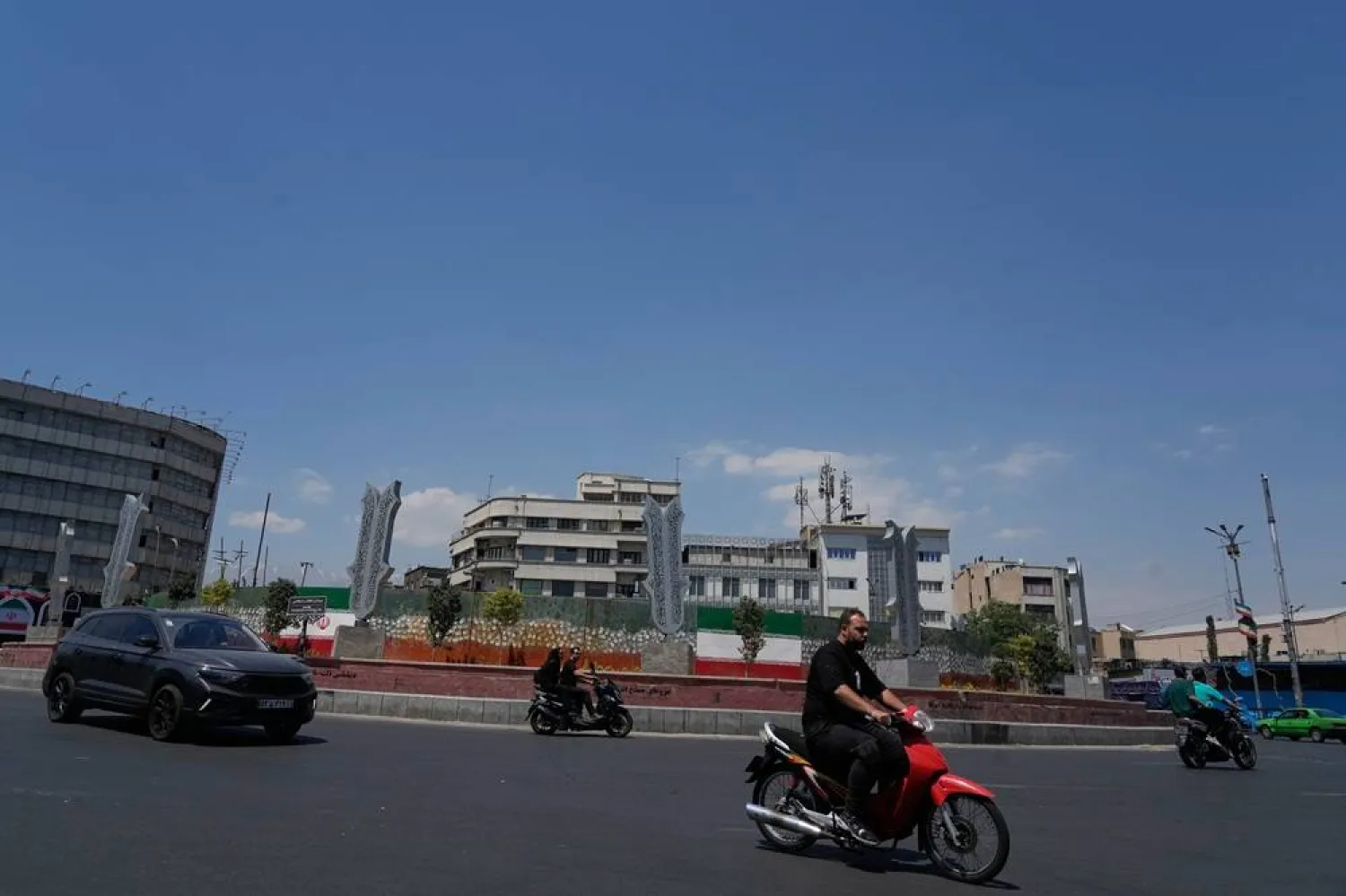
 Vehicles drive at a square in Tehran, Iran, Monday, June 8, 2026. (AP)
Vehicles drive at a square in Tehran, Iran, Monday, June 8, 2026. (AP)
TT

Drone Boat Rescued Two US Aviators After Their Army Helicopter Went Down Near Hormuz Strait

 Vehicles drive at a square in Tehran, Iran, Monday, June 8, 2026. (AP)
Vehicles drive at a square in Tehran, Iran, Monday, June 8, 2026. (AP)

A drone boat rescued the crew of a US Army attack helicopter that crashed early Tuesday near the Strait of Hormuz, the strategic waterway that Iran has effectively closed during the war, a US military official said. 

A 24-foot unmanned boat located the two aviators and brought them to shore after they spent about two hours in the water, said Capt. Tim Hawkins, a spokesman for US Central Command. 

Military officials have not said what caused the Apache helicopter to go down. A military news release on the incident said it was under investigation. 

The crash occurred with the Middle East still reeling after Iran and Israel exchanged fire the previous day in the biggest blow yet to the straining ceasefire in the Iran war. Iranian state television reported Tuesday the Israeli attacks killed at least two members of the country’s air defense units. 

Since the US and Israel began striking Iran on Feb. 28, the war has shaken the global economy, driven up energy prices around the world and made many basics, including food, more expensive. Officials have been unable to turn the April ceasefire into a deal to permanently end the conflict, particularly as Israel intensifies and expands its military campaign in Lebanon against the Iranian-backed Hezbollah group. 

US President Donald Trump acknowledged the crash while speaking to journalists at John F. Kennedy International Airport in New York after watching the NBA Finals on Monday night. 

“The pilots are fine. Yeah,” Trump said. “Nobody injured. We are going to issue a report tomorrow. But the pilots are fine.” 

The crash happened about 3:30 a.m. local time Tuesday off the coast of Oman while the helicopter was on a patrol, the US military's Central Command said. 

AH-64 Apache helicopters have been a key asset for the American military as it enforces a blockade on Iranian crude oil shipments and tankers, seeking to pressure Tehran into a deal. The helicopters have also been used by the United Arab Emirates to shoot down Iranian drones. 

The New York Times first reported on the crash. 

Trump insists an Iran deal is coming  

Trump also expressed renewed optimism over negotiations with Iran. 

“We have a good chance” of signing a deal in “two or three days," Trump said. But he didn’t provide any details on why there was reason for new optimism. In the two months since the US and Iran agreed to an initial ceasefire, Trump has repeatedly predicted that a deal is near. 

“We’re very close to having a very, very good, strong, powerful deal,” the president said. “If we go and bomb — which we could do very easily if we want, and we spend another two or three weeks bombing — they’ll have nothing left whatsoever. But you won’t have the strait open for months.” 

He added: “If we do the bombing, you know, a lot of people are going to be killed. Who wants to do that? I don’t.” 

Mediators, led predominantly by Pakistan, have been trying for weeks to get a deal across the line. However, both Iran and the US have taken hard-line positions. 

The US wants to see Iran give up its stockpile of highly enriched uranium, which is believed to be entombed in the aftermath of American airstrikes that happened during the 12-day war in 2025. But Iran is refusing that and demanding relief from sanctions. It also wants the release of frozen assets even before a final agreement is in place, something rejected by Trump. 

Before Trump’s comments on negotiations, Iranian parliament Speaker Mohammad Bagher Qalibaf said Monday that Trump’s remarks so far on a possible deal “contradicted the agreed-upon sections," showing that the US is "neither seeking a ceasefire nor dialogue.” 

The continued fighting between Israel and Hezbollah is still a top Iranian priority as well. Lebanon’s army chief, Gen. Rodolphe Haykal, traveled to Pakistan on Tuesday. There, he met Pakistan’s army chief, Field Marshal Asim Munir, who has been a key figure in the Iran-US talks. 

Haykal's visit comes as Lebanon's government takes an increasingly hard line on Hezbollah but remains unable to disarm the group. Hezbollah thanked Iran on Tuesday for attacking Israel “in defense of our Lebanese people,” suggesting that Lebanon's government should take this opportunity to improve relations with Tehran. 


Spanish PM Says Disinformation on Ceuta Crisis Was Spread by Russia, Israel

Migrants wait outside the Loma Colmenar temporary migrant shelter in Ceuta, Spain, 31 August 2026. (EPA)
TT

Spanish PM Says Disinformation on Ceuta Crisis Was Spread by Russia, Israel

Migrants wait outside the Loma Colmenar temporary migrant shelter in Ceuta, Spain, 31 August 2026. (EPA)

Russia and Israel both spread and amplified disinformation related to the mass entry of migrants into Spain's North ‌African ‌enclave of ‌Ceuta ⁠last month, Prime Minister ⁠Pedro Sanchez said on Monday, citing research by the European ⁠Union's foreign service ‌EEAS.

Sanchez ‌said it ‌was "evident" that the ‌two countries had used the crisis to criticize ‌the Spanish government, as they were at ⁠odds ⁠with Madrid over its position on the wars in Ukraine and the Middle East.

He ruled out any responsibility on the part of the Moroccan authorities in the incident.

"No intelligence service with which the Spanish government normally cooperates sheds any doubt, or rather, suggests any doubt, about the involvement in one way or another of the Moroccan authorities," he told Cadena Ser radio.


Leaders of China, Russia and India are Among Heads of State Meeting to Counter US Influence

FILE - Russian President Vladimir Putin, left, gestures while speaking to Chinese President Xi Jinping during the Shanghai Cooperation Organization (SCO) summit in Samarkand, Uzbekistan, Sept. 16, 2022. (Sergei Bobylev, Sputnik, Kremlin Pool Photo via AP, File)
TT

Leaders of China, Russia and India are Among Heads of State Meeting to Counter US Influence

FILE - Russian President Vladimir Putin, left, gestures while speaking to Chinese President Xi Jinping during the Shanghai Cooperation Organization (SCO) summit in Samarkand, Uzbekistan, Sept. 16, 2022. (Sergei Bobylev, Sputnik, Kremlin Pool Photo via AP, File)

The leaders of China, Russia and India are among the heads of state gathering in Kyrgyzstan this week for the summit of the Shanghai Cooperation Organization, a group billed as a counterweight to US global influence.

Chinese President Xi Jinping, Russian President Vladimir Putin and Indian Prime Minister Narendra Modi are scheduled to attend the events in Bishkek, the capital of the Central Asian nation, The Associated Press said.

Multiple one-on-one meetings are scheduled on the sidelines, including one between Putin and Xi on Monday, as well as talks between the Russian leader and Iranian President Masoud Pezeshkian on Tuesday, the day of the official SCO sessions.

Russia, now 4½ years into its full-scale invasion of Ukraine, and Iran, six months into a war with the United States and Israel, see the summit as an important platform to strengthen their relations with non-Western partners.

The SCO was founded in 2001 by China, Russia and four Central Asian states as a security forum. Over the past quarter-century, it has grown in size and influence, although its goals and programs remain vague and its brand recognition low.

It now includes 10 nations: Russia, China, India, Iran, Pakistan, Belarus, Kazakhstan, Kyrgyzstan, Tajikistan and Uzbekistan. Many other countries have the status of “dialogue partners."

Along with Russia, China has presented the SCO as an alternative to Western-aligned organizations like the G7, and in recent years has wanted to expand the scope and influence of the organization, pledging development and financial assistance.

China’s Ministry of Foreign Affairs said last week that the organization has successfully “explored a new path for regional cooperation.” Beijing has consistently promoted the idea of an alternative world order with Russia’s support.

Summit attendees have significant disagreements

For many SCO members, the summit will be an opportunity to show that they maintain strong ties on the global stage despite souring relations with the West.

The organization is not a unified political or military bloc, however, and analysts note that its members have significant disagreements and their own distinct interests.

For countries such as India, however, experts say the summit is likely to be more about optics and strategic signaling than substantive outcomes.

The forum is heavily influenced by China and includes Pakistan as a member — both of which are rivals for India.

Dinakar Peri, a fellow in security studies at Carnegie India, said the SCO gives India a seat at the table in a region increasingly shaped by competition among the larger powers, allowing it to protect its interests, track shifting geopolitical currents and project itself as a reliable stakeholder.

“While it may not entirely shape the agenda, it gives New Delhi a first-hand view of the region and allows it to hedge its position with others,” Peri said.

Türkiye, which holds partner status within the SCO, also seeks to use the platform to strengthen its position in the region.

It views SCO membership as part of a balanced foreign policy that seeks to maintain its traditional ties with the West as a part of NATO, while strengthening its influence in Eurasia.

President Recep Tayyip Erdogan, who brought his country into the SCO as a “dialogue partner” in 2012, has repeatedly stated that he wants Türkiye to become a permanent member. While Türkiye has close trade ties with the European Union under a 1995 trade deal, its EU membership bid has stalled for more than 25 years.


NATO’s Arctic Moves Pose ‘Direct Threat’ to Russia, Says Lavrov

Russian Foreign Minister Sergei Lavrov attends a press conference in Moscow, Russia, 25 August 2026. (EPA)
TT

NATO’s Arctic Moves Pose ‘Direct Threat’ to Russia, Says Lavrov

Russian Foreign Minister Sergei Lavrov attends a press conference in Moscow, Russia, 25 August 2026. (EPA)

Russia sees ‌NATO activity in the Arctic as a direct security threat, Foreign Minister Sergei Lavrov said in an article published on Monday, as the alliance members boost their presence in the region in the wake of Russia's war on Ukraine.

In February, NATO launched a mission called Arctic Sentry to bolster its presence in the far north, underscoring the alliance's increased focus on the Arctic amid ‌tensions with Russia ‌and US President Donald Trump's ‌push ⁠for the acquisition of ⁠Greenland.

Russia, which has a naval fleet including nuclear-armed submarines in the Arctic, sees the region as its sphere of interest where it also develops a shipping route to connect with the Asian nations.

Moscow has earlier protested the Arctic Sentry mission ⁠and in the article, Lavrov, President ‌Vladimir Putin's long standing foreign ‌minister, said Russia sees NATO military exercises in the ‌region as "aggressive".

"Such military activity in the Far ‌North poses direct threats to Russia's security. The risks of incidents that could trigger an armed confrontation, with potentially catastrophic consequences, are increasing," he said in the ‌article published by the Russian foreign ministry.

Russia has the largest military presence and ⁠the ⁠most extensive military infrastructure in the Arctic and in recent years China has started to increase its activity in the mineral-rich area, mostly in partnership with Moscow.

Norway, a Russia's neighbor, this month expanded a recently created military brigade headquartered in the Arctic, the latest move by a NATO nation to boost its defense footprint in the wake of the Ukraine war which Russia started in 2022.

Moscow has previously dismissed allegations that it poses a threat to NATO.
