


Have Hezbollah’s Drones Changed the Rules of Engagement with Israel?

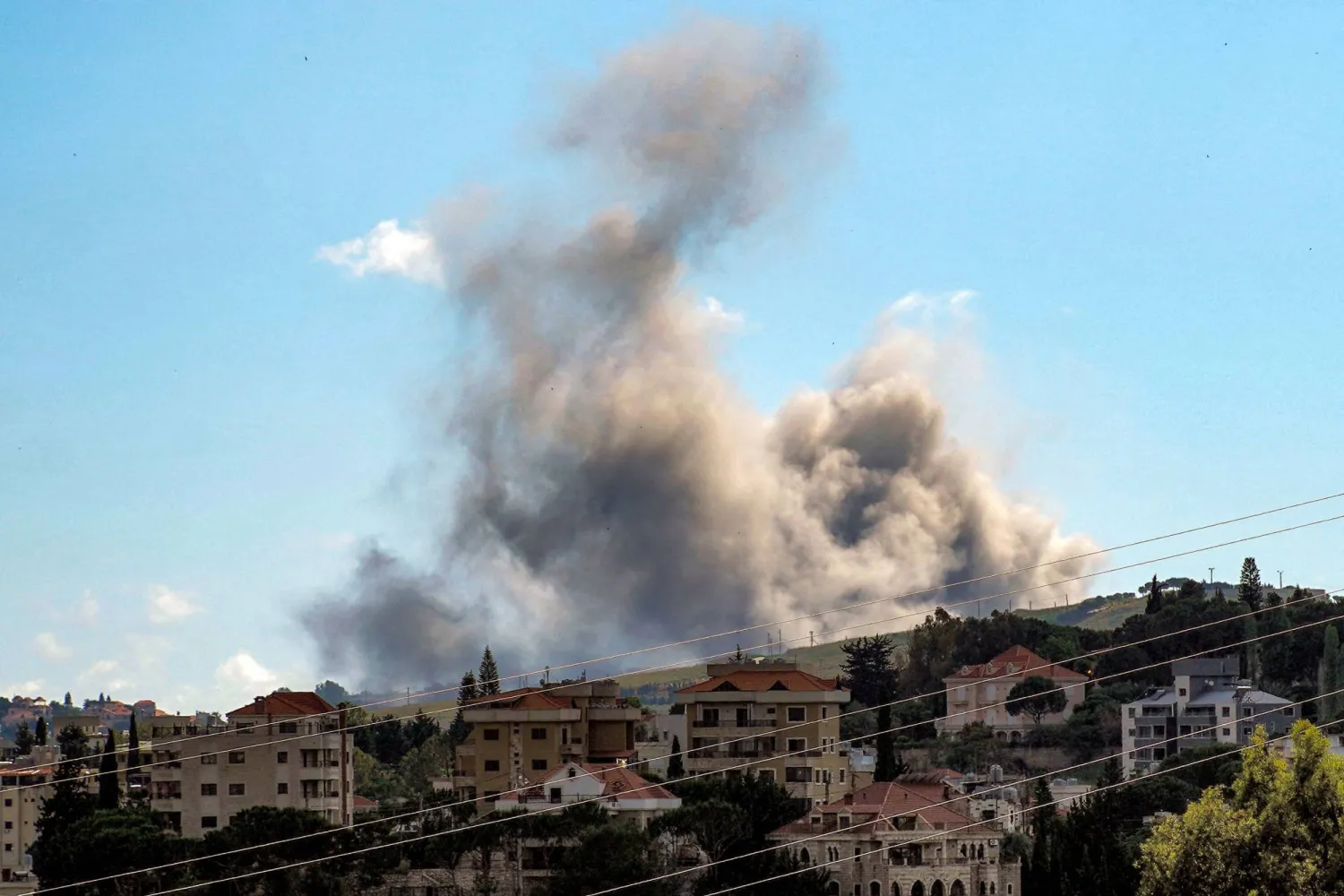
Smoke rises following Israeli bombardment on the village of Jibchit in southern Lebanon on May 23, 2026. (AFP)
TT

Have Hezbollah’s Drones Changed the Rules of Engagement with Israel?

Smoke rises following Israeli bombardment on the village of Jibchit in southern Lebanon on May 23, 2026. (AFP)

The “support war” waged by Lebanon’s Hezbollah in backing Hamas in late 2023 shattered the doctrine of “deterrence” that the Iranian-backed group had embraced and promoted for nearly two decades in its confrontation with its traditional adversary, Israel. Israel, for its part, also helped reinforce this assumption, which proved entirely mistaken the following year. The new round of fighting in 2026 then offered both sides an opportunity to establish a new set of rules governing the conflict.

Israeli patience and cunning

Israel did not rush into a direct war with Hezbollah after the group launched a wave of largely “performative” attacks, beginning with rockets fired at the outskirts of Israeli military positions in the Shebaa Farms. Instead, it quietly steered the confrontation in a different direction, displaying notable restraint and considerable strategic calculation.

This approach was reflected in diplomatic efforts undertaken by Tel Aviv through Washington to persuade Hezbollah to separate the Lebanese front from the Palestinian one. In July 2024, then US envoy Amos Hochstein reportedly told Lebanese officials that he was prepared to deliver what would amount to a political victory for Hezbollah Secretary-General Hassan Nasrallah if the group halted its operations.

Nasrallah immediately rejected the proposal. According to those who relayed the message to him, he replied that the war in Gaza would first have to end. After that, other matters could be discussed.

This was not Hezbollah’s first strategic misjudgment. The shape of the new conflict unfolding in Lebanon’s border villages quickly revealed a clear Israeli technological and military advantage. A senior Hezbollah official later disclosed that in previous confrontations, fighters could launch a rocket, calmly gather their equipment after informing command that the launch had been successful, and leave the site before Israeli aircraft arrived.
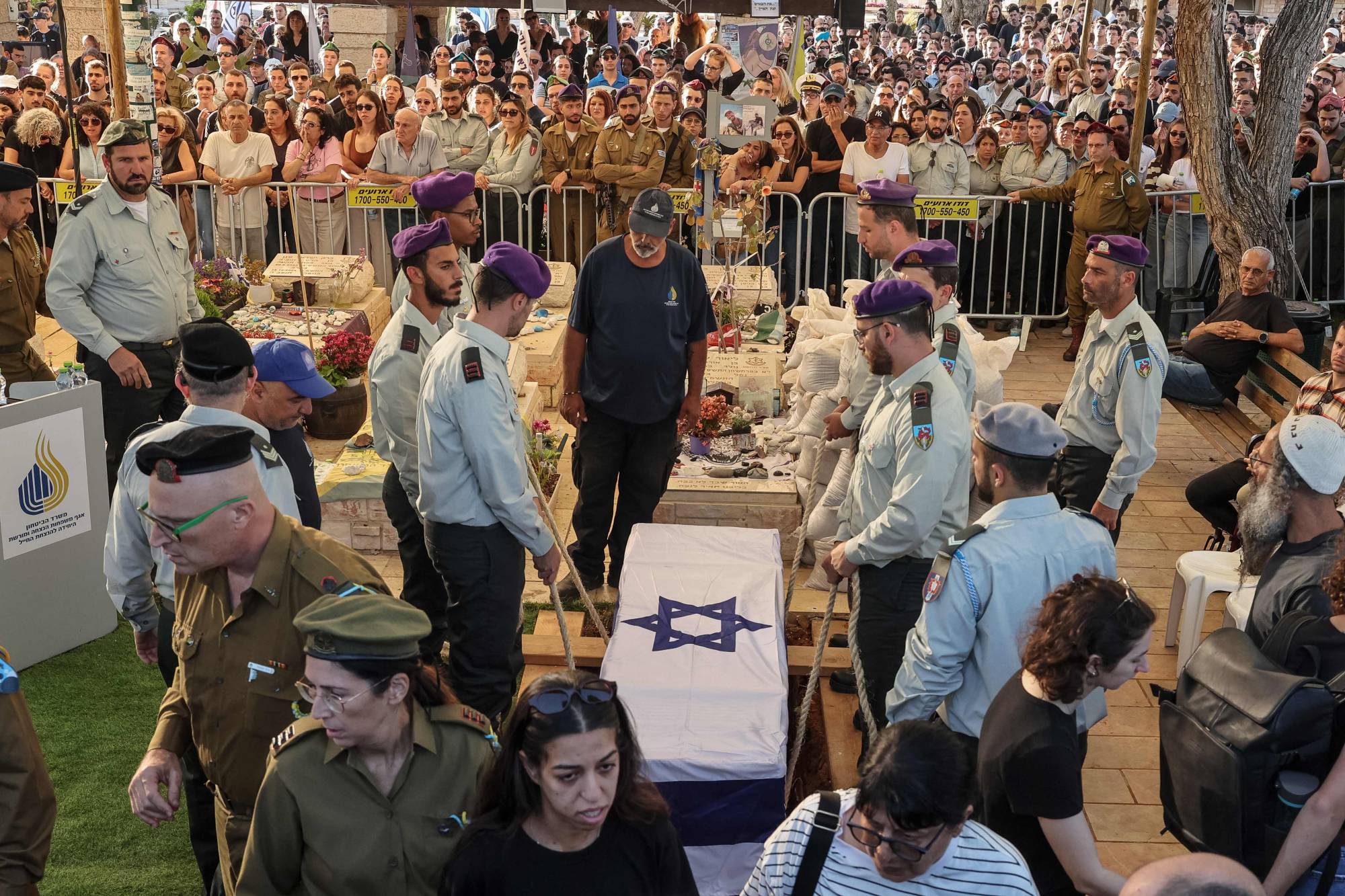
People react while attending the funeral of an Israeli soldier Captain Doctor Ori Yosef Silvester, a 30-year-old army doctor for the Givati Brigade's Shaked Battalion, who was killed in southern Lebanon, at the Segula Cemetery in Petah Tikva on June 2, 2026. (AFP)

In the new conflict, however, the window between launch and retaliation had narrowed to between five and twenty seconds. As a result, the official said, fighters often dug into the ground and sought immediate cover after firing in the hope of surviving. Every launch effectively became a near-suicidal operation.

Subsequent developments underscored Israel’s superiority even more clearly. Israeli forces carried out a series of precise assassinations targeting Hezbollah military commanders, culminating in a strike that eliminated most of the leadership of the Radwan Force, the group’s elite unit.

Israel then killed Hezbollah’s military commander and launched the “pager operation,” which put thousands of Hezbollah operatives out of action at the push of a button. This was followed by the assassination of Nasrallah in a massive airstrike on Beirut’s southern suburbs and, later, the killing of his successor, Hashem Safieddine.

Instruments of war

According to field sources, the weapons and tactics employed by both sides suggest that they prepared for a prolonged war of attrition rather than a decisive battle.

Beginning in the first week after the latest ceasefire agreement, Hezbollah reduced its reliance on rockets, scaled back the use of suicide drones, and curtailed the deployment of guided anti-tank missiles, whose operators were often vulnerable to detection. Instead, it introduced first-person-view (FPV) drones.

These drones are typically operated within a range of 10 to 15 kilometers in southern Lebanon and are guided through fiber-optic cables linking the aircraft directly to its operator. A thin wire connects the control station to the drone carrying the explosive payload, allowing it to evade electronic jamming.
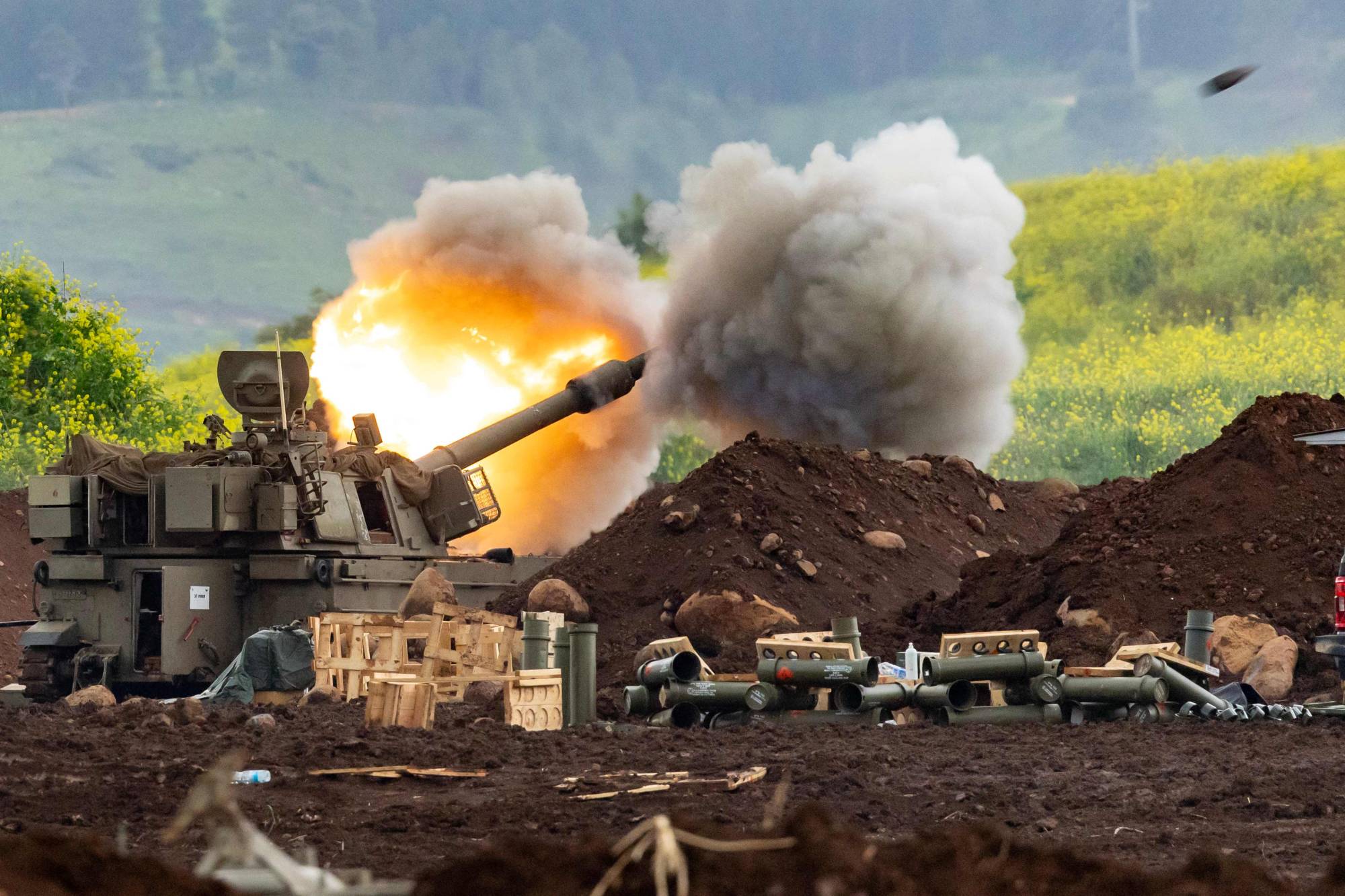
An Israeli self-propelled howitzer artillery gun fires rounds towards southern Lebanon from a position in the upper Galilee in northern Israel near the border on March 15, 2026. (AFP)

Hezbollah in 2026: A war of drones

Hezbollah sought to regain the initiative in the latest conflict, which erupted in March and coincided with the war with Iran. Israel conveyed a message that it was not interested in opening a front with Lebanon so long as Hezbollah remained on the sidelines.

The group reassured officials in Beirut that it would not initiate hostilities. It nevertheless surprised observers by launching rockets toward northern Israel, prompting a fierce Israeli response.

Unlike the image it initially projected through the launch of six rudimentary rockets, Hezbollah appeared far more organized and capable in the fighting that followed, revealing capabilities that had remained concealed during 15 months of relative calm. The group claimed to be carrying out as many as 100 operations a day against Israeli forces and introduced new weapons systems to the battlefield.

Its ground strategy also evolved. Rather than relying on static defenses or attempting to halt Israeli advances outright, Hezbollah focused on inflicting the greatest possible damage on advancing forces.

Rise of drones

Rockets no longer dominate the battlefield between Israel and Hezbollah. After weeks of fighting that erupted in the spring of 2026, a notable shift emerged in the military operations, with attack and suicide drones moving to the forefront and becoming one of the most influential factors shaping combat on both sides of the border.

For years, Hezbollah’s military identity was closely associated with its vast rocket arsenal, which represented Israel’s primary security concern. The current conflict, however, has shown that the group no longer relies exclusively on rockets. Instead, it has expanded its use of drones on a large scale.

According to Israeli assessments, a substantial share of Hezbollah’s recent attacks has involved attack and suicide drones, while conventional rockets have assumed a less prominent role than before.

Israeli researchers argue that this shift reflects lessons drawn from recent conflicts, particularly the war in Ukraine, where inexpensive drones demonstrated their ability to inflict significant losses on technologically superior forces.

According to Israeli reports and military studies published since the outbreak of the war in March, Hezbollah’s principal weapon is no longer its rocket arsenal alone but the attack and suicide drones that have become the primary threat facing Israeli forces in southern Lebanon.
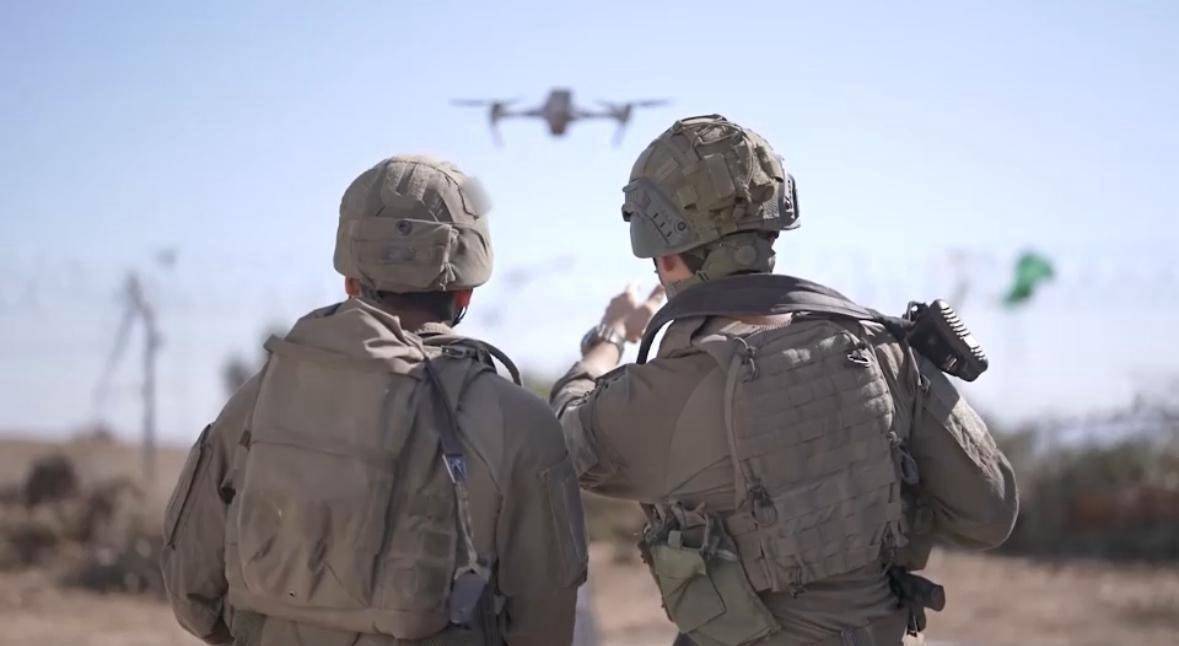
Israeli soldiers operate a drone. (Israeli army)

Foremost among these are FPV suicide drones guided by thin fiber-optic cables, making them effectively immune to electronic jamming. Their small size, low-altitude flight profiles, and erratic maneuverability pose additional challenges for Israeli radar and air-defense systems.

These drones carry relatively small explosive payloads, typically weighing no more than five kilograms. A Lebanese security source told Asharq Al-Awsat that Hezbollah employs three different types of warheads depending on the intended target—whether a tank, a conventional vehicle, or personnel.

Former Israeli officers say the threat posed by these drones extends beyond fixed military targets. They are also capable of tracking moving forces and striking tanks, vehicles, and field command centers, placing continuous pressure on Israeli ground units in southern Lebanon.

No definitive figures are available regarding the number of suicide drones Hezbollah has used since the beginning of the war. Unofficial Israeli estimates, however, suggest that the number may range from several hundred launches to more than a thousand.

Israel recently stated that Hezbollah had launched more than 120 drones of this type. The group, meanwhile, has released dozens of videos purporting to show drones striking vehicles, armored platforms, electronic systems, and personnel in the field.

Israel says Hezbollah’s operations have killed 20 soldiers and wounded dozens more since March.

In addition, Hezbollah has claimed responsibility for detonating explosive devices against Israeli vehicles deep inside operational areas and for repelling Israeli incursions using light and medium machine guns, as well as rocket-propelled grenades (RPGs).
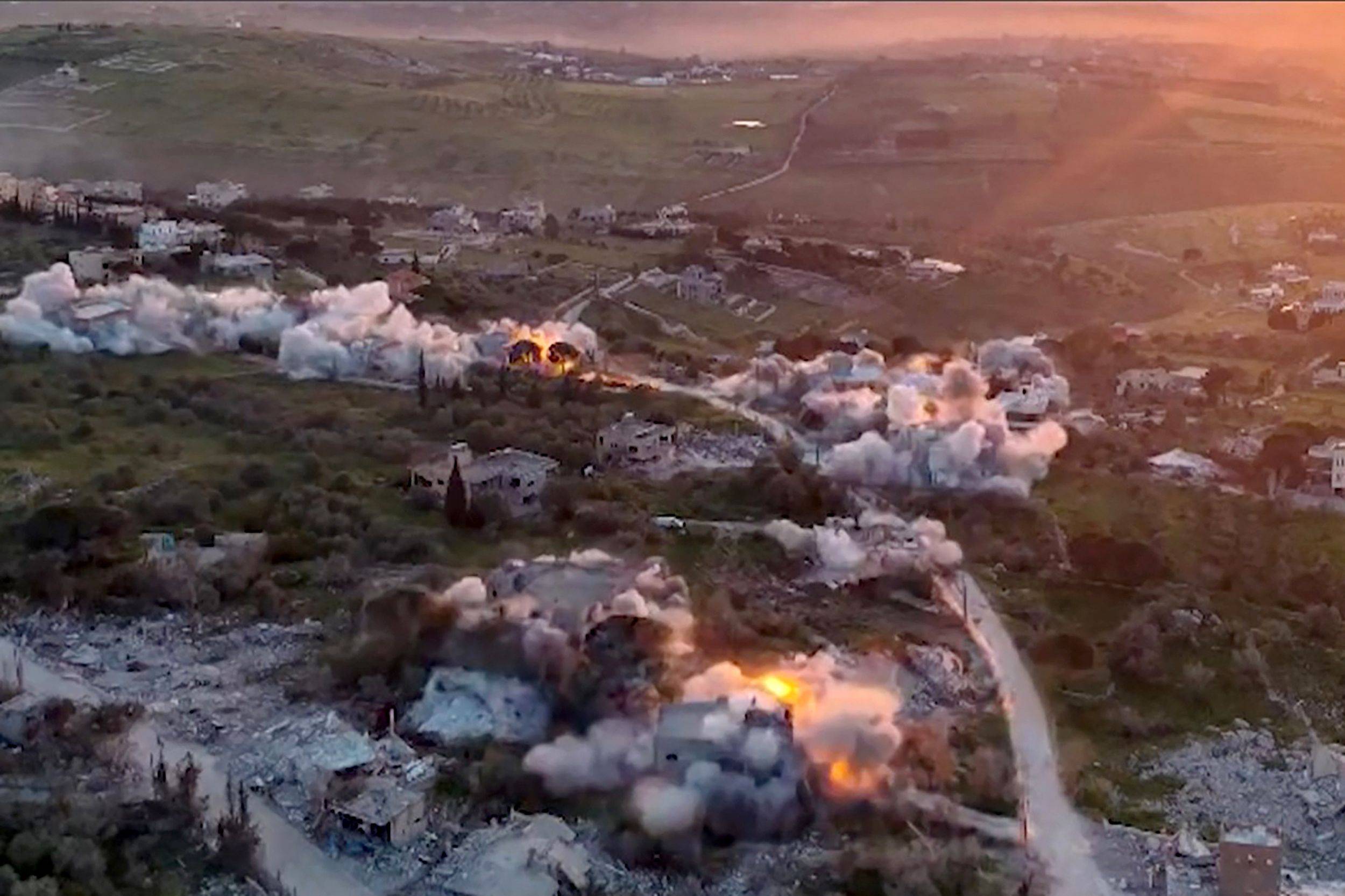
A screengrab image taken from a handout video released by the Israeli army and created on April 27, 2026, shows Israeli army footage of what it says is the destruction of Hezbollah infrastructure in Lebanon, where a ceasefire has been in place since mid-April. (Israel Army / AFP)

Anti-armor missiles

Anti-armor missiles remain the backbone of Hezbollah’s ground warfare capability and have been used against Israeli tanks, vehicles, and fortifications.

Israeli sources point in particular to the Almas missile family, derived from Israel’s Spike missile system. According to those sources, Iran reverse-engineered the weapon after Hezbollah fighters captured an Israeli missile during the 2006 war. Russian-made Kornet systems and other anti-tank platforms also remain in service.

A third category of weapons consists of short- and medium-range rockets and artillery projectiles used extensively against military positions, troop concentrations, and bases in the Galilee and northern Israel. Their use, however, declined relative to drones during many phases of the 2026 conflict.

Reconnaissance and attack drones

Reconnaissance and attack drones rank fourth among Hezbollah’s principal battlefield systems.

Not all of them are suicide drones. Some are used for surveillance, fire correction, and target acquisition, while others carry small munitions and return to base after completing their missions.

Israeli sources have also reported limited use of anti-aircraft missiles and air-defense fire directed at Israeli aircraft.

Nevertheless, these systems have not proven as decisive as drones and anti-armor missiles in the current conflict.
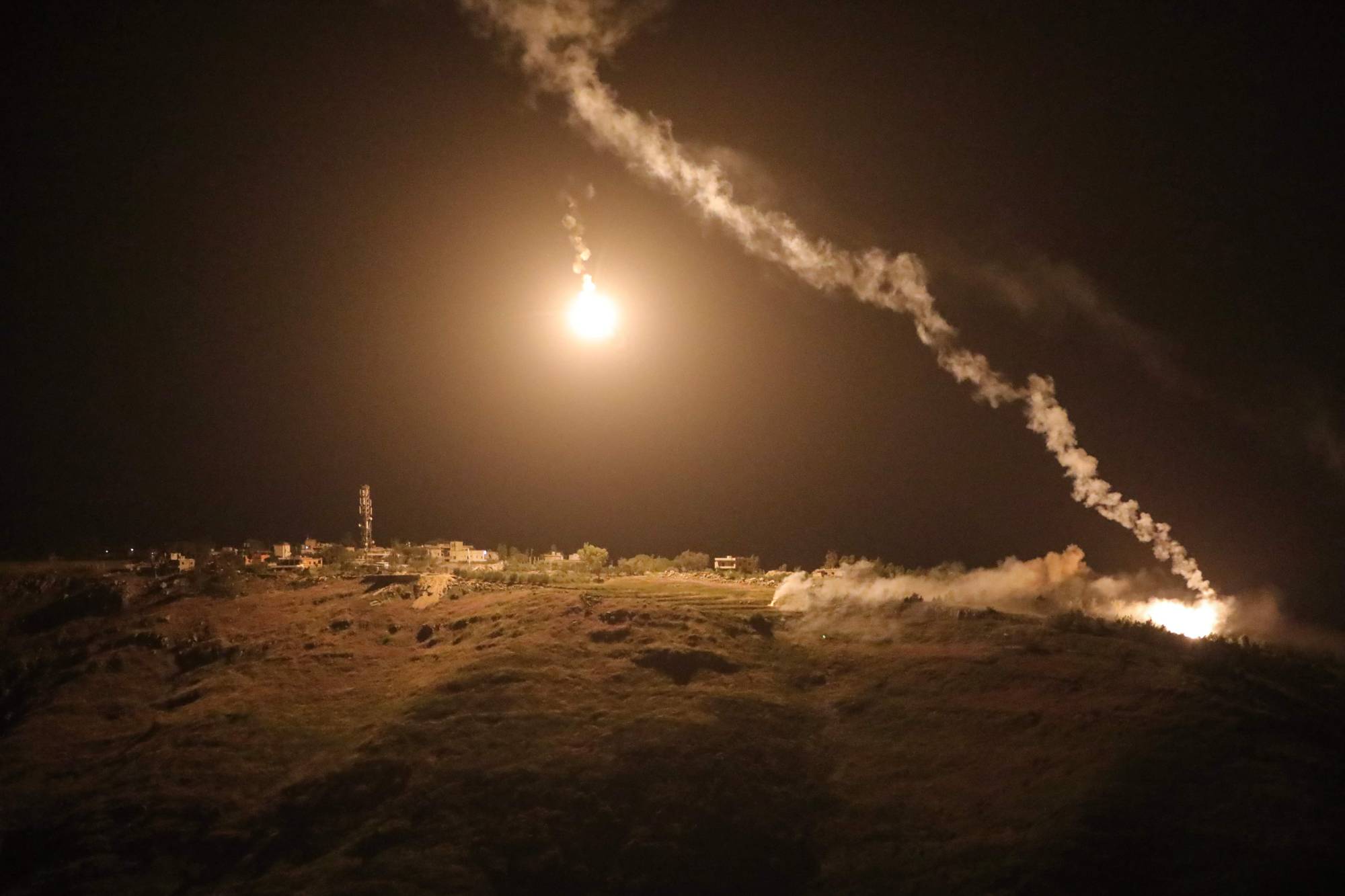
A photograph taken from the southern area of Marjeyoun shows flares fired by the Israeli military descending over the village of Arnoun late on May 13, 2026. (AFP)

Evolving tactics

Israel, too, has adapted its methods of warfare.

Rather than relying primarily on armored formations advancing under air cover, it has sought to reduce casualties and increase mobility.

Lebanese security sources said the Israeli military has adopted tactics centered on small special forces teams moving along unpaved routes to avoid mines and ambushes. At the first sign of resistance, these units withdraw while combat aircraft strike hostile firing positions.

Alongside heavy air raids conducted by fighter jets and precision strikes carried out by drones against individuals traveling in cars and motorcycles, Israel has introduced two additional systems to the battlefield.

The first consists of loitering munitions, which have appeared in footage targeting motorcycles and personnel in the field.

The second is the extensive use of guided artillery rounds in 155 mm and 240 mm calibers, according to field sources in southern Lebanon. These systems have been employed against villages located well beyond the border zone.

The sources described the rounds as laser-guided, providing greater accuracy and enabling strikes at distances reaching up to 30 kilometers inside Lebanese territory.

According to Israeli statements and observations by military research centers during the 2026 war, unmanned aerial systems have been among the most heavily utilized assets in Lebanon. Israel maintains an extensive drone network covering both front-line and rear areas, including the Hermes 900 and Hermes 450 platforms, as well as smaller Skylark reconnaissance drones.

These systems have been used for surveillance, target acquisition, fire direction, and precision strikes against both mobile and fixed targets.

A beachgoer stands in the water against the backdrop of smoke rising from the site of an Israeli strike that targeted the southern Lebanese village of al-Mansouri on May 22, 2026. (AFP)

Precision munitions and guided missiles

Israel has also employed long-range missiles from the Spike NLOS family, as well as precision-guided aerial munitions launched from aircraft and drones against command centers and launch sites.

Tanks and armored units remain central to Israeli ground operations in southern Lebanon, although many have come under attack from drones and anti-armor missiles.

Israel has also employed artillery, surface-to-surface missiles, long-range rocket launchers, and self-propelled guns to strike targets deep inside Lebanon, along with precision ground-to-ground missiles against preselected objectives.

Air-defense systems

Israel possesses several major air-defense systems, most notably Iron Dome, David’s Sling, and Arrow.

Yet Israeli reports themselves acknowledge that these systems have faced difficulties countering the small suicide drones used by Hezbollah, particularly those guided through fiber-optic cables.

Israeli media previously reported that the military had introduced the Ro’em artillery system into service in southern Lebanon. The Israeli-made 155 mm system is wheel-mounted for enhanced mobility, features automatic loading, requires a crew of only three rather than seven personnel, offers a firing range of up to 40 kilometers, and incorporates advanced command-and-control capabilities.
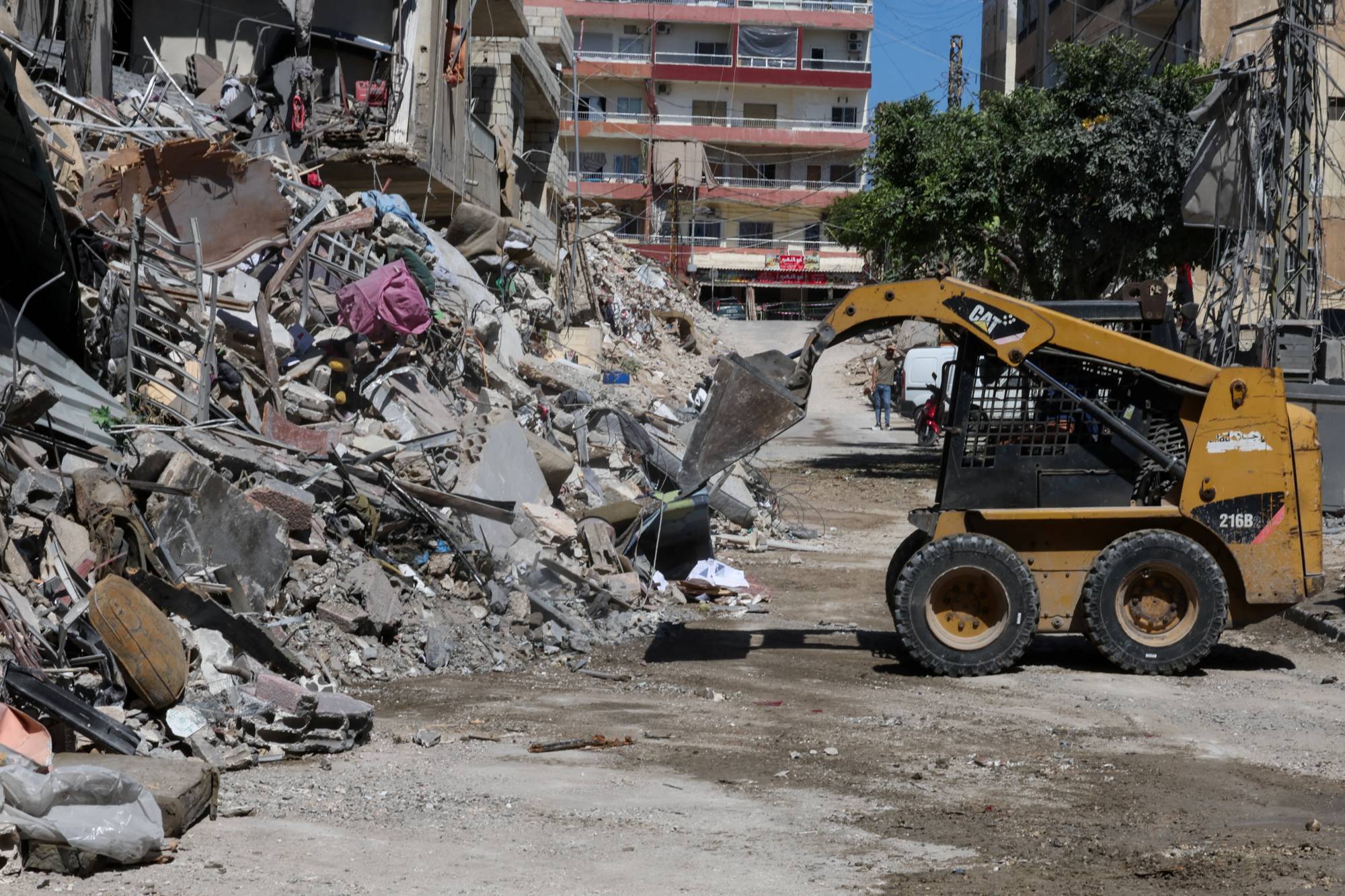
Heavy machinery clears the rubble at the site of an overnight Israeli strike in the southern city of Tyre, Lebanon, May 23, 2026. (Reuters)

Rules of engagement

Since the ceasefire took effect, Hezbollah has sought to establish rules of engagement that would confine the fighting to occupied territory by refraining from targeting Israeli towns and settlements in the north. The Israeli military, however, gradually expanded the battlefield through sustained airstrikes and bombardment reaching the outskirts of Sidon.

Speaking to Asharq Al-Awsat, retired Brig. Gen. Said Kozah said Hezbollah has been attempting since the ceasefire to establish a new operational equation with Israel based on the principle that every Israeli strike should trigger a response. However, he argued, Israel continues to work against this.

Kozah noted that describing the situation as “rules of engagement” is not entirely accurate because the term is generally used between regular armies or within a clearly defined military framework.

“In practice,” he said, “Hezbollah is attempting to entrench a new set of rules under which any Israeli attack would be met with retaliation—whether through strikes against Israeli positions in occupied Lebanese territory or through rocket fire directed into Israel.”

He added that Hezbollah had recently carried out operations against Israeli positions in the border area, some involving drones and others consisting of infiltration attempts or direct attacks.

He also remarked that rocket launches into Israel had declined in recent days and that many had been intercepted because of the relatively limited numbers employed.

According to Kozah, Hezbollah seeks through these operations to reinforce the legitimacy of retaining its weapons under the banner of resisting occupation within Lebanese territory. At the same time, the group avoids addressing the factors that led to the current level of escalation and occupation.

As for whether Hezbollah has succeeded in imposing this new equation, Kozah said the situation suggests Israel remains the one setting the rules.

“The Israeli military is not limiting its operations to the buffer zone or the so-called ‘Yellow Line,’” he said. “It continues to conduct operations, clearing activities, and strikes against villages north of that line, effectively rejecting the balance Hezbollah is trying to establish.”



Why is North Korea Ramping Up Criticism of Japan?

News coverage showing file footage of a North Korean missile launch is seen on a screen at Seoul Station in Seoul on August 12, 2026. (Photo by GREG BAKER / AFP)
TT

Why is North Korea Ramping Up Criticism of Japan?

News coverage showing file footage of a North Korean missile launch is seen on a screen at Seoul Station in Seoul on August 12, 2026. (Photo by GREG BAKER / AFP)

North Korea has stepped up a campaign of rhetoric against Japan's military ‌buildup and its security ties with the United States and South Korea, saying they threaten regional stability. The criticism in more than a dozen state media attacks since early July has coincided with an unusual silence over the North's own missile launches, raising questions about Pyongyang's broader strategic messaging, according to Reuters.

WHY IS NORTH KOREA TALKING MORE ABOUT JAPAN?

North Korean statements have targeted Japan's acquisition of counter-strike capabilities, testing of a US-made Tomahawk cruise missile, rising defense spending and Tokyo's annual defense white paper.

Last week, Kim Yo Jong, the influential sister of leader Kim Jong Un, warned of "additional military options" in response to what she described as Japan's transformation into a military power. On Tuesday, a KCNA commentary described Japan's 2026 defense white paper as a "re-invasion-minded" document aimed at justifying military expansion.

The latest broadside came on Friday, when North Korea criticized annual US-South Korean Ulchi Freedom Shield military drills and accused US-Japan-South Korea military cooperation of evolving into a "nuclear alliance". Washington and Seoul say the drills are defensive.

Another KCNA commentary accused Washington of pursuing a strategy that lowers the threshold for nuclear weapons use and cited US extended deterrence commitments to South Korea and Japan.

HOW HAS ‌JAPAN CHANGED ITS ‌DEFENCE STANCE?

Japan in 2022 announced plans to double defense spending to 2% of GDP to ‌counter ⁠growing security threats ⁠from China, Russia and North Korea.

A major part of that expansion includes spending on long-range missiles such as the US-made Tomahawk, which can strike targets more than 1,000 km (621 miles) away. Prime Minister Sanae Takaichi’s government is expected this year to revise Japan’s national security strategy, a move some analysts will likely lead to further increases in defense spending, including on drones and arms production.

IS THIS REALLY ABOUT JAPAN?

Analysts say Japan is only part of the story.

Park Won-gon, a professor at Seoul's Ewha Womans University, said the primary goal is to frame Northeast Asia as a contest between rival camps.

"The biggest objective is to create a US-South Korea-Japan versus North Korea-China-Russia framework," Park said.

He said Pyongyang wants stronger backing ⁠from Beijing and Moscow to cement its escape from diplomatic isolation and to bolster arguments that its ‌nuclear arsenal is necessary.

South Korea's Unification Ministry expressed a similar view on Thursday after ‌North Korean First Vice Foreign Minister Jang Kum-chol criticized Seoul's plans to acquire nuclear-powered submarines and accused South Korea, the United States and Japan of ‌preparing a "second AUKUS" in Northeast Asia. The ministry said North Korea appears to view South Korea's submarine plans, Japan's evolving security posture ‌and trilateral military cooperation as threats to the regional balance of power, as it increasingly aligns itself with China and Russia. Kyungnam University professor of North Korean studies Lim Eul-chul said North Korea's messaging increasingly mirrors China's concerns about Japan's military expansion.

WHY IS NORTH KOREA STAYING SILENT ABOUT ITS MISSILE TESTS?

The heightened rhetoric has coincided with unusual silence on North Korea's recent missile launches, which were condemned by South Korea, Japan and the United States.

Despite conducting ‌ballistic missile tests last week and again this week, state media has yet to report either, departing from its usual pattern of publicizing tests within a day.

Analysts say the launches may ⁠have involved upgrades to existing missile ⁠systems rather than new weapons, reducing their propaganda value. Shin Jong-woo of the Korea Defense and Security Forum said the tests may have involved improved short-range ballistic missiles developed with Russian technical assistance and potentially destined for Russia.

Kim Yong-hyun, a professor at Dongguk University, said North Korea may be avoiding publicity if launches are connected to prospective military exports.

WHAT DOES RUSSIA HAVE TO DO WITH IT?

North Korea's growing military cooperation with Russia has become a central factor in assessments of its weapons programs. Ukrainian President Volodymyr Zelenskiy has repeatedly said Russia continues to use North Korean missiles against Ukraine and has accused Pyongyang of providing Moscow with missiles, ammunition and a further promise of troops for the war effort.

Analysts say battlefield feedback and Russian assistance may have helped North Korea improve the accuracy and performance of some missile systems.

Shin said recent launches could have been tests of upgraded variants before deployment or export.

WHAT IS NORTH KOREA TRYING TO ACHIEVE?

Analysts say North Korea is seeking to cast the region in terms of competing blocs, with Pyongyang, Beijing and Moscow on one side and Washington, Seoul and Tokyo on the other.

Portraying US-South Korea-Japan cooperation as an increasingly threatening military and nuclear alliance helps Pyongyang justify its weapons programs, bolster Chinese and Russian backing and argue that its nuclear arsenal is a necessary response to a worsening security environment, they say.


Mazen Al-Sudairi Brings Financial Expertise as Saudi Market Expands Globally

Mazen bin Turki Al-Sudairi (Asharq Al-Awsat)
TT

Mazen Al-Sudairi Brings Financial Expertise as Saudi Market Expands Globally

Mazen bin Turki Al-Sudairi (Asharq Al-Awsat)

Mazen bin Turki Al-Sudairi will lead the board of Saudi Arabia’s Capital Market Authority after a royal order appointed him chairman with the rank of minister, as the kingdom’s capital market rapidly expands, deepens its offerings, strengthens ties with global markets and seeks to attract more foreign investment.

Al-Sudairi brings a career rooted in financial markets and investment before moving into government and policymaking, combining technical expertise in market analysis with institutional experience inside government.

His appointment comes as Saudi Arabia’s capital market enters a new phase of growth focused on greater depth and openness, a broader investor base and a stronger presence in global markets, alongside the economic and investment transformation under Saudi Vision 2030.

The royal order appointed Al-Sudairi chairman of the Capital Market Authority’s board with the rank of minister, succeeding Mohammed El-Kuwaiz. He takes charge of the market regulator as the financial sector assumes an increasingly important role in financing economic growth and attracting domestic and international capital.

Since 2024, Al-Sudairi has served as an adviser at the General Secretariat of the Council of Ministers at an excellent grade, adding a government dimension to his background in finance and investment. The role broadened his experience from analyzing markets and investments to working in an environment closely connected to policymaking and decision-making.

He holds a master’s degree in finance from HEC Paris in France and a bachelor’s degree in industrial engineering from King Saud University, an academic background combining financial knowledge with the analytical and quantitative training associated with engineering.

Al-Sudairi has extensive experience in financial services and capital markets. He served as head of research at Al Rajhi Capital, where he monitored company and sector performance and analyzed economic and financial developments and their impact on investor decisions.

He also headed sell-side research at Al-Istithmar Capital, adding experience in managing investment research and responding to market developments and investor needs during a period of rapid regulatory and investment change in the Saudi market.

Earlier, Al-Sudairi worked as an analyst covering the energy and petrochemicals sectors at Samba Capital, two of the most influential sectors in the Saudi economy and capital market. The role gave him direct experience analyzing companies and industries exposed to energy markets, global developments, commodity prices and economic cycles.

His career also took him outside Saudi Arabia, where he worked in equity research at Bank Degroof in Belgium. The experience added an international dimension to his background and gave him practical exposure to market and company analysis in a European financial environment.

Al-Sudairi is a recognized name in financial research and market analysis, having built experience across Saudi and international financial and investment institutions. His roles have been closely tied to assessing markets, analyzing companies and sectors, and evaluating investment opportunities.

His career spans financial and economic analysis, investment research and government work. After years of leading research functions at Saudi financial institutions and analyzing equities and sectors, his move into government added experience in institutional work and policymaking.

Al-Sudairi takes the helm of the Capital Market Authority’s board as the market becomes increasingly important as a channel for financing companies and projects, supporting private-sector growth, expanding savings and investment options, and connecting the Saudi economy more closely with global capital flows.


From War Amnesty to Prison Amnesty... What Has Changed in Lebanon in 35 Years?

A general view of parliament building in Beirut, Lebanon, March 24, 2026. (Reuters)
TT

From War Amnesty to Prison Amnesty... What Has Changed in Lebanon in 35 Years?

A general view of parliament building in Beirut, Lebanon, March 24, 2026. (Reuters)

The Lebanese parliament's landmark approval of an amnesty law on Wednesday, 35 years after the 1991 amnesty, has revived debate on the different circumstances that prompted Lebanon to resort to amnesty twice.

While the first was enacted to turn the page on the 1975-90 civil war and kick off a new political chapter in the country, the 2026 law came to address the conditions of detainees and convicts, prolonged detentions, and the prison crisis, amid political considerations that led to parliament to ratify it.

‘Public oblivion’

Former Minister of Social Affairs Rashid Derbas brought the discussion back to the philosophy of amnesty itself, telling Asharq Al-Awsat that "the general amnesty issued in 1991 came following the civil war, in hopes of closing a chapter and entering a new era."

He explained that "the philosophy of general amnesty is fundamentally based on establishing public oblivion, meaning closing a page of the past and opening a new one."

Commenting on the current amnesty law, Derbas wondered: "Is it reasonable for a person to remain all this long time without a trial? Is it reasonable for certain accusations and cases to drag on to this extent? It was necessary to address this issue,” but unfortunately, it fell victim to political wrangling for years.

Former Justice Minister Ibrahim Najjar drew a legal and political distinction between the two experiences, telling Asharq Al-Awsat that "there is a very big difference between the law of August 26, 1991, and the law of August 12, 2026."

He explained that "from a political standpoint, the 1991 general amnesty law aimed to turn the page on the war and conclude all prosecutions associated with it. This is evidenced by the fact that it broadly covered crimes committed before March 28, 1991, specifically war-related crimes of a political nature, with some specific exceptions."

Najjar added that "the 1991 law therefore had a political, reconciliatory character, meaning it aimed to restore the smooth functioning of coexistence, which was its primary political goal."

As for the new legislation, he placed it in a different framework, stating that "the 2026 law has specific political dimensions in Lebanon and Syria, in addition to being related to prison conditions and the high number of detainees and convicts."

Najjar stressed that "the law issued on Wednesday is not a general amnesty for crimes committed before a specific date, because it targets specific categories and cases. It is closer to a socio-penal law concerned with addressing the conditions of detainees and convicts through an exceptional reduction of certain sentences."

He pointed out that "the 2026 law excluded many crimes and felonies, including the killing of military personnel, crimes referred to the Judicial Council, premeditated murder, money laundering, financial crimes, and drug felonies."

"This Lebanese law has clear Syrian dimensions, and it has also benefited some Lebanese who had sought refuge in Israel," he added.

Lebanese lawmakers attend a parliamentary session to discuss a proposed general amnesty law, the abolition of the death penalty and the salaries of retired members of Lebanon's security forces in Beirut, Lebanon, 11 August 2026. (EPA)

Political settlement

Former MP and Minister Butros Harb interpreted the current law from an angle that combines politics and humanitarian considerations.

Speaking to Asharq Al-Awsat, Harb stated: "In part, the current amnesty is a political settlement more than a purely judicial move, even though it includes a humanitarian aspect that cannot be ignored."

At the same time, he stressed that addressing the conditions of prisoners should not lead to "overlooking the rights of the Lebanese Army and its victims, particularly in cases related to those who engaged in clashes with it."

He explained that "there is a humanitarian aspect that must be taken into account, because the Lebanese judiciary was influenced at certain stages and did not exercise its powers with the required speed, whether in terms of settling cases or issuing verdicts."

He noted that "there are individuals who spent long periods in prison that, in some cases, exceeded the sentence that could have been issued against them had they been tried within normal timeframes."

This "demands a humanitarian and legal solution to the problem," he remarked.

However, he noted that the amnesty file "has also unfortunately turned into a subject of sectarian debates, especially regarding the cases of Islamists who fought the army."

Harb criticized the double standards related to the army in the ongoing debate. "Some of those who today declare their concern for the army were, unfortunately, among the forces that helped inflict major losses on it, whether during the Lebanese civil war or in the clashes the country witnessed in later years."

The issue must not turn into fodder for political debates at the expense of the army or the rights of its victims, he urged.

‘Fundamentally different’

He said the 1991 and current amnesty are "fundamentally different."

He explained that the 1991 amnesty happened during "exceptional political circumstances that followed the Taif Agreement" and the end of the civil war.

"At that time, Lebanon was emerging from a long war, and it was necessary to turn the page on that chapter and enter a new era allowing the rebuilding of the state. Therefore, the amnesty was part of a broader national political settlement."

"Today, however, the problem is different even if it has a political aspect because it is primarily linked to a judicial and humanitarian failure that must be addressed," Harb stressed.

"The issue required a solution because it is unacceptable for individuals to remain in prison for years due to delayed trials or the failure to settle their cases," he said.