


Attacks on Gulf States...an Obstacle to Egypt-Iran Rapprochement

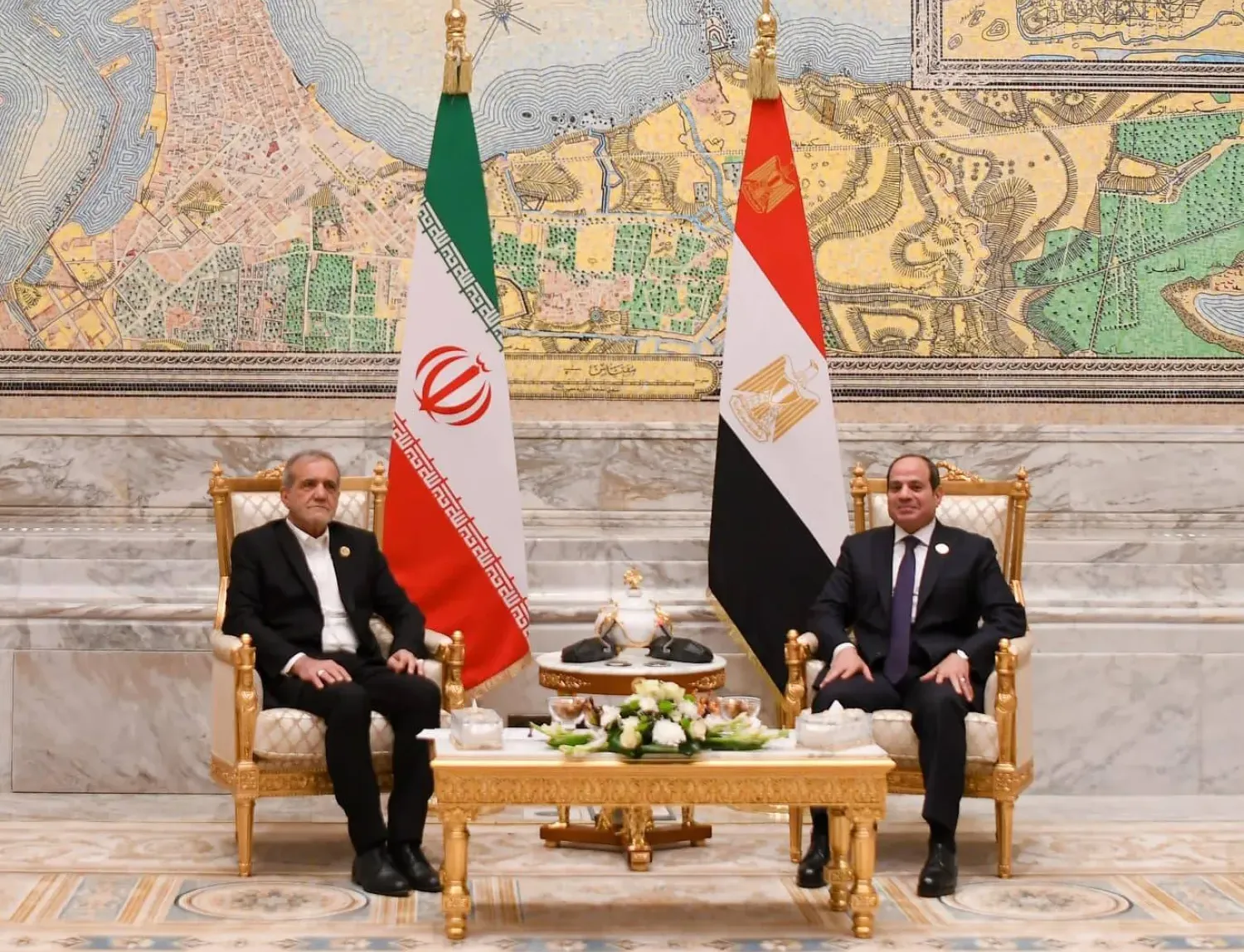
Egyptian President Abdel Fattah el-Sisi during his meeting with his Iranian counterpart in Cairo in December 2024 (Egyptian Presidency)
TT

Attacks on Gulf States...an Obstacle to Egypt-Iran Rapprochement

Egyptian President Abdel Fattah el-Sisi during his meeting with his Iranian counterpart in Cairo in December 2024 (Egyptian Presidency)

After two years of steadily improving ties that appeared to be moving toward the restoration of full diplomatic relations, Egypt and Iran now seem to be facing a major setback. Egypt views Iran's current war and the subsequent attacks it carried out against Gulf states as a violation of one of its key conditions for fully normalizing relations: that Iran must not threaten the security of the Gulf or the wider region.

In a series of official statements and comments, Egypt has strongly condemned the Iranian attacks targeting Gulf Arab states, describing them as a dangerous escalation, a blatant violation of national sovereignty, and a direct threat to regional security and stability.

In its latest position, Egypt on Wednesday condemned "in the strongest terms" what it described as Iran's attacks on Jordan, Bahrain and Kuwait, saying they constituted "a flagrant violation of the sovereignty and territorial integrity of these sisterly states and a highly dangerous escalation that threatens the security and stability of the entire region," according to a Foreign Ministry statement.

Egypt stressed that "the security and stability of sisterly Arab states are an integral part of Egyptian and Arab national security," reiterating its categorical rejection of any actions or practices that undermine state sovereignty or threaten territorial integrity and security. It also underscored the importance of de-escalation and respect for international law in order to preserve regional security and stability.

For its part, Iran has been seeking to restore momentum in its relationship with Egypt. On Monday, Iran's mission in Cairo announced that Foreign Minister Abbas Araghchi had met in Tehran with Mojtaba Ferdowsi, head of Iran's Interests Section in Cairo, to discuss the course of bilateral relations.

According to the mission, Ferdowsi briefed Araghchi on the latest developments in relations between the two countries, as well as ongoing political contacts and cooperation in several fields.

The mission said Araghchi emphasized the importance of continuing bilateral consultations, adding that Egypt-Iran relations had made notable progress in recent years and that "continuous dialogue and consultation between Cairo and Tehran constitute an important pillar in supporting efforts for peace and stability in the Middle East."
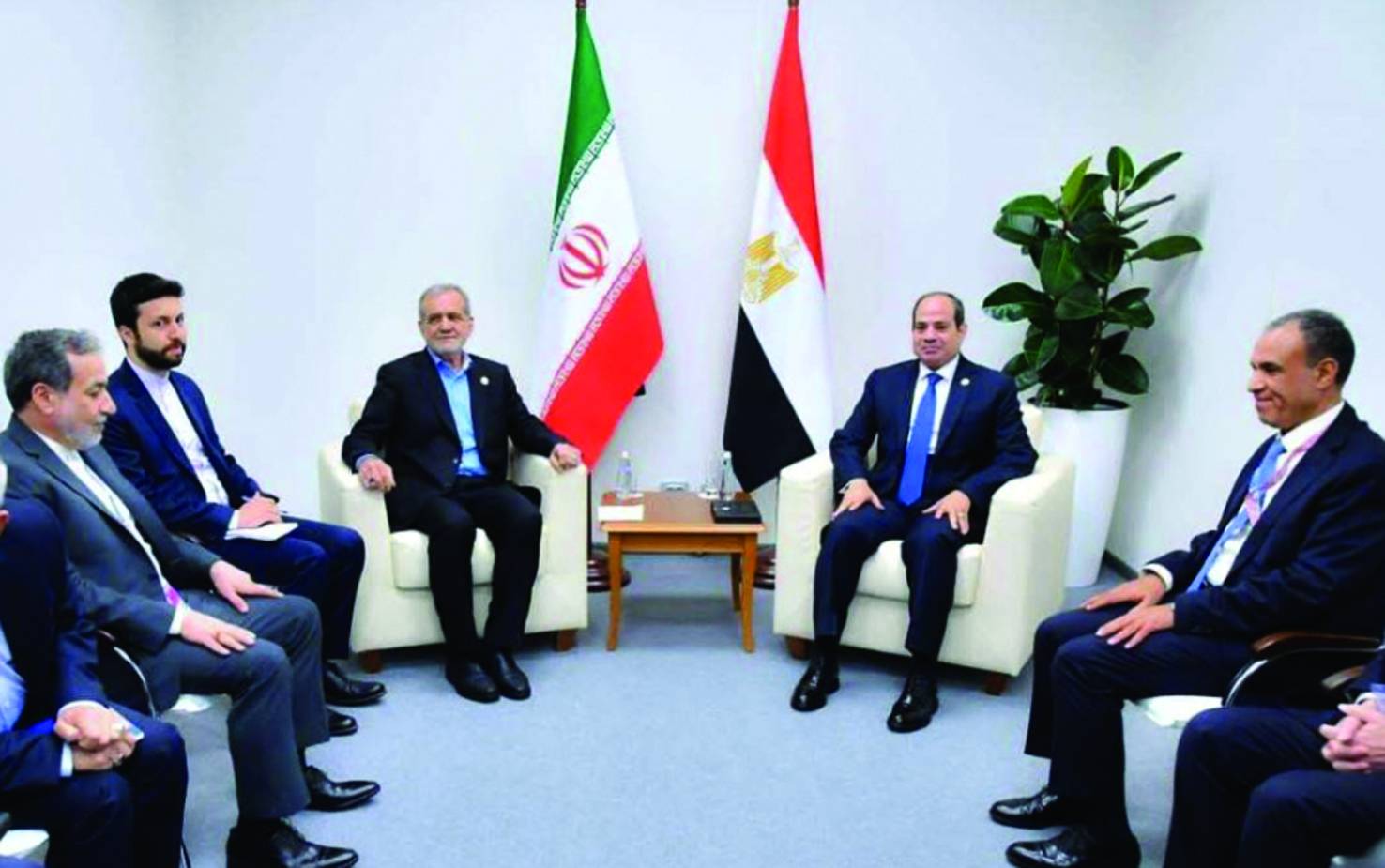
Egyptian and Iranian presidents and their delegations on the sidelines of the BRICS summit in Russia in October 2024 (Egyptian Presidency)

Bare Minimum

Diplomatic relations between Egypt and Iran were severed in 1979 before being resumed 11 years later at the chargé d'affaires level.

Over the past two years, Egyptian and Iranian officials have held a series of meetings to discuss the possibility of developing relations further. Progress gained momentum in May 2023 following a presidential directive in Iran instructing the Foreign Ministry to take the necessary steps to strengthen relations with Egypt.

The period also saw meetings between the two countries' foreign ministers, as well as encounters between Egyptian President Abdel Fattah el-Sisi and both Iran's late president Ebrahim Raisi and current President Masoud Pezeshkian.

Asked about the prospects for advancing bilateral ties under current circumstances, former Egyptian Foreign Minister Mohamed El-Orabi said there was little room at present to speak of further development in Egypt-Iran relations.

"The region is experiencing turmoil that requires maintaining only the minimum level of relations necessary to manage the situation, reduce tensions and prevent further escalation," he told Asharq Al-Awsat.

He added: "The situation is not as dynamic as Tehran portrays it. There are certainly contacts and consultations, but they are aimed at addressing concerns that could further destabilize the region, not at deepening relations. Egypt rejects Iran's attacks on Gulf states and has strongly condemned them. That message has reached Iran, which is now trying to restore the level of rapprochement that existed before the current war."
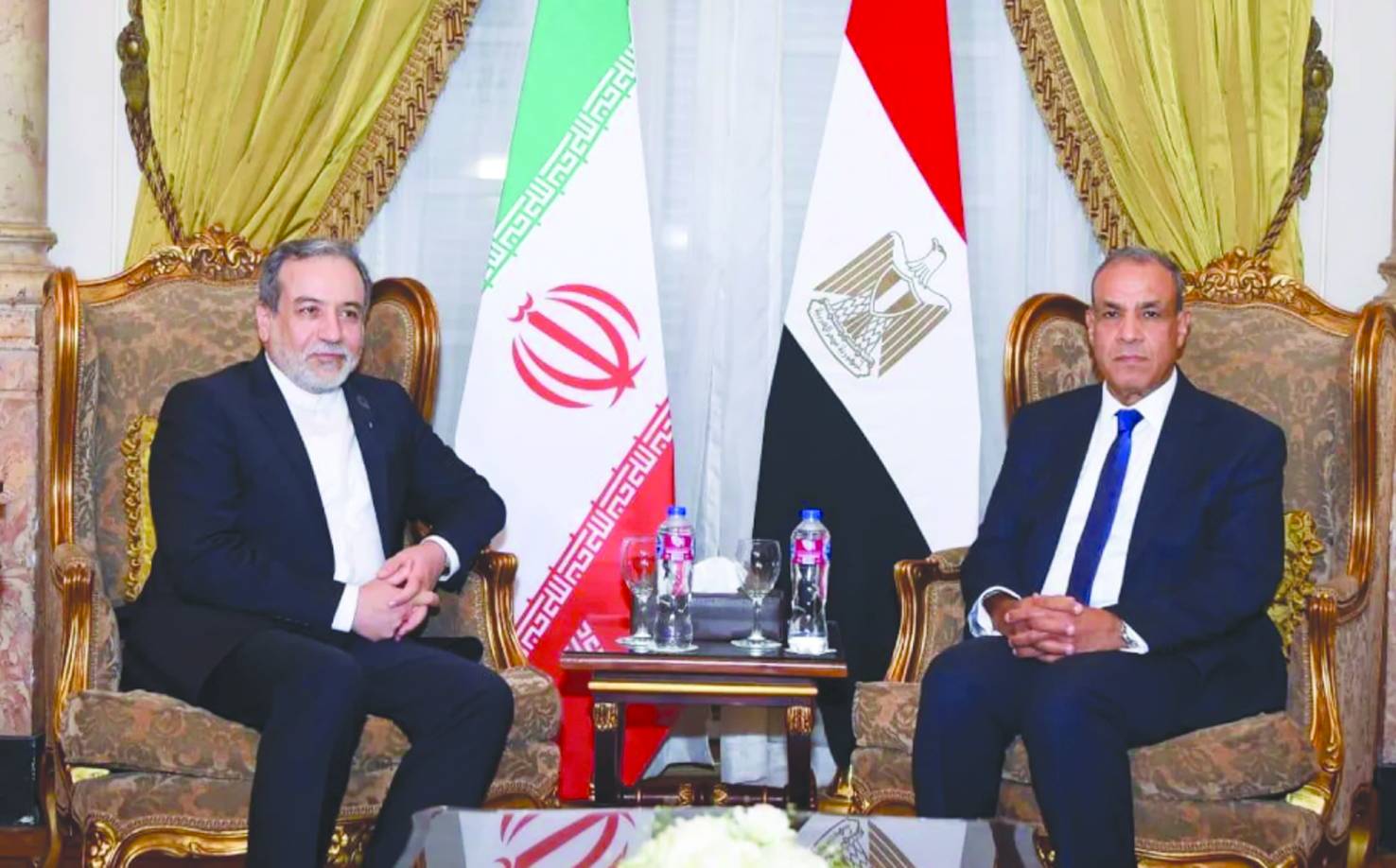
File: The Egyptian Foreign Minister and his Iranian counterpart in Cairo (Egyptian Foreign Ministry)

Tarek Fahmy, professor of political science and international relations at Cairo University, said Egypt had approached Iran cautiously even before the war because of a longstanding lack of trust.

"Even when Iran responded by changing the name of Islambouli Street, named after the assassin of President Anwar Sadat, Egyptian officials stressed that this was not the basis of Egypt's demands for restoring relations with Iran," Fahmy said.

"There were broader political and security requirements related to regional security, foremost among them the security of the Gulf states and non-interference in Arab affairs."

He added that despite Iranian assurances intended to demonstrate goodwill and meet Egypt's requirements, which helped advance relations to some extent, Iran's current war and the subsequent attacks directed at Gulf states prompted Egypt to stand firmly behind Gulf security.

The Message Was Received

During two phone calls with the Iranian president in March and May, Sisi stressed Egypt's categorical rejection of any violation of Gulf states' sovereignty.

"The message has reached Iran, and Tehran has taken notice of it," Fahmy said. "It is now working to address the issue in an effort to restore the trajectory of relations with Cairo."

According to Fahmy, Iran wants Egypt to be one of the principal parties involved in any current or future negotiations with the United States, Israel or the International Atomic Energy Agency because of Egypt's credibility and its ability to maintain channels of communication with all sides.

"Tehran understands that its negotiations cannot rely on Pakistan alone," he said, adding that Iran also views Egypt as a key stabilizing force for regional security and stability.

Nevertheless, Fahmy does not expect Cairo to restore full diplomatic relations with Tehran unless Iran fulfills Egypt's conditions and requirements.

"Egypt will not take that step unless stability and balance are restored in the Gulf and the region as a whole," he said.


US to Remove Syria from Terror Blacklist

US President Donald Trump meets Syrian President Ahmed al-Sharaa (L) on the sidelines of the NATO Summit at Bestepe Presidential Compound in Ankara, on July 8, 2026. (AFP)
TT

US to Remove Syria from Terror Blacklist

US President Donald Trump meets Syrian President Ahmed al-Sharaa (L) on the sidelines of the NATO Summit at Bestepe Presidential Compound in Ankara, on July 8, 2026. (AFP)

The United States said Wednesday it will delist Syria as a state sponsor of terrorism, a decades-old designation that severely impeded investment, in a new vote of confidence in President Ahmed al-Sharaa.

Secretary of State Marco Rubio formally informed Congress of the long-expected move, which will be effective in 45 days unless lawmakers take the unlikely step of blocking it.

The step came as President Donald Trump met on the sidelines of a NATO summit in Türkiye with Sharaa, who led a 2024 opposition offensive that toppled the Assad family, which ruled with an iron fist for a half century.

"This is yet another historic step by President Trump to give the Syrian people a chance at greatness," Rubio said in a statement.

"Lifting sanctions on Syria will unlock international trade and investment, give Syria a chance to rebuild, and open up a new chapter for the Syrian people," he said.

Trump's embrace of Sharaa comes despite misgivings from Israel, which has repeatedly launched airstrikes in Syria.

Trump had earlier publicly pressed for Syria to make peace with Israel but went ahead with the delisting decision despite a lack of tangible progress.

Rubio said in his statement that "a stable, unified Syria at peace with itself and its neighbors benefits not only the region, but the entire world."

A year ago, Trump started lifting most sanctions on Syria after Saudi Arabia and Türkiye both encouraged him to meet Sharaa.

Meeting with Sharaa, Trump said: "He's doing an unbelievable job in unifying Syria. What a job he's doing."

"Syria was a mess with what happened with the previous government," Trump said.

The United States listed Syria as a state sponsor of terrorism in 1979.

The designation creates legal risks to working in Syria for businesses, especially American ones or those with transactions in the world's largest economy.


Amnesty Urges Investigating Israeli Attacks on Lebanon as ‘War Crimes’

This picture taken from a position in the Upper Galilee in northern Israel shows Israeli military vehicles driving past houses destroyed in Israeli strikes in the southern Lebanese village near the Israel-Lebanon border, on July 1, 2026. (AFP)
TT

Amnesty Urges Investigating Israeli Attacks on Lebanon as ‘War Crimes’

This picture taken from a position in the Upper Galilee in northern Israel shows Israeli military vehicles driving past houses destroyed in Israeli strikes in the southern Lebanese village near the Israel-Lebanon border, on July 1, 2026. (AFP)

Amnesty International on Thursday accused Israel of wiping out families in its strikes on Lebanon during its war with Hezbollah, calling for these attacks to be investigated as war crimes.

Hezbollah drew Lebanon into the Middle East war on March 2 by launching rockets at Israel in support of its backer Iran.

Israel responded with major airstrikes and a ground invasion, killing more than 4,300 people according to Lebanese authorities, including more than 250 children.

Amnesty analyzed three strikes on civilian homes between March 6 and 13, in which 24 civilians were killed, 12 of them children.

The London-based rights group accused Israel of "wiping out families" in those strikes and called for them to be treated as "war crimes".

The group said it reached out to Israeli authorities, who said that some of the attacks "were carried out against Hezbollah military objectives", while others were "referred for examination".

The authorities told Amnesty they were "committed to mitigating harm to civilians during operational activity".

"Despite follow up, the Israeli military did not provide specific information regarding the three attacks... including what the targets may have been," Amnesty added.

Its findings in the investigation were based on interviews with 15 people, including survivors, relatives, paramedics, journalists who visited attack sites and local officials.

"Based on the evidence gathered, in each of these air strikes, Amnesty International has reasonable basis to conclude that Israeli forces violated international humanitarian law, including by failing to distinguish between civilians and military objectives, by carrying out attacks directed against civilians or civilian objects, or by failing to take all feasible precautions to minimize harm to civilians," the report read.

Kristine Beckerle, Amnesty's deputy regional director for the Middle East and North Africa, said that "within the space of just a week -- the Israeli military obliterated entire families, including a dozen children, in Lebanon, demonstrating a callous disregard for civilian lives".

"States must impose an immediate comprehensive arms embargo on Israel and use universal and extraterritorial jurisdiction to investigate and prosecute those responsible," she added.

Israel's Defense Minister Israel Katz said, in a statement on Thursday, that the military's operations in Lebanon were a response to attacks by Hezbollah.

"The terrorist organization Hezbollah has attacked Israel twice on its own initiative," Katz said, without specifying whether he was responding to Amnesty's report.

"Israel responded with force and, over the past two and half years, has crushed most of Hezbollah's capabilities and its leadership," adding that Israeli forces would remain in their self-declared "security zone" inside occupied Lebanese territory "as long as necessary" to protect Israel's northern communities.

Last month, Lebanon and Israel concluded a US-backed framework agreement aiming to pave the way for a permanent end to hostilities.

It was preceded by a memorandum of understanding between Iran and the United States to end the broader Middle East conflict, which included a ceasefire in Lebanon.

Despite this, Israel still carries out intermittent strikes on southern Lebanon, some of them deadly.


How a Palestinian Town Is Defending Itself from Israeli Settler Attacks

 Jawaher Foqahaa walks past the tall metal fencing installed by the Israeli military that closed off four of the five entrances to their town and runs directly past the family home, in Sinjil, near Ramallah, in the Israeli-occupied West Bank, June 26, 2026. (Reuters)
Jawaher Foqahaa walks past the tall metal fencing installed by the Israeli military that closed off four of the five entrances to their town and runs directly past the family home, in Sinjil, near Ramallah, in the Israeli-occupied West Bank, June 26, 2026. (Reuters)
TT

How a Palestinian Town Is Defending Itself from Israeli Settler Attacks

 Jawaher Foqahaa walks past the tall metal fencing installed by the Israeli military that closed off four of the five entrances to their town and runs directly past the family home, in Sinjil, near Ramallah, in the Israeli-occupied West Bank, June 26, 2026. (Reuters)
Jawaher Foqahaa walks past the tall metal fencing installed by the Israeli military that closed off four of the five entrances to their town and runs directly past the family home, in Sinjil, near Ramallah, in the Israeli-occupied West Bank, June 26, 2026. (Reuters)

On a cool night in June, some 15 Palestinians from the town of Sinjil in the occupied West Bank gathered on a hilltop to watch the shadowed valleys below for any sign of movement that might signal an impending Israeli settler attack.

They are part of a grassroots volunteer group — similar to others in the West Bank — that has stepped in to defend the town from rising settler violence that Palestinians say the Israeli military and their own government have proved unable or unwilling to prevent.

"We have been left on our own. You are facing settlers supported by their government," said Fadi Alwan, one of the volunteers.

"We have nobody. So we are forced to stay here and protect this town."

Prime Minister Benjamin Netanyahu's far-right government has approved hundreds of new settlements and settler outposts across the West Bank, the smaller outposts often serving as staging grounds for violence that has displaced thousands of Palestinians.

The Israeli government has said that through the strategic placement of settlements it plans to thwart a Palestinian state with the West Bank at its heart — a Palestinian objective key to the two-state solution long backed by world powers.

Most ‌of the world ‌considers all Israel's settlement activity in the West Bank, where the Palestinian Authority exercises limited self-rule and the ‌Israeli ⁠military operates freely, ⁠as illegal under international law. Israel disputes this view.

Palestinians say that when they call the Israeli police or the military they are either late to respond, or come to the aid of the settlers perpetrating the violence. The military denies this.

"The army protects them and doesn't stop them. We call the army. We call the police. It's useless," said Alwan.

Asked for comment on Sinjil and what residents describe as an escalating campaign of attacks, Israel's military said troops deploy to disperse confrontation but that responsibility for Israeli civilian actions in the West Bank lies with the Israeli police.

Israeli police did not respond to a Reuters request for comment.

A man uses a flashlight as other Palestinian volunteers sit around a bonfire as they guard their town against Israeli settler attacks, in Sinjil, near Ramallah, in the Israeli-occupied West Bank, June 26, 2026. (Reuters)

SEARCHLIGHTS, WHATSAPP GROUPS TO FEND OFF ATTACKS

On June 26, as the men gathered around a fire on a Sinjil hilltop, one of them used a searchlight to scan ⁠the hills for settlers. Others drove on patrols around the town, all of them tuned into community WhatsApp groups ‌where residents can alert one another to potential attacks.

Towns elsewhere in the West Bank also ‌have groups, though the patrols around Sinjil appear unusually organized.

"If they get close to the houses, we go confront them, we send (messages out) on the WhatsApp groups," Alwan ‌said.

Just a few days earlier, Alwan said he was beaten by a settler wielding a spiked club in a daytime attack as he attempted ‌to harvest wheat. He lifted his shirt to show his wound, still fresh.

He said settlers last year shot live bullets at a tent erected by the volunteers, only missing the young men inside by luck. He said the next day troops came and dismantled the tent.

Israel's military did not immediately provide comment on allegations that they dismantled the watch tent.

Alwan and other residents said they believed most of the settlers perpetrating violence against their town came from the six settler outposts perched on ‌the hills around them.

The Yesha Council, an organization that represents settlers, did not immediately respond to a request for comment on events in Sinjil and what local regional councils are doing to curb violence.

Palestinians cross a blocked gate at the main entrance of the West Bank village of Sinjil after the Israeli army imposed a closure of all entrances to the village, 01 July 2026. (EPA)

GRASSROOTS SOLUTION

Sinjil sits ⁠along the main road between ⁠the Palestinian urban centers of Ramallah and Nablus, and the hills north of the village are dotted with settlements and outposts.

Deepening the town's isolation, local officials say Israel's military closed off four of its five entrances, and has built a metal wall around the town cutting it off from 2,000 acres of private land.

Moataz Tawafsha, the head of Sinjil's municipality, said that after the war in Gaza began in October 2023, settler attacks escalated and the town needed to find a way to protect itself.

"We really feel as if we are living in a collective prison," Tawafsha said. "As a result, the municipality has taken primary responsibility for providing protection."

Since October 2023, settler attacks have killed two people and displaced more than 100 from the Bedouin Palestinian community living on town land, according to Tawafsha.

The violence has displaced a further 20 families from their homes in the town's core during the same period, he said.

CALL FOR HELP

Some Sinjil residents credit community protection for their survival.

Abed Foqahaa installed metal bars over the windows of his house and built a tall metal fence around his garden after settlers threw a Molotov cocktail through his window while he and his family were inside around two years ago.

"The fire broke out and we couldn't control it. We tried to save the house, but all of us suffered from the smoke," said Foqahaa.

Foqahaa used the town WhatsApp group to call for help. Young men from the town, initially stopped by the Israeli military, arrived and helped carry out Foqahaa's wheelchair-using father, he said.

"God bless them, they really helped us," Foqahaa said.
