


Dollar Steadies as Traders Weigh Prospects for Iran Ceasefire

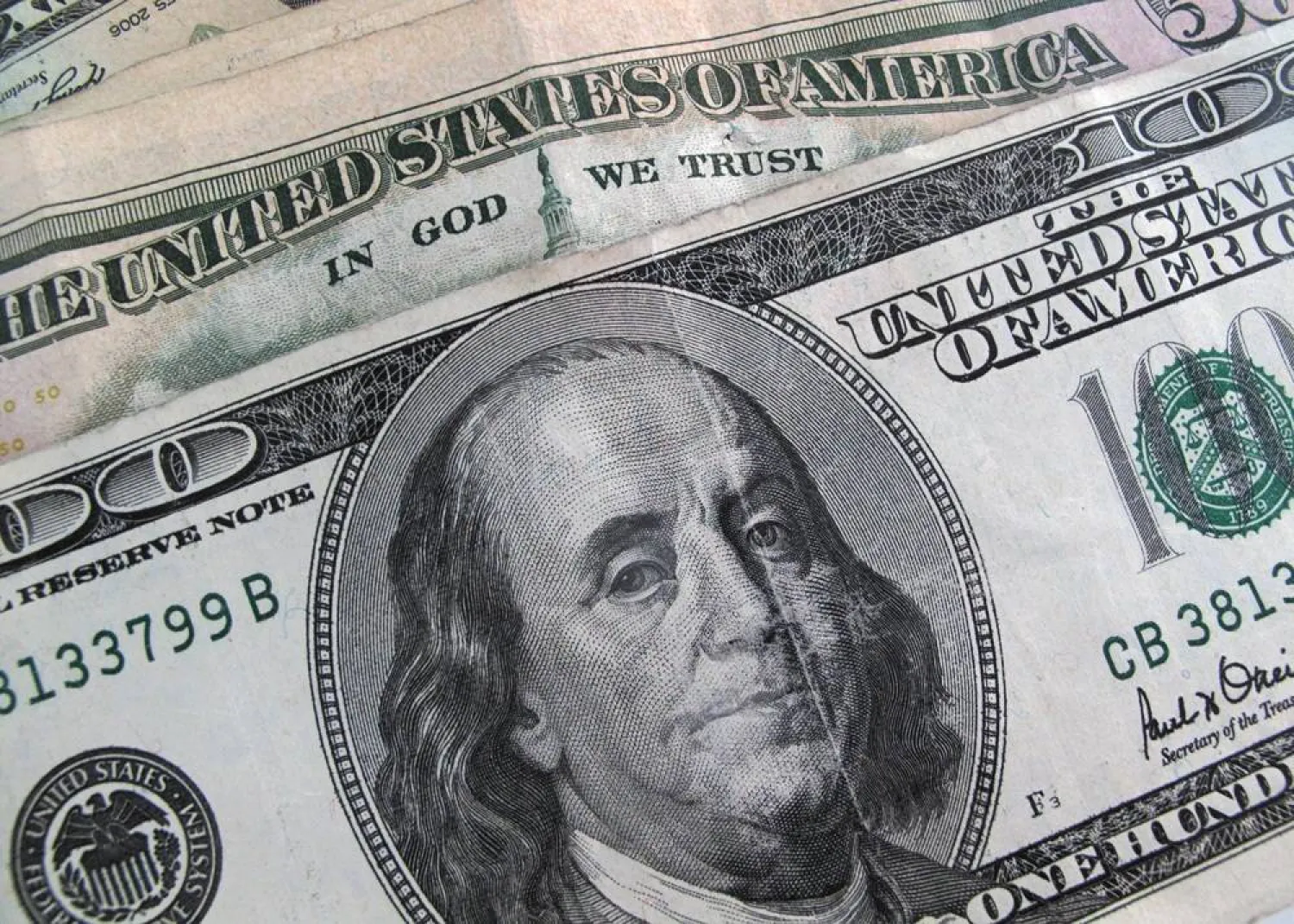
A US $100 dollar bill is seen on December 17, 2009. (Reuters)
TT

Dollar Steadies as Traders Weigh Prospects for Iran Ceasefire

A US $100 dollar bill is seen on December 17, 2009. (Reuters)

The dollar found its footing on Friday after sliding the previous day as traders waited for confirmation that a ceasefire deal in the Middle East could be imminent.

The euro bounced around and was last very slightly higher at $1.158, near its strongest in a week after the European Central Bank's first interest rate hike in three years on Thursday.

The US dollar was up 0.1% against Japan's currency at 160 yen, keeping it around a key level at which traders tend to get nervous about intervention from Tokyo.

The British pound fell very slightly to $1.341. Data showing the economy contracted in April appeared to have little impact, with the focus on Iran ‌talks.

US President Donald ‌Trump said on Thursday the United States and Iran could ‌sign ⁠a peace deal ⁠as soon as this weekend that would reopen the Strait of Hormuz to shipping. Brent crude slid 3.6% to $87 a barrel on Friday.

Iran's semi-official Mehr news agency said on Friday the memorandum, which contained US commitments to lifting sanctions and its naval blockade, required finalization by the relevant authorities.

Yet analysts and investors sounded a skeptical note, saying potential breakthroughs have previously failed to materialize.

"There's a question around the hopes of a deal, ⁠and questions around whether it will be met and agreed upon ‌by Iran and the United States," said Michael ‌Wan, senior currency analyst at Mitsubishi UFJ Financial Group in Singapore.

"It sounds like it's quite ‌close, but they're not exactly at the finish line."

The US dollar index, which ‌measures the greenback's strength against a basket of six currencies, was flat at 99.68 after slumping to its weakest in a week on Thursday.

Investors have flocked to the safe-haven dollar when tension in the Iran war has flared, and sold it to buy stocks when peace talks ‌have appeared to make progress.

"For today, the market will again be headline-driven. Will Vice President JD Vance be getting ⁠on a plane ⁠to Europe to sign some kind of agreement?" asked Chris Turner, global head of markets at ING.

"And more importantly, will we receive confirmation from Iran that it is happy with a deal and will also be sending a delegation to Europe this weekend? Expect the dollar to be bounced around."

Data on Thursday showed US producer prices increased more than expected in May, ahead of Kevin Warsh's first rate-setting meeting as chair of the Federal Reserve next week.

Traders expect the Fed to keep rates steady at 3.5% to 3.75%but see a more than 50% chance that it raises them by the end of the year, with pricing pulled slightly lower on Thursday by Trump's comments about a potential deal.

In cryptocurrencies, bitcoin was up 0.1% at $63,430 but down 13% for the month so far.


Alswaha Strengthens Saudi Arabia’s AI Partnerships, Expands Computing Infrastructure

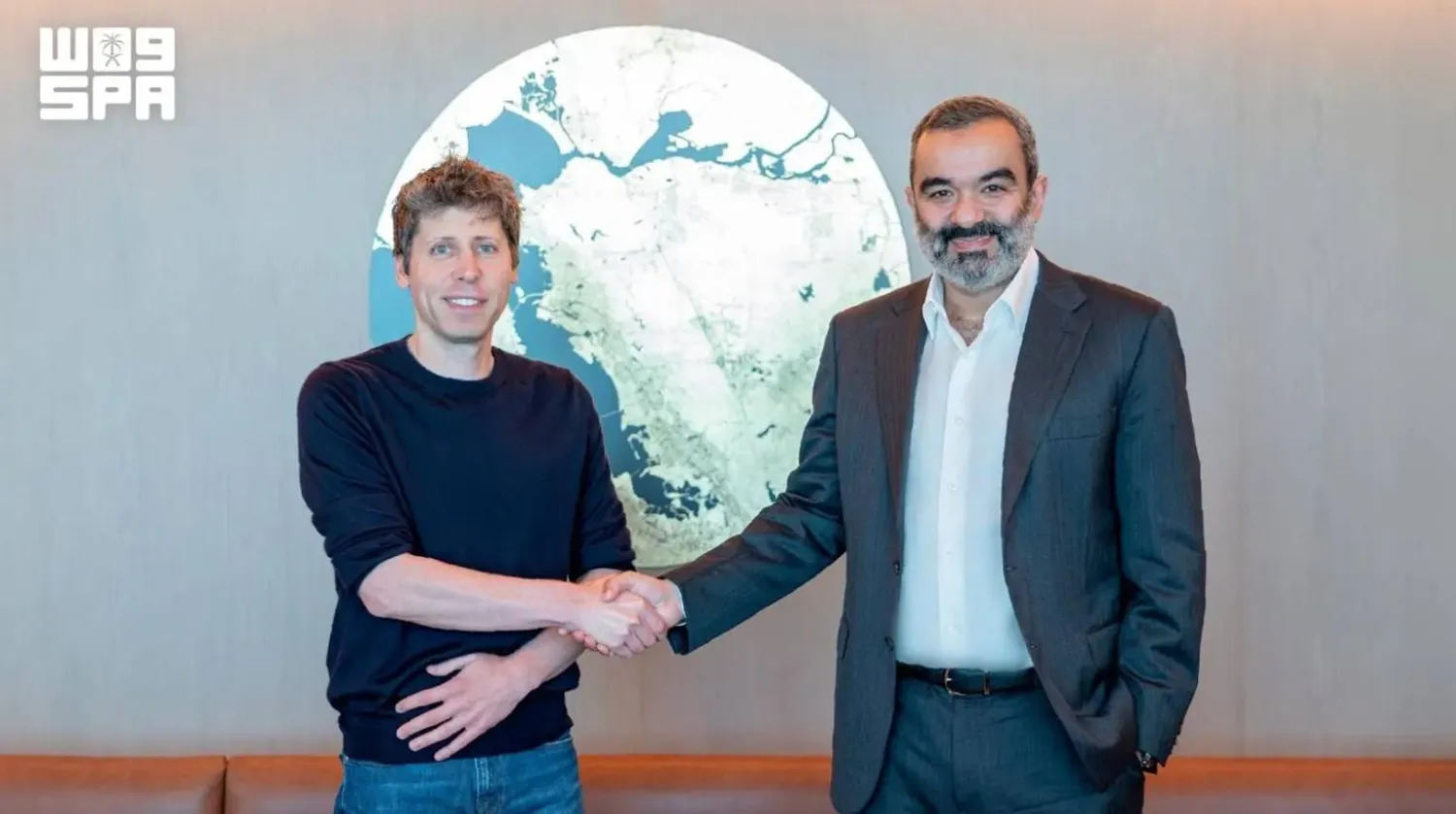
Minister of Communications and Information Technology Abdullah Alswaha's meetings are part of Saudi Arabia’s efforts to build an integrated AI ecosystem. SPA
TT

Alswaha Strengthens Saudi Arabia’s AI Partnerships, Expands Computing Infrastructure

Minister of Communications and Information Technology Abdullah Alswaha's meetings are part of Saudi Arabia’s efforts to build an integrated AI ecosystem. SPA

Minister of Communications and Information Technology Abdullah Alswaha held a series of meetings with leaders of major global technology and investment companies during the second day of his visit to Silicon Valley.

The meetings focused on strengthening Saudi Arabia’s partnerships in artificial intelligence (AI), expanding computing capabilities and infrastructure, accelerating the development of advanced applications and robotics, and attracting high-value investments.

Alswaha met with OpenAI CEO Sam Altman and senior company executives to discuss expanding cooperation in advanced AI models, leveraging the computing capabilities and infrastructure being developed by HUMAIN to support the large-scale deployment of AI models, and accelerating the development of advanced national applications in priority sectors.

In the field of AI infrastructure, Alswaha met with Dell Technologies Chairman and CEO Michael Dell to discuss accelerating enterprise adoption of AI solutions, integrating Dell AI Factory solutions with HUMAIN’s computing capabilities to support the deployment of enterprise AI at scale, and advancing knowledge transfer and national capability development to support the transformation of key sectors in the Kingdom.

He also met with Cognition AI Co-Founder and CEO Scott Wu and senior company executives to discuss expanding the use of autonomous software engineering solutions, improving developer productivity, enabling the deployment of Devin and software agents through HUMAIN’s computing capabilities, and accelerating national capabilities in building and operating AI applications.

Alswaha also met with Solidigm Senior Vice President and Head of Global Operations Kyle Fukuda to discuss using advanced storage solutions in the computing infrastructure and data centers being developed by HUMAIN, improving data access efficiency and computing resource utilization, and supporting the expansion of AI applications in the Kingdom.

In the investment sector, Alswaha met with Social Capital Founder and CEO Chamath Palihapitiya to discuss attracting the firm’s investments into the infrastructure and computing capabilities being developed by the Kingdom, expanding investment in advanced technologies, and connecting global capital with high-value opportunities in Saudi Arabia.

These meetings are part of Saudi Arabia’s efforts to build an integrated AI ecosystem encompassing advanced models, computing capabilities, data centers, infrastructure, applications, robotics, and investment, further strengthening the competitiveness of the Kingdom’s digital economy and reinforcing its position as a global hub for technology, innovation, and AI.


China’s Car Exports in First 8 Months Surpass 2025 Total, as EV Sales Soar

FILE - Aerial view of new cars waiting for shipment at a port in Shanghai, China, on Jan. 14, 2026. (Chinatopix via AP, File)
TT

China’s Car Exports in First 8 Months Surpass 2025 Total, as EV Sales Soar

FILE - Aerial view of new cars waiting for shipment at a port in Shanghai, China, on Jan. 14, 2026. (Chinatopix via AP, File)

China’s passenger car exports in the first eight months of this year already surpassed last year's total, an industry association said Thursday, though domestic sales continued to decline.

Passenger car exports in August jumped 67.1% from the year before to around 890,000 units, driven by plug-in hybrids and pure electric vehicles, according to the China Association of Automobile Manufacturers (CAAM).

China exported more than 6.2 million passenger vehicles in January-August. Exports of all types of vehicles totaled 7.1 million last year, CAAM data show, including about 6 million passenger vehicles.

The world’s largest car exporter is on track to achieve 50% to 70% growth in full-year passenger vehicle exports, according to S&P Global Ratings.

At home, passenger car sales fell 25.6% year-on-year in August to just below 1.5 million vehicles.

China’s domestic car market is under pressure from intense competition and price wars, while the slowing economy has undermined consumer confidence.

China’s car exports have been stronger than expected so far this year, helped by competitive pricing and quality, said Stephen Chan, an associate director at S&P Global Ratings.

“It’s likely that strong export growth will largely mitigate the domestic weakness,” The Associated Press quoted him as saying.

Over the past few months the energy shock from the Iran war and rising fuel prices have led more drivers of gasoline and diesel-powered vehicles to shift to EVs.

Hefty tariffs have in effect kept most Chinese-made passenger cars out of the US market. But China has been exporting and selling more of its vehicles to Europe, Latin America, Africa and Southeast Asia.

Chinese automakers are also setting up more factories overseas.

Weak domestic demand is increasing carmakers’ incentives to redirect capacity overseas, analysts at Morgan Stanley said in a recent research note, and Chinese carmakers are increasingly moving beyond vehicle exports toward local assembly and manufacturing to ease impacts from trade barriers and reduce logistics costs.


‘Disciplined Pricing’: Saudi Arabia Tightens Motor Insurance Oversight, Protects Competition

 A vehicle showroom in Riyadh (Asharq Al-Awsat) 
 A vehicle showroom in Riyadh (Asharq Al-Awsat) 
TT

‘Disciplined Pricing’: Saudi Arabia Tightens Motor Insurance Oversight, Protects Competition

 A vehicle showroom in Riyadh (Asharq Al-Awsat) 
 A vehicle showroom in Riyadh (Asharq Al-Awsat) 

Saudi Arabia’s Insurance Authority is tightening oversight of motor insurance pricing to ensure rates are fair, sound and sustainable, while curbing practices that could undermine competition.

It has also introduced six regulatory standards for motor insurance pricing, requiring insurers to set premiums that are fair and reasonable and to base them on underwriting criteria that avoid pricing below technically sustainable levels or exposing insurers to losses.

Consumer protection

Specialists told Asharq Al-Awsat that the rules should make pricing more transparent without pushing insurers toward uniform rates, preserving competition on price, service and claims quality.

They cautioned that consumers could be negatively affected if the standards artificially narrowed price differences. But rules that curb undisciplined pricing while leaving room for genuine competition would benefit the market and policyholders.

Salem Baajajah, a professor of economics at King Abdulaziz University, stressed that oversight should focus on the fairness of pricing methodologies rather than making final rates similar across insurers.

He explained that the measures would help prevent unfair pricing, price dumping and other harmful practices while allowing insurers to compete through operational efficiency, claims management, service quality, innovation and more accurate risk models.

Fair trade

Consumer protection specialist Abdulaziz Al-Khudairi noted that the Insurance Authority was also addressing ambiguities surrounding vehicle leases to protect lessees’ rights, increase transparency and apply the principle of “fair trade.”

He explained that comprehensive insurance rules require financing companies to obtain at least three insurance quotes annually and offer the lessee the lowest-priced option, preventing customers from bearing unnecessary additional costs.

According to Al-Khudairi, discounts granted by insurers, including for a claims-free record, are credited to a dedicated insurance account for the lessee, with the balance settled at the end of the contract.

The rules also require vehicles to be revalued annually to reflect depreciation, with premiums declining accordingly instead of remaining based on the vehicle’s original new-car value throughout the financing period.

Al-Khudairi added that the lessee is the “primary beneficiary” in cases of partial loss, receiving compensation for repairs and managing vehicle maintenance, while the lessor is the “secondary beneficiary” in a total loss, covering the outstanding financing balance.

Rising prices

Some policyholders reported that motor insurance prices in Saudi Arabia have risen steadily, in some cases to six times previous levels. They expect the new standards to produce fairer rates based on clear and sound principles.

The Saudi Insurance Market Report for the first quarter of 2026 showed coverage expanding to 11.2 million vehicles, with gross written motor insurance premiums reaching SAR 5 billion ($1.3 billion). The monthly complaint rate fell to 0.09 percent from 0.12 percent.
