
At Chad-Sudan Border, Aid Funding Crisis Leaves Displaced in Limbo

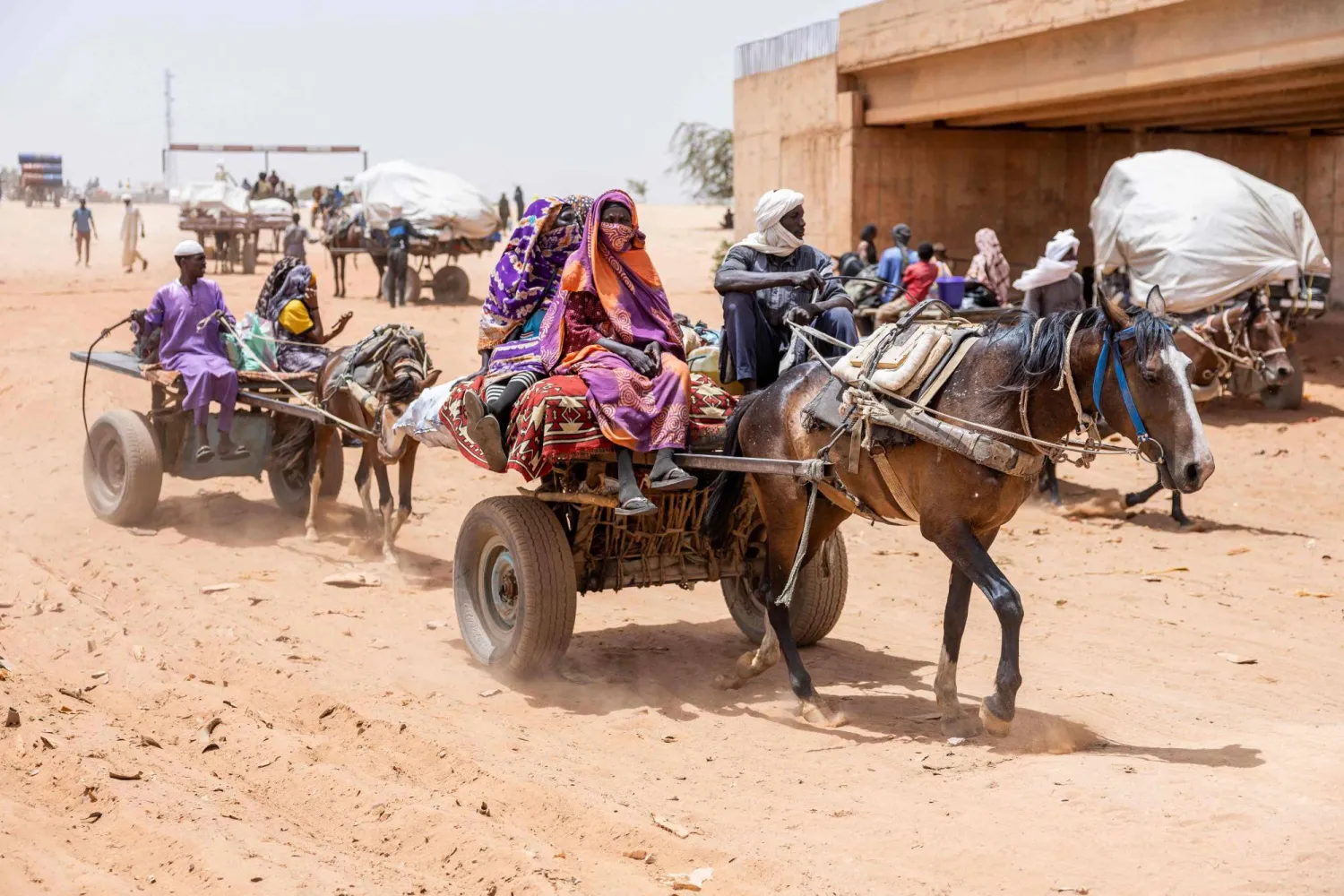
TOPSHOT - A general view of carts heading towards Chad at the Adré border post on June 8, 2026. (Photo by Joris Bolomey / AFP)
TT

At Chad-Sudan Border, Aid Funding Crisis Leaves Displaced in Limbo

TOPSHOT - A general view of carts heading towards Chad at the Adré border post on June 8, 2026. (Photo by Joris Bolomey / AFP)

Rising numbers of Chadians fleeing the Sudan war are arriving at the Adre border post in Chad, but funding shortages could force UN agencies on the ground to stop operating.

The civil conflict in Sudan has already cost tens of thousands of lives and forced more than 12 million people to flee their homes, more than a million of them Chadian, according to UN figures.

Government forces and the paramilitary Rapid Support Forces (RSF) have been fighting since April 2023.

A steady stream of horse-carts arrived at the Adre border post, under the region's scorching desert sun, during a recent visit by AFP.

In the swirling dust and the crack of whips, some of the makeshift wagons toppled under the weight of their loads, dragging the horses onto their backs, hooves in the air.

They leave loaded with cans of petrol and food for Sudan, and return to Chad, in some cases carrying people fleeing the war.

- Lack of resources -

Last week SungAh Lee, deputy director general of the UN's International Organization for Migration, visited Adre as part of a three-day visit to the Assoungha region.

She met Chadians who had been in Sudan and had fled the war to return home.

"When I go there and meet the beneficiaries and hear from them, then go back and meet ambassadors and the donor community, it is important for them to hear what I have seen in person," she told AFP.

In May, the number of Chadians returning from Sudan passed the 400,000 mark.

They had initially expected to reach that level by the end of June, Lee said, but the flow of returnees has accelerated.

Mahamat Issa Abakar, general secretary of the Assoungha region, confirmed the surge in returnees.

"There are more than 5,000 Chadians getting ready to return to Chad from Sudan in the coming days," said Abakar, himself a former aid worker.

"Their representatives came to ask me how they will be taken in here, but I don't know what to tell them," he added. "On our side, we lack the resources."

"The Chadians from Sudan returning to Chad have exactly the same needs as the refugees," he added.

And yet, he said, looking over at the IOM delegation, they were not as well cared for.

- No food, no work -

According to figures from the UN refugee agency UNHCR, more than 900,000 people have sought refuge in Chad since the start of the war in Sudan. They make up one in three people in the eastern provinces of Chad.

In Tongori camp, where the IOM says 13,000 people are packed in, Chadians who have fled Sudan speak of a sense of abandonment.

"We don't have food!" said 59-year-old Ahmat Mahamat Hassan. "It hasn't been handed out for six months."

"It's the IOM who led us here and it's for you to take responsibility for us," he added, addressing the UN delegation set up under sheets of metal in the middle of some 300 Chadian returnees.

Others among the returnees complained of a lack of work and being stuck in the camp with nothing to do.

"We have a lot of skills here among the women, but we can't put them into practice," said Saide Yaya Abderamanou.

"Most of us have a job in Sudan. Some of us make jewels, perfumes, shoes," she added.

Lee, for the IOM, acknowledged the problem.

"Continuously providing humanitarian aid is not a sustainable model," she told AFP.

"They all want to work, they all have skills. So it's about creating opportunities for them, and I think this is really the most difficult part."

But she also recognized the growing difficulties in helping the Chadians returning from Sudan.

The $21-million IOM response plan for eastern Chad in 2026 was only 19-percent financed, Lee said.

"After October 2026, we won't be able to provide humanitarian assistance if the finance doesn't arrive," she warned.


Lebanon ‘Not Informed’ of Terms of Iran-US Deal, Says Official

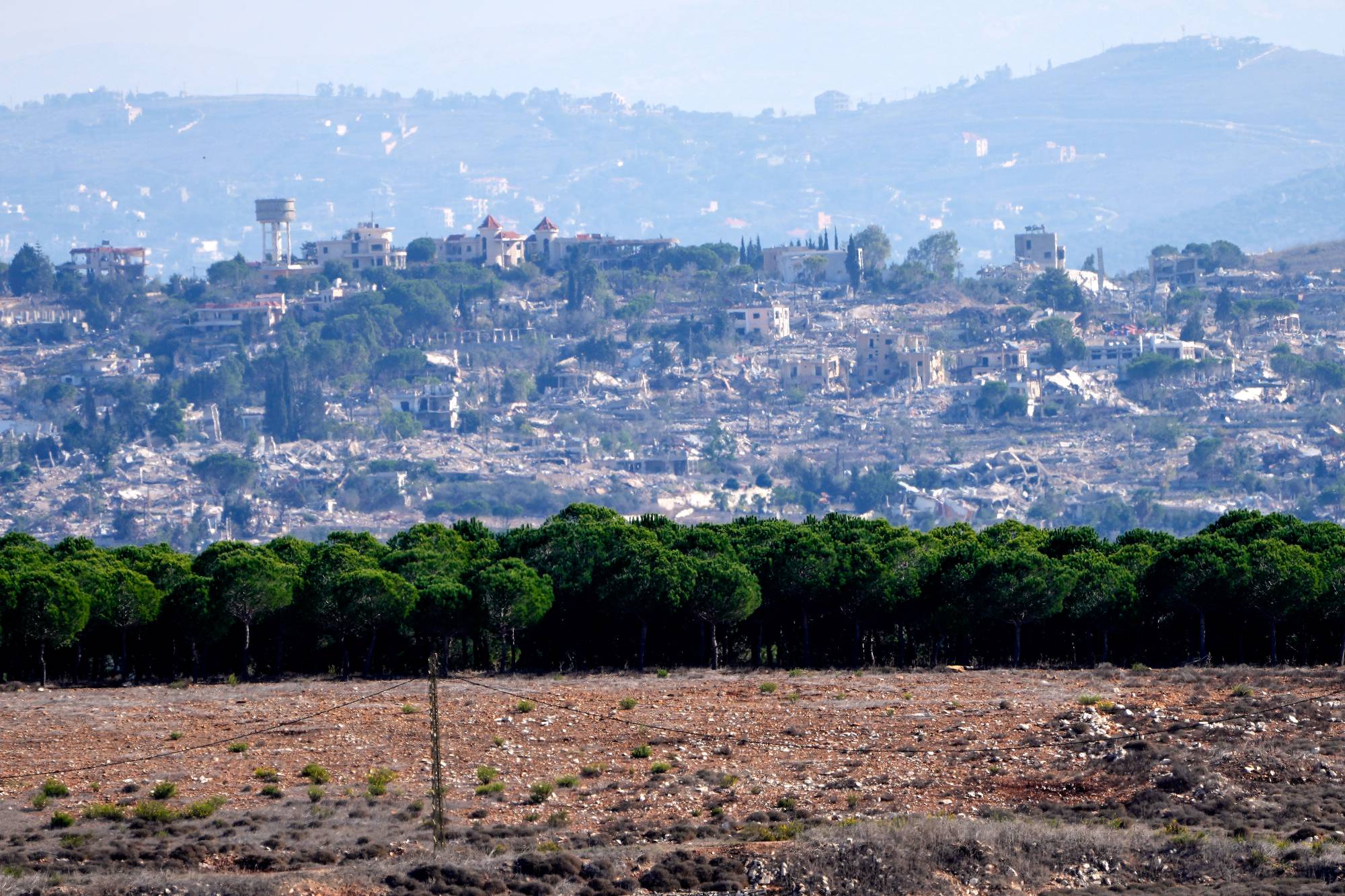
A photograph taken from the southern area of Marjeyoun shows smoke rising from fires reportedly ignited at a site targeted by Israeli artillery shelling in the southern village of Kfar Tibnit on June 15, 2026. (AFP)
TT

Lebanon ‘Not Informed’ of Terms of Iran-US Deal, Says Official

A photograph taken from the southern area of Marjeyoun shows smoke rising from fires reportedly ignited at a site targeted by Israeli artillery shelling in the southern village of Kfar Tibnit on June 15, 2026. (AFP)

Lebanon has not been informed of details of an agreement between the United States and Iran to end the Middle East war on all fronts including in Lebanon, an official source told AFP on Monday.

Lebanon's state-run National News Agency (NNA) reported intermittent artillery shelling in the country's south on Monday but no airstrikes -- a lower level of violence compared to previous days.

Hezbollah has not commented on the agreement, but the Iran-backed group has not claimed any fresh attacks on Monday on Israeli targets.

"Lebanon was not informed of the terms of the agreement or the time of the ceasefire," the source said on condition of anonymity.

Few details have been made public about the agreement announced overnight.

Lebanese parliament Speaker Nabih Berri, a Hezbollah ally who acts as an intermediary between the group and the US, praised the deal, thanking the United States and Tehran for their "insistence on including... an essential and binding clause on halting the Israeli aggression on all of Lebanon".

Israel and Hezbollah have been at war since March 2 when the Iran-backed group fired rockets at Israel to avenge the killing of Iran's supreme leader in US-Israeli strikes days earlier.

Israel responded with a campaign of airstrikes and a ground invasion. Previous ceasefire announcements have failed to stop the fighting.

Pakistan's Prime Minister Shebhaz Sharif, whose country has been mediating between Tehran and Washington, said that "both sides have declared the immediate and permanent termination of military operations on all fronts, including in Lebanon".

Iran's Deputy Foreign Minister Kazem Gharibabadi said that "a permanent and immediate end to the war has been declared on all fronts, including Lebanon".

AFP correspondents on Monday reported a cautious return of some residents to their homes in areas of south Lebanon not occupied by Israel's army.


Police Captain Injured in Car Bomb Explosion in Syria’s Aleppo

 A damaged car is seen after an explosion in the city of al-Bab, Aleppo, on Sunday. (Syrian Al-Ikhbariya TV)
A damaged car is seen after an explosion in the city of al-Bab, Aleppo, on Sunday. (Syrian Al-Ikhbariya TV)
TT

Police Captain Injured in Car Bomb Explosion in Syria’s Aleppo

 A damaged car is seen after an explosion in the city of al-Bab, Aleppo, on Sunday. (Syrian Al-Ikhbariya TV)
A damaged car is seen after an explosion in the city of al-Bab, Aleppo, on Sunday. (Syrian Al-Ikhbariya TV)

A Syrian police officer holding the rank of captain was among two people injured Sunday when an explosive device detonated inside a vehicle in the city of al-Bab in eastern Aleppo province, according to local media.

Syrian state-affiliated media said the blast occurred near the al-Center roundabout and was caused by a bomb placed inside the vehicle. The explosion wounded two people, who were transported to nearby hospitals for treatment.

A source told Syria TV that, according to preliminary information, the vehicle was parked near the city’s Grand Mosque when the explosion occurred.

The incident comes amid heightened security tensions across Aleppo province.

Authorities have reported a recent increase in attacks targeting checkpoints and facilities operated by government Internal Security Forces, particularly around the city of Kobani, or Ain al-Arab, in northeastern Aleppo.

Syrian officials have blamed many of the attacks on the Revolutionary Youth movement, a group linked to the Syrian Democratic Forces (SDF), although the allegations have not been independently verified.

On Friday, Aleppo Internal Security Commander Col. Mohammed Abdel Ghani sought to reassure residents of Kobani, stressing that maintaining security, stability, and public safety remained the authorities’ top priority.

His remarks followed a series of attacks on security personnel and installations, including an incident last Thursday in which unidentified assailants fired RPG rounds at an Internal Security Forces checkpoint near Kobani.

The violence has fueled debate over the motives. A tribal elder from Hasakah described the attacks as an attempt to pressure the Syrian government into making further concessions during the implementation of an agreement with Kurdish forces reached on Jan. 29.

By contrast, an official from the Syrian Democratic Council (SDC), the political wing associated with the SDF, said the incidents were isolated acts carried out by individuals rather than an organized campaign.


Lebanon Warns Displaced against Rushing Home after US-Iran Deal

This photograph taken from the southern Lebanese area of Marjayoun shows smoke as it rises from the site of an Israeli airstrike that targeted the village of Kfar Tibnit on June 11, 2026. (Photo by AFP) /
TT

Lebanon Warns Displaced against Rushing Home after US-Iran Deal

This photograph taken from the southern Lebanese area of Marjayoun shows smoke as it rises from the site of an Israeli airstrike that targeted the village of Kfar Tibnit on June 11, 2026. (Photo by AFP) /

Authorities in southern Lebanon warned people displaced by three months of war between Israel and Hezbollah against rushing home on Monday despite a US-Iran deal to end the wider conflict, as Israel said it would not withdraw troops from the south.

Lebanon has suffered the deadliest spillover of the conflict between the US and Iran, with thousands of people killed and some 1.2 million people uprooted by an Israeli offensive against the Iran-backed Hezbollah group, which ‌opened fire on ‌Israel in support of Tehran on March 2.

Pakistani ‌Prime ⁠Minister Shehbaz Sharif, ⁠a key mediator between Tehran and Washington, announced that a deal was struck early on Monday local time, and that the pact called for "the immediate and permanent termination of military operations on all fronts, including in Lebanon".

In south Lebanon, where Israeli forces have occupied a self-declared security zone, municipal councils issued statements calling on residents to hold off on returning, the state-run National News ⁠Agency reported.

Mona Mazeh, a displaced woman sheltering in Beirut's ‌Hamra district, had no immediate plans to ‌return to her village near the southern city of Tyre. "Frankly, we are hesitant; ‌Israel cannot be trusted," she said.

ISRAEL IS NOT A PARTY TO US-IRAN ‌DEAL

Israeli Defense Minister Israel Katz, whose country is not a party to the US-Iran deal, said Israel would not withdraw from security zones in southern Lebanon, Gaza and Syria, and that it would retaliate if Iran attacked Israel due to ‌events in Lebanon.

Katz said the security zone in southern Lebanon would be cleared of local residents, and "all terrorist ⁠infrastructure, including houses in ⁠contact villages", in reference to Hezbollah.

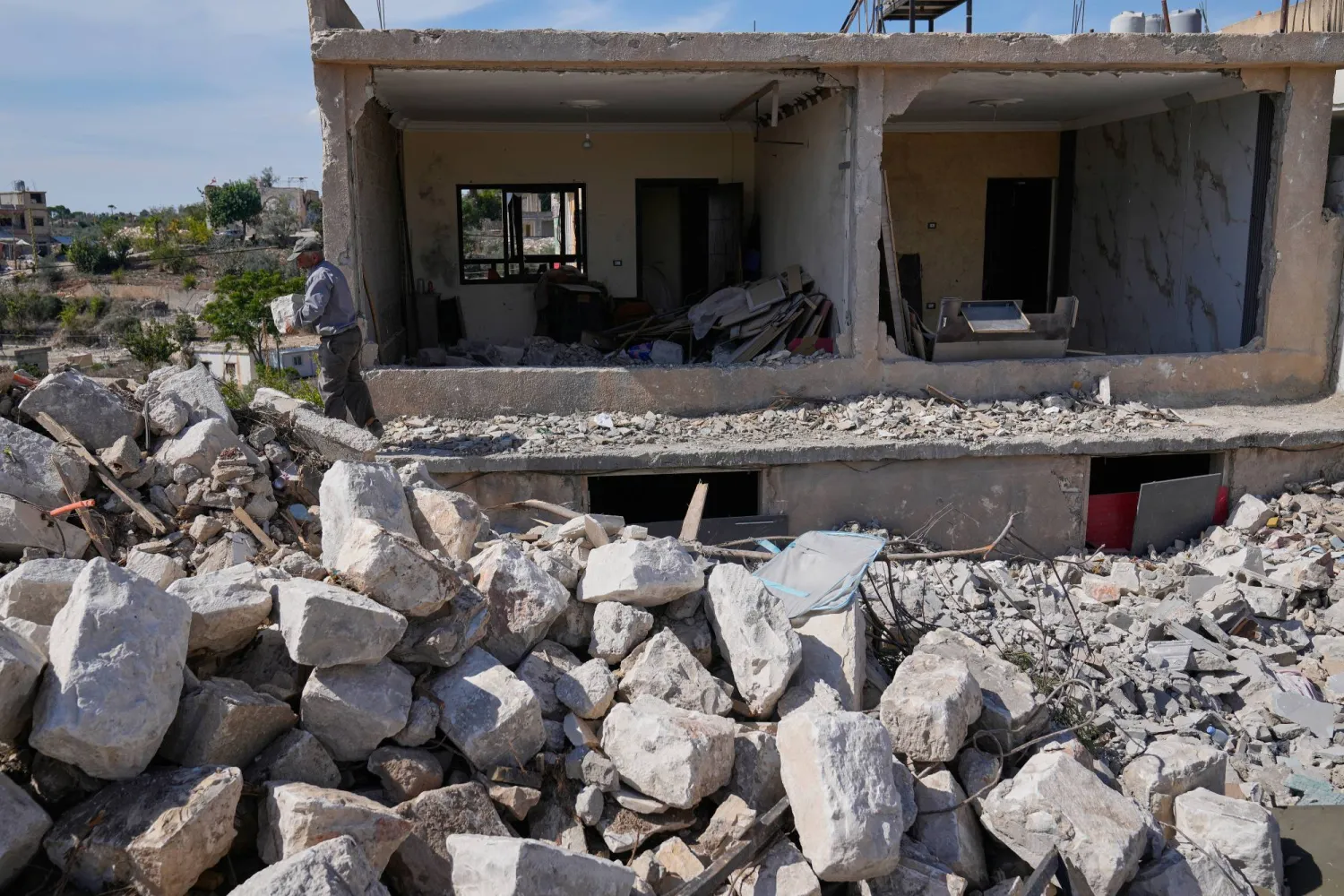
The Israeli military has been razing villages in southern Lebanon for weeks, saying it is acting against Hezbollah militants embedded in civilian areas of the predominantly Shi'ite Muslim region.

Hundreds of thousands of Lebanese Shi'ites are sheltering in other parts of the country.

In Nabatieh, a devastated city in the south, Mohammed Daqdouq said he had returned on Monday morning to check on his home. "We'll need a lifetime to rebuild - to rebuild it again and bring Nabatieh back to how it was," he said.

Iran, whose Revolutionary Guards established Hezbollah in 1982, had insisted that a Lebanon ceasefire be included as part of any broader deal with the United States.