


Israel Seized More Land from Neighbors since 2023 than it Has in Decades

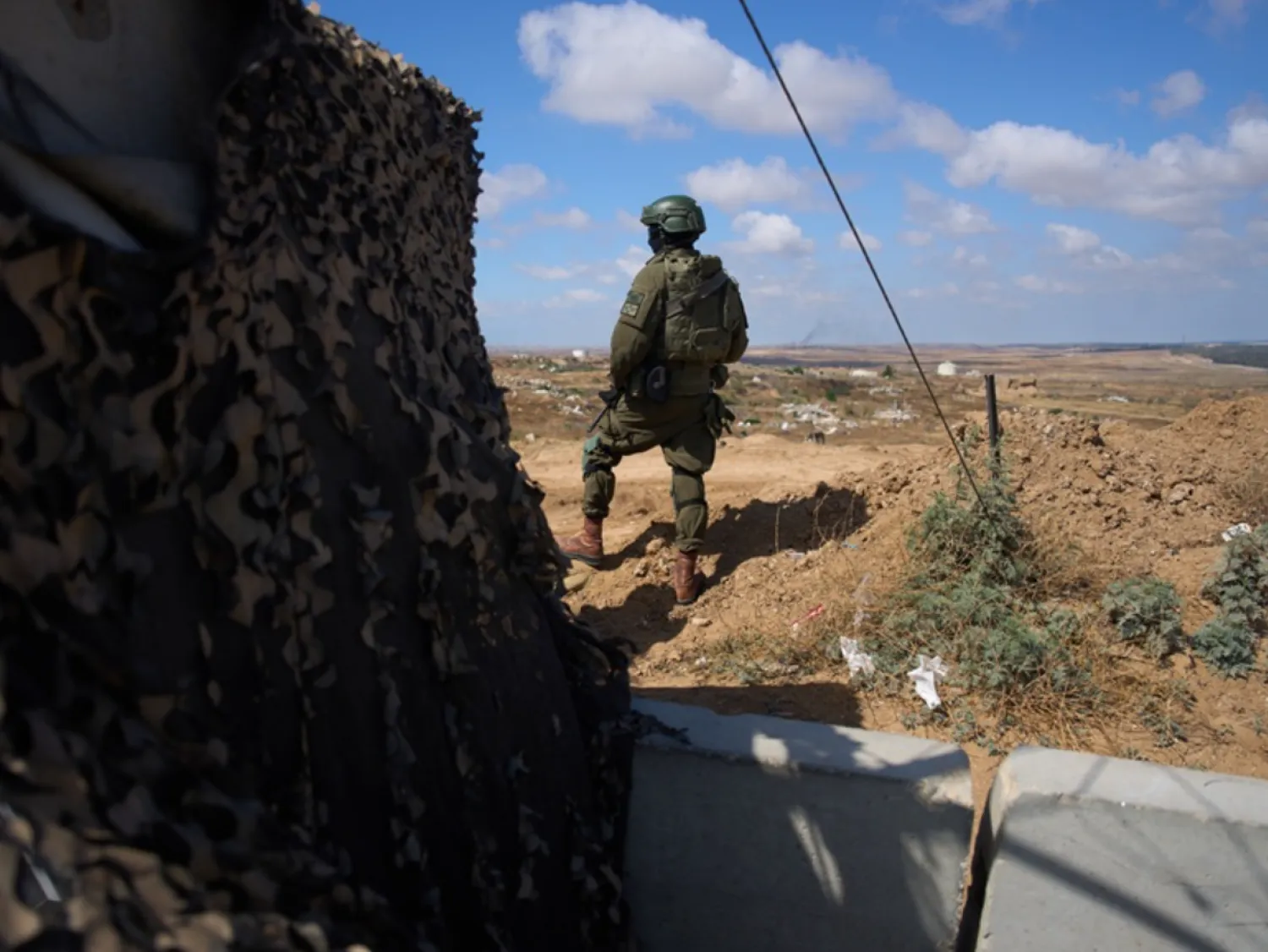
An Israeli soldier occupies a military position overlooking the so-called Yellow Line in the central Gaza Strip, Tuesday, May 26, 2026. (AP Photo/Ariel Schalit)
TT

Israel Seized More Land from Neighbors since 2023 than it Has in Decades

An Israeli soldier occupies a military position overlooking the so-called Yellow Line in the central Gaza Strip, Tuesday, May 26, 2026. (AP Photo/Ariel Schalit)

Over the past two and a half years, Israel has taken control of swaths of Gaza, Lebanon and Syria that amount to its biggest expansion of militarily occupied lands in decades.

It is an area larger than many major cities — roughly 1,000 square kilometers (386 square miles) — and Israel has said it plans to stay indefinitely.

The land seizures began in the aftermath of Hamas’ 2023 cross-border attack, which ignited wars on multiple fronts. The Israeli military took over large portions of Gaza as part of a broad invasion, and later seized control of chunks of Lebanon and Syria.

Israel calls these areas “buffer zones” and says they are needed to prevent future attacks by militant groups.

In Gaza and Lebanon, Israeli land seizures and evacuation warnings have pushed out more than 3 million people, and troops have demolished towns and neighborhoods, creating large, depopulated zones, The AP news reported.

The “buffer zones” — equivalent to roughly 5% of Israel’s area soon after its founding — are not new borders, which require an agreement between two countries. But many fear these changes could become long-lasting. Iran has made Israel’s withdrawal from Lebanon a condition for ending its war with the US.

Since its founding in 1948, Israel has never had clear borders. Its boundaries have shifted through wars, annexations, ceasefires and peace agreements.

Here is a deeper look at the Israeli expansions:

Lebanon Israel and Hezbollah have fought multiple wars since the Iran-backed Lebanese militant group was formed in 1982.

Israel occupied much of southern Lebanon between 1982–2000, saying it was necessary to protect northern Israeli communities. After Israel’s withdrawal in 2000, the UN drew up a boundary between the two countries.

A year of fighting between Israel and Hezbollah ended with an October 2024 ceasefire. That truce collapsed in March, days into the US-Israeli war against Iran. Following missile and drone attacks by Hezbollah, Israel launched a ground invasion into Lebanon.

When fighting was halted in April, Israel said the military would occupy an area up to 10 kilometers (6 miles) deep.

Israel now holds 608 square kilometers (234 square miles) in Lebanon, according to experts with the Carnegie Middle East Center.

Evacuation warnings have forced about 1.2 million Lebanese to flee, and Israel has warned civilians against returning.

Hezbollah has condemned Israel’s presence inside Lebanon, and the Lebanese government has called for Israel to withdraw.

Gaza Israel seized the Gaza Strip from Egypt in the 1967 Mideast War. It unilaterally withdrew troops and settlers from the territory in 2005.

Hamas militants overran the territory two years later, and their Oct. 7, 2023, attack on Israel launched the devastating war in Gaza.

When the Gaza ceasefire went into effect in October 2025, Israel withdrew its troops to a zone demarcated by the so-called “yellow line,” giving it control of just over half the strip.

Almost the entire population of Gaza, more than 2 million people, has been squeezed into vast, squalid tent cities dependent on international aid. The military has bulldozed or demolished wide swaths of the zone, and the area, where most of Gaza’s agricultural land lies, is inaccessible to Palestinians.

Israeli forces are meant to complete a fuller withdrawal under the US-brokered ceasefire. But the US-backed diplomat overseeing the truce says progress is deadlocked over the central sticking point of disarming Hamas.

With the ceasefire process stuck, Israel has since moved the line west and expanded its control to more than 60% of Gaza — 194 square kilometers (75 square miles), according to rights group Gisha. Prime Minister Benjamin Netanyahu says Israeli control of Gaza will increase to 70%.

Syria Israel captured the Golan Heights from Syria during the 1967 Mideast war and later annexed it -- a move not widely recognized by the international community.

After the 1973 Mideast war, the UN created a buffer zone in southern Syria next to the Israeli-controlled Golan Heights, patrolled by a UN force of about 1,100 troops.

In December 2024, after the surprise downfall of Syrian President Bashar Assad, Israel moved its troops into the UN buffer zone, saying it was concerned that Syrian opposition could attack Israel. It also wanted to disrupt Iran’s ability to smuggle weapons through Syria to Hezbollah militants in Lebanon.

The UN and other critics say the seizure of land violates a 1974 ceasefire agreement. Civilians in the area have not been instructed to evacuate but have faced checkpoints and tension, with occasional clashes between Israeli soldiers and villagers.

Syria’s interim president, Ahmad al-Sharaa, has called on Israel to withdraw from the area that the UN says is 235 square kilometers (91 square miles).

West Bank Since capturing the West Bank in the 1967 Mideast war, Israel has built well over 100 settlements across the occupied territory.

The government has approved 47 new settlements and formalized or expanded 55 existing settlements just since 2022, according to Peace Now.

After the war in Gaza began, Israel expanded its military operations in the West Bank, displacing tens of thousands of Palestinians from their homes.

Some of the new settlements approved recently are retroactive legalizations of tiny outposts, while others are neighborhoods of existing settlements.

The precipitous growth of settlements stems from settler leaders and supporters holding key positions in Israel’s government and a US administration that is largely pro-settlement.

The international community considers them illegal. The expanded settlements have put enormous restrictions on the daily lives of Palestinians, who view them as the main barrier to a lasting peace agreement because they are built on lands they seek for a future state.



Iraq Sentences US-Sanctioned Oil Official to Prison

The sun sets behind apartment buildings in Baghdad, Iraq, Friday, Aug. 28, 2026. (AP)
TT

Iraq Sentences US-Sanctioned Oil Official to Prison

The sun sets behind apartment buildings in Baghdad, Iraq, Friday, Aug. 28, 2026. (AP)

Iraq sentenced a US-sanctioned oil official to seven years in prison after he was arrested as part of a government-led anti-corruption campaign, the country's anti-graft body said on Sunday.

Deputy oil minister for distribution affairs Ali al-Bahadli is among dozens of officials who were detained in June during anti-graft raids that took place in several areas, mostly in Baghdad's fortified Green Zone.

The Commission of Integrity said in a statement that an anti-corruption court sentenced Bahadli to seven years in prison for "illicit gains".

The ruling requires Bahadli to return to the state an amount equivalent to more than $20 million in ill-gotten gains, in addition to paying a fine of the same amount.

The United States imposed sanctions on Bahadli in May, accusing him of fraudulently mixing Iraqi and Iranian oil as part of a scheme to help Iran avoid sanctions.

At the time, Iraq's oil ministry denied the accusations against Bahadli, who was then arrested during the anti-graft raids.

Iraqi authorities said that the raids were part of new Prime Minister Ali al-Zaidi's campaign to fight the corruption that has plagued Iraq for decades.

But several Iraqi officials told AFP that the raids were also part of al-Zaidi's campaign against funding for pro-Iran armed groups and the smuggling of Iranian oil.

Iraq has been under mounting pressure from the United States to curb Tehran's influence and rein in Iran-backed armed factions, which Washington designates as terrorist groups.

Al-Zaidi, who took office this year with the blessing of the United States, has pledged to ensure the armed factions that emerged after the US-led invasion hand over their weapons to the state.

In Iraq, corruption is especially rampant across public institutions, but convictions typically target mid-level officials or minor players and rarely those at the top of the power hierarchy.


US News Agency Says Crew Attacked by Israeli Settlers in West Bank

 Israeli settlers look out through a metal fence, as an Israeli flag flutters nearby, on the day of their weekly tour in Hebron, in the Israeli-occupied West Bank, August 29, 2026. (Reuters)
Israeli settlers look out through a metal fence, as an Israeli flag flutters nearby, on the day of their weekly tour in Hebron, in the Israeli-occupied West Bank, August 29, 2026. (Reuters)
TT

US News Agency Says Crew Attacked by Israeli Settlers in West Bank

 Israeli settlers look out through a metal fence, as an Israeli flag flutters nearby, on the day of their weekly tour in Hebron, in the Israeli-occupied West Bank, August 29, 2026. (Reuters)
Israeli settlers look out through a metal fence, as an Israeli flag flutters nearby, on the day of their weekly tour in Hebron, in the Israeli-occupied West Bank, August 29, 2026. (Reuters)

Israeli settlers attacked an NBC crew in the central West Bank Saturday, as they were interviewing a Palestinian woman who said she’d been driven out of her house by settlers, the network said.

NBC’s American correspondent Matt Bradley, two other crew members and the woman they were interviewing were all treated for injuries sustained during the attack, NBC said. There were no further details on their injuries.

The assault was caught on video and shared by NBC, with footage showing masked settlers approaching the crew with sticks and beating the crew’s vehicles.

Israel’s military said it was “aware of reports of Palestinian injuries, including a Palestinian woman who sustained non-life-threatening injuries and was evacuated by the Red Crescent for medical treatment.” It did not comment on the attack on the NBC crew.

It was the latest in a growing wave of violence by West Bank settlers. Prime Minister Benjamin Netanyahu issued a rare condemnation of the violence on Saturday. The Israeli leader has come under heavy US criticism for the settler attacks.

Settlers seized British activist and held him locked in shed

Israeli settlers seized a British activist from a Palestinian village in the West Bank and locked him in a shed before turning him over to police, his lawyer said Sunday.

The lawyer, Inbar Shaked Vardi, said settlers held her client, Finn Joughin, for half an hour Saturday before turning him over to Israeli police. Joughin was set to appear before a Jerusalem court later Sunday, she said.

Video showed two settlers, one armed, restraining Joughin and marching him away from the village.

It was not immediately clear what led to his capture. Settlers say he assaulted a child, accusations Vardi vehemently denied.

Settlers point to a video where the activist uses his body in an apparent attempt to block a settler boy from passing through a fence. Vardi said the video shows he was trying to protect the village.

Police said they were investigating and holding Joughin in custody on suspicion of committing an indecent act against a minor.


Libya Rivals Agree Roadmap for Elections Within 24 Months at UN-Led Talks

People wave Libyan flags during a demonstration in Benghazi February 7, 2014. (Reuters)
TT

Libya Rivals Agree Roadmap for Elections Within 24 Months at UN-Led Talks

People wave Libyan flags during a demonstration in Benghazi February 7, 2014. (Reuters)

Representatives of ‌Libya's rival political parties on Sunday signed an agreement on holding long-delayed national elections within two years to resolve contentious issues over electoral laws and reform the national elections body.

The political process to resolve more than a decade of conflict in Libya has been stalled since an election scheduled for December 2021 collapsed following disputes over the eligibility of the main candidates.

Sunday's signing ceremony was held at the United Nations Support Mission in Libya, UNSMIL, in ‌the Libyan capital ‌Tripoli.

It followed talks in a ‌smaller ⁠format, known as ⁠the 4+4, that involved two representatives of each of Libya's four main institutions: the Government of National Unity, the High Council of State, the House of Representatives and the Libyan National Army.

Walid Ellafi, state minister of political affairs and communications in the Government of National Unity, said legislative and ⁠presidential elections should be held "within a period not ‌exceeding 24 months" under a ‌single executive authority and unified national institutions.

Shibani AbuHamoud, head ‌of the army's general command, said the 4+4 would work ‌with UNSMIL "to develop a framework within one month of the signing of the agreement to follow up on all matters related to its implementation".

The agreement says that if Libya's House ‌of Representatives and High Council of State fail to approve the deal within a month, the ⁠parties ⁠will seek to adopt it nationally as a constitutional document through broad national mechanisms and secure international backing through the UN Security Council.

Libya has had little stability or security since a 2011 NATO-backed uprising.

It split in 2014 between warring eastern and western factions but there has been little major warfare since a 2020 ceasefire.

All Libya's major political players have repeatedly called for elections, but many Libyan people have voiced doubts that they would want a vote that could push most of them from positions of authority.