


Iraq Projects Oil Production to Return to Pre-war Levels Within Two Months

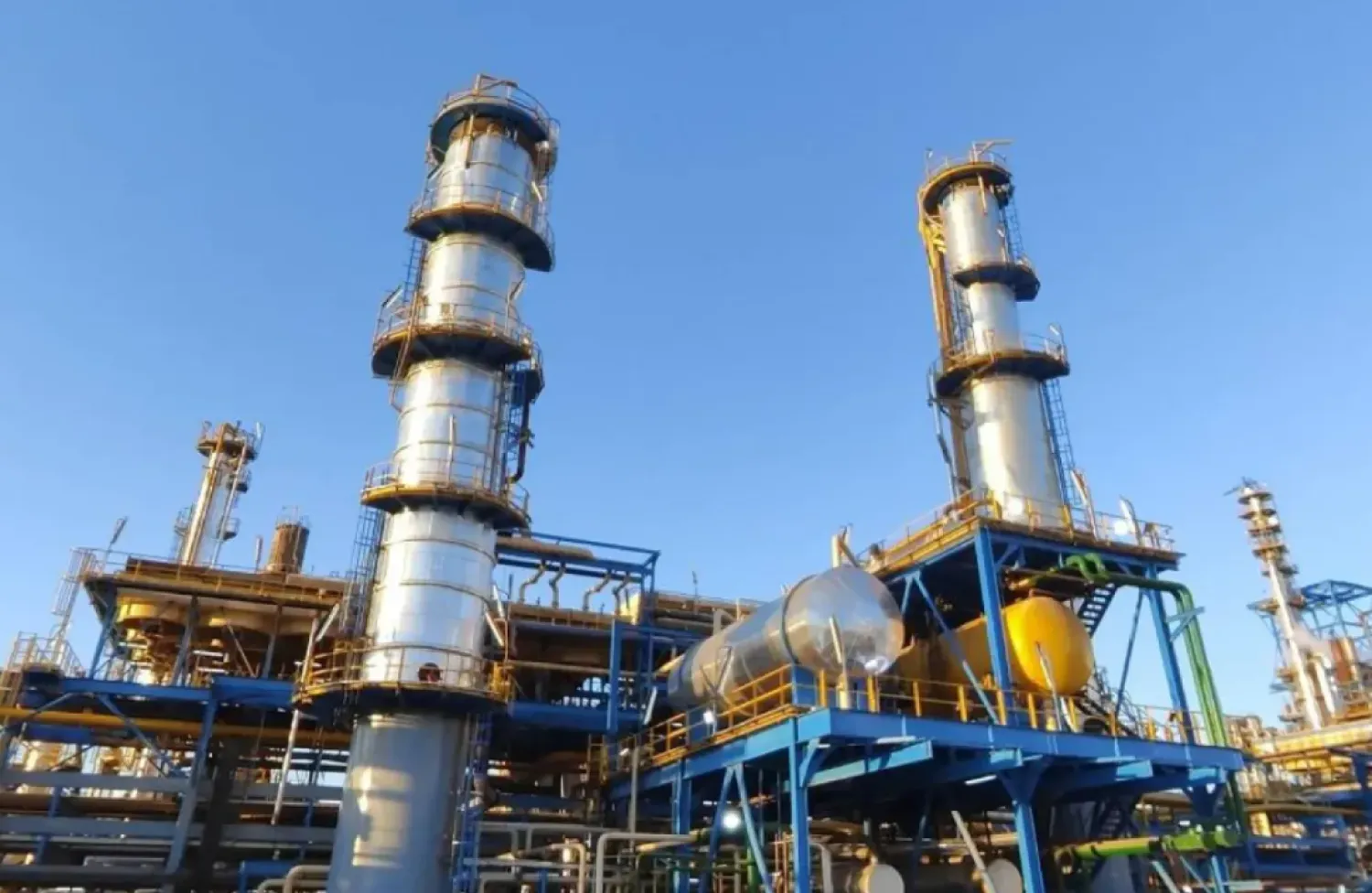
A handout picture released by Iraq's Prime Minister's Press Office on January 2, 2025, shows a partial view of the oil refinery of Baiji north of Baghdad, during the inauguration ceremony of the fourth and fifth units. (Iraq's Prime Minister's Press Office / AFP)
TT

Iraq Projects Oil Production to Return to Pre-war Levels Within Two Months

A handout picture released by Iraq's Prime Minister's Press Office on January 2, 2025, shows a partial view of the oil refinery of Baiji north of Baghdad, during the inauguration ceremony of the fourth and fifth units. (Iraq's Prime Minister's Press Office / AFP)

Iraqi authorities predict oil production will return to peacetime levels "within one to two months", state media reported, after the Middle East war caused exports to plummet.

The war and Iran's ensuing blockade of the Strait of Hormuz choked off shipments and prompted production cuts in key oil-producing countries including Iraq, shaking world energy markets.

But a deal agreed this week between Washington and Tehran to end the fighting has offered some relief, despite follow-up negotiations having stalled.

The spokesman for Iraq's oil ministry, Salim Farhoud, told the state-run Iraq News Agency (INA) late Friday that "we can return within one to two months to the previous production levels".

"The fields that reduced their production capacity have currently begun raising this capacity," he said.

Before the war broke out in late February, Iraq exported about 3.5 million barrels per day of oil, the majority of it via the Hormuz Strait.

But the OPEC founding member was forced to halt production in most of its oil fields as reservoirs filled up, limiting its exports to routes via neighbouring Türkiye and Syria.

The vital strait began reopening this week following the signing of the initial agreement between Iran and the United States.

Iraqi Oil Minister Bassem Khodeir on Friday told INA that exports "will return gradually based on the smooth flow through the Strait of Hormuz".

In April, Iraqi crude exports via the waterway declined to 10 million barrels from an average of 93 million before the war, according to authorities.

Iraq is highly reliant on crude exports, which normally account for about 90 percent of its revenues.



Riyadh to Host Inaugural Water Regulation Forum in November

A night view of the Saudi capital Riyadh. (SPA)
TT

Riyadh to Host Inaugural Water Regulation Forum in November

A night view of the Saudi capital Riyadh. (SPA)

The Saudi Water Authority (SWA) will launch the inaugural edition of the Water Regulation Forum in Riyadh on November 1. Established as an annual global platform for advancing regulatory excellence and international cooperation across the water sector, the forum is being organized in strategic partnership with the International Desalination and Reuse Association (IDRA).

A statement from SWA on Sunday said the forum will bring together water regulators, policymakers, experts, and sector leaders from around the world, with the participation of 28 speakers from 24 countries, four international organizations, and 25 government entities that are counterparts to the authority.

The diverse participation reflects the range of regulatory experiences and models represented and provides an opportunity to showcase regulatory practices and exchange expertise on developing regulatory frameworks and governance across the water sector.

The forum comes amid rapid developments across the global water sector that require regulatory frameworks capable of keeping pace with changes in resources, services, technologies, and investment models. Approaches to these developments vary from one country to another according to the nature of their water resources and their institutional and regulatory frameworks.

The forum will address key issues shaping water-sector regulation worldwide, including governance, scarcity management, compliance, utility performance, private-sector partnerships and financing, water reuse, and regulatory integration, drawing on a diverse range of international experiences.

The forum will be held alongside the IDRA World Congress 2026, hosted by the Kingdom in Riyadh from November 1-5, under the patronage of Minister of Environment, Water and Agriculture Abdulrahman Alfadley.

The forum is expected to announce the launch of its first edition in 2027, serving as a platform for knowledge and expertise exchange and for strengthening cooperation among regulatory authorities worldwide.


Saudi Maritime and Logistics Congress Kicks off in Jeddah in October

The Jeddah Superdome will host the 2026 edition of the congress. (Saudi Maritime and Logistics Congress)
TT

Saudi Maritime and Logistics Congress Kicks off in Jeddah in October

The Jeddah Superdome will host the 2026 edition of the congress. (Saudi Maritime and Logistics Congress)

The Saudi Maritime and Logistics Congress will kick off in Jeddah on October 21 and 22, with the participation of more than 15,000 specialists from over 90 countries, coinciding with the Kingdom's efforts to boost its position as a global logistics hub.

The Jeddah Superdome will host the 2026 edition of the congress, which brings together government officials, representatives from port authorities, shipping companies, logistics operators, investors, and major buyers in the sector.

The event comes at a time when the Kingdom is focusing on developing its maritime transport infrastructure and logistics services under the National Transport and Logistics Strategy. This strategy aims to increase port capacity to 40 million twenty-foot equivalent units (TEUs) annually by 2030.

The congress will explore opportunities to develop port capacity, logistics zones, shipping corridors, maritime transport services, and digital infrastructure, alongside shifts in the energy sector, infrastructure and technology investments, and supply chain resilience.

The congress program will focus on five key themes, including trade corridors and connectivity; ports, logistics, and industrial competitiveness; the energy transition; infrastructure investment and economic development; and technology and resilience.

The Saudi Ports Authority (Mawani) and the Transport General Authority (TGA) are participating as main partners in the 2026 edition, while the event is being organized in cooperation with Bahri and Seatrade Maritime Saudi, a subsidiary of Informa.


Saudi Ministry of Industry Participates in 63rd Damascus International Fair

26 August 2026, Syria, Damascus: People walk at the Damascus Fair Grounds during the opening ceremony of the 63rd Damascus International Fair. (dpa)
TT

Saudi Ministry of Industry Participates in 63rd Damascus International Fair

26 August 2026, Syria, Damascus: People walk at the Damascus Fair Grounds during the opening ceremony of the 63rd Damascus International Fair. (dpa)

The Saudi Ministry of Industry and Mineral Resources is participating in the 63rd Damascus International Fair, taking place from August 26 to September 4.

The participation aims to strengthen economic and industrial integration between the two countries, showcase the growth and development of Saudi industries, and expand access for Saudi goods and services to regional markets.

Saudi non-oil exports to Syria reached SAR1.23 billion in 2025, representing growth of more than 123% compared to 2024.

The fair serves as a key platform for fostering international investment partnerships across a wide range of economic sectors, particularly energy, industry, and technology.

The 63rd edition brings together around 1,000 entities from 60 countries, as well as Syrian ministries, institutions, and artisans, highlighting the fair’s significant economic and developmental impact.